
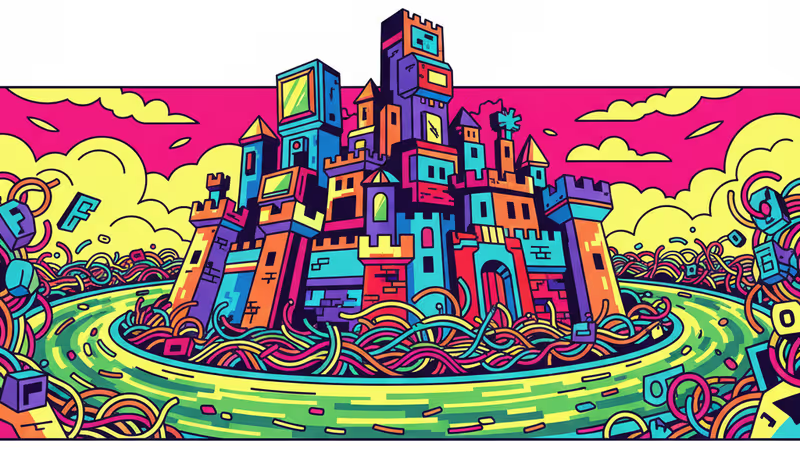
Beyond Wordle: How The NYT's New 'Strands' Game is Building an Unbreakable Subscription Moat
The NYT's new game, Strands, isn't just a puzzle. It's a strategic move to deepen user engagement and build an unbreakable subscription moat.
The Lede: More Than a Game, It's a Retention Engine
The New York Times' latest puzzle, Strands, isn't just another diversion for your coffee break. It represents a critical evolution in the media giant's strategy to dominate the attention economy. While casual observers see a clever word search, executives should see a masterclass in building a high-friction, high-reward engagement loop designed to make the NYT's digital subscription an indispensable part of a user's daily ritual. This isn't about puzzles; it's about building an unbreachable competitive moat.
Why It Matters: The Gamification of Loyalty
In the digital media landscape, user acquisition is expensive and churn is a constant threat. The NYT's Games division has become its secret weapon for retention. Strands deliberately requires more time and cognitive load than its predecessors, Wordle and Connections. By demanding 10-15 minutes of focused effort, it fundamentally changes the user relationship from a 'snackable' distraction to a 'lean-in' commitment. This extended engagement time is a gold-standard metric, driving up the perceived value of the subscription bundle and making it significantly harder for a user to cut the cord. Every minute a user spends solving Strands is a minute they aren't spending on TikTok, Netflix, or a rival news service.
The Analysis: Engineering the Perfect Engagement Stack
The NYT's gaming portfolio is a strategically engineered 'Engagement Stack', designed to capture users at every level of commitment:
- The Hook (Low-Friction): Wordle and the Mini Crossword are the top of the funnel. They take 1-3 minutes, are highly shareable, and create a low-barrier daily habit.
- The Habit (Medium-Friction): Connections and Spelling Bee demand more categorical and creative thinking. They are the daily ritual for a core, engaged audience.
- The Moat (High-Friction): Strands and the full Crossword represent the deepest level of engagement. They require discovering a hidden theme and solving a more complex puzzle, creating a powerful sense of accomplishment and intellectual investment. This layer is designed not just for daily use, but for deep loyalty.
This tiered approach allows the NYT to cater to a user's entire spectrum of available time and mental energy, ensuring they remain within the NYT ecosystem regardless of their daily context. It's a deliberate move away from the single viral hit towards a durable, multi-faceted platform.
PRISM Insight: From Clicks to Cognitive Investment
The underlying trend is a shift from monetizing pageviews to monetizing 'cognitive investment'. Strands' core mechanic—forcing the player to deduce a theme (the 'spangram') before they can effectively solve the puzzle—is a brilliant piece of behavioral design. It transforms players from passive word-finders into active detectives. This process forges a stronger psychological connection to the product. For other media brands, the lesson is clear: the future of subscription value lies not in the volume of content, but in the quality and depth of the interactive experiences you can build around it. The data gathered from how users solve these puzzles is infinitely more valuable than simple clickstream data, offering deep insights into user cognition and problem-solving patterns.
PRISM's Take: Selling Intellectual Wellness
The New York Times is no longer just in the news business; it's in the intellectual wellness business. In an age of passive, algorithmic content streams, the NYT is successfully selling a premium, finite, and intellectually satisfying challenge. Strands is the latest, and perhaps most sophisticated, product in this lineup. It offers a sense of order, discovery, and completion in a chaotic digital world. This is not a game; it is a meticulously crafted tool for habit formation and brand entrenchment, proving that in the future of media, the most valuable commodity isn't information, but focused attention.
Related Articles
Wordle is more than a game. It's a masterclass in user acquisition and the NYT's secret weapon in the attention economy. PRISM breaks down the strategy.
Beyond spoilers, the Duffer Brothers' Funko Pop stunt is a masterclass in IP management and fan engagement. PRISM analyzes the strategy.
The rise of bizarre online gifts signals a seismic shift in e-commerce. Discover why the niche product economy is the future of retail and brand strategy.

One woman's viral story of parental regret is not a personal drama, but a critical economic signal of systemic burnout. Here's why leaders must pay attention.