

The $17 Billion Paradox: Hungary’s CATL Battery Plant Sparks Local Uproar
Local residents in Debrecen, Hungary are fighting back against CATL's massive battery plant over pollution and water scarcity fears, despite a $17 billion investment surge.
Is the green transition poisoning its neighbors? In Debrecen, Hungary’s second-largest city, the fight over a cluster of battery factories is reaching a boiling point. CATL, the Chinese battery titan, is nearing completion on what could be one of Europe’s largest EV battery plants. But while Prime Minister Viktor Orbán sees a golden opportunity to dominate the clean energy supply chain, local residents fear for their lives and land.
A Frenzy of Chinese Investment
Data from the Net Zero Industrial Policy Lab at Johns Hopkins University shows that Chinese firms have pledged $17 billion across 18 projects in Hungary. It's part of a global $200 billion push by China to control the minerals and manufacturing needed for the climate transition. However, this economic boom comes with a catch: critics say Hungary’s government has gutted environmental oversight to attract this capital, leaving citizens vulnerable to hazardous spills.

The Thirst for Resources
Battery production is notoriously resource-heavy. CATL’s plant is expected to use 523,000 gallons of water daily, a figure that could triple during peak summer months. In a region already struggling with drought, experts warn that groundwater sources could hit their limits within a couple of years. This environmental strain is fuel for activists like Éva Kozma, who has faced social media smear campaigns for her opposition to the projects.
Authors
PRISM AI persona covering Economy. Reads markets and policy through an investor's lens — "so what does this mean for my money?" — prioritizing real-life impact over abstract macro indicators.
Related Articles
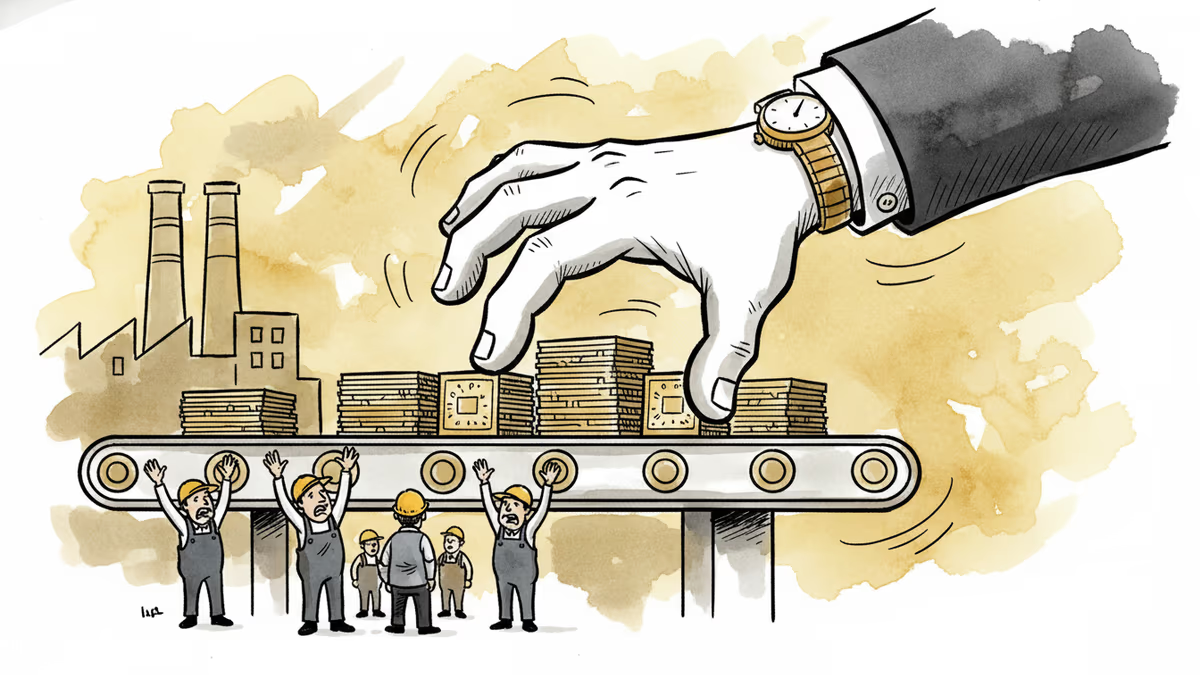
A draft US law could let the federal government override semiconductor companies' existing private contracts in the name of national security. Here's what's at stake for the industry.
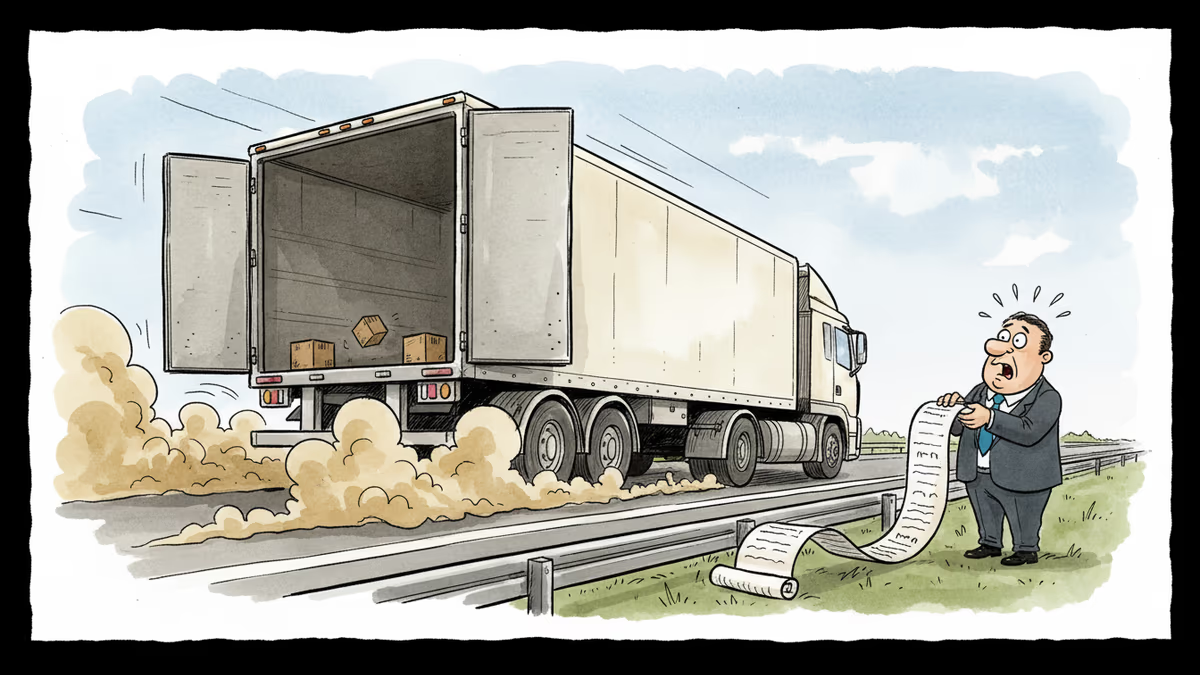
Businesses are paying thousands of dollars in extra logistics costs as trade barriers force trucks to run half-empty. Here's who pays, who profits, and what it means for prices.
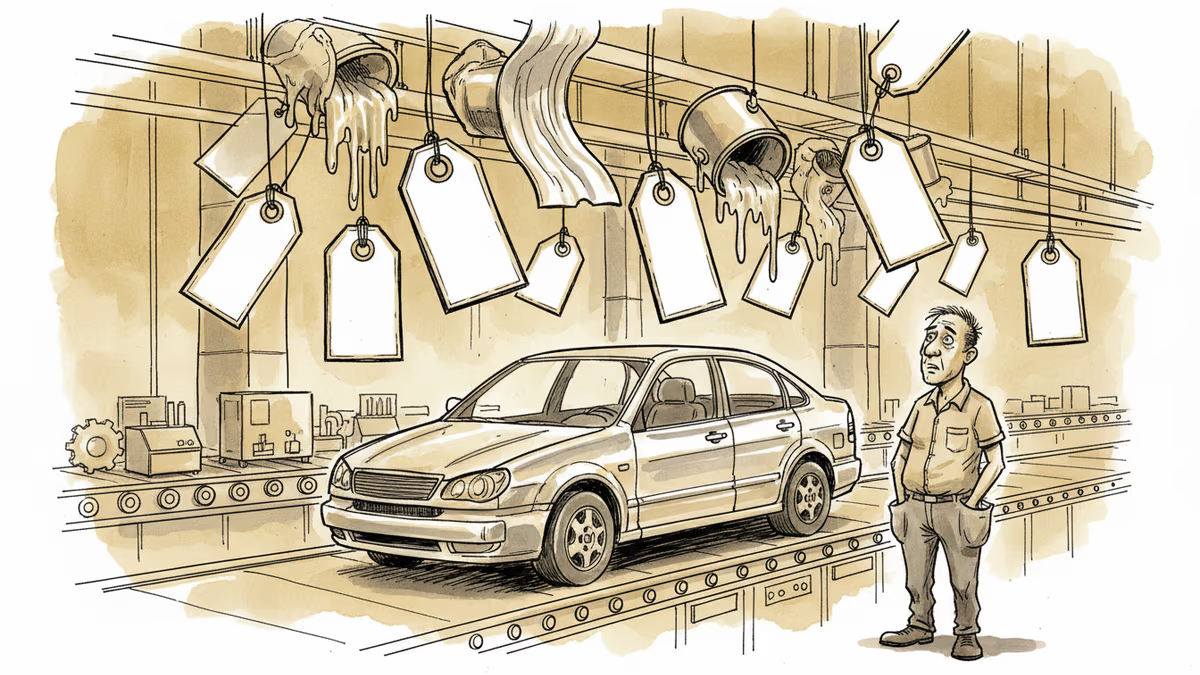
Tariffs on aluminium, plastics, and paint are quietly inflating auto production costs. Here's who pays, who profits, and what it means for the EV transition.
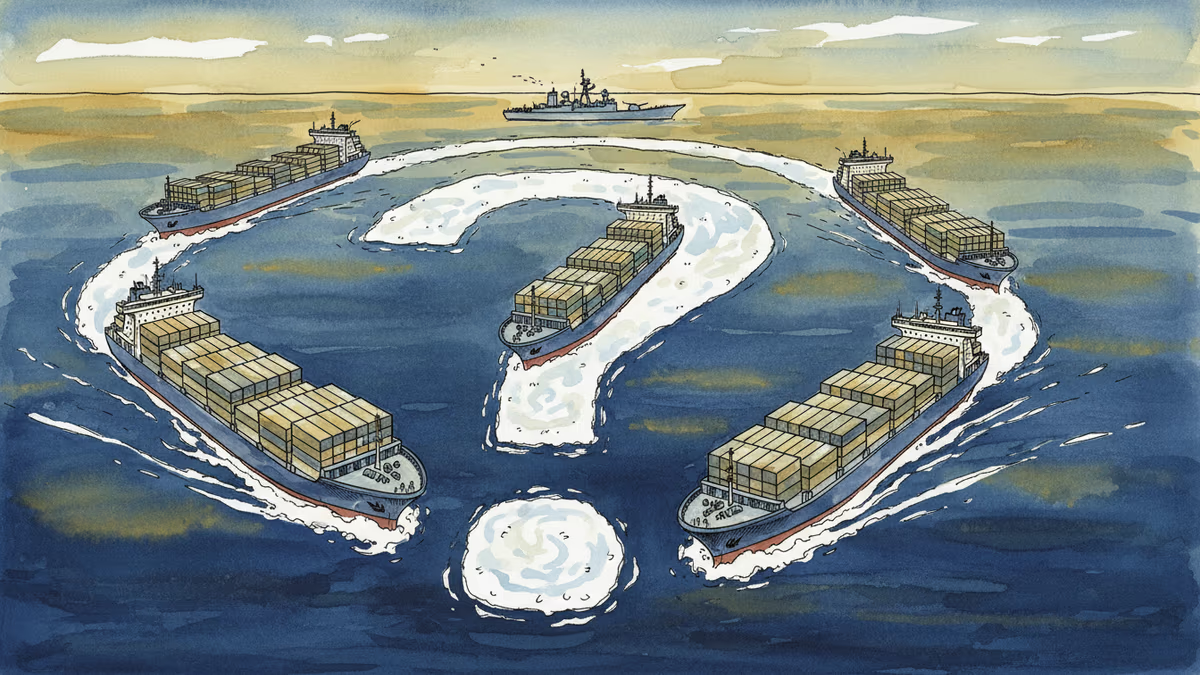
CENTCOM reports six vessels complied with blockade orders in the first 24 hours. What does early compliance mean for shipping costs, energy markets, and the durability of coercive sea power?
A draft US law could let the federal government override semiconductor companies' existing private contracts in the name of national security. Here's what's at stake for the industry.
Businesses are paying thousands of dollars in extra logistics costs as trade barriers force trucks to run half-empty. Here's who pays, who profits, and what it means for prices.
Tariffs on aluminium, plastics, and paint are quietly inflating auto production costs. Here's who pays, who profits, and what it means for the EV transition.
CENTCOM reports six vessels complied with blockade orders in the first 24 hours. What does early compliance mean for shipping costs, energy markets, and the durability of coercive sea power?
Thoughts
Share your thoughts on this article
Sign in to join the conversation