

The Analog Rebellion: Why Japanese Planners Are Winning the Productivity War
Discover why Japanese planners like Hobonichi and Kokuyo are gaining global popularity. We break down the key differences in paper quality, design, and customization compared to American brands.
In a world saturated with productivity apps, a quiet but powerful rebellion is unfolding on paper. Japanese planners like the Hobonichi Techo are amassing a global cult following, and it's not just about aesthetics. According to extensive testing by WIRED, they're outperforming American rivals by focusing on three core differentiators: superior paper, a minimalist philosophy, and a radical approach to freedom.
Difference 1: The Paper Paradox — Thinner is Better
The most immediate distinction is tactile. While many American planners use thick, cardstock-like paper, Japanese brands have perfected paper that is incredibly thin and smooth, yet remarkably durable. It’s strong enough to prevent most inks from bleeding through, though you might see faint 'ghosting' on the reverse side. Hobonichi uses its signature Tomoe River S paper, while Kokuyo uses its proprietary Thin Paper. This allows a year-long planner to be significantly slimmer and more portable without sacrificing quality.
Difference 2: Minimalism as a Feature
There’s a clear philosophical divide in design. American brands like Happy Planner or Ban.do often feature colorful, pre-styled layouts that try to match a user's personality. Japanese planners, in contrast, embrace minimalism. They favor clean grid paper over lines or blank pages, providing structure without being prescriptive. As WIRED's tester notes, this blank canvas hands creative control back to the user. It’s a system designed to adapt to you, not the other way around.

Difference 3: Freedom Over Pre-Set Features
Customization in the American market often means choosing pre-printed modules or page orders before you buy. Japanese planners offer a more profound form of customization: empty space. Instead of providing printed habit trackers or schedules, they give you the room to create your own. This open-ended structure is a key advantage. If your goals shift in June, you're not locked into a system you designed in January. It offers a true fresh start on any given day, week, or month.
The Market Leaders to Consider
1. Hobonichi Techo: The gold standard. Famous for its one-page-per-day format and luxurious Tomoe River S paper. The compact A6 'Techo' (from $41) is the classic, while the A5 'Techo Cousin' (from $65) adds a weekly view. 2. Kokuyo Jibun Techo: A brilliant modular system. The 'First Kit' (B6 Slim from $45) includes three separate, refillable booklets: 'Diary' for schedules, 'Life' for long-term records, and 'Idea' for notes. It's a system that truly grows with you. 3. Midori MD Notebook: An excellent entry point with high-quality 'MD Paper' that feels slightly thicker than a Hobonichi but smoother than most American notebooks. The 'Stand+' version ($8 for A5) is cleverly designed to stand up on your desk for easy viewing of your to-do list.
Worried about the language barrier? Don't be. Most of these popular planners are available in English versions or use English headers for key sections, making them fully accessible to a global audience.
Authors
Related Articles
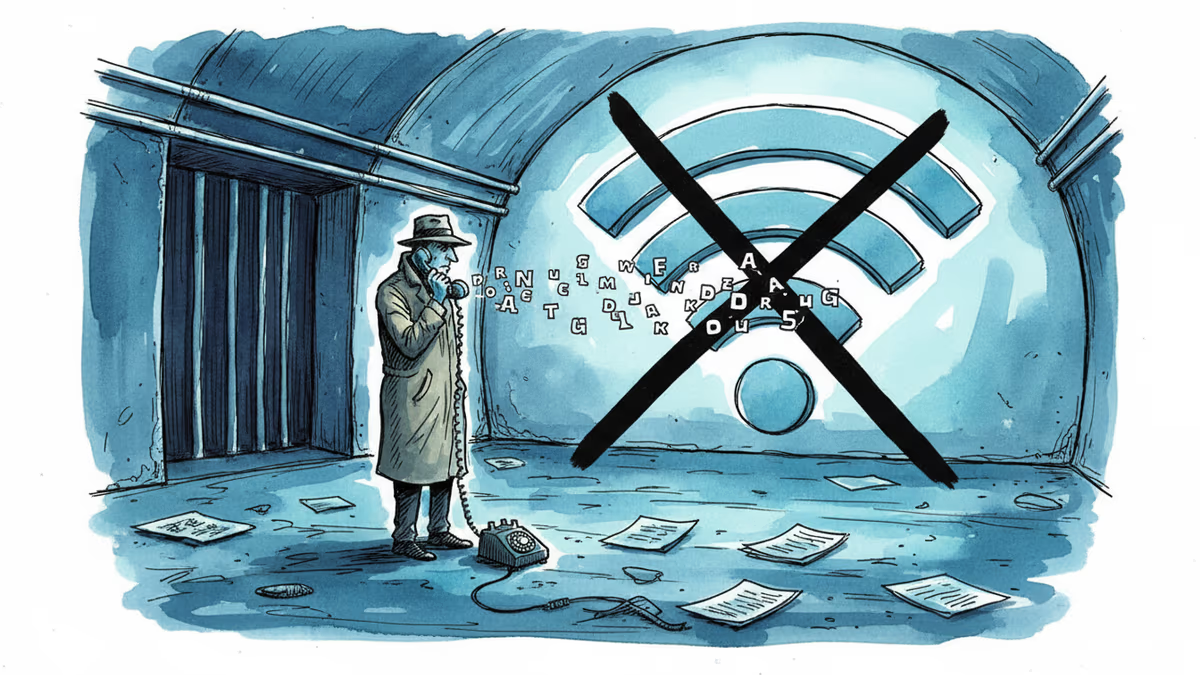
Google quietly launched an offline-first AI dictation app called Eloquent on iOS. Built on Gemma, it cleans up your speech on-device — no internet required. Here's what it signals.
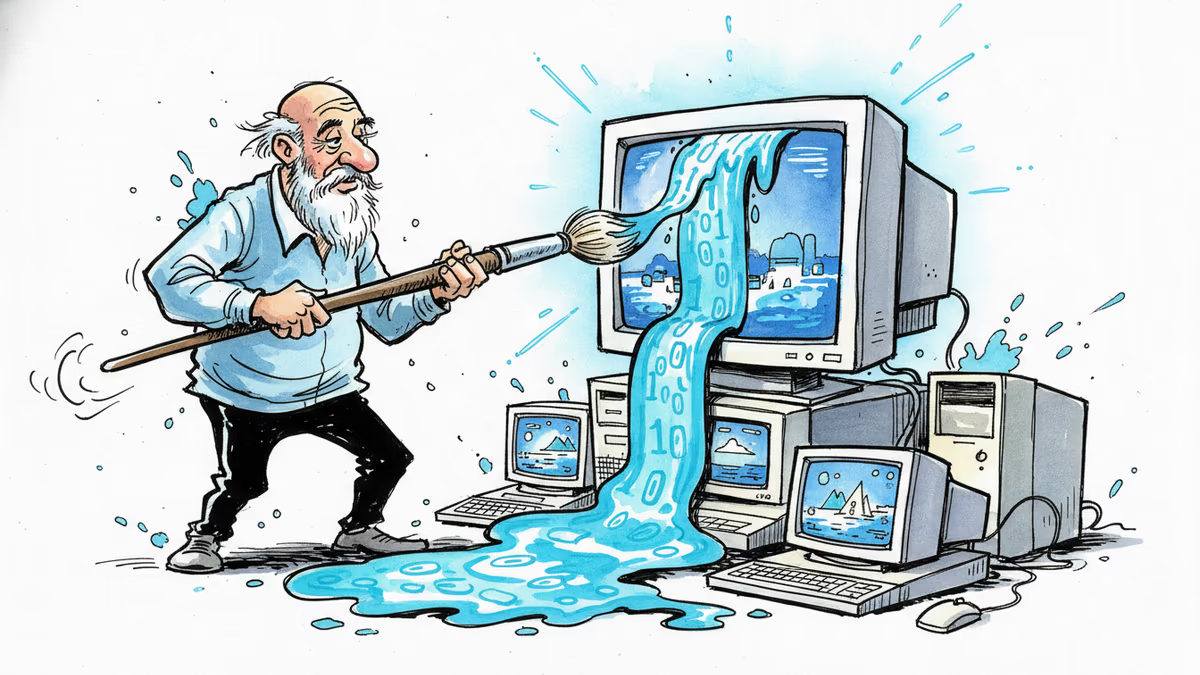
Robert Tinney's death marks the end of an era when one illustrator's airbrush paintings shaped how a generation imagined personal computers
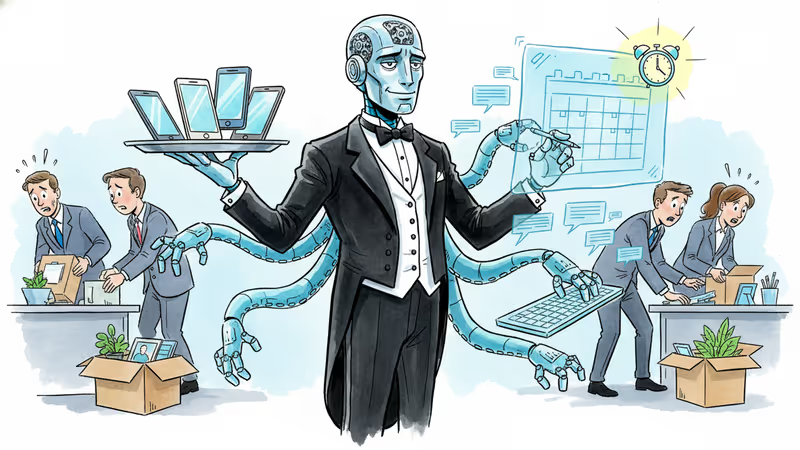
Moltbot, an open-source AI agent, lets users automate real tasks through popular messaging apps. But what happens when everyone has their own digital assistant?

Harvey, valued at $8 billion, has acquired Hexus to strengthen its legal AI tools for enterprise clients. Discover the strategy behind this aggressive expansion.
Google quietly launched an offline-first AI dictation app called Eloquent on iOS. Built on Gemma, it cleans up your speech on-device — no internet required. Here's what it signals.
Robert Tinney's death marks the end of an era when one illustrator's airbrush paintings shaped how a generation imagined personal computers
Moltbot, an open-source AI agent, lets users automate real tasks through popular messaging apps. But what happens when everyone has their own digital assistant?
Harvey, valued at $8 billion, has acquired Hexus to strengthen its legal AI tools for enterprise clients. Discover the strategy behind this aggressive expansion.
Thoughts
Share your thoughts on this article
Sign in to join the conversation