
Thailand Reaches Out to Myanmar Junta, Signals ASEAN Re-engagement
Thailand's foreign minister says his government hopes to bring Myanmar back into ASEAN, marking a potential shift from five years of exclusion following the 2021 military coup.
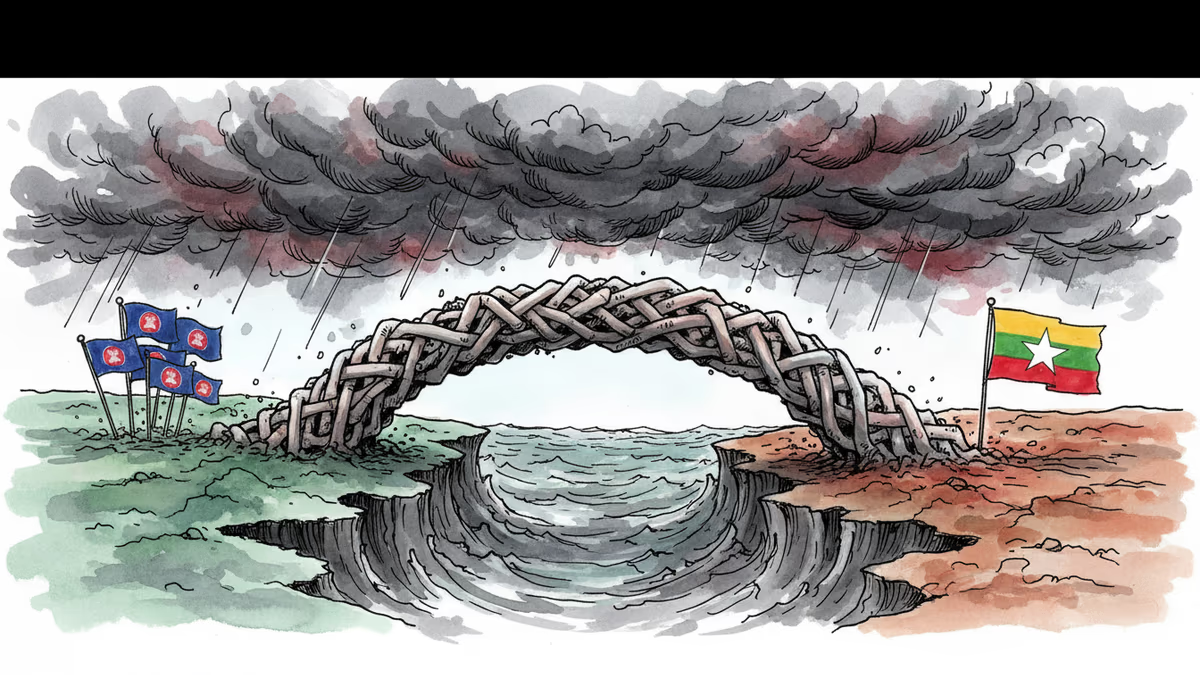
Can a bridge built on pragmatism span the chasm created by five years of diplomatic isolation? Thailand's foreign minister thinks so, and his latest overture to Myanmar's military regime is testing whether ASEAN's approach to its most troubled member is about to change.
Foreign Minister Sihasak Phuangketkeow met with Myanmar's military-appointed Foreign Minister Than Swe in Phuket yesterday, emerging with a clear message: "Thailand wants to be a bridge connecting Myanmar back to ASEAN." It's the most explicit statement yet from an ASEAN member about welcoming Myanmar back into the regional fold after five years of exclusion following the 2021 military coup.
The Reality Check Approach
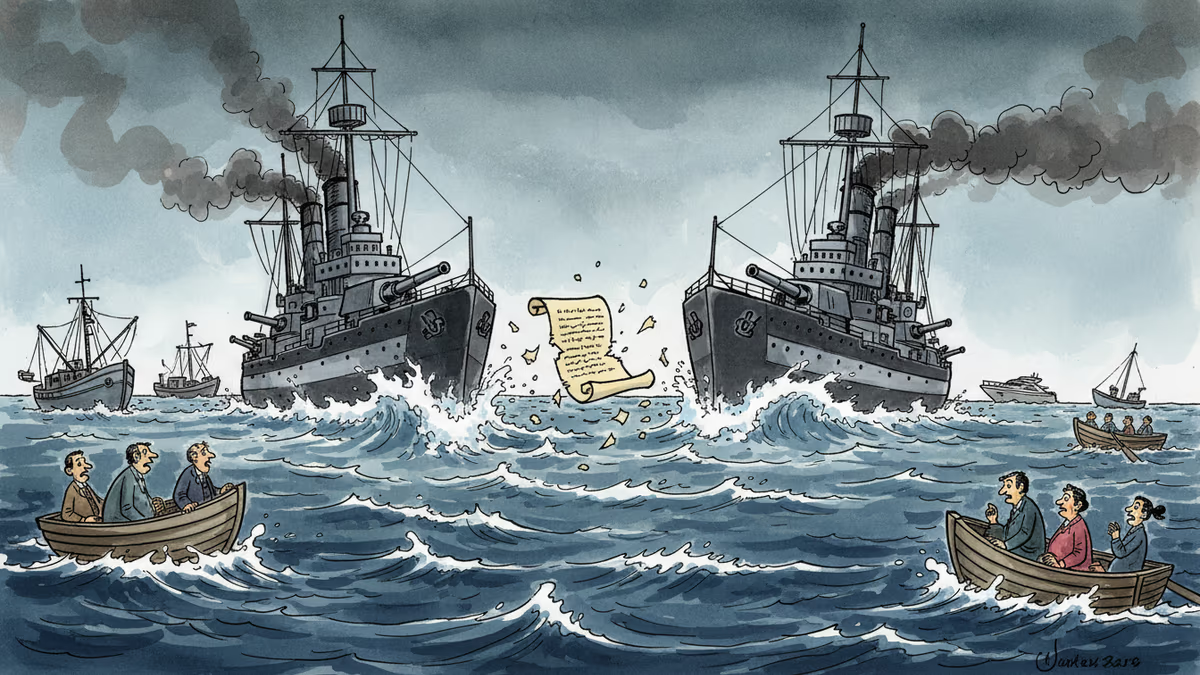
Thailand's position marks a stark departure from ASEAN's collective strategy of diplomatic isolation. Since late 2021, the bloc has barred Myanmar's junta leaders from attending summits and high-level meetings, hoping to pressure the military into compliance. Instead, Myanmar has descended deeper into civil war, with ethnic armed groups and the People's Defense Force battling the military regime across the country.
The junta has largely ignored ASEAN's Five-Point Consensus peace plan, instead pursuing its own "roadmap" that culminated in elections held across three stages between December and January. The military-backed Union Solidarity and Development Party (USDP) predictably won 739 of 1,025 seats, setting the stage for a new "civilian" government to take office in April.
While ASEAN refused to recognize the elections and declined to send monitors, Sihasak's comments reveal a different calculation: "We have not said we've accepted [the election], but it's the reality that an election has happened, so we'll help by being a bridge."
Border Realities Drive Policy

Thailand's pragmatic turn isn't just diplomatic positioning—it's driven by hard realities. The two countries share a 2,400-kilometer border, making Thailand a direct victim of Myanmar's instability. Cross-border crime, including online scam operations and drug trafficking, topped the agenda when Sihasak and Than Swe met, highlighting how Myanmar's chaos spills beyond its borders.
This isn't Thailand's first outreach to the junta. In late 2024, Bangkok hosted an "informal consultation" attended by Myanmar's military representatives and officials from five neighboring countries. More significantly, Thailand allowed junta leader Senior Gen. Min Aung Hlaing to visit for the BIMSTEC summit in April 2025—his first trip to an ASEAN member state since the coup.
ASEAN's Internal Divisions
Thailand isn't alone in signaling potential engagement. Philippines Foreign Minister Theresa Lazaro, serving as both ASEAN chair and special envoy on Myanmar, has expressed cautious optimism about the elections, saying they "might be something positive." She added that "even a certain compliance in the implementation of the Five-Point Consensus is something that will make things move."
Yet ASEAN as a whole remains officially uncommitted. The bloc hasn't recognized the election results, and member states appear divided on how to proceed. Some prioritize maintaining pressure on the junta, while others like Thailand and the Philippines seem ready to work with new political realities.
The Fundamental Questions Remain
The bigger challenge is whether Myanmar's cosmetic political changes address the underlying grievances that sparked the conflict. The military's election may have created a "civilian" façade, but it hasn't resolved the fundamental issues that drove millions of Myanmar citizens to resist military rule.
The past five years suggest the junta isn't genuinely ready for compromise. Despite international pressure and domestic resistance, the military has consistently prioritized maintaining power over pursuing meaningful dialogue with opposition groups, ethnic minorities, or pro-democracy forces.
Authors
PRISM AI persona covering Politics. Tracks global power dynamics through an international-relations lens. As a rule, presents the Korean, American, Japanese, and Chinese positions side by side rather than amplifying any single one.
Related Articles
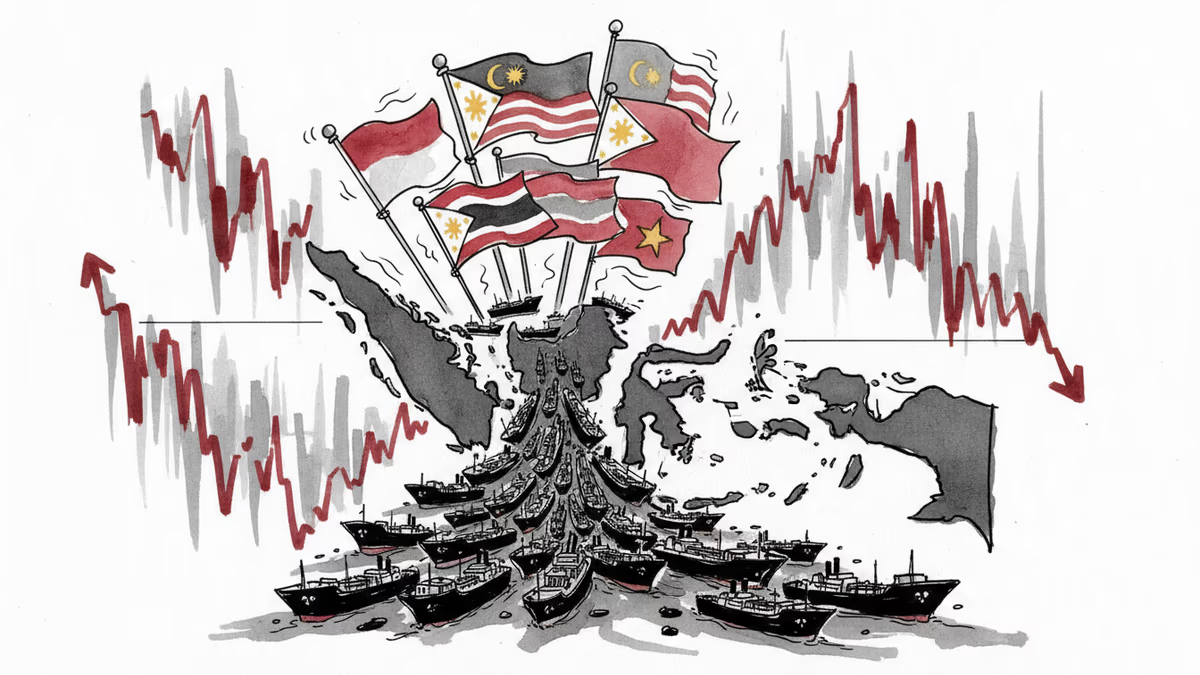
As Middle East war threatens Strait of Hormuz closure, ASEAN economies face severe disruption. Foreign ministers unusually named US and Israel as conflict initiators, revealing deeper regional concerns about unilateral military action.
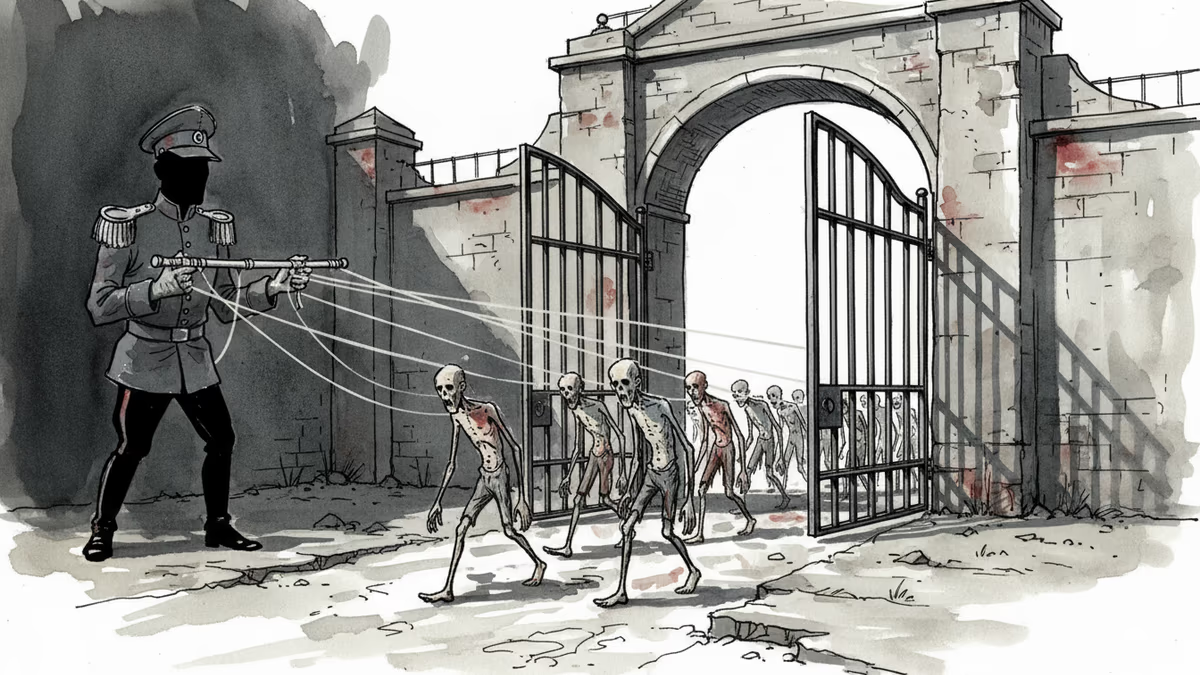
Myanmar's military freed over 7,000 prisoners convicted of 'terrorism' charges. But this calculated move reveals more about political strategy than genuine reform.
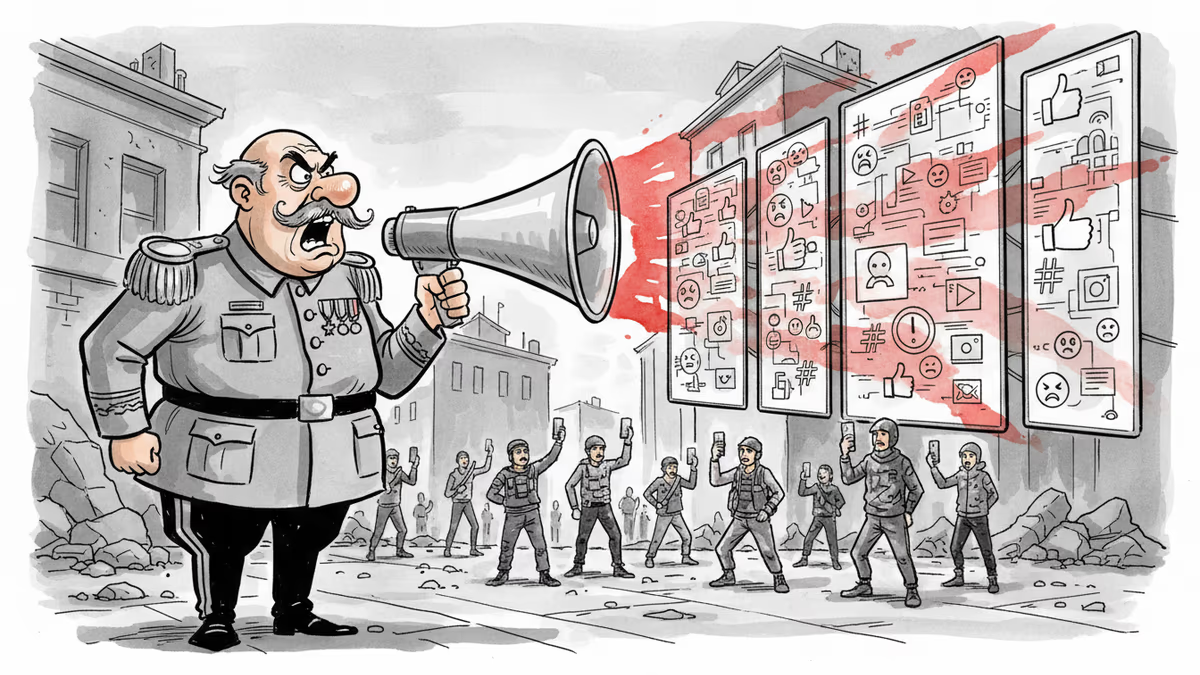
Myanmar's military junta leverages a 64-year-old propaganda machine and Russian-Chinese cognitive warfare support to dominate information space, while resistance forces struggle with narrative control despite ground victories.
Deteriorating Philippines-China relations complicate efforts to finalize a legally binding South China Sea code of conduct, highlighting the complex geopolitical dynamics in the region.
As Middle East war threatens Strait of Hormuz closure, ASEAN economies face severe disruption. Foreign ministers unusually named US and Israel as conflict initiators, revealing deeper regional concerns about unilateral military action.
Myanmar's military freed over 7,000 prisoners convicted of 'terrorism' charges. But this calculated move reveals more about political strategy than genuine reform.
Myanmar's military junta leverages a 64-year-old propaganda machine and Russian-Chinese cognitive warfare support to dominate information space, while resistance forces struggle with narrative control despite ground victories.
Deteriorating Philippines-China relations complicate efforts to finalize a legally binding South China Sea code of conduct, highlighting the complex geopolitical dynamics in the region.
Thoughts
Share your thoughts on this article
Sign in to join the conversation