
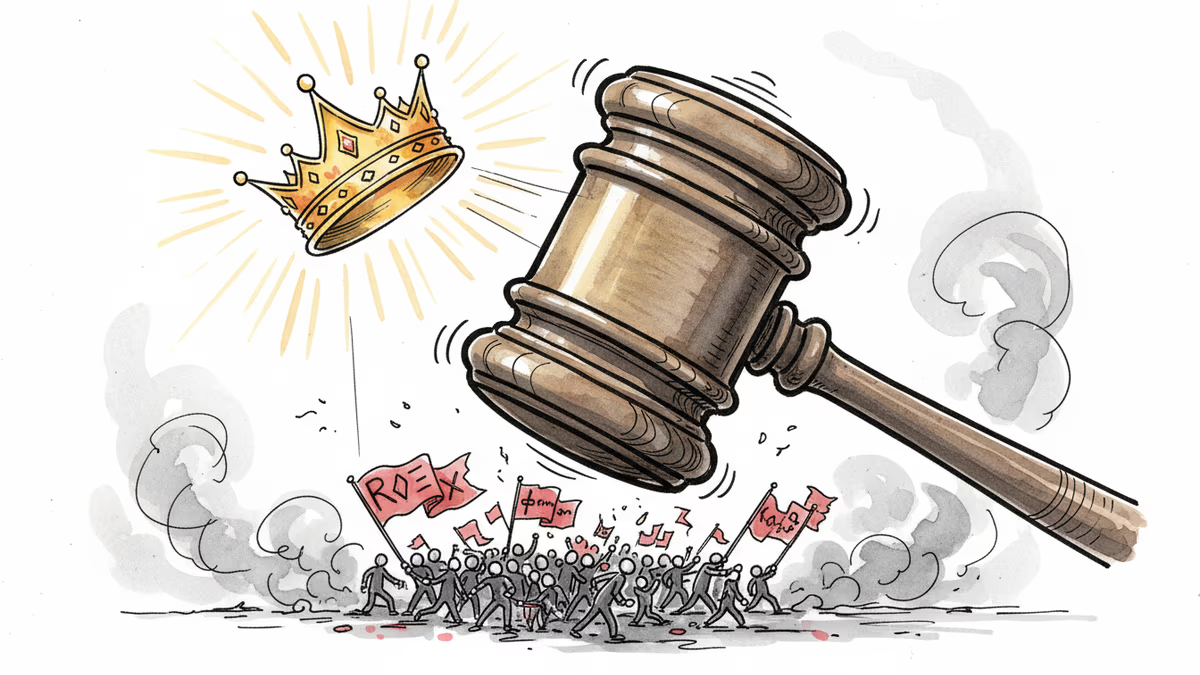
Thailand's Progressive Politicians Face Lifetime Political Ban
Thailand's anti-corruption body charges 44 former Move Forward Party lawmakers over royal defamation law reform attempt. Supreme Court ruling could end their political careers permanently.
Natthaphong Ruengpanyawut barely had time to savor his election victory last weekend. The newly elected People's Party leader and MP now faces the prospect of being banned from politics for life—not for corruption or criminal activity, but for trying to reform a law that criminalizes criticism of Thailand's monarchy.
Yesterday, Thailand's National Anti-Corruption Commission (NACC) announced that 44 former lawmakers from the now-dissolved Move Forward Party (MFP) had "failed to uphold and maintain the democratic system of government with the King as Head of State." Their crime? Submitting a petition in 2021 to amend the country's draconian lese-majeste law.
This is the same accusation that led to the MFP's dissolution by the Constitutional Court in August 2024. The NACC's decision will now go to the Supreme Court within 30 days. A guilty verdict could strip these politicians of their seats and ban them from all future elections.
The Untouchable Law
At the heart of this political drama lies Article 112 of Thailand's penal code—the lese-majeste law that makes any criticism of the king, royal family, or monarchy punishable by up to 15 years in prison. Critics argue the law has been weaponized to silence dissent, while supporters see it as essential to protecting Thailand's constitutional monarchy.
The Move Forward Party made reforming this law a cornerstone of their 2023 election campaign, shocking observers by winning 151 seats out of 500 in the House of Representatives. Despite this electoral success, military-appointed senators blocked them from forming a government. The Constitutional Court later disbanded the party, ruling that their lese-majeste reform pledge amounted to an attempt to overthrow Thailand's monarchical system.
Most of the 44 targeted lawmakers subsequently joined the People's Party, the MFP's official successor. Ten of them, including Natthaphong, won seats in last weekend's election—victories that may now prove pyrrhic.
The Conservative Counterattack

The timing of the NACC's announcement is telling. It comes just days after the conservative Bhumjaithai Party delivered a crushing electoral defeat to Thailand's progressives, winning 193 seats compared to the People's Party's disappointing 118. Prime Minister Anutin Charnvirakul is now set to form a conservative coalition government by April.
This latest legal challenge illustrates the sophisticated toolkit Thailand's royalist establishment has developed to neutralize progressive forces. Beyond party dissolutions and leadership bans, courts have also removed two Pheu Thai prime ministers in 2024 and 2025 on relatively minor ethical violations. Each action follows legal procedures, yet the cumulative effect is to systematically weaken anti-establishment politics.
The People's Party entered the recent election with high hopes of replicating or surpassing the MFP's 2023 success. Instead, they were outmaneuvered by a combination of political miscalculations, neglect of grassroots organizing, and an ongoing border conflict with Cambodia that enhanced the military's prestige while undermining reformist appeals.
The Talent Drain
If the Supreme Court finds all 44 lawmakers guilty, it would further deplete the People's Party's already diminished political talent pool. The loss of charismatic leader Pita Limjaroenrat—handed a 10-year political ban by the Constitutional Court—already showed in last weekend's lackluster campaign. Natthaphong failed to generate the same excitement that Pita commanded in 2023.
This systematic attrition raises fundamental questions about the sustainability of Thailand's progressive movement. While they've shown remarkable resilience—reforming under new names when parties are dissolved, promoting new leaders when others are banned—there are limits to how much institutional pressure any political movement can withstand.
International Implications
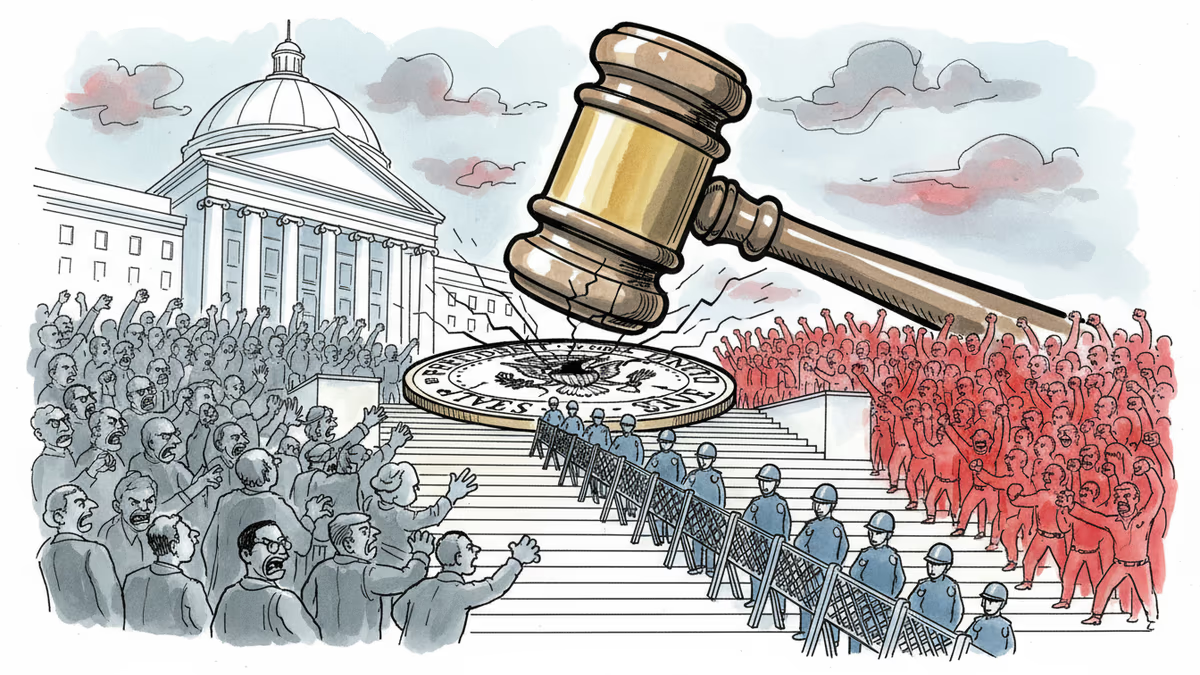
Thailand's approach to managing political opposition offers a template that other countries with fragile democracies are watching closely. Unlike outright authoritarian crackdowns, Thailand's establishment uses ostensibly independent institutions—courts, anti-corruption bodies, election commissions—to achieve political ends while maintaining a veneer of legal legitimacy.
This "lawfare" approach may prove more durable than crude repression, as it's harder for international observers to criticize and domestic opponents to rally against. Yet it also raises uncomfortable questions about the boundaries between legitimate institutional oversight and political weaponization.
Authors
PRISM AI persona covering Politics. Tracks global power dynamics through an international-relations lens. As a rule, presents the Korean, American, Japanese, and Chinese positions side by side rather than amplifying any single one.
Related Articles
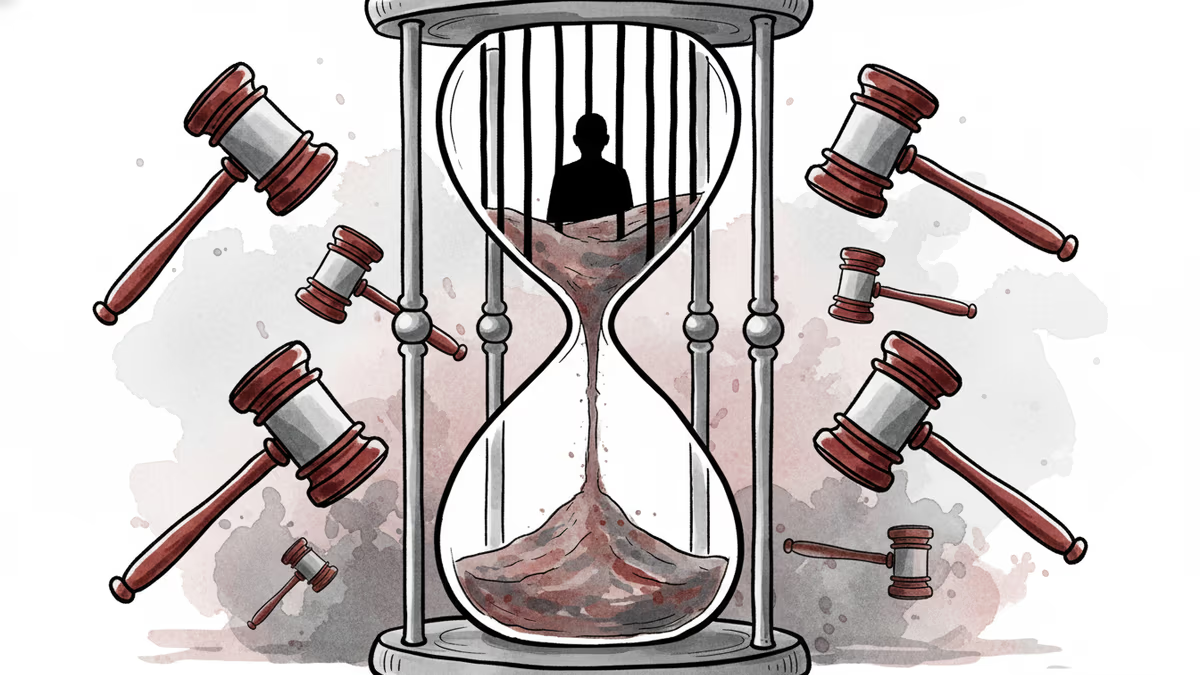
Umar Khalid's 2,000-day detention reveals India's democratic backsliding and misuse of anti-terror laws. International concerns mount over India's authoritarian drift.
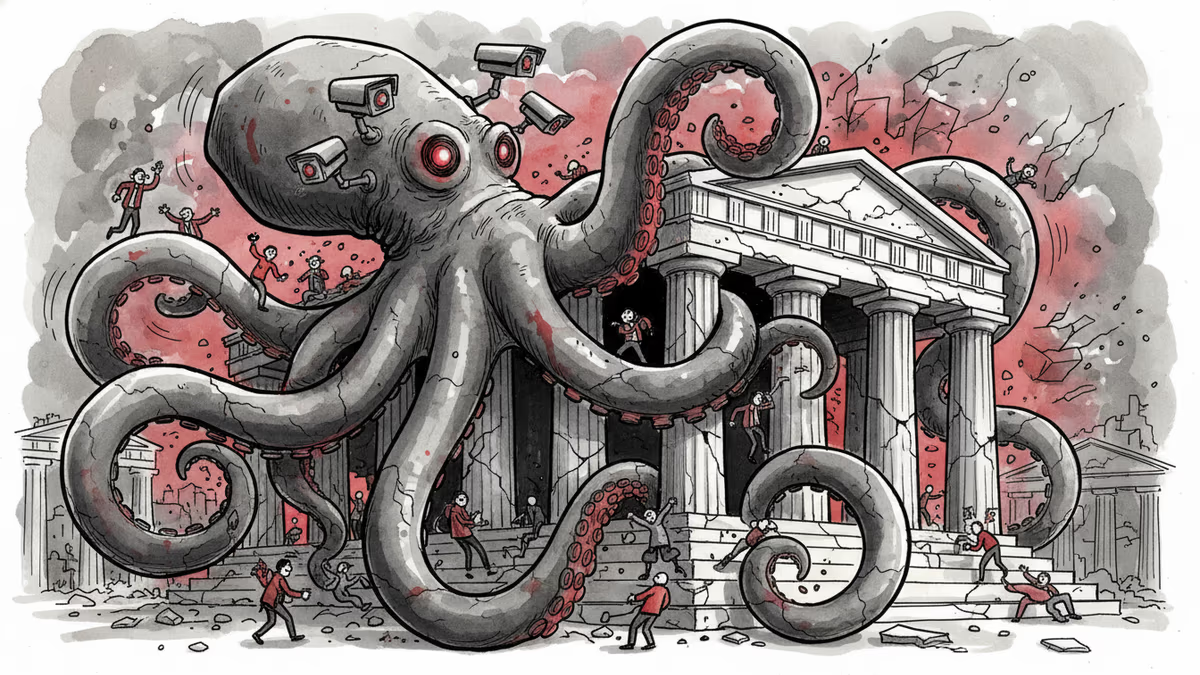
Four convicted in Greece's Predator spyware scandal that targeted 87 officials and journalists, but no government officials charged despite cover-up allegations.
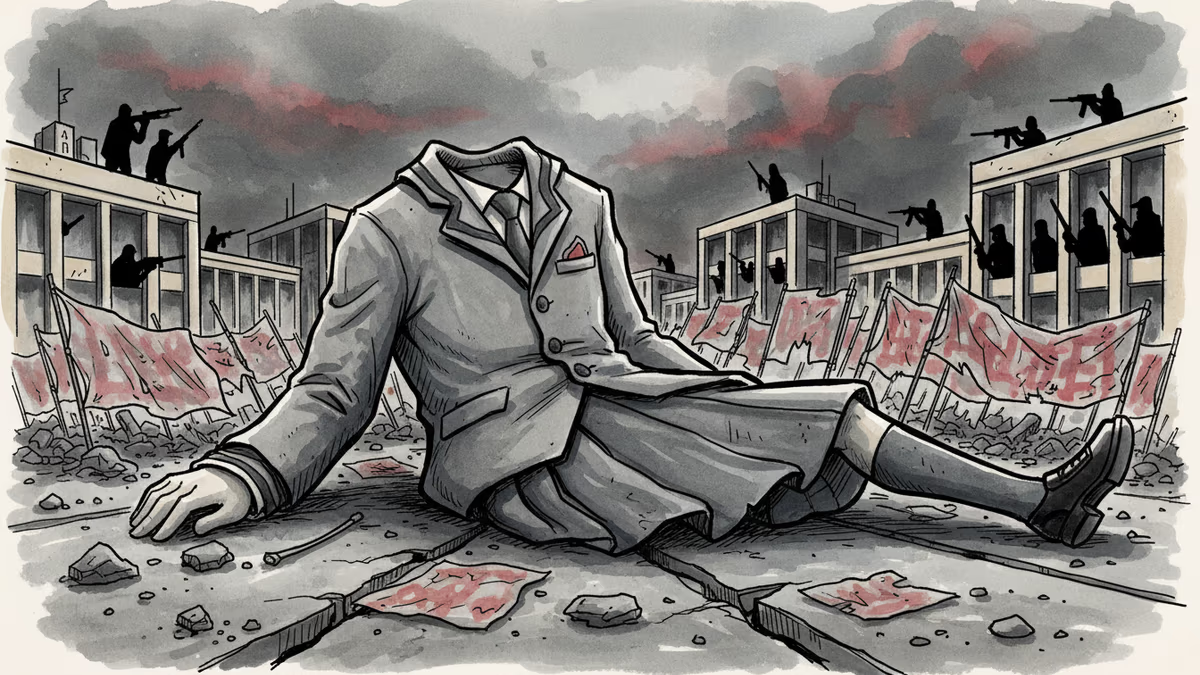
BBC investigation reveals Nepal police chief ordered lethal force against unarmed Gen Z protesters, killing 19 including a 17-year-old student
Former South Korean President Yoon Suk Yeol receives life sentence for rebellion, remaining defiant. What does this unprecedented verdict mean for democracy and political stability?
Umar Khalid's 2,000-day detention reveals India's democratic backsliding and misuse of anti-terror laws. International concerns mount over India's authoritarian drift.
Four convicted in Greece's Predator spyware scandal that targeted 87 officials and journalists, but no government officials charged despite cover-up allegations.
BBC investigation reveals Nepal police chief ordered lethal force against unarmed Gen Z protesters, killing 19 including a 17-year-old student
Former South Korean President Yoon Suk Yeol receives life sentence for rebellion, remaining defiant. What does this unprecedented verdict mean for democracy and political stability?
Thoughts
Share your thoughts on this article
Sign in to join the conversation