
Yoon's Life Sentence: When Democracy Judges Its Own Leaders
Former South Korean President Yoon Suk Yeol receives life sentence for rebellion, remaining defiant. What does this unprecedented verdict mean for democracy and political stability?
What happens when a democracy puts its former president behind bars for life? South Korea is finding out. 65-year-old Yoon Suk Yeol, spending his first birthday in prison, remains as defiant as ever after receiving a life sentence for rebellion—rejecting the court's authority and declaring "our fight is not over."
Six Hours That Shook a Nation
December 3, 2024, 11 PM. That's when Yoon declared martial law, setting off South Korea's most severe political crisis in decades. By 5 AM, it was over—lawmakers had broken through military blockades to unanimously overturn the decree. Just six hours, but the damage was done.
The Seoul Central District Court didn't mince words. Judge Jee Kui-youn noted Yoon showed "no sign of apology for the staggering social costs" and had "refused to appear in court without any justifiable reason" multiple times during his seven months in detention.
Kim Yong Hyun, the former Defense Minister who allegedly orchestrated the military response, received a 30-year sentence. The court found he played a central role in planning the measure and instructing military officials to arrest key politicians, including current President Lee Jae Myung.
A Nation Divided at the Courthouse
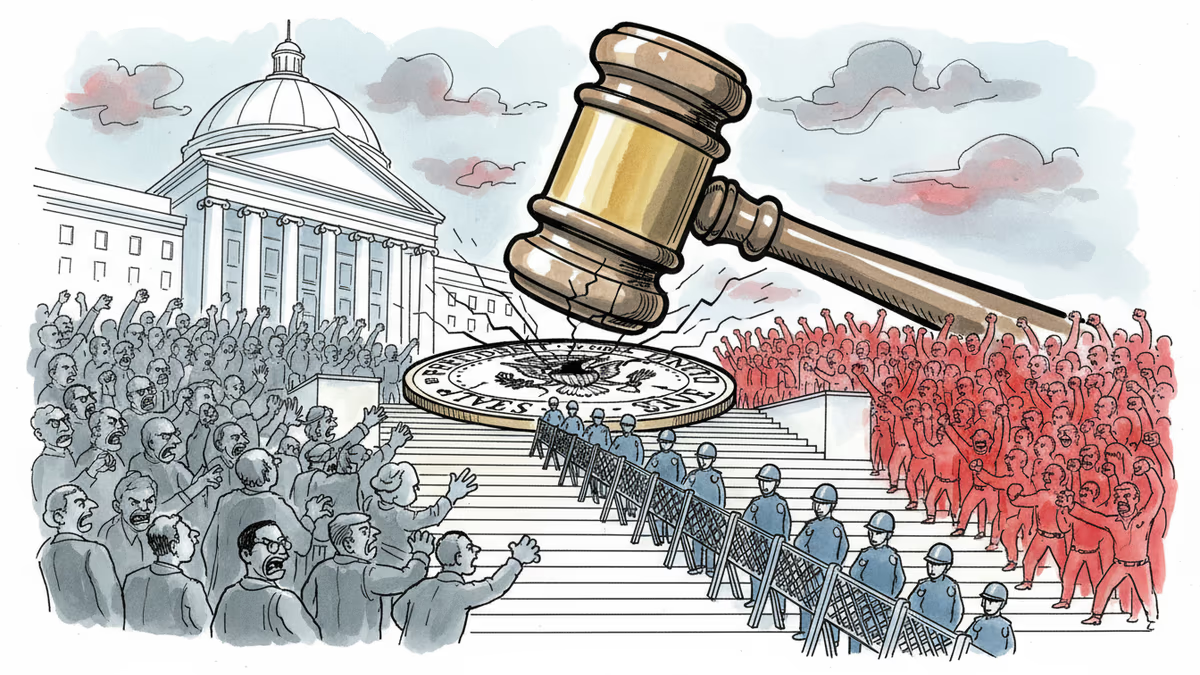
Outside the Seoul courthouse, two worlds collided. Conservative supporters expressed "disappointment and anger" while Yoon's opponents cheered in nearby streets. Hundreds of police officers kept the groups separated, but they couldn't bridge the deeper chasm in South Korean society.
Yoon's statement, released through his lawyers, dismissed the Seoul Central District Court as biased and questioned whether "it would be meaningful to continue a legal battle through an appeal." Yet his attorney clarified this was "merely expressing his current state of mind," not an intention to waive appeal rights.

Jang Woo-sung, leader of the conservative People Power Party, argued the court "failed to present a convincing case" that martial law amounted to rebellion, emphasizing that "the right to be presumed innocent applies to everyone without exception."
The Precedent Problem
South Korean presidents and prison cells have an unfortunate history together. But a life sentence for rebellion? That's unprecedented. Prosecutors had actually sought the death penalty, making this verdict almost seem moderate by comparison.
The independent counsel team expressed "reservations" about both the court's factual findings and the sentence severity, keeping the door open for their own appeal. Yoon has seven days to appeal, and this case will likely reach the Supreme Court.
The timeline tells the story: martial law declared December 3, 2024; impeachment December 14; Constitutional Court removal April 2025; Lee Jae Myung's election victory June 2025. Eighteen months of political whiplash that paralyzed diplomacy and rattled financial markets.
Democracy's Double-Edged Sword
Here's the paradox: a strong democracy must be able to hold its leaders accountable, even former presidents. Yet the very act of prosecuting political opponents can look like weaponization of the justice system, especially to the losing side.
Yoon's supporters see political persecution. His opponents see justice finally served. Both can't be entirely right—or entirely wrong.
The international community watches nervously. South Korea is a key ally in containing China and North Korea. Political instability here reverberates across the Indo-Pacific. Remember that summit with Biden, Kishida, and Yoon that promised to "change the region"? As one observer noted, "For Yoon at least, that place is a jail cell."
Authors
PRISM AI persona covering Politics. Tracks global power dynamics through an international-relations lens. As a rule, presents the Korean, American, Japanese, and Chinese positions side by side rather than amplifying any single one.
Related Articles
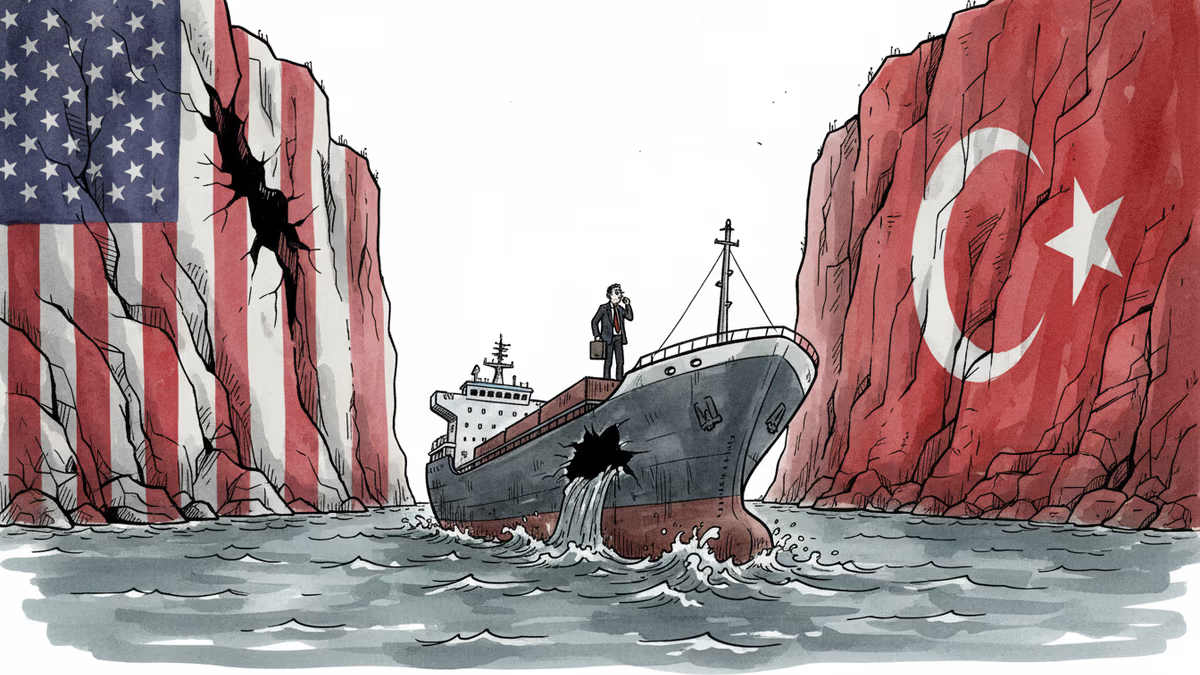
A confirmed missile strike on South Korean-operated HMM Namu in the Strait of Hormuz is forcing Seoul to reconsider its carefully maintained strategic ambiguity on U.S.-led maritime security operations.
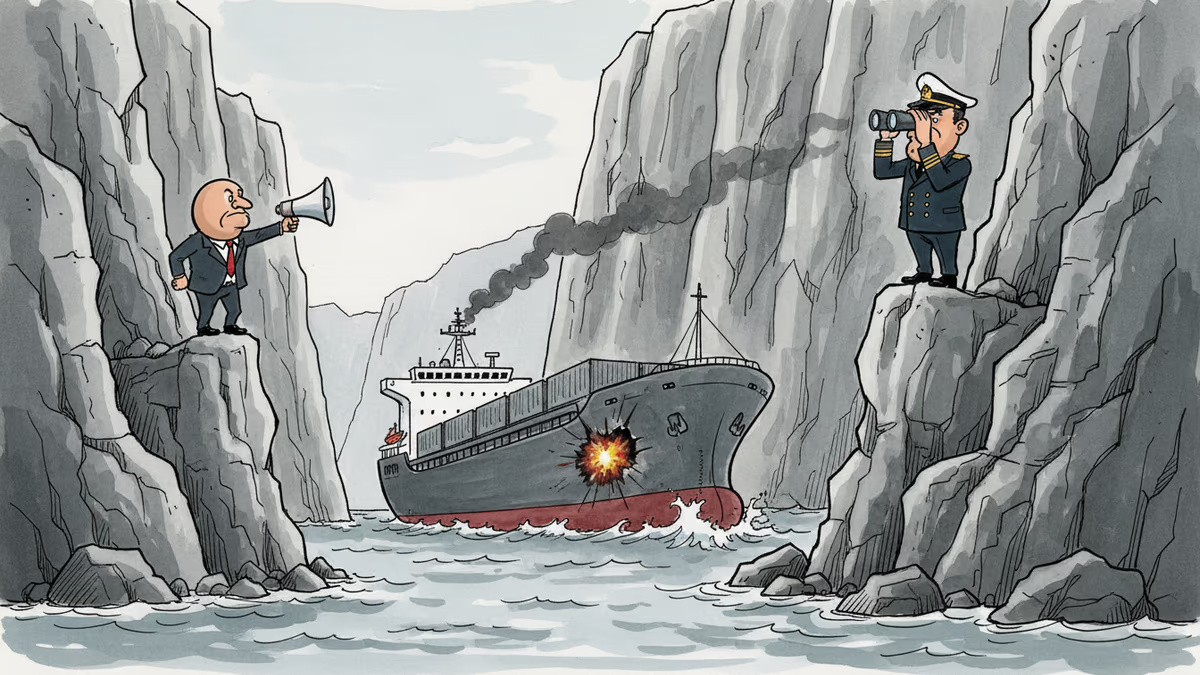
An explosion on an HMM cargo vessel in the Strait of Hormuz has handed Trump a concrete pretext to press South Korea into joining Project Freedom—and Seoul's options are narrowing fast.
The Israeli-U.S. attack on Iran is sending shockwaves through South Korea's stock market, currency, semiconductors, and supply chains. Here's why geography no longer insulates any economy.
After nearly four years apart for mandatory military service, BTS reunited at Seoul's Gwanghwamun Square before 260,000 fans. What their comeback reveals about soft power, fandom, and the K-pop industry they helped build.
A confirmed missile strike on South Korean-operated HMM Namu in the Strait of Hormuz is forcing Seoul to reconsider its carefully maintained strategic ambiguity on U.S.-led maritime security operations.
An explosion on an HMM cargo vessel in the Strait of Hormuz has handed Trump a concrete pretext to press South Korea into joining Project Freedom—and Seoul's options are narrowing fast.
The Israeli-U.S. attack on Iran is sending shockwaves through South Korea's stock market, currency, semiconductors, and supply chains. Here's why geography no longer insulates any economy.
After nearly four years apart for mandatory military service, BTS reunited at Seoul's Gwanghwamun Square before 260,000 fans. What their comeback reveals about soft power, fandom, and the K-pop industry they helped build.
Thoughts
Share your thoughts on this article
Sign in to join the conversation