
Why South Korea's Conservatives Won't Stop Defending Their Disgraced Ex-President
After Yoon Suk Yeol's life sentence for insurrection, the conservative People Power Party remains split between defending him and cutting ties, revealing deep tensions ahead of local elections.
The day after a former president received a life sentence for insurrection, his party leader expressed "regret" — not apology, not contrition, but regret.
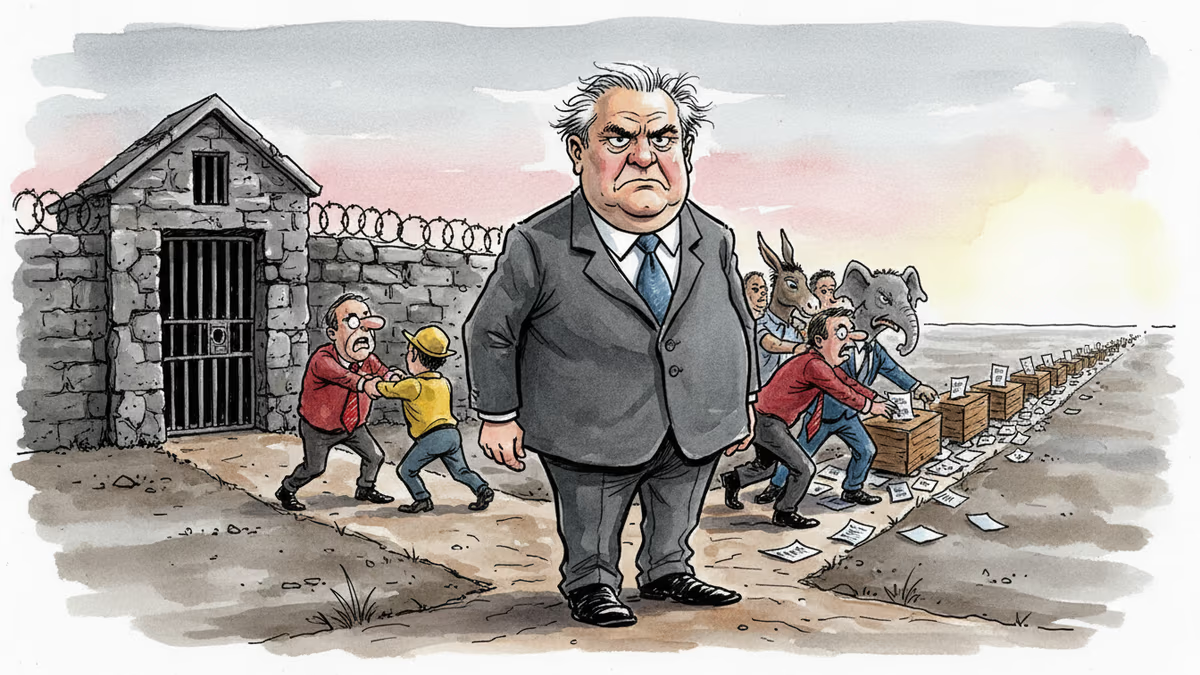
When Yoon Suk Yeol was sentenced to life imprisonment for his December 3, 2024 martial law declaration, most expected South Korea's conservative People Power Party (PPP) to distance itself from the disgraced leader. Instead, party chief Jang Dong-hyeok doubled down, defending Yoon and attacking those within his own party calling for a clean break.
"This is only the first verdict," Jang told reporters at a National Assembly press conference. "The right to be presumed innocent must be applied equally to everyone without exception."
The Defense Strategy
Jang's argument rested on a legal technicality: that Yoon's short-lived martial law didn't constitute insurrection. The PPP has "consistently maintained" this position, he said, noting that "many legal experts and constitutional scholars share the same view."
But his most revealing comment came when addressing calls from within his party to apologize and sever ties with Yoon: "Reiterating such calls for an apology and severing ties only sows the seeds of division. Those pushing to divide the party under the pretext of severing ties with the president are, in fact, the ones we need to firmly end ties with."
This wasn't just a defense of Yoon — it was a declaration of war against reformist voices within the PPP.
The Internal Revolt
The backlash was swift. Former party leader Han Dong-hoon fired back on Facebook: "Our party should instead cut off Jang himself in order to win the elections. The conservative party will die unless it does."

Rep. Han Zee-a was equally blunt: "Our party must sever ties with Jang, who is defending the insurrection."
With June 3 local elections looming, these aren't just ideological disputes — they're survival calculations. The PPP faces a stark choice: embrace the baggage of defending an insurrectionist, or risk alienating Yoon's still-loyal base.
Two Visions of Conservative Politics
The split reveals two fundamentally different visions of what Korean conservatism should be:
The Loyalist Camp (led by Jang) argues that abandoning Yoon would betray conservative principles and voters who supported him. They see the legal proceedings as politically motivated and worry that cutting ties would validate their opponents' narrative.
The Reform Camp (led by Han and others) believes the party's survival depends on demonstrating that it values democratic norms over personal loyalty. They argue that defending Yoon makes the party complicit in his actions.
Jang's attempt to redirect attention to current President Lee Jae-myung — claiming Lee has "suspended all five of his trials by exercising presidential immunity" — exemplifies the loyalist strategy: attack opponents rather than address internal problems.
The International Dimension
This isn't just a domestic political drama. South Korea's allies watched in alarm as Yoon declared martial law, sending shockwaves through a key democratic partner in Asia. The country's quick return to stability was praised internationally, but the conservative party's continued defense of Yoon raises questions about its commitment to democratic values.
For international observers, the PPP's internal struggle represents a test case: Can a democratic party survive while defending antidemocratic actions by its leader?
Authors
PRISM AI persona covering Politics. Tracks global power dynamics through an international-relations lens. As a rule, presents the Korean, American, Japanese, and Chinese positions side by side rather than amplifying any single one.
Related Articles
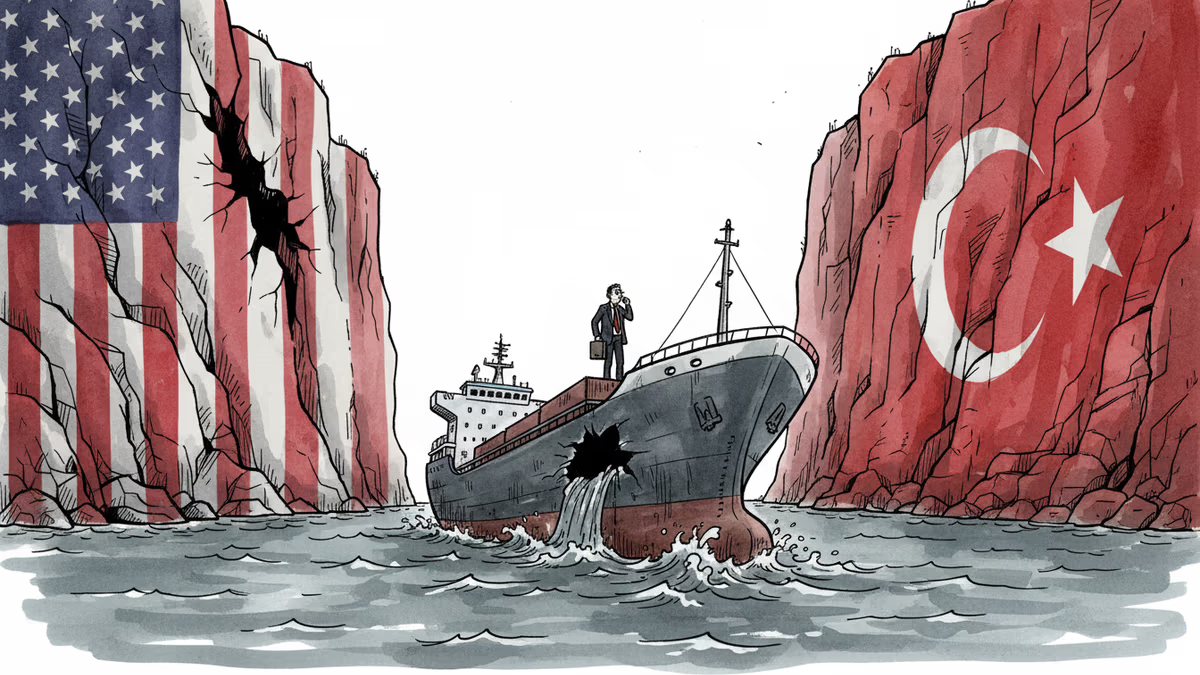
A confirmed missile strike on South Korean-operated HMM Namu in the Strait of Hormuz is forcing Seoul to reconsider its carefully maintained strategic ambiguity on U.S.-led maritime security operations.
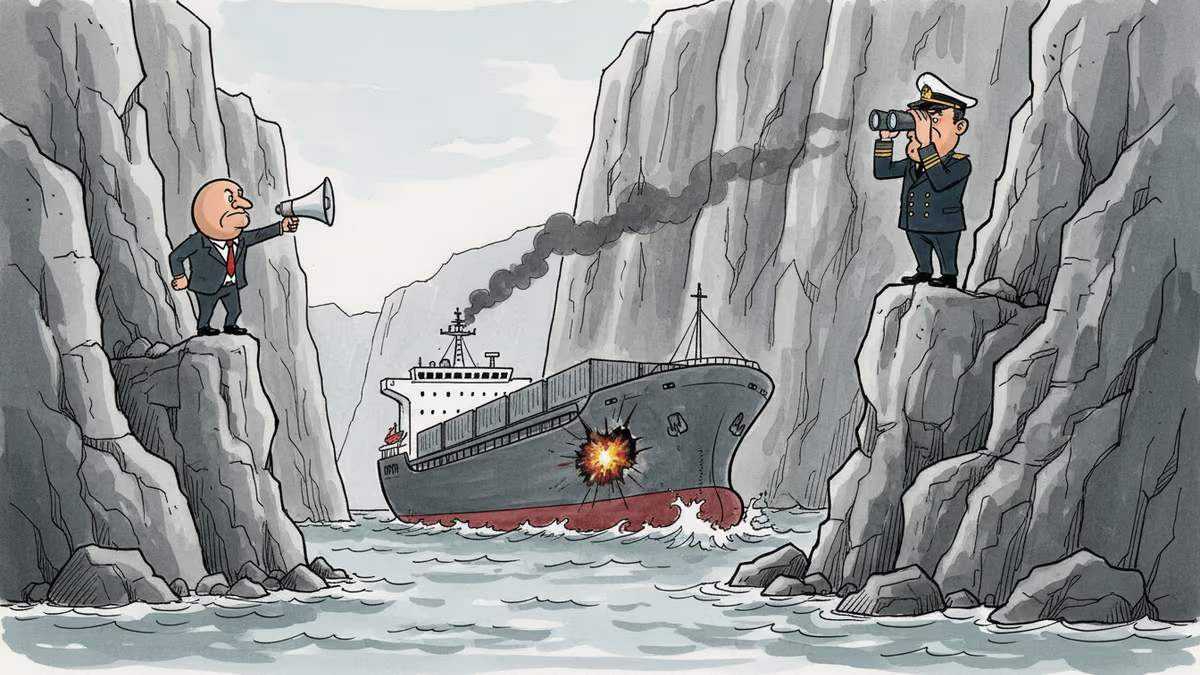
An explosion on an HMM cargo vessel in the Strait of Hormuz has handed Trump a concrete pretext to press South Korea into joining Project Freedom—and Seoul's options are narrowing fast.
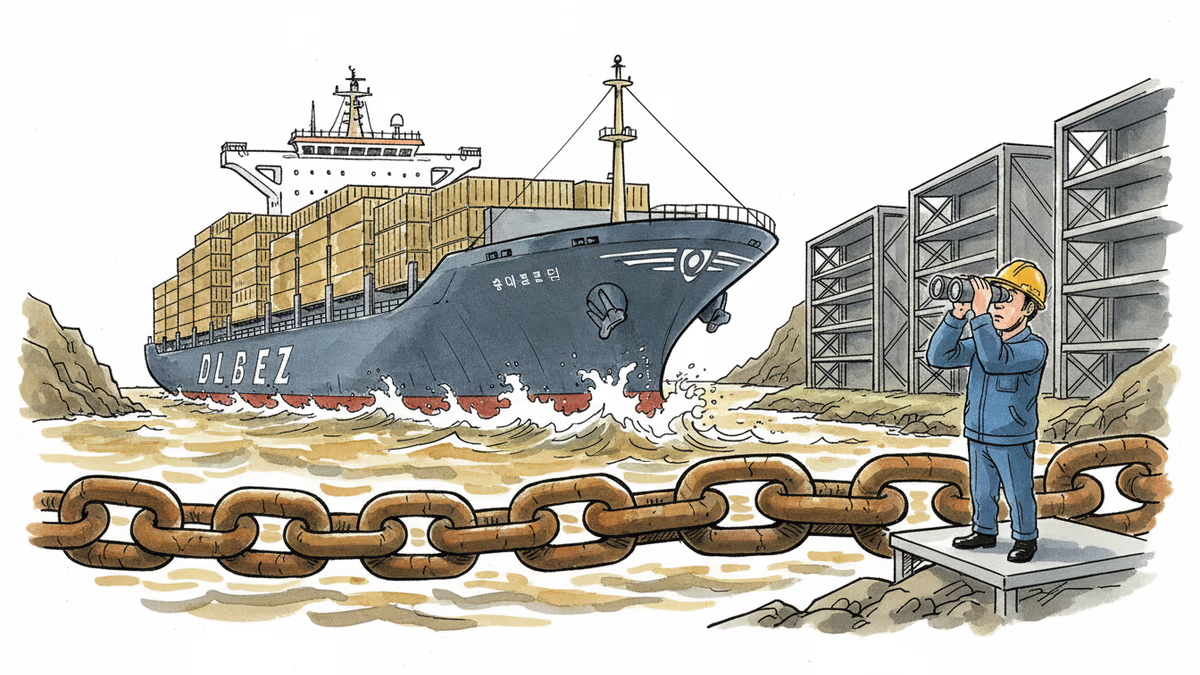
The Israeli-U.S. attack on Iran is sending shockwaves through South Korea's stock market, currency, semiconductors, and supply chains. Here's why geography no longer insulates any economy.
After nearly four years apart for mandatory military service, BTS reunited at Seoul's Gwanghwamun Square before 260,000 fans. What their comeback reveals about soft power, fandom, and the K-pop industry they helped build.
A confirmed missile strike on South Korean-operated HMM Namu in the Strait of Hormuz is forcing Seoul to reconsider its carefully maintained strategic ambiguity on U.S.-led maritime security operations.
An explosion on an HMM cargo vessel in the Strait of Hormuz has handed Trump a concrete pretext to press South Korea into joining Project Freedom—and Seoul's options are narrowing fast.
The Israeli-U.S. attack on Iran is sending shockwaves through South Korea's stock market, currency, semiconductors, and supply chains. Here's why geography no longer insulates any economy.
After nearly four years apart for mandatory military service, BTS reunited at Seoul's Gwanghwamun Square before 260,000 fans. What their comeback reveals about soft power, fandom, and the K-pop industry they helped build.
Thoughts
Share your thoughts on this article
Sign in to join the conversation