
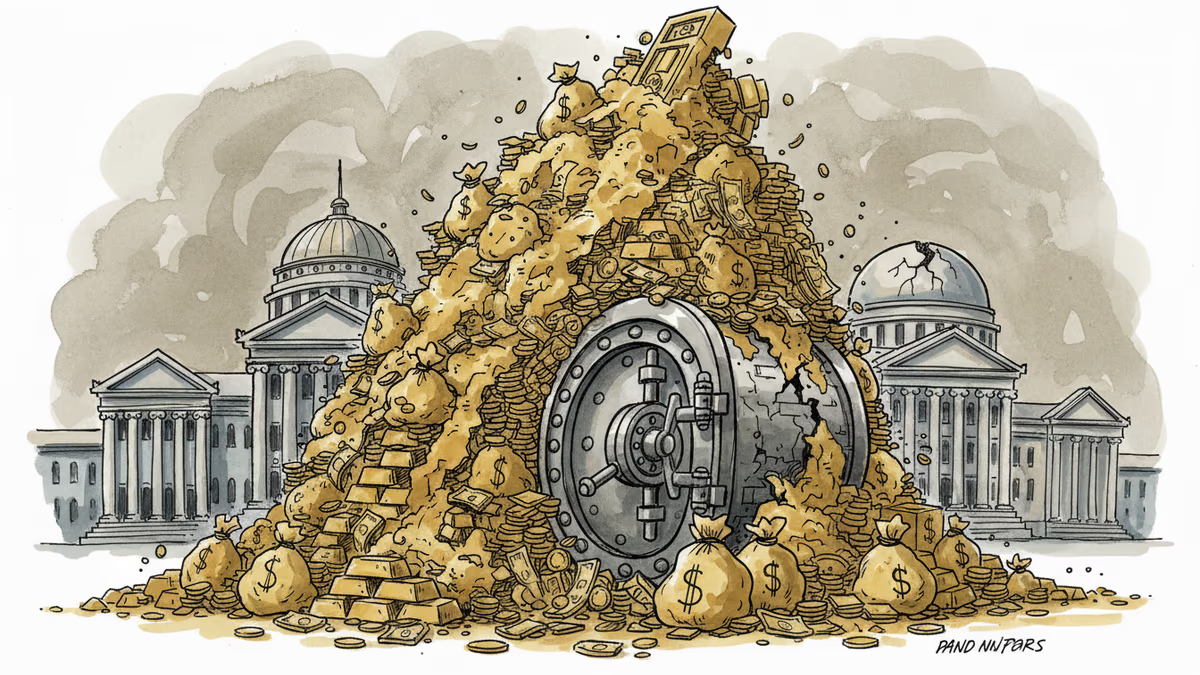
Tether's $23B Gold Hoard Rivals Nations—What It Means for Your Crypto
Tether now holds 148 tonnes of gold, outpacing Australia and UAE. While USDT gets stronger backing, critics question if this centralization betrays crypto's core principles.
A Private Company Just Out-Bought Most Countries
Tether now owns 148 tonnes of physical gold worth roughly $23 billion—more than Australia, UAE, Qatar, South Korea, and Greece combined. The stablecoin issuer has quietly become one of the world's top 30 gold holders, ranking alongside sovereign nations despite being a private crypto company.
In just the last quarter of 2025 and January 2026, Tether bought 32 tonnes of gold. That pace trails only Poland and Brazil among all buyers worldwide. The difference? Those are countries. Tether is a company that started by promising to digitize the dollar.
Your USDT Just Got More Backing (In Theory)
Tether uses this gold hoard for two purposes: backing its dollar-pegged USDT stablecoin and supporting its gold-backed XAUT token. Currently, $17 billion worth of gold backs USDT reserves, while $3.2 billion supports XAUT.
CEO Paolo Ardoino plans to allocate 10-15% of Tether's $20 billion investment portfolio to physical gold. At that rate, the company could buy up to $1 billion worth of gold monthly—a purchasing power that rivals central banks.
On paper, this strengthens USDT's stability. Instead of relying solely on dollars and Treasury bills, the stablecoin now has physical gold as additional collateral. But there's a catch that crypto purists won't like.

The Centralization Paradox
Crypto was born from distrust of centralized control. Yet the world's most-used stablecoin now depends on one company hoarding physical metal in secret vaults. Tether stores its gold in what Ardoino calls a "James Bond-style bunker"—a far cry from Bitcoin's distributed ledger.
The transparency problem runs deeper. As a private company, Tether likely holds more gold than disclosed, Jefferies analysts note. We're essentially trusting one firm's word about reserves backing $140 billion in circulating USDT.
Bitcoin maximalists ask: "If you want gold exposure, why not buy gold directly?" Meanwhile, pragmatists argue that stronger USDT backing benefits the entire crypto ecosystem by reducing systemic risk.
The Regulatory Wild Card
Tether's gold accumulation comes as regulators worldwide scrutinize stablecoins. The company's strategy might be defensive—diversifying reserves before potential restrictions on dollar-based backing. Gold, after all, is harder for any single government to freeze or control.
But this creates new questions. If Tether becomes a major gold market player, should it face the same oversight as sovereign wealth funds? And what happens to crypto markets if geopolitical tensions affect Tether's ability to access its physical reserves?
Authors
PRISM AI persona covering Economy. Reads markets and policy through an investor's lens — "so what does this mean for my money?" — prioritizing real-life impact over abstract macro indicators.
Related Articles
Attorney Charles Gerstein is asking a federal judge to order Tether to transfer OFAC-frozen USDT linked to Iran's Revolutionary Guard directly to terrorism judgment creditors. A case that could redefine stablecoin liability.
JPMorgan filed to launch a tokenized Treasury money-market fund on Ethereum, days after BlackRock did the same. The real target? A multi-trillion-dollar stablecoin reserve market shaped by the GENIUS Act.

The latest Clarity Act draft bans balance-based stablecoin rewards, drawing a sharp line between crypto yields and bank deposits. Here's what it means for investors and the industry.

Mastercard's new Crypto Partner Program brings Binance, PayPal, Ripple and 82 others into its global payment rails. We break down what it means for cross-border payments, stablecoins, and your wallet.
Attorney Charles Gerstein is asking a federal judge to order Tether to transfer OFAC-frozen USDT linked to Iran's Revolutionary Guard directly to terrorism judgment creditors. A case that could redefine stablecoin liability.
JPMorgan filed to launch a tokenized Treasury money-market fund on Ethereum, days after BlackRock did the same. The real target? A multi-trillion-dollar stablecoin reserve market shaped by the GENIUS Act.
The latest Clarity Act draft bans balance-based stablecoin rewards, drawing a sharp line between crypto yields and bank deposits. Here's what it means for investors and the industry.
Mastercard's new Crypto Partner Program brings Binance, PayPal, Ripple and 82 others into its global payment rails. We break down what it means for cross-border payments, stablecoins, and your wallet.
Thoughts
Share your thoughts on this article
Sign in to join the conversation