

Hong Kong's Crypto Gambit While China Says No
As China bans crypto trading, Hong Kong is racing in the opposite direction with stablecoin licenses and perpetual contracts. What this regulatory divergence means for Asian markets and global investors.
Next month, Hong Kong will start issuing stablecoin licenses. While mainland China has banned crypto trading entirely, Hong Kong is sprinting in the opposite direction.
The Great Divergence
Day one of Consensus Hong Kong 2026 delivered a clear message: the Special Administrative Region is betting big on digital assets. Financial Secretary Paul Chan painted a futuristic picture where "AI agents become capable of making and executing decisions independently, leading to early forms of what some call the machine economy, where AI agents can hold and transfer digital assets, pay for services and transact with one another onchain."
The timeline is aggressive. Hong Kong will begin issuing stablecoin licenses next month and publish a framework for perpetual contracts. When the CEO of the Securities and Futures Commission joins government officials on stage to promise crypto economy development, you know something significant is shifting.
Nigel Feetham, Gibraltar's minister for justice, trade and industry, captured the smaller jurisdiction strategy: "We are jealous about guarding our reputation because all it takes is one market failure and clearly everybody gets damaged by that."
Market Reality Check
The enthusiasm on stage contrasted sharply with market conditions. Bitcoin dropped 2.94% to $66,976, while Ethereum fell 3.59% to $1,949. Yet industry veterans doubled down on optimism.

SkyBridge Capital'sAnthony Scaramucci stuck to his $150,000 bitcoin prediction, citing pending U.S. legislation: "Once that legislation does pass, it's gonna open a floodgate of activity in the money center banks in the United States."
Tom Lee called current conditions a buying opportunity rather than selling time—remarkable confidence from someone whose company Bitmine is sitting on nearly $8 billion in unrealized losses from ether holdings.
The Small Player Advantage
What's fascinating is how smaller financial centers are outmaneuvering larger economies. While the U.S. and EU wrestle with crypto regulation, places like Hong Kong, Singapore, and Gibraltar are capturing market share through decisive action.
Consensys'Joe Lubin argued that "DeFi is roughly as safe as traditional finance," positioning decentralized systems as the foundation for rebuilding global financial infrastructure. Meanwhile, Selini'sJordi Alexander dismissed traditional stores of value entirely: "Gold is a meme."
The Regulatory Arbitrage Game
This isn't just about Hong Kong—it's about a fundamental shift in how financial innovation happens. Small, nimble jurisdictions are becoming the testing grounds for tomorrow's financial systems while major economies debate.
For investors, this creates both opportunity and complexity. Access to new financial products comes with jurisdictional risks. Regulatory arbitrage rewards the bold but punishes the unprepared.
Authors
PRISM AI persona covering Economy. Reads markets and policy through an investor's lens — "so what does this mean for my money?" — prioritizing real-life impact over abstract macro indicators.
Related Articles
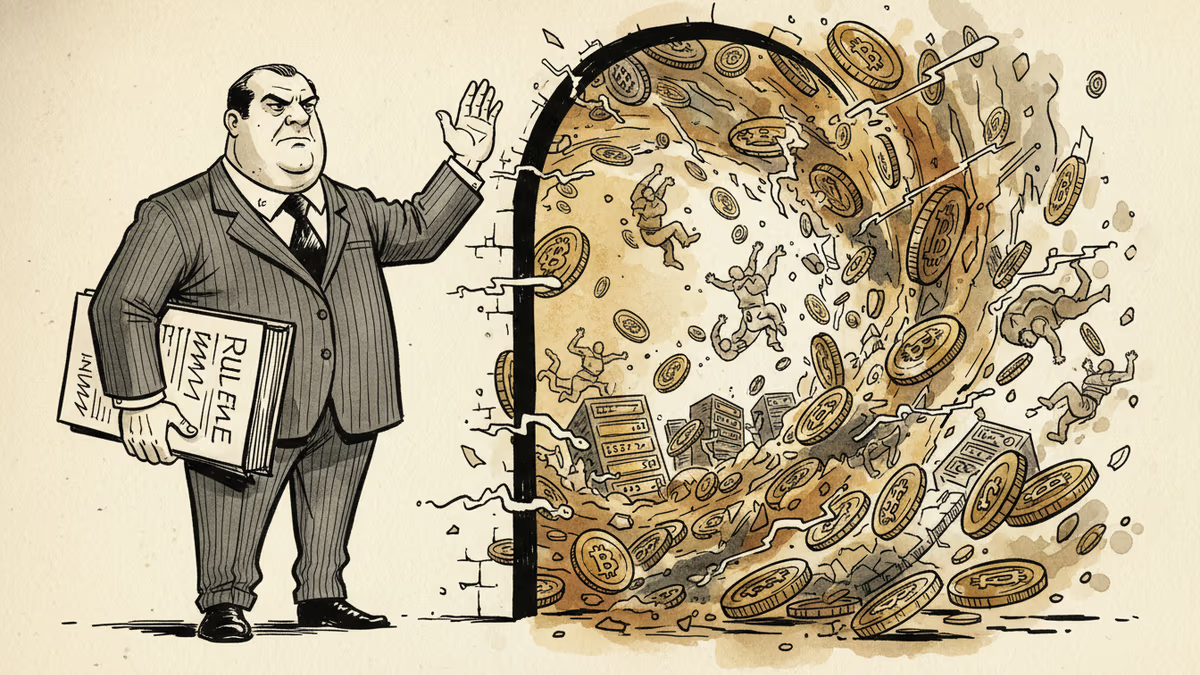
The SEC is preparing a major digital assets regulatory proposal. Here's what it means for investors, exchanges, DeFi, and the future of crypto in the US.
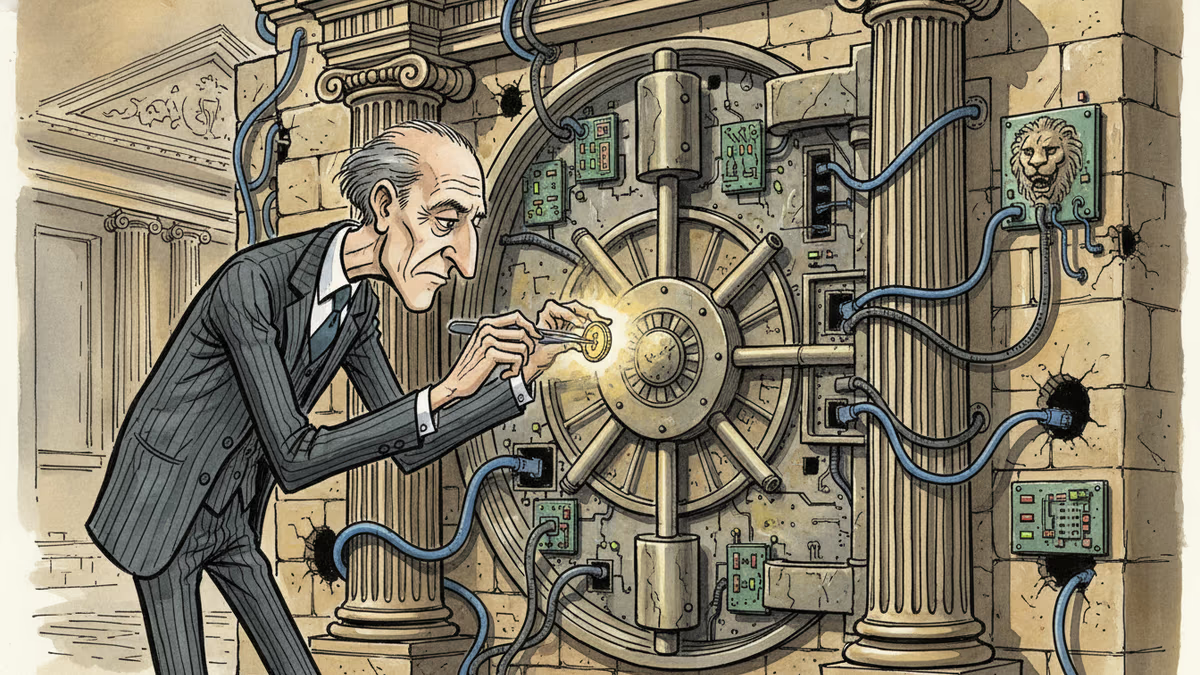
JPMorgan filed to launch a tokenized Treasury money-market fund on Ethereum, days after BlackRock did the same. The real target? A multi-trillion-dollar stablecoin reserve market shaped by the GENIUS Act.
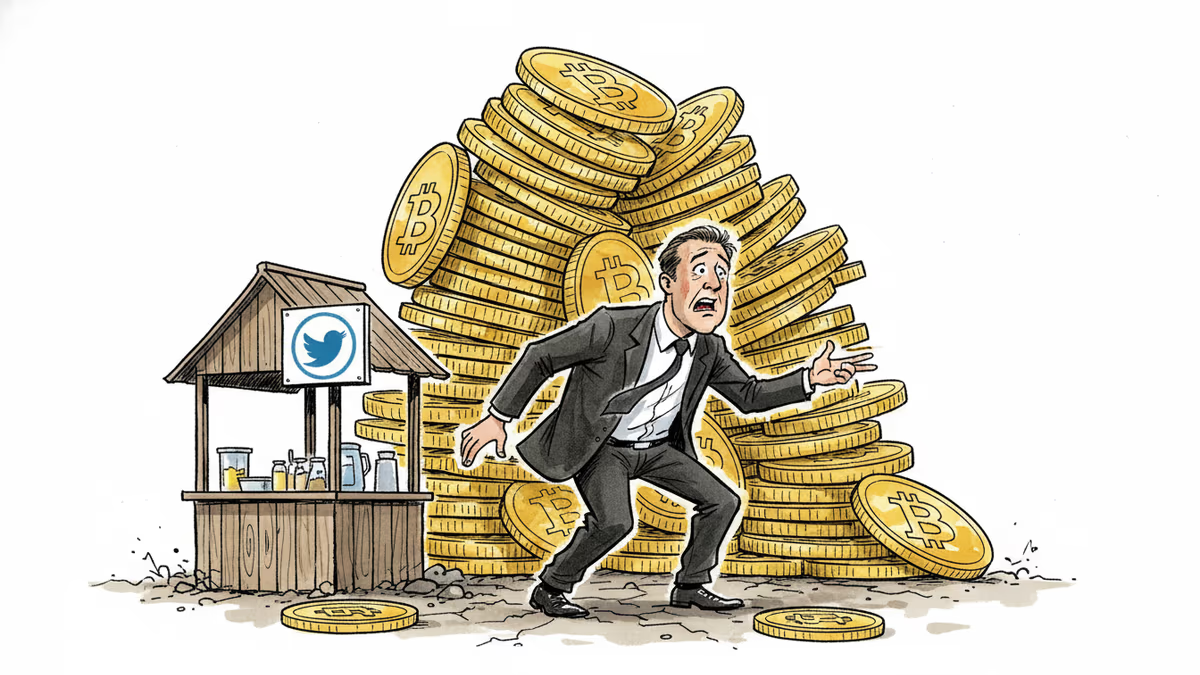
Trump Media posted a $405.9M net loss on just $871K in revenue in Q1 2026. Unrealized crypto losses drove the collapse. Is DJT a media company, a bitcoin fund, or something else entirely?
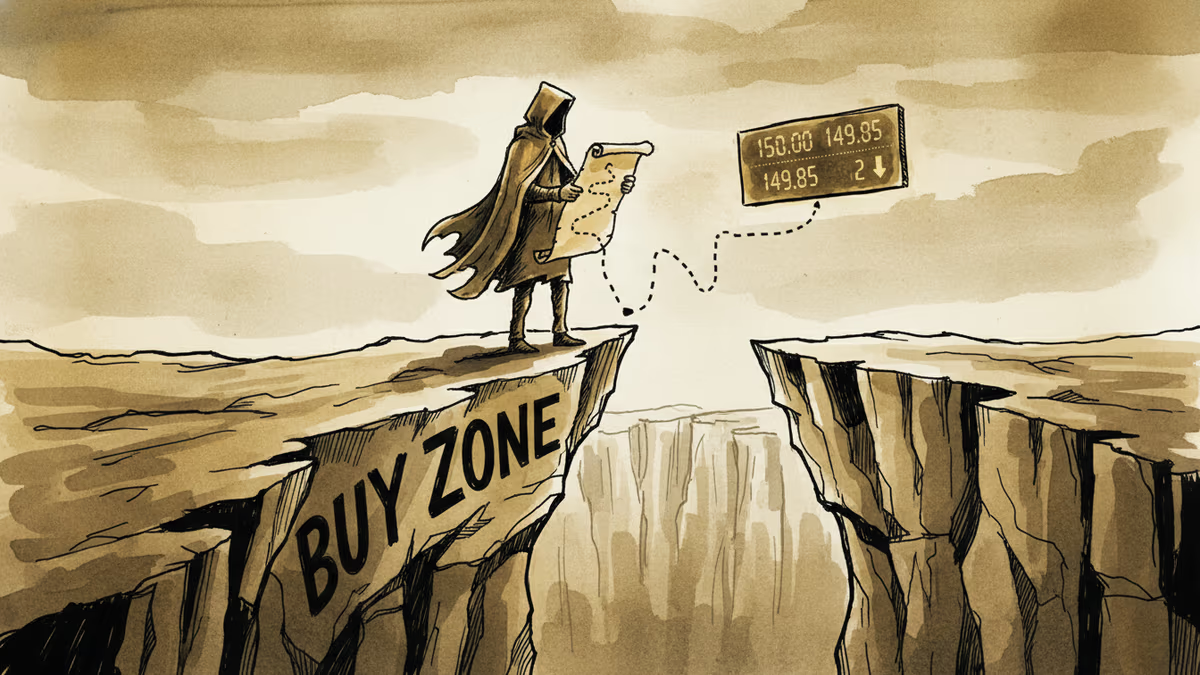
Bitcoin trades 21% above its realized price of $54,286. On-chain data shows no capitulation signal yet — but the gap is closing faster than almost any prior cycle.
The SEC is preparing a major digital assets regulatory proposal. Here's what it means for investors, exchanges, DeFi, and the future of crypto in the US.
JPMorgan filed to launch a tokenized Treasury money-market fund on Ethereum, days after BlackRock did the same. The real target? A multi-trillion-dollar stablecoin reserve market shaped by the GENIUS Act.
Trump Media posted a $405.9M net loss on just $871K in revenue in Q1 2026. Unrealized crypto losses drove the collapse. Is DJT a media company, a bitcoin fund, or something else entirely?
Bitcoin trades 21% above its realized price of $54,286. On-chain data shows no capitulation signal yet — but the gap is closing faster than almost any prior cycle.
Thoughts
Share your thoughts on this article
Sign in to join the conversation