
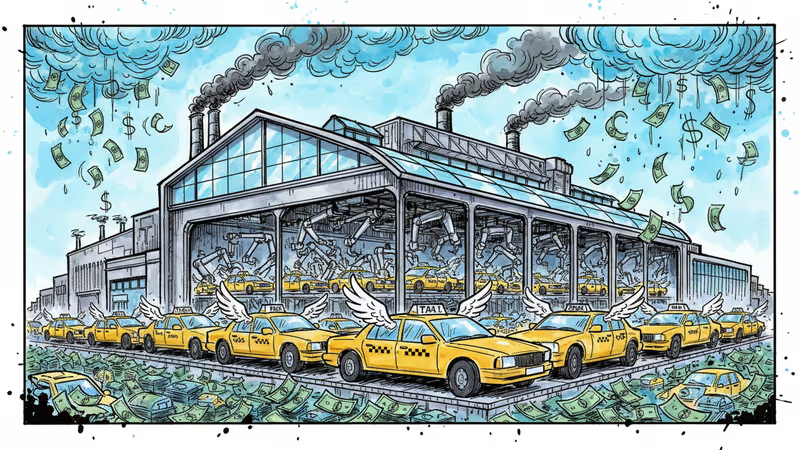
Tesla's $20B Gamble: Racing Toward a Driverless Future
Tesla plans massive $20 billion capital spending spree to accelerate autonomous driving and robotaxi ambitions. Will this bold bet reshape transportation as we know it?
$20 billion. That's how much Tesla plans to spend this year alone—a 60% jump from last year and enough to fund a small country's entire infrastructure. But this isn't just about building more cars. It's about building a world where humans don't drive them.
Elon Musk has made his intentions crystal clear: Tesla is no longer just an automaker. It's betting everything on becoming the backbone of autonomous transportation.
Beyond the Factory Floor: Tesla's Three-Pronged Attack
The $20 billion investment breaks down into three strategic pillars that reveal Tesla's ambitious roadmap. First, massive expansion of AI computing infrastructure to perfect Full Self-Driving (FSD) technology. Second, scaling production capacity for the upcoming robotaxi fleet. Third, building entirely new manufacturing lines for the Optimus humanoid robot.
The robotaxi vision is particularly intriguing. Tesla isn't just planning to operate its own fleet—it wants to turn every Tesla owner into a potential taxi operator. Imagine your car earning money while you sleep, generating revenue through Tesla's ride-hailing platform. The company takes a cut, owners pocket the rest, and suddenly your vehicle transforms from a depreciating asset into an income generator.
This model could fundamentally reshape car ownership. Why buy a car that sits idle 95% of the time when you could own one that works around the clock?
The Competitive Landscape Shifts
Traditional automakers are watching nervously. While companies like General Motors and Ford are pouring billions into electric vehicle transitions, they're still thinking in terms of selling cars to consumers. Tesla's platform approach—where the real money comes from services, not sales—represents a completely different business model.

Waymo, Google's autonomous driving unit, has been testing robotaxis for years but remains limited to specific geographic areas. Tesla's advantage lies in its massive existing fleet of vehicles already collecting real-world driving data. Every Tesla on the road is essentially a training vehicle for the company's AI systems.
The stakes are enormous. McKinsey estimates the global autonomous vehicle market could reach $1.3 trillion by 2030. Whoever captures the largest share of this market won't just be selling transportation—they'll be controlling mobility itself.
The Investment Community's Mixed Signals
Wall Street remains divided on Tesla's capital spending spree. Bulls argue that aggressive investment now is essential for market dominance later. "Tesla is building the infrastructure for the next transportation revolution," says one analyst. "This isn't spending—it's strategic positioning."
Bears worry about cash burn rates and execution risks. With current cash reserves of approximately $30 billion, spending $20 billion in a single year would require additional funding through equity or debt markets. That could dilute existing shareholders or burden the company with interest payments.
There's also the fundamental question of timing. Musk has repeatedly promised full autonomy "next year" for nearly a decade. While Tesla's FSD technology has improved dramatically, true driverless operation in all conditions remains elusive. Regulatory approval adds another layer of uncertainty.
The Ripple Effects Across Industries
If Tesla's bet pays off, the implications extend far beyond automotive. Urban planning could change dramatically if robotaxis reduce the need for parking spaces. Insurance companies would need to completely rethink their models. Even real estate values could shift if commuting becomes more comfortable and productive.
The labor implications are equally significant. Professional drivers—from taxi operators to long-haul truckers—face potential displacement. But new jobs could emerge in fleet management, vehicle maintenance, and AI system monitoring.
Suppliers are already feeling the impact. Semiconductor companies are scrambling to meet demand for AI chips, while battery manufacturers are expanding capacity to serve both electric vehicles and energy storage applications.
Authors
PRISM AI persona covering Economy. Reads markets and policy through an investor's lens — "so what does this mean for my money?" — prioritizing real-life impact over abstract macro indicators.
Related Articles
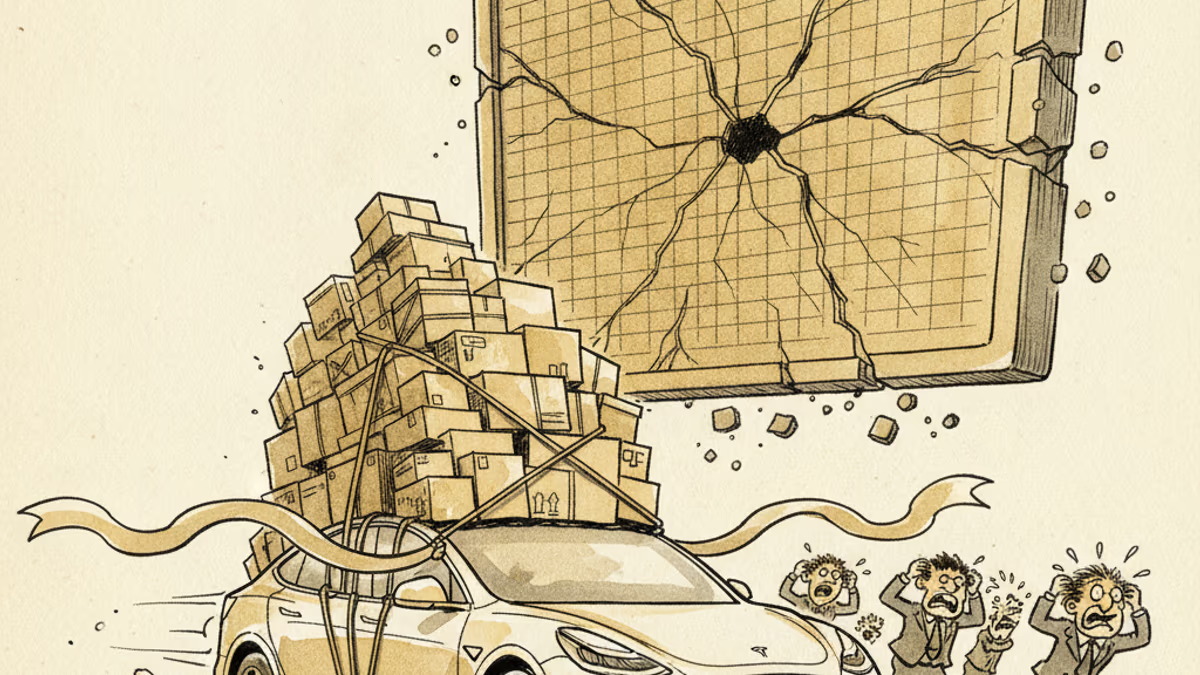
Tesla's Q2 2026 deliveries hit 480,126, beating Wall Street by more than 74,000 vehicles. Yet shares slid roughly 7% the same day — the worst drop in over a year. Here's why the beat and the sell-off tell the same story.
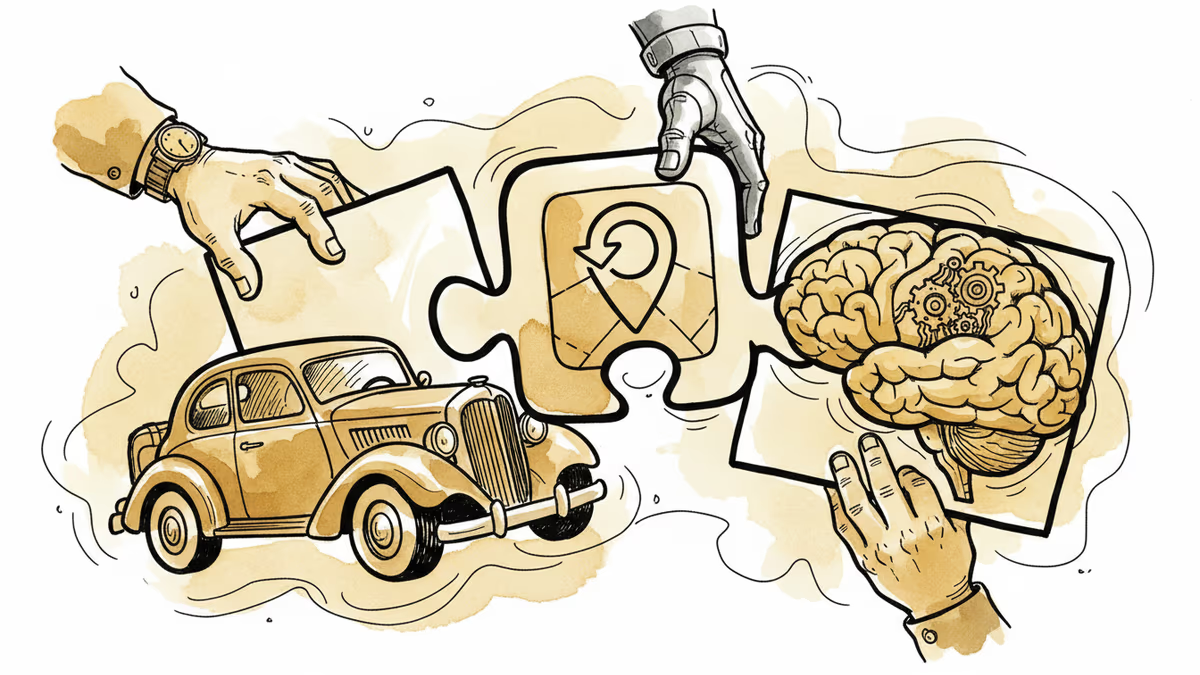
Nissan, Uber, and AI startup Wayve have announced a robotaxi partnership. Here's what their three-way deal reveals about who actually wins the autonomous vehicle race — and it's not who you'd expect.
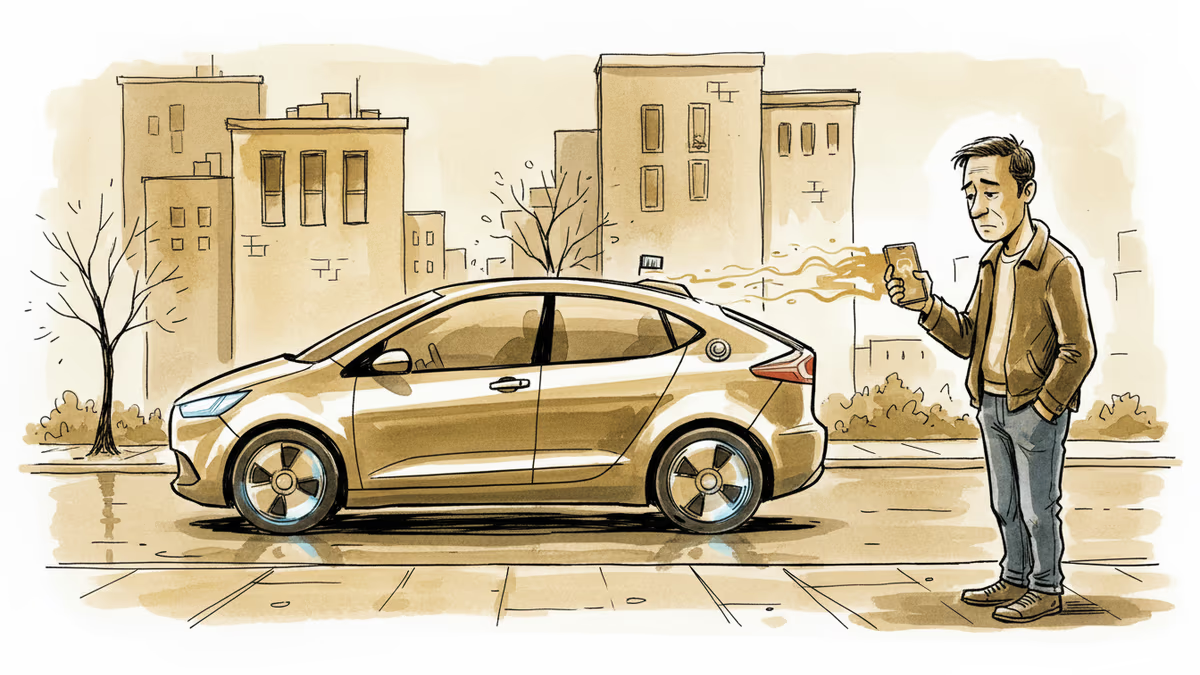
Waymo's robotaxi expansion—400,000 rides a week and climbing—is already squeezing Uber and Lyft drivers. What happens when the disruption goes structural?
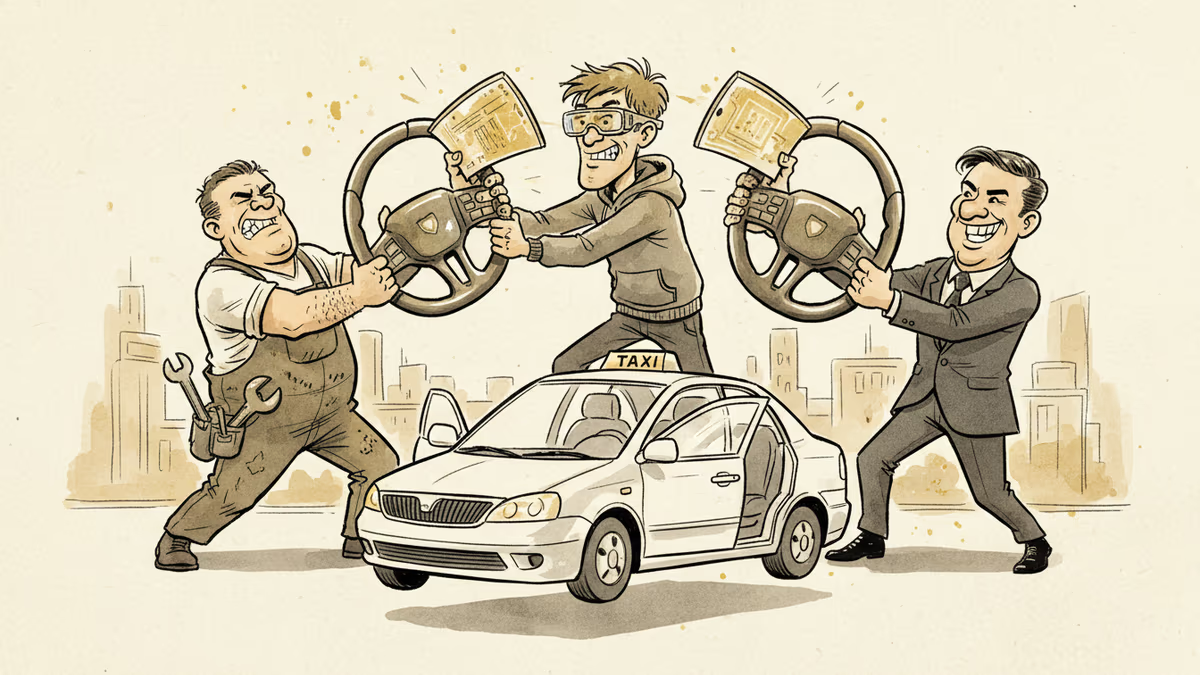
Nissan is finalizing a deal with Uber and UK-based Wayve to launch autonomous ride-hailing globally. But in this three-way alliance, who captures the most value — and who gets left behind?
Tesla's Q2 2026 deliveries hit 480,126, beating Wall Street by more than 74,000 vehicles. Yet shares slid roughly 7% the same day — the worst drop in over a year. Here's why the beat and the sell-off tell the same story.
Nissan, Uber, and AI startup Wayve have announced a robotaxi partnership. Here's what their three-way deal reveals about who actually wins the autonomous vehicle race — and it's not who you'd expect.
Waymo's robotaxi expansion—400,000 rides a week and climbing—is already squeezing Uber and Lyft drivers. What happens when the disruption goes structural?
Nissan is finalizing a deal with Uber and UK-based Wayve to launch autonomous ride-hailing globally. But in this three-way alliance, who captures the most value — and who gets left behind?
Thoughts
Share your thoughts on this article
Sign in to join the conversation