
When Kids Join the March: Where Do We Draw the Line?
Portland's labor solidarity march saw families with strollers and dogs join the protest, sparking debate about children's participation in political demonstrations and the ethics of family activism.
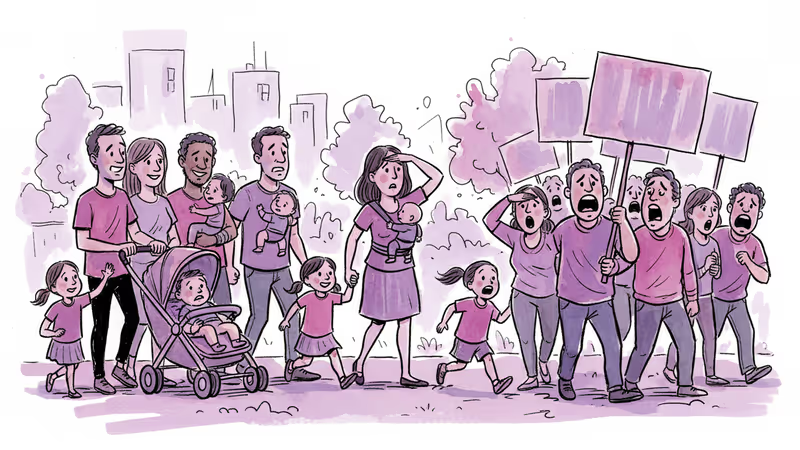
The day after Minneapolis's second general strike, something unusual happened at Portland's solidarity march. Alongside the typical chants of "ICE out of Portland" and "No hate, no fear," there were toddlers in strollers, kids in wagons, and even dogs on leashes. The warmest day Portland had seen in weeks brought out entire families, creating a scene that left City Councilor Mitch Green feeling "a slight twinge of awkwardness."
The discomfort was understandable. While families peacefully demonstrated, some protesters shouted "Fuck ICE" with children just steps away. It's a moment that captures a growing tension in modern activism: when does family participation in protests cross the line?
The New Face of Civic Engagement
This isn't an isolated incident. Across the country, protests and demonstrations increasingly look like community gatherings. From climate strikes to immigration rallies, parents are bringing their children to witness—and participate in—political action. The shift represents a fundamental change in how Americans view civic engagement.
For many families, these events serve as real-world civics lessons. Parents argue their children need to see democracy in action, to understand that change requires participation. "How else will they learn that their voices matter?" asks one parent at the Portland march. It's hands-on education that no classroom can replicate.
The Other Side of the Coin
Critics raise valid concerns. Children may not fully grasp the complex issues they're supporting, potentially becoming unwitting participants in adult political battles. There's also the safety question—protests can turn unpredictable, and crowds can become dangerous quickly.

More philosophically, some argue that bringing children to protests exploits their innocence for political gain. Images of kids holding signs make powerful media moments, but do they represent genuine youth engagement or adult manipulation?
Cultural Battleground
The debate reflects deeper cultural divides about childhood, parenting, and political participation. Conservative critics often frame family protest participation as indoctrination, while progressive supporters see it as empowerment. Both sides claim to protect children's best interests.
Internationally, the perspective varies dramatically. In some countries, multi-generational protests are the norm—political engagement is viewed as a family responsibility. In others, strict boundaries separate adult political activity from childhood experiences.
The Generational Factor
Today's protesting parents often grew up during pivotal moments—the Iraq War protests, post-9/11 civil liberties debates, or the 2008 financial crisis. Their approach to activism reflects lessons learned: that political engagement can't wait until adulthood, that democracy requires active participation, not passive observation.
Yet this generation also faces unique challenges. Social media amplifies every moment, turning family decisions into public debates. A photo of a child at a protest can go viral within hours, subjecting families to scrutiny they never anticipated.
Authors
Related Articles
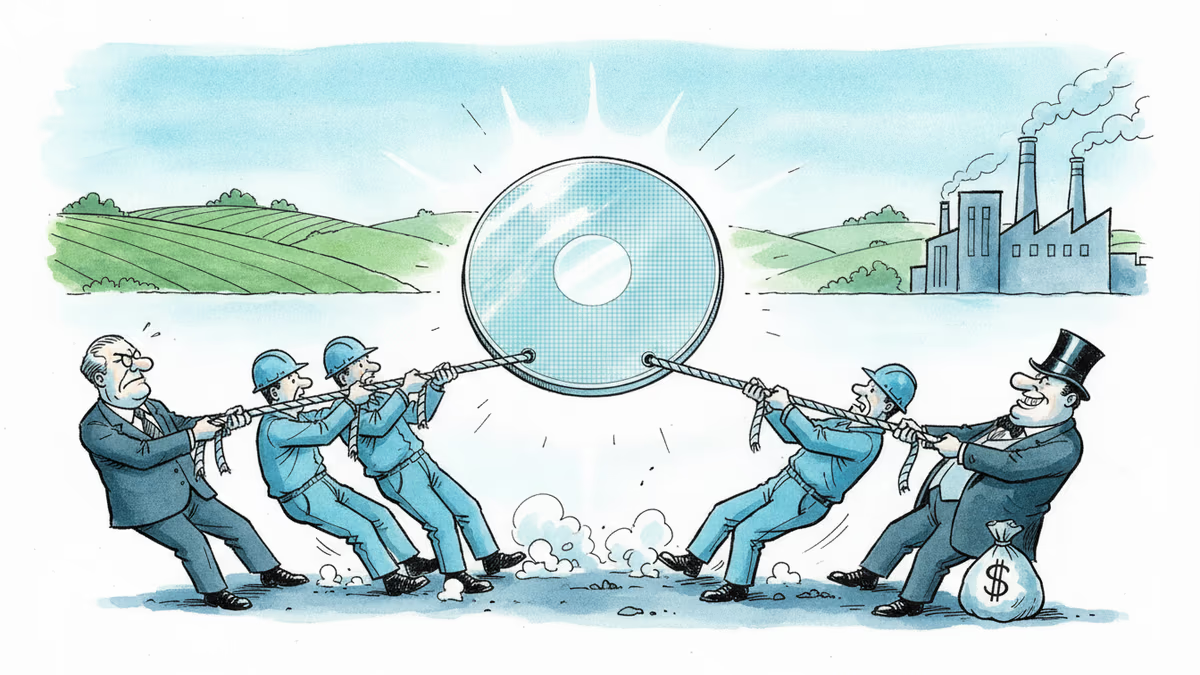
Samsung Electronics' union branch revealed that 84% of survey respondents oppose the government's roughly $290 billion (₩400 trillion) semiconductor megaproject in Gwangju. Government, management, the union and shareholders are all reading the same national project in sharply different ways.
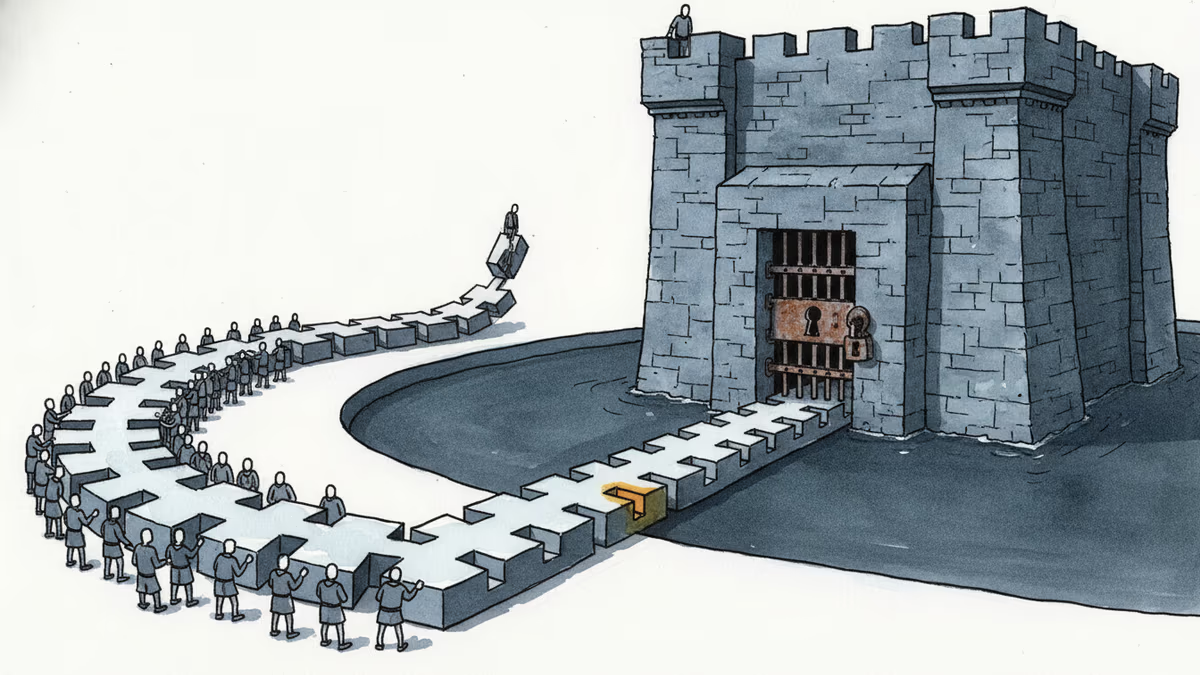
Nvidia shipped roughly a billion RISC-V cores in 2024, then announced it would run CUDA on the open standard. We break down how royalty-free instruction sets and open software stacks are trying to route around CUDA's lock-in. Part 2 of the Semiconductor Sovereignty series.
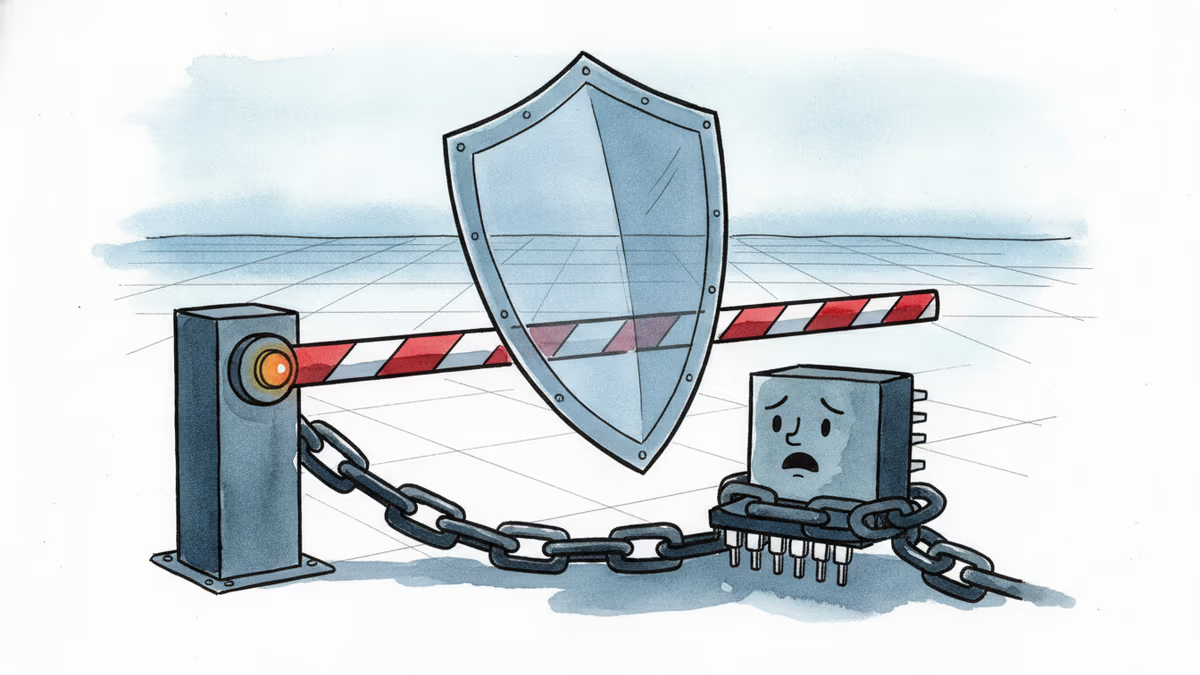
US AI-chip export controls split into three layers in the first half of 2026 — January easing, a May crackdown on circumvention, and a pending bill. Nvidia erased China from its guidance and still posted a record $81.6 billion quarter. A look at the export policy that both shields and cages it.
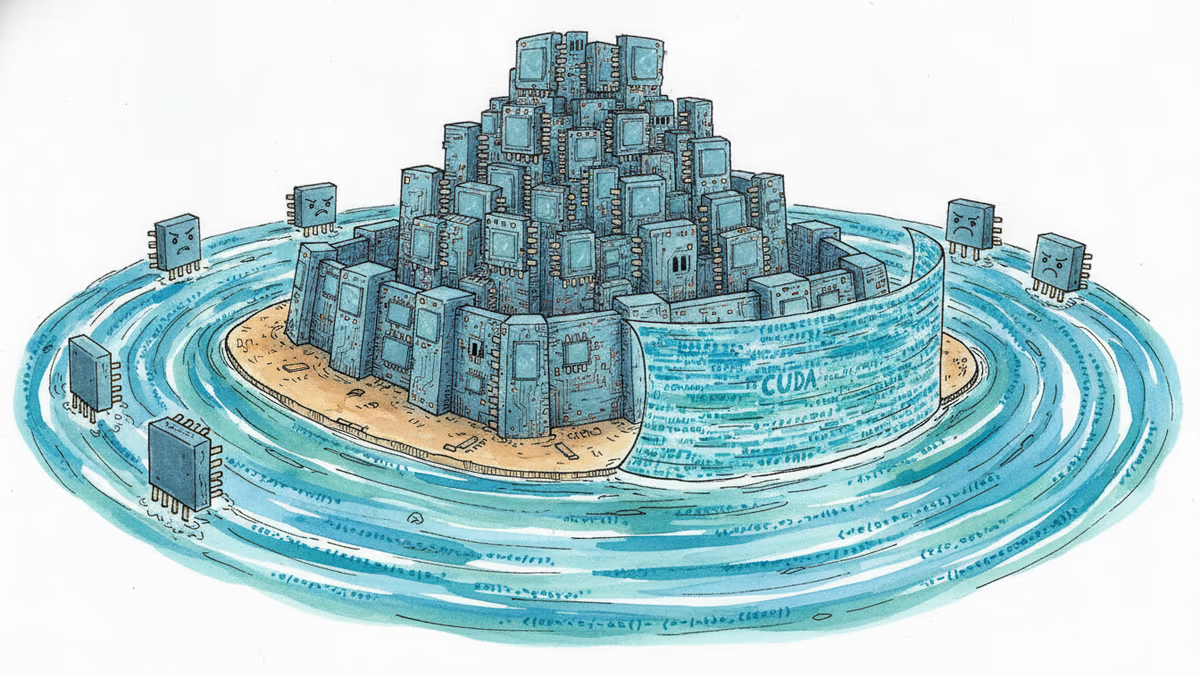
AMD's MI325X matches or beats Nvidia on memory and bandwidth — yet Nvidia's 86-92% share holds. The real moat is CUDA, 20 years in the making. Part 1 of 4.
Samsung Electronics' union branch revealed that 84% of survey respondents oppose the government's roughly $290 billion (₩400 trillion) semiconductor megaproject in Gwangju. Government, management, the union and shareholders are all reading the same national project in sharply different ways.
Nvidia shipped roughly a billion RISC-V cores in 2024, then announced it would run CUDA on the open standard. We break down how royalty-free instruction sets and open software stacks are trying to route around CUDA's lock-in. Part 2 of the Semiconductor Sovereignty series.
US AI-chip export controls split into three layers in the first half of 2026 — January easing, a May crackdown on circumvention, and a pending bill. Nvidia erased China from its guidance and still posted a record $81.6 billion quarter. A look at the export policy that both shields and cages it.
AMD's MI325X matches or beats Nvidia on memory and bandwidth — yet Nvidia's 86-92% share holds. The real moat is CUDA, 20 years in the making. Part 1 of 4.
Thoughts
Share your thoughts on this article
Sign in to join the conversation