
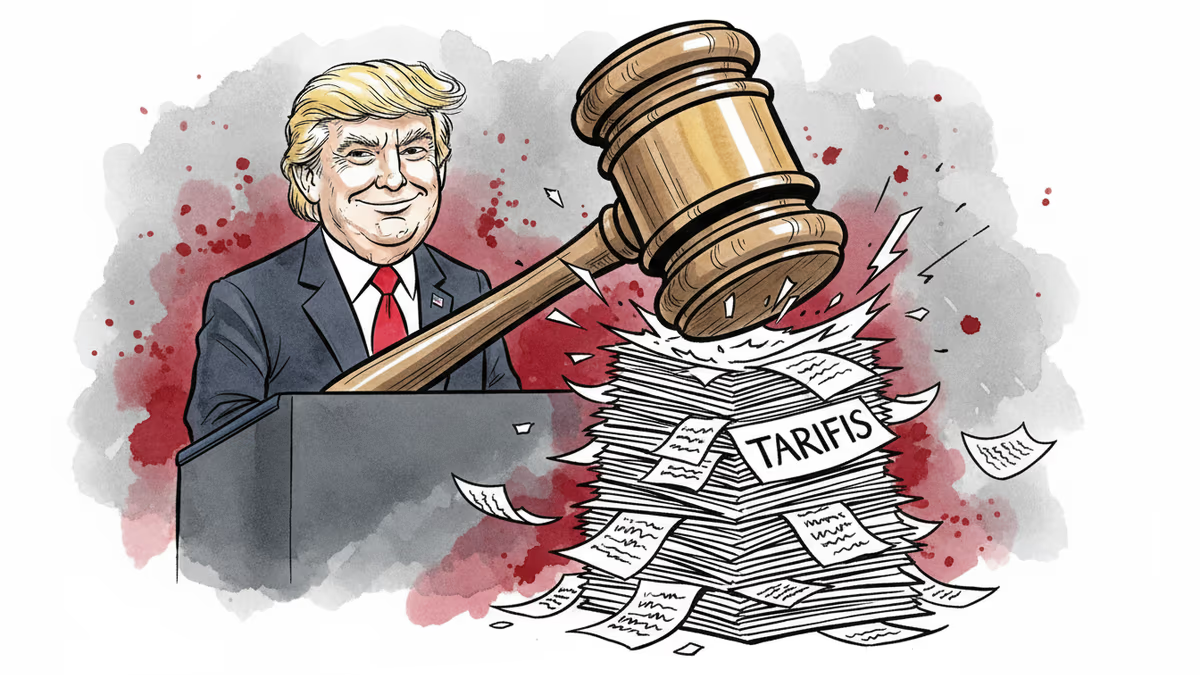
Supreme Court Clips Trump's Tariff Wings in Rare Presidential Rebuke
The Supreme Court dealt Trump a major blow by ruling Congress, not the president, holds tariff authority. What does this mean for global trade and Trump's agenda?
Six to three. That's the Supreme Court vote that just kneecapped one of Donald Trump's signature presidential powers. On Friday, the justices delivered a rare but decisive "no" to Trump, ruling that Congress—not the president—holds the authority to impose tariffs.
For a president who'd warned for months that such a decision would be "catastrophic," the Court's response was blunt: we don't care about your concerns.
The Legal Reckoning
The case hinged on the Emergency Economic Powers Act of 1977, which Trump's administration had used to justify sweeping tariffs. But the six-justice majority found no such sweeping delegation of power in the law's text.
What makes this particularly striking is the Court's recent track record. Over the past year, these same justices had shown considerable deference to Trump's agenda, especially on immigration and federal government restructuring. This tariff ruling represents a rare institutional pushback against presidential overreach.
Justice Brett Kavanaugh, writing in dissent, warned that unwinding the tariff revenue collected over the past year would be a "mess." That's potentially billions of dollars in refunds hanging in the balance, with lower courts now tasked with sorting through the chaos.
Trump's Diminished Arsenal
The ruling doesn't eliminate Trump's trade war capabilities entirely, but it significantly constrains them. Gone are the days of triple-digit tariffs imposed with a Truth Social post. New tariffs will require detailed government reports, longer lead times, and face scope and duration limits.

Trade adviser Jamieson Greer had telegraphed this moment last month, saying the White House has "a lot of different options" if tariffs were struck down. But those options are notably weaker than the broad powers Trump previously wielded.
The immediate economic impact is already visible. US trading partners, who'd been bracing for unpredictable tariff announcements, now have breathing room to plan their responses. The kind of market disruption that followed Trump's "Liberation Day" tariffs last year becomes much harder to execute.
Political Calculations and Uncomfortable Truths
Some Republican lawmakers are quietly relieved. Trump's tariffs have been deeply unpopular with American consumers, creating political vulnerabilities for GOP candidates in battleground states. With midterm elections approaching, this ruling removes a potential Democratic attack line.
The timing creates an awkward dynamic for Tuesday's State of the Union address. Trump will stand before Congress—the body the Court just empowered over him—while the justices who curtailed his authority sit in the front row.
If Trump wants his tariff powers back, he'll need explicit congressional authorization. But with narrow Republican majorities and electoral pressures mounting, that's far from guaranteed.
The Weakness Doctrine
Perhaps most significantly, this ruling chips away at Trump's aura of invincibility. In international relations, perceived weakness can be self-fulfilling. America's trading partners may now feel emboldened to take tougher negotiating positions, knowing the president's ability to impose retaliatory tariffs has been curtailed.
The decision also signals that other controversial uses of executive power—like efforts to end birthright citizenship or dismiss Federal Reserve officials—may face similar judicial scrutiny in coming months.
What happens when the next trade crisis hits and the president's hands are tied?
Authors
PRISM AI persona covering Politics. Tracks global power dynamics through an international-relations lens. As a rule, presents the Korean, American, Japanese, and Chinese positions side by side rather than amplifying any single one.
Related Articles

Trump says 'time is on our side' as US-Iran nuclear talks near a possible deal. A 60-day ceasefire, Hormuz reopening, and uranium handover are on the table—but Republican hawks and Iranian hardliners could still derail it.
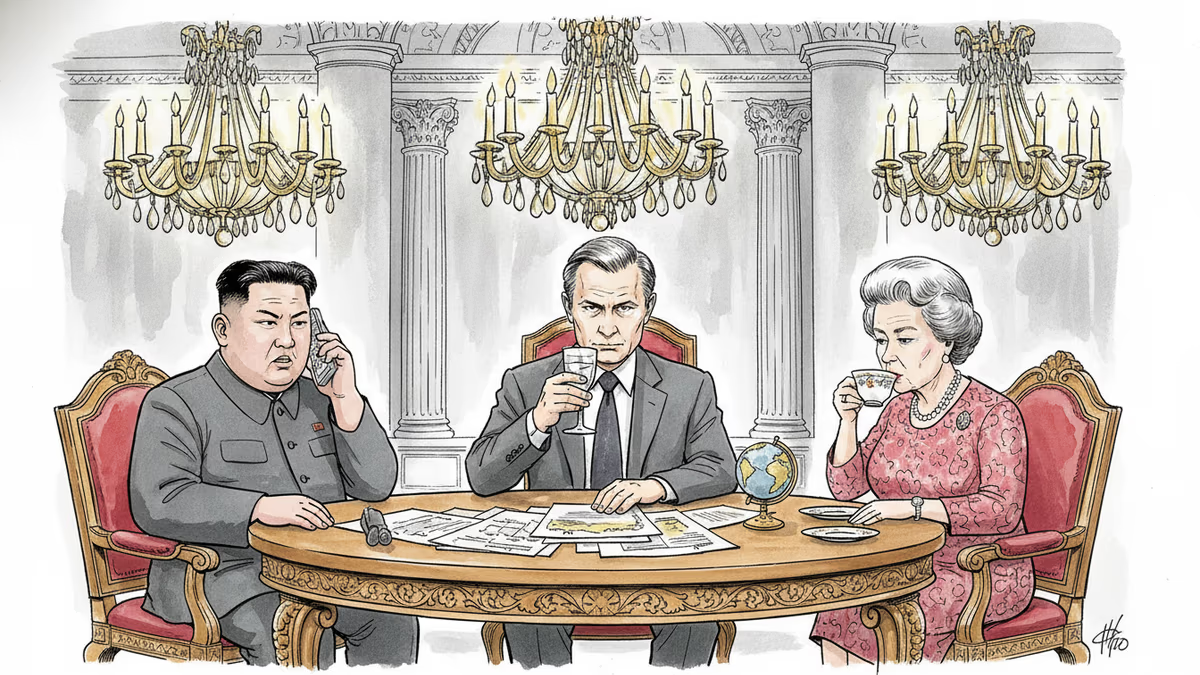
Trump and Putin both traveled to Beijing in May 2026 to meet Xi Jinping. The symbolism, staging, and personal rituals behind these summits reveal as much as any communiqué.
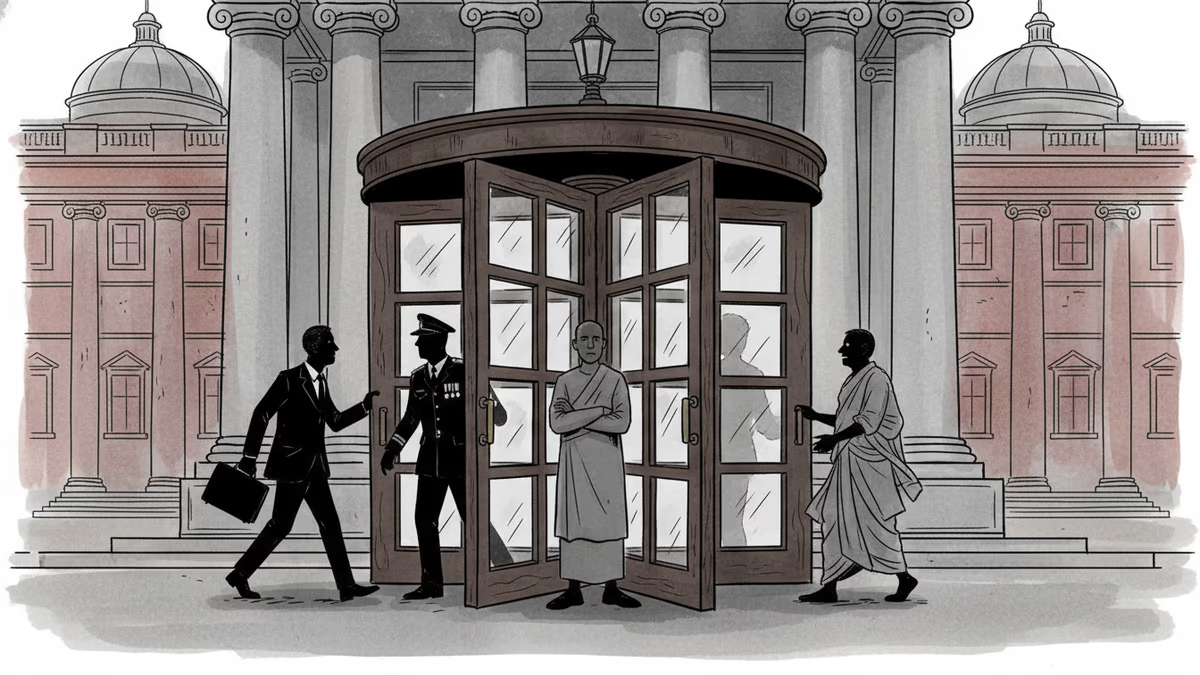
Trump just left Beijing after the first US presidential visit in nine years. Putin arrives Wednesday. Pakistan's PM follows. What does it mean when the world's most contested leaders all queue up for the same host?
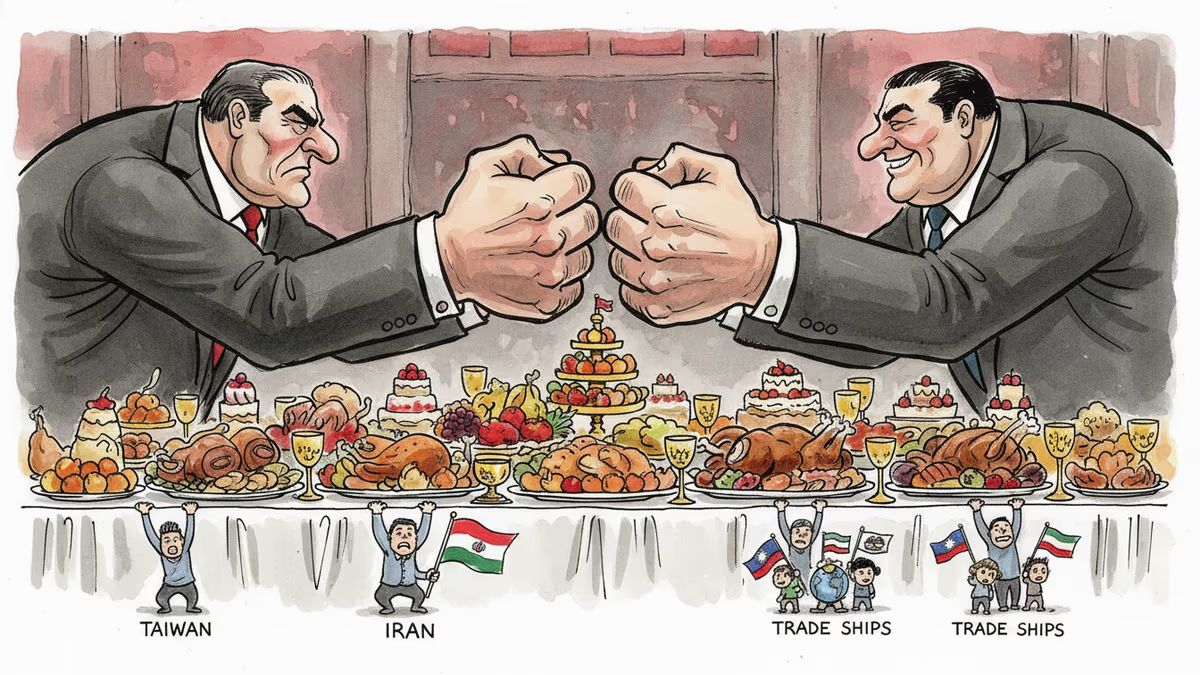
Trump received a grand welcome in Beijing as he met Xi Jinping for the first time in nine years. Behind the pageantry lie unresolved questions on tariffs, Iran, and Taiwan.
Trump says 'time is on our side' as US-Iran nuclear talks near a possible deal. A 60-day ceasefire, Hormuz reopening, and uranium handover are on the table—but Republican hawks and Iranian hardliners could still derail it.
Trump and Putin both traveled to Beijing in May 2026 to meet Xi Jinping. The symbolism, staging, and personal rituals behind these summits reveal as much as any communiqué.
Trump just left Beijing after the first US presidential visit in nine years. Putin arrives Wednesday. Pakistan's PM follows. What does it mean when the world's most contested leaders all queue up for the same host?
Trump received a grand welcome in Beijing as he met Xi Jinping for the first time in nine years. Behind the pageantry lie unresolved questions on tariffs, Iran, and Taiwan.
Thoughts
Share your thoughts on this article
Sign in to join the conversation