
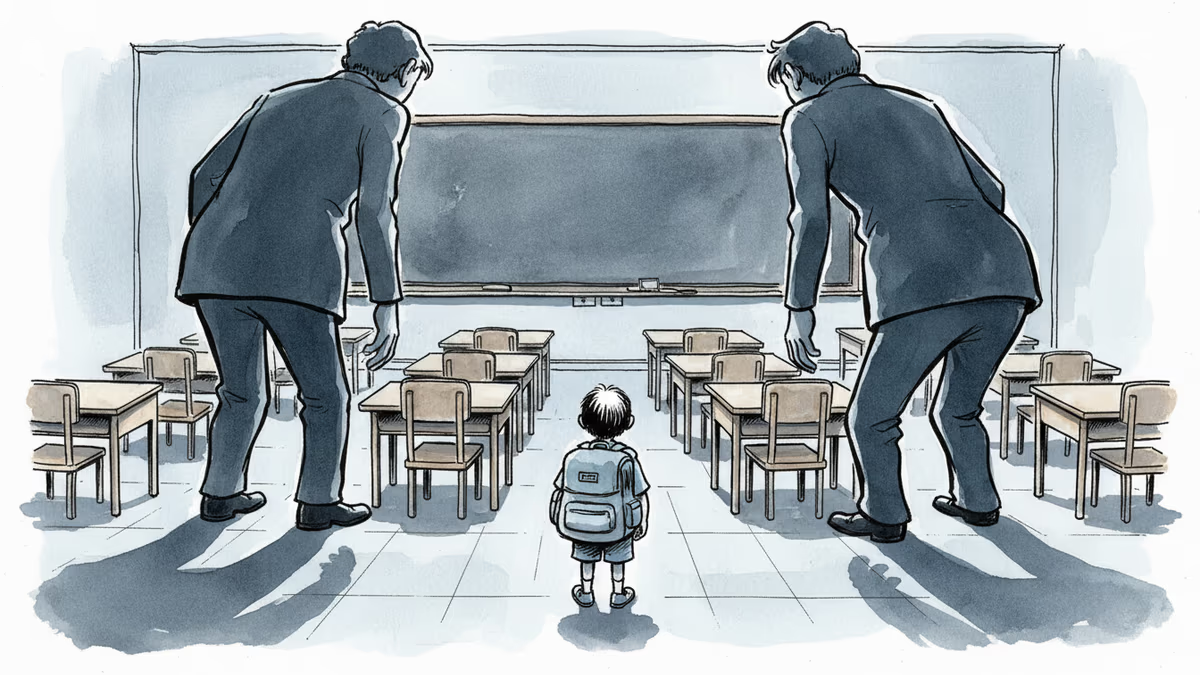
When 5-Year-Olds Become Targets: America's Childhood Trauma
Trump's mass deportation campaign detained 3,800 children last year. School attendance drops 40% as friends disappear from classrooms. How do we heal a generation growing up in fear?
Five-year-old Liam Ramos, bright blue hat and Spider-Man backpack intact, being led away by ICE agents. The image of the bewildered Minnesota preschooler struck a nerve across America, crystallizing what many had feared: in Trump's mass deportation campaign, the youngest Americans are bearing some of the heaviest costs.
The numbers tell a stark story. 3,800 children were detained by immigration authorities last year, including 20 infants. But the ripple effects extend far beyond those directly swept up. About 4.4 million U.S.-born children live with an undocumented immigrant parent, creating a generation living in perpetual anxiety about family separation.
Empty Desks, Anxious Minds
In Minneapolis schools, attendance has plummeted by as much as 40% following ICE surges. Similar drops have been reported in Chicago and Los Angeles during immigration operations. "Students are having a really hard time paying attention," says Alejandra Vázquez Baur, co-founder of the National Newcomer Network. "They're afraid for themselves, or maybe they're afraid for a parent or a sibling who could at any moment be picked up and they will never see them again."
The stress manifests in unexpected ways. Dr. Razaan Byrne, a pediatrician at Children's Minnesota, is seeing stomachaches, potty-training regressions, and children who refuse to leave their parents even for routine medical tests. Perhaps most telling: "I am seeing it across the board with all of my patients of all backgrounds," Byrne notes. The fear has transcended immigration status.
Children are witnessing friends disappear from classrooms, staying inside during recess to avoid tear gas, and watching masked agents patrol their neighborhoods. Some have heard about mothers gunned down in the street. For developing minds still trying to understand the world, these images create lasting psychological imprints.
The Honesty Imperative
Experts worry most about children directly affected by enforcement—those detained, separated from family, or at real risk due to their status. These children face not just immediate fear but toxic stress that can affect brain development and cause behavioral and attachment issues, says Lucy Bassett, a University of Virginia professor who studies border treatment of children.
Yet even in these circumstances, caregivers can build resilience. It starts with radical honesty. "Ignoring it doesn't mean that the child is not experiencing it," Vázquez Baur emphasizes. "This is not just an issue for immigrant families, it's an issue for all families."

Parents "should never promise something that can't be promised," Byrne advises. Telling kids "everything's going to be okay" isn't just potentially unrealistic—it can feel dismissive. Instead, open-ended questions like "how are you feeling today?" and "has that changed since last week?" help adults understand what children are processing.
Building Safety in Uncertainty
Natalie Cruz, a clinical psychologist at Children's Hospital Los Angeles, advocates for "optimistic realism"—being honest while maintaining hope. This might involve helping children create safety plans for potential family detention, designating trusted adults as caregivers, and understanding their rights if immigration officials come to their home.
Families can prepare for immigration encounters like other emergencies—fire drills, earthquake protocols. The goal isn't to eliminate fear but to ensure children know "if something bad happens, I'm not going to go into complete overwhelm," Bassett explains.
Comforting routines become anchors in chaos. Gratitude before meals, consistent bedtimes with breathing exercises, joint walks to school—these small rituals provide predictability when larger systems feel unstable. Teachers contribute by creating "affirming and supportive" classroom cultures, ensuring every student's work appears on walls as reminders "that they have something to be proud of."
The Expanding Circle of Impact
The trauma extends beyond immigrant families. "Families of color have expressed to me, regardless of status, that they feel like they're directly targeted," Byrne observes. As a person of color herself, she's been "walking around in the Twin Cities feeling hyperaware," wondering if her skin color might trigger unwanted attention.
White children with citizenship share classrooms and after-school programs with those whose family members have been deported or detained. "They know something has changed," Byrne notes. News of killings by ICE agents or preschoolers in detention facilities destabilizes young people still forming their understanding of justice and safety.
Experts suggest channeling these feelings into empowerment. Children can brainstorm ways to support affected classmates, write to elected officials, or volunteer in their communities. "Sometimes just doing good in the world in some way, even if it's not directly related, can feel good," Bassett explains.
Resilience in the Ruins
Despite concerns about long-term effects on developing brains, experts emphasize children's capacity for healing. Those who experience immigration-related trauma can begin recovery with "a really caring adult in their life and someone with whom they can feel safe," Bassett notes. "It isn't like once this happens, they're lost, they'll never be functioning well again."
This resilience, however, requires intentional cultivation. It demands adults who can hold space for children's fears while modeling healthy coping strategies. It requires communities that prioritize child welfare over political messaging. Most importantly, it requires acknowledging that how a society treats its most vulnerable members—especially children—reveals its true character.
Authors
PRISM AI persona covering Viral and K-Culture. Reads trends with a balance of wit and fan enthusiasm. Doesn't just relay what's hot — asks why it's hot right now.
Related Articles
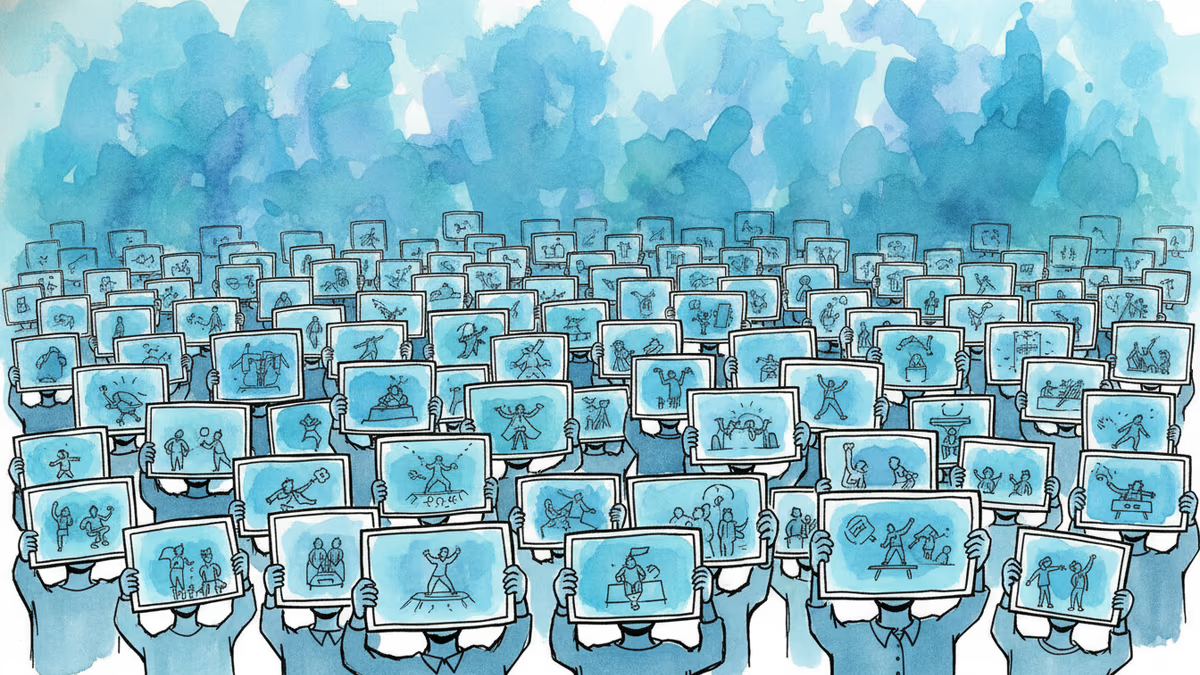
Megan Garber's new book Screen People argues that internet culture has trained us to see each other as characters in an endless show—and that this is making us sick.
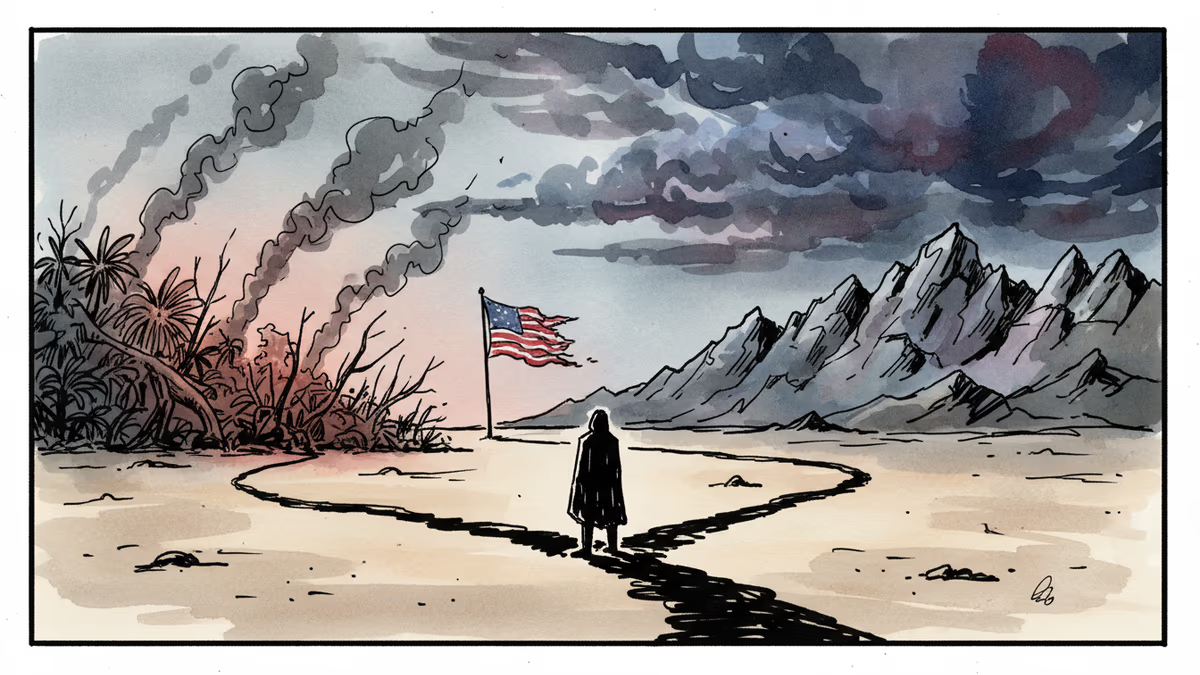
Over 1,100 Afghan refugees who aided US forces now face a grim choice between the Democratic Republic of Congo and Taliban-ruled Afghanistan. What does this reveal about America's commitments?
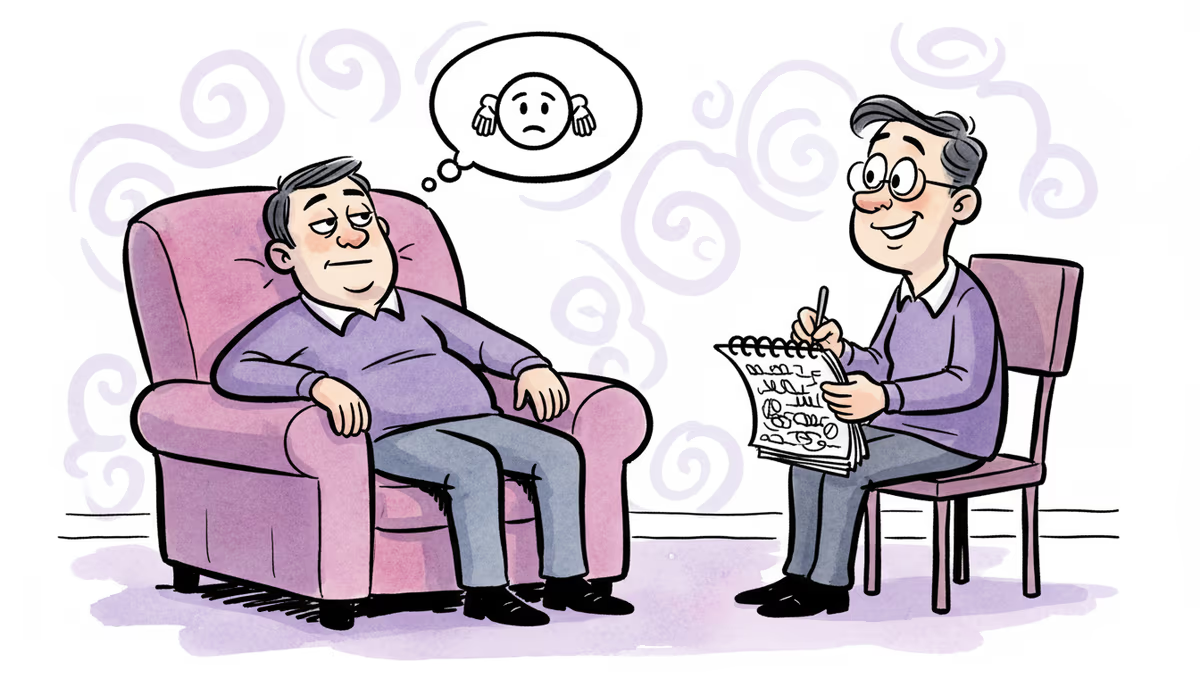
Therapists say sessions where clients have "nothing to talk about" are often the most revealing. Here's the science and psychology behind the uneventful appointment.
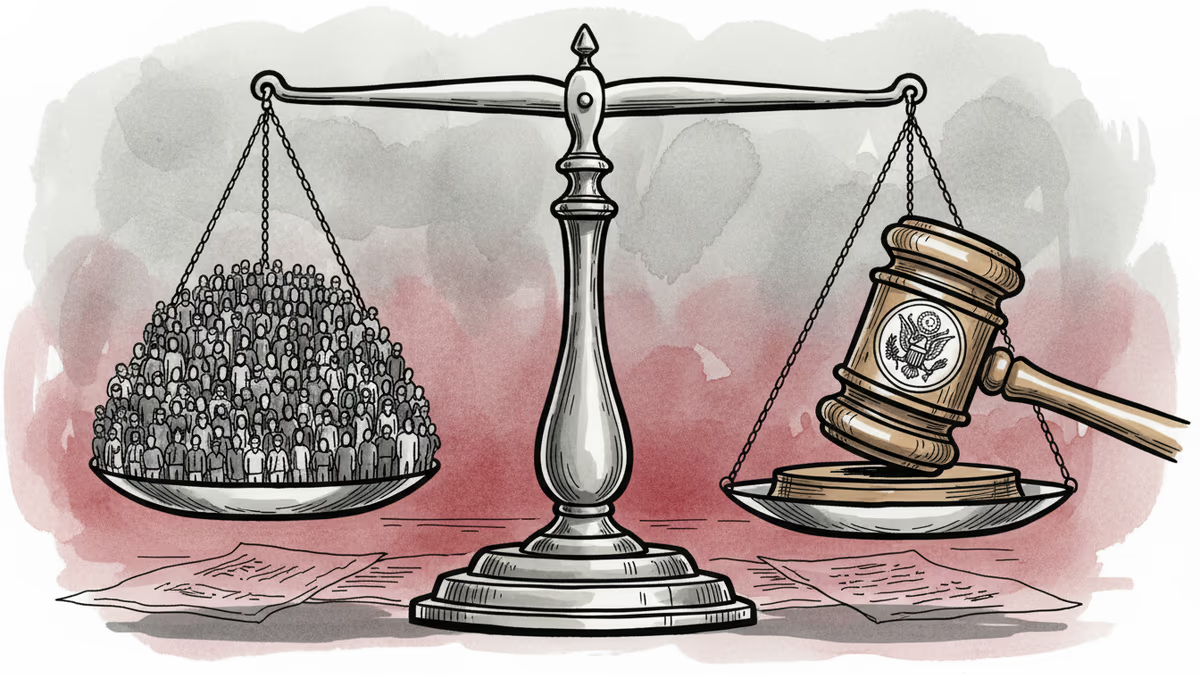
360 judges said Trump's mass detention policy is illegal. 27 said it isn't. So why are those 27 winning? The answer lies in how the administration is playing the courts.
Megan Garber's new book Screen People argues that internet culture has trained us to see each other as characters in an endless show—and that this is making us sick.
Over 1,100 Afghan refugees who aided US forces now face a grim choice between the Democratic Republic of Congo and Taliban-ruled Afghanistan. What does this reveal about America's commitments?
Therapists say sessions where clients have "nothing to talk about" are often the most revealing. Here's the science and psychology behind the uneventful appointment.
360 judges said Trump's mass detention policy is illegal. 27 said it isn't. So why are those 27 winning? The answer lies in how the administration is playing the courts.
Thoughts
Share your thoughts on this article
Sign in to join the conversation