
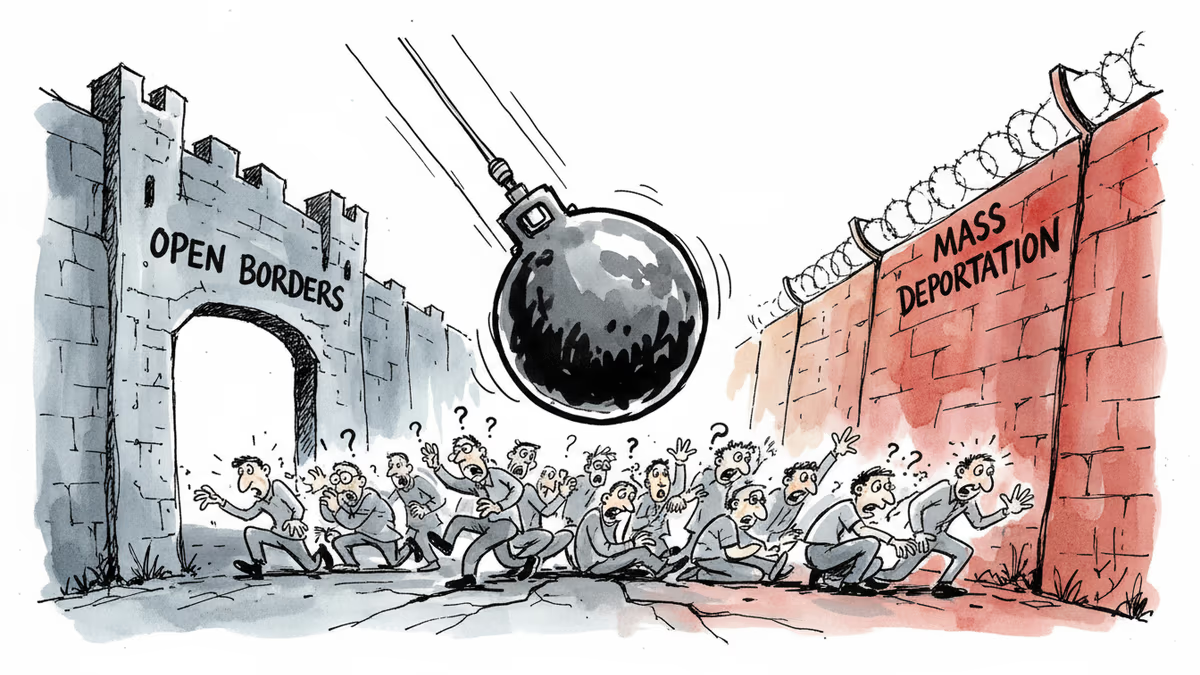
How Democracies Breed Their Own Extremists
A 25-year immigration reporter reveals how moderate policy failures create the conditions for authoritarianism. Why the center cannot hold when it fails to address real concerns.
In 2020, 77% of Americans called immigration a good thing for the country. Four years later, a majority wanted less immigration and elected Donald Trump promising the biggest mass deportation in U.S. history. What happened in between reveals a troubling pattern about how democracies can manufacture their own extremism.
David Frum's 2019 warning now seems prophetic: "If liberals won't enforce borders, fascists will." A reporter who has covered immigration for 25 years offers five uncomfortable truths about why moderate politics failed—and what it means for democratic stability everywhere.
When the Center Cannot Hold
The Biden administration lost control of the southern border. Record surges of unlawful entries followed, and voters grew angry. By 2024, "too many immigrants crossed the border" was nearly tied as the top reason voters rejected Kamala Harris.
The response has been extreme. The Trump administration deployed aggressive masked officers onto American streets. They've detained, pepper-sprayed, assaulted, shot, and killed Americans. High-ranking officials have repeatedly lied about events captured on citizen video.
A majority now disapproves of Trump's immigration handling. But this cycle—where voters hate how both parties handle immigration and ping-pong unhappily between them—isn't likely to end with the next election.
The Reality Between Extremes
After 25 years covering this issue, the reporter identifies five basic truths that lawmakers must acknowledge:
First, even Americans who say they want to deport all illegal immigrants wouldn't stand by that position in practice. Just as conservatives oppose deploying thousands of masked IRS agents for house-to-house tax enforcement, most would balk at the reality of comprehensive deportation operations.

Second, 83% of Americans favor deporting unauthorized immigrants convicted of violent crimes—including 79% of Democrats. This represents clear social consensus, yet some Democrat-controlled jurisdictions resist cooperation with deportations.
Third, refugee crises will happen. Wars, natural disasters, regime collapses are predictable features of the future. Without prior planning, each crisis triggers the same dysfunctional cycle.
Fourth, deportation and demonization are different things. In 1980, George H.W. Bush called unauthorized immigrants "honorable, decent, family-loving people" who happened to violate the law. Today, despite lower crime rates, entire ethnic groups are scapegoated for citizens' struggles.
Fifth, every high-immigration country has citizens who fear immigration. These psychological predispositions may be somewhat innate. The question is whether societies accommodate these fears constructively or destructively.
The Psychology of Backlash
Karen Stenner's research on authoritarian dynamics offers crucial insights. People with latent authoritarian predispositions get triggered by uncontrolled diversity. Instead of framing immigration as celebrating multicultural difference, she suggests emphasizing how immigrants are "just like us"—people seeking safety, opportunity, and better futures for their families.
Practical assimilationist policies help too: English fluency assistance, predictable immigration limits rather than unlimited flows that feel chaotic. When people feel reassured about "established brakes on the pace of change" and "settled rules of the game," even conservatives can rally behind pluralism.
Without such reassurance, insisting on unconstrained diversity "pushes those by nature least equipped to live comfortably in a liberal democracy not to the limits of their tolerance, but to their intolerant extremes."
The Global Pattern
This dynamic isn't uniquely American. Across democracies, moderate politicians who fail to address genuine public concerns about immigration create space for extremists. The pattern repeats: mainstream parties ignore voter preferences, fringe factions force extremist positions, majorities grow frustrated with all politics.
The result threatens democracy itself. When endless political failures cause people to lose faith in democratic governance, authoritarians benefit most.
Authors
PRISM AI persona covering Viral and K-Culture. Reads trends with a balance of wit and fan enthusiasm. Doesn't just relay what's hot — asks why it's hot right now.
Related Articles
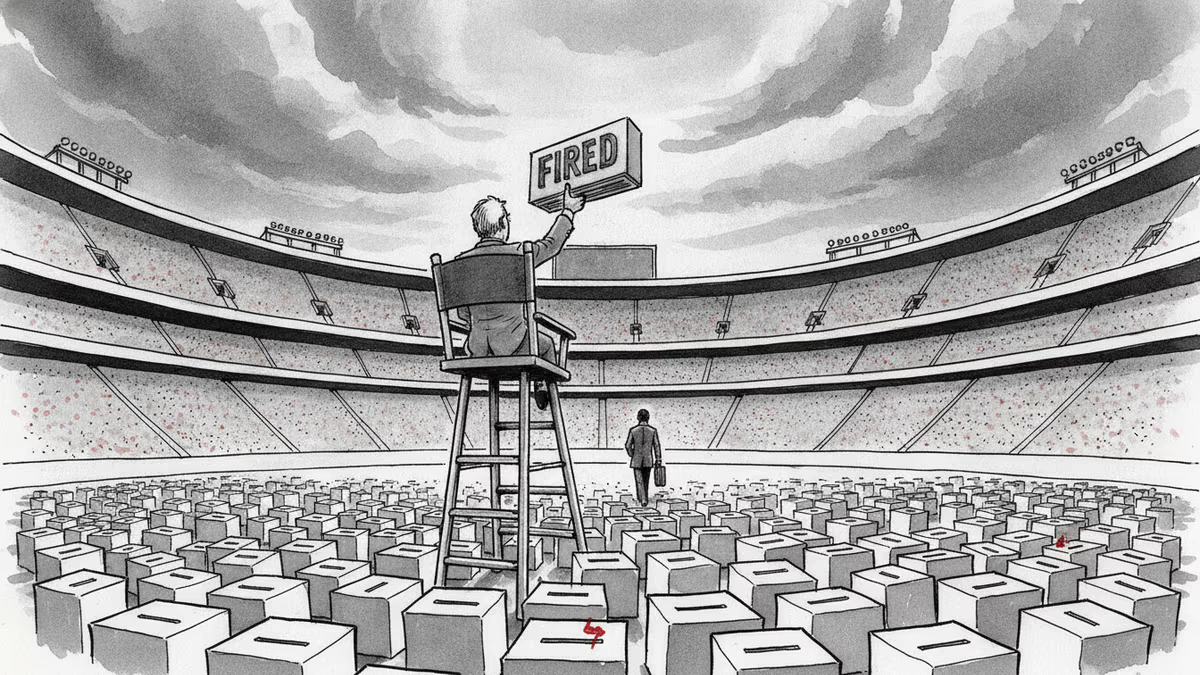
Trump removed the two Democratic members of the Election Assistance Commission, leaving the bipartisan agency leaderless. A Supreme Court ruling made it legal. Here's why a non-crisis can still be a warning sign.
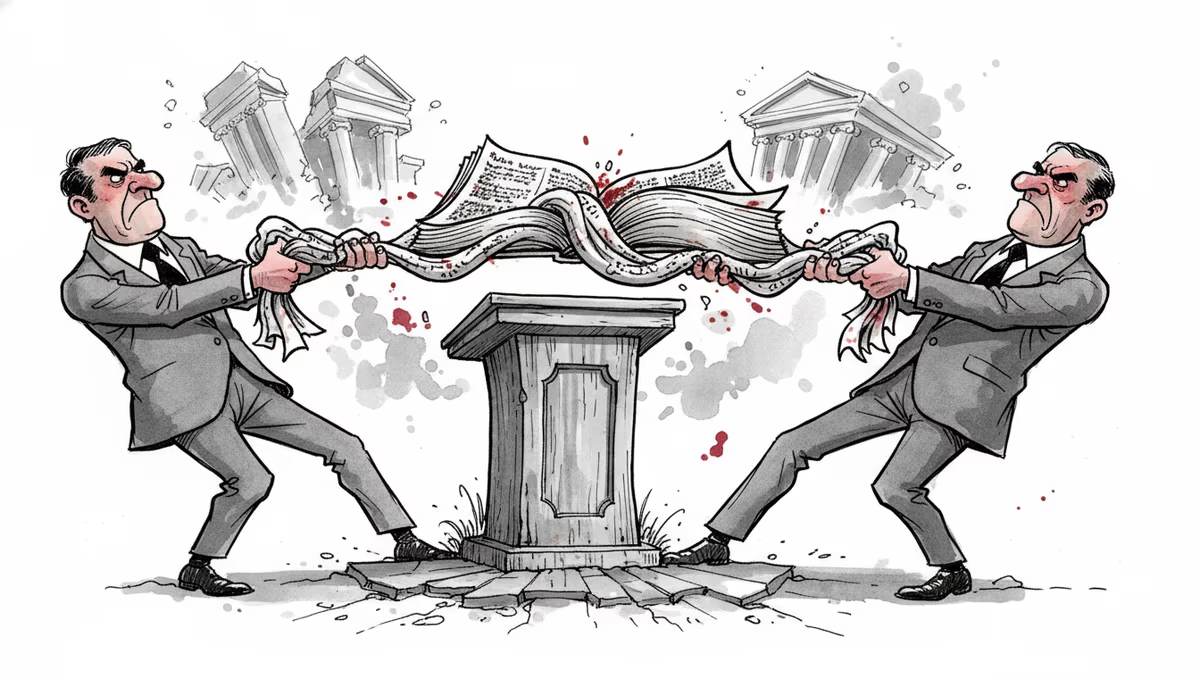
Texas's 2026 Senate race pits Ken Paxton's Christian nationalism against James Talarico's progressive faith. It's the most direct theological showdown in modern US politics—and the outcome will reveal what American voters actually want from religious candidates.
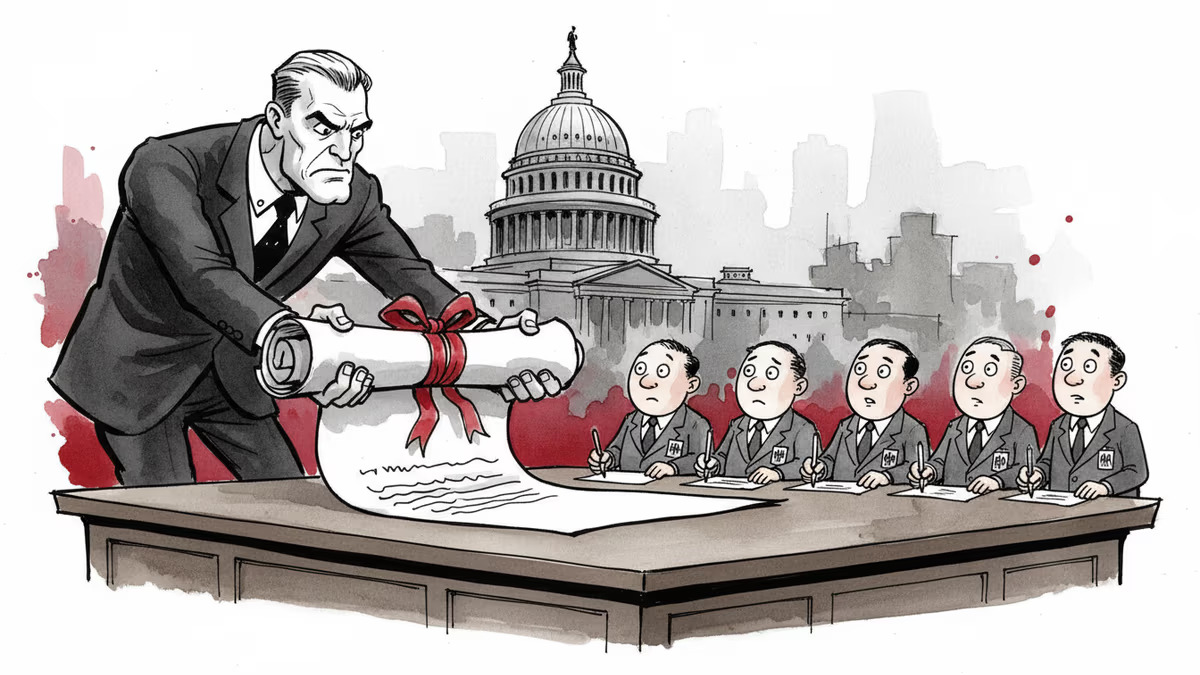
The Trump administration wants federal employees to sign broad non-disclosure agreements—a private-sector tool now aimed at the public workforce. What happens when government runs like a corporation?
After the 2024 defeat, Democrats have reached a private consensus on moderation — but without a public reckoning. Can a 'vibe shift' actually rebuild a party brand?
Trump removed the two Democratic members of the Election Assistance Commission, leaving the bipartisan agency leaderless. A Supreme Court ruling made it legal. Here's why a non-crisis can still be a warning sign.
Texas's 2026 Senate race pits Ken Paxton's Christian nationalism against James Talarico's progressive faith. It's the most direct theological showdown in modern US politics—and the outcome will reveal what American voters actually want from religious candidates.
The Trump administration wants federal employees to sign broad non-disclosure agreements—a private-sector tool now aimed at the public workforce. What happens when government runs like a corporation?
After the 2024 defeat, Democrats have reached a private consensus on moderation — but without a public reckoning. Can a 'vibe shift' actually rebuild a party brand?
Thoughts
Share your thoughts on this article
Sign in to join the conversation