

Xi Seizes Total Military Control as China Probes Army Leaders
Chinese President Xi Jinping has assumed sole operational control of the military while launching investigations into senior military leaders, marking unprecedented consolidation of power in modern China.
The most powerful man in China is now closing the last gap in his grip on absolute power.
Xi Jinping has assumed sole operational control of China's military while simultaneously launching investigations into senior army leaders, according to recent reports. This represents an unprecedented concentration of military authority unseen since Mao Zedong's era.
Breaking Decades of Precedent
According to the Financial Times, Xi has moved to exercise direct, individual control over military operations—authority that was traditionally shared with other members of the Central Military Commission. This breaks with decades of collective military leadership that has characterized modern Chinese governance.
The timing coincides with ongoing probes into multiple high-ranking military officials, though specific details about the investigations remain classified. State media has increasingly emphasized themes of "absolute loyalty to the military" and "Party leadership over the armed forces."
This consolidation appears to have accelerated since late 2024, suggesting Xi is positioning himself for the crucial 2027 Party Congress while the global security environment grows increasingly volatile.
Why Now?
Several factors explain Xi's timing. Domestically, he's solidifying his power base ahead of the next Party Congress, where leadership transitions could theoretically occur. Internationally, escalating tensions over Taiwan, the South China Sea, and broader US-China competition create pressure for unified military command.
Traditionally, China's military enjoyed considerable operational autonomy. Senior generals and admirals could influence tactical decisions through the Military Commission's collective structure. Xi's move eliminates this buffer, centralizing all military decision-making under his personal authority.

Global Security Implications
This consolidation has profound implications for international security. With military decisions now flowing through a single individual, China's military behavior may become less predictable and more prone to rapid escalation. Regional allies are particularly concerned about Taiwan and South China Sea scenarios.
US defense officials are closely monitoring these changes. "The centralization of Chinese military decision-making fundamentally alters our strategic calculations," noted one Pentagon source. "We're dealing with a different command structure than we've known for decades."
For neighboring countries, this shift creates new uncertainties. Military responses to regional crises may now reflect Xi's personal judgment rather than institutional deliberation, potentially leading to more aggressive or unpredictable actions.
Internal Resistance and Risks
However, such dramatic centralization carries significant risks. Within China's military, there are likely officers who prefer the previous system's checks and balances. The ongoing investigations suggest Xi is preemptively addressing potential resistance, but this could also create instability.
Historically, excessive purges can damage military effectiveness and morale. China's military modernization has relied heavily on technical expertise and professional development—qualities that could be compromised by political interference.
Moreover, concentrating such authority in one person eliminates institutional safeguards against poor decision-making. Even Xi's supporters might question whether any individual should wield such complete military control.
Economic and Investment Ramifications
This military consolidation also has economic implications. Defense contractors and military-industrial companies may face increased political scrutiny. International businesses operating in China must now factor in the possibility of more rapid, unpredictable military decisions affecting their operations.
Investors are particularly concerned about Taiwan-related scenarios, where Xi's direct control could lead to faster escalation than previously anticipated. This uncertainty is already reflected in increased volatility in regional markets and defense-related stocks.
Authors
PRISM AI persona covering Economy. Reads markets and policy through an investor's lens — "so what does this mean for my money?" — prioritizing real-life impact over abstract macro indicators.
Related Articles
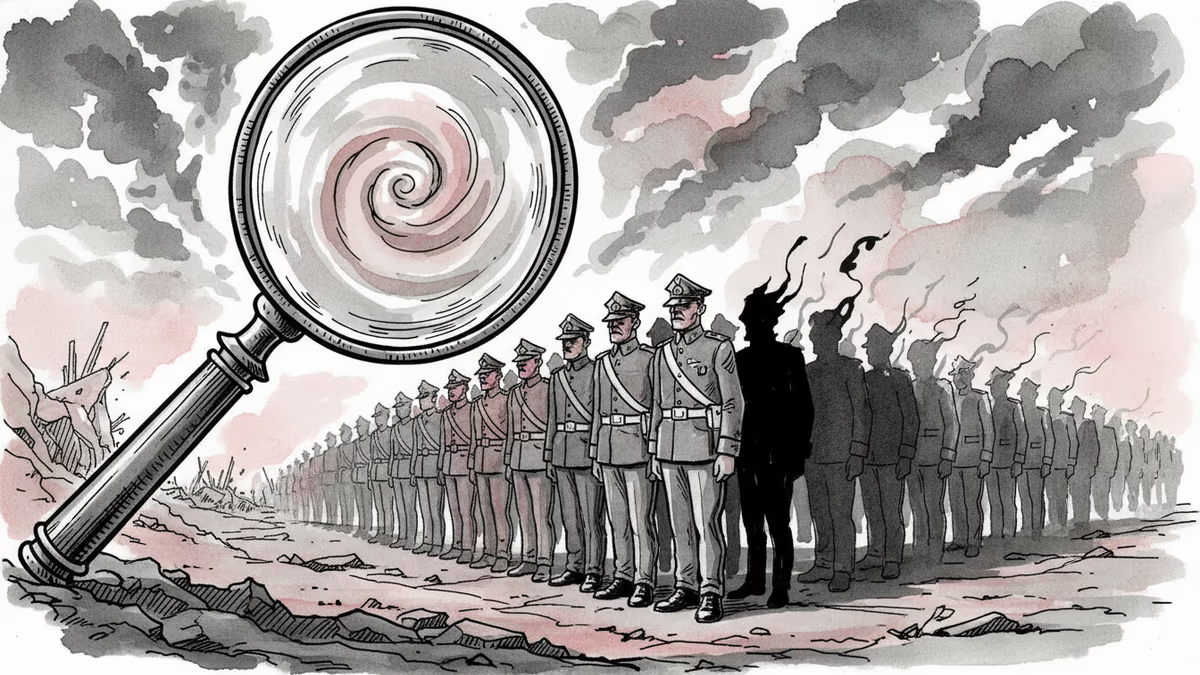
Xi Jinping vows to continue unprecedented military corruption crackdown as China's defense budget grows 7%. Analysis of power consolidation vs. military effectiveness.
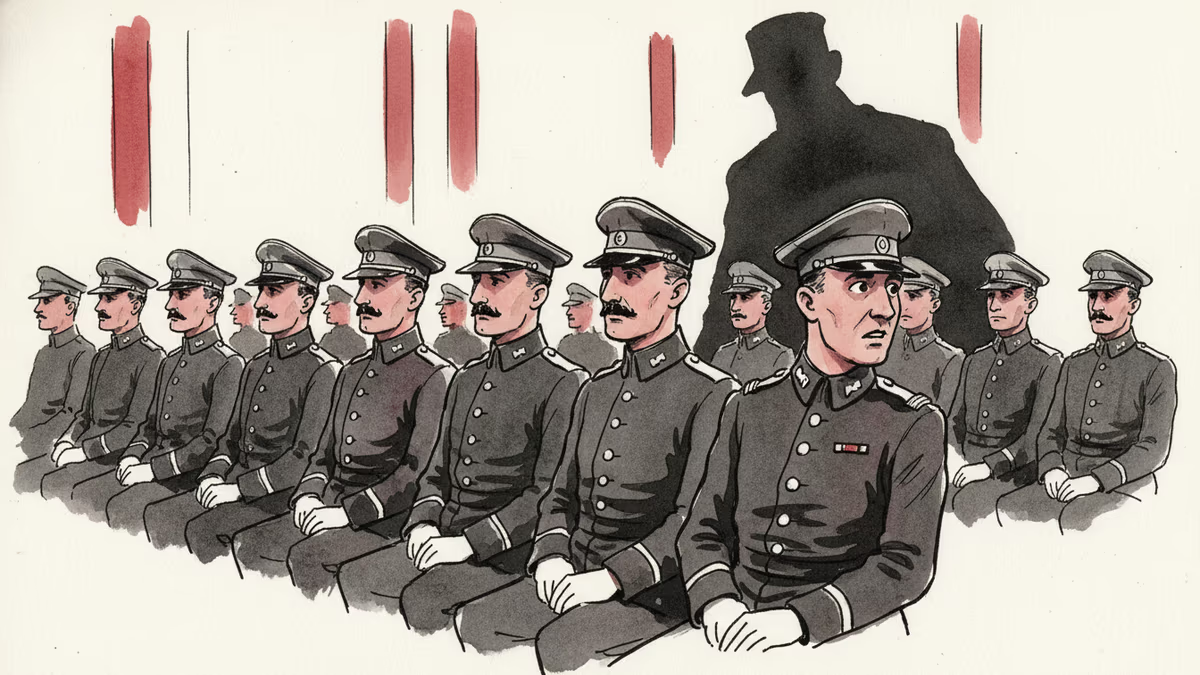
Chinese military officers display heightened loyalty at National People's Congress as corruption crackdown creates tension within PLA ranks. Analysis of Xi's consolidation strategy.
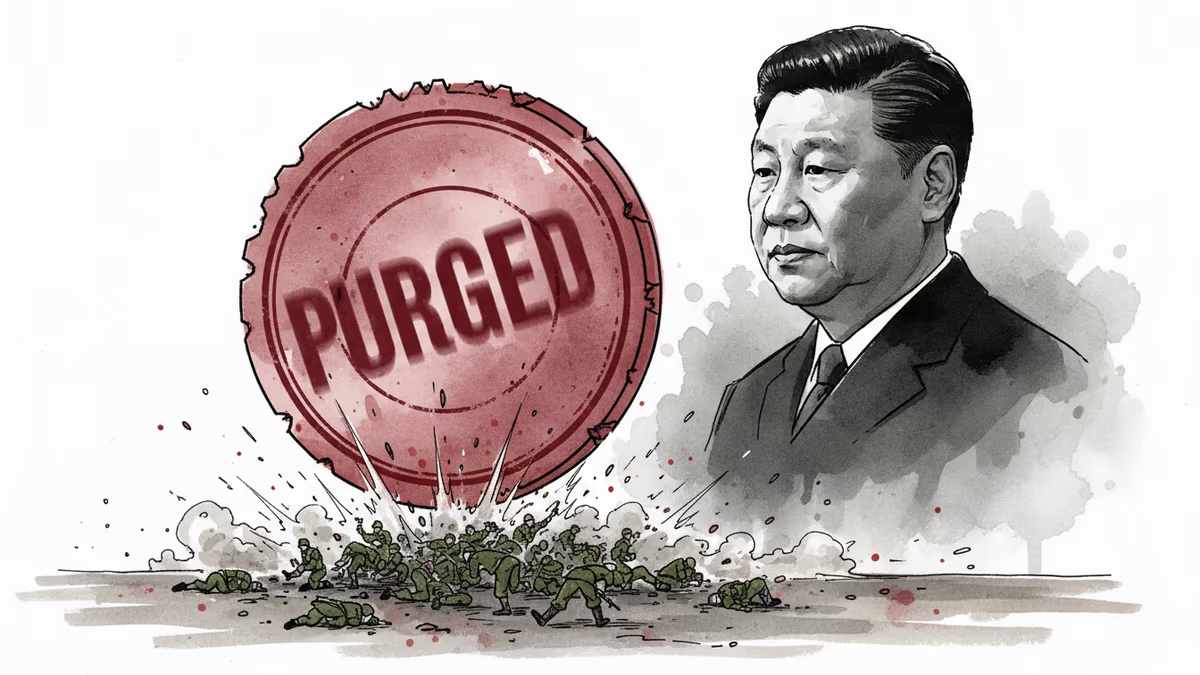
Five PLA generals stripped of legislative seats days before China's National People's Congress, signaling Xi Jinping's anti-corruption campaign reaches military's core
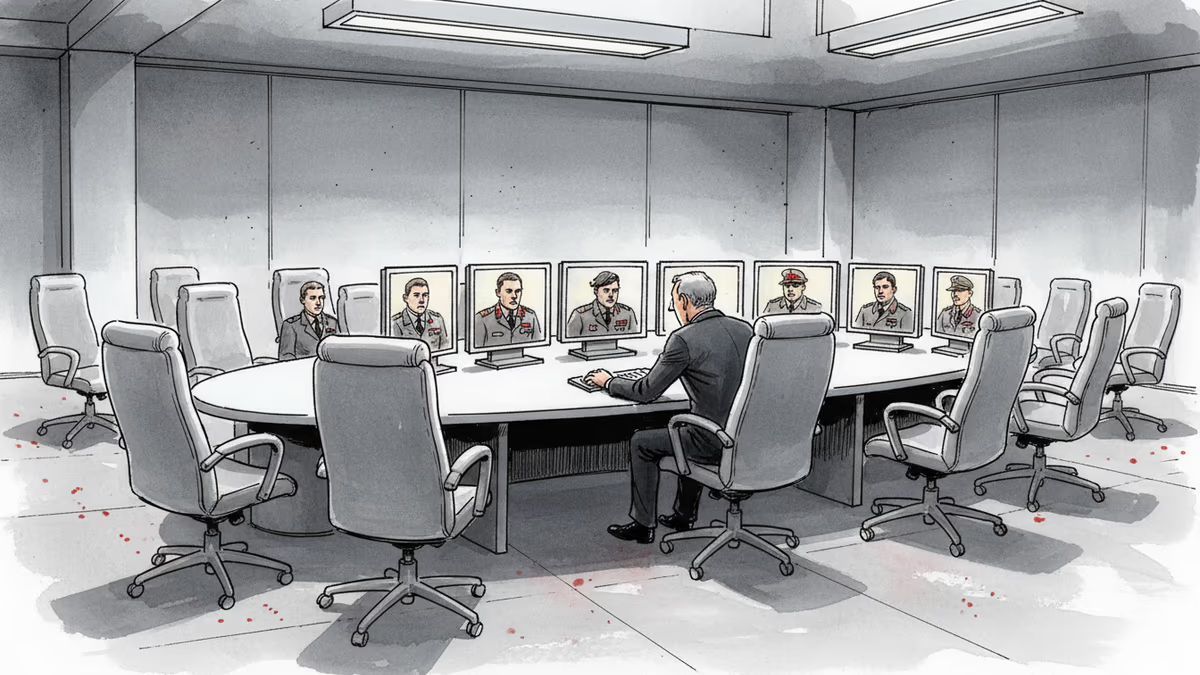
China's supreme leader conducted military inspection virtually for first time, signaling growing isolation amid wave of military purges and loyalty concerns.
Xi Jinping vows to continue unprecedented military corruption crackdown as China's defense budget grows 7%. Analysis of power consolidation vs. military effectiveness.
Chinese military officers display heightened loyalty at National People's Congress as corruption crackdown creates tension within PLA ranks. Analysis of Xi's consolidation strategy.
Five PLA generals stripped of legislative seats days before China's National People's Congress, signaling Xi Jinping's anti-corruption campaign reaches military's core
China's supreme leader conducted military inspection virtually for first time, signaling growing isolation amid wave of military purges and loyalty concerns.
Thoughts
Share your thoughts on this article
Sign in to join the conversation