
Taiwan Bolsters National Security After Taipei Stabbing Kills 3, Sparks Copycat Fears
Taiwan's government has bolstered security measures for the holidays following a deadly stabbing in Taipei that killed 3 and injured 11, raising public fears of copycat attacks.
Taiwanese authorities are ramping up security measures across the island's transport hubs and major public events ahead of the holidays. The move comes in response to a deadly mass stabbing in central Taipei last week that killed three people, injured 11, and has stoked significant public anxiety over potential copycat attacks.
Government's Response to Public Anxiety
In separate statements on Tuesday, Taiwan's Ministry of the Interior and National Police Agency (NPA) announced a series of immediate actions. According to the statements, these include tighter police deployments, increased monitoring of online threats for copycat messaging, and an accelerated review of police resources and command procedures. The government's swift reaction aims to restore public confidence and pre-empt further violence during a high-traffic holiday period.
Details of the Attack
The violence that triggered the security alert unfolded on Friday afternoon in Taipei. Police identified the attacker as Chang Wen, a 27-year-old man. The rampage reportedly began at approximately 3:40pm with acts of arson before escalating. About an hour later, Chang allegedly used smoke devices to create confusion near Taipei Main Station, a major transport hub, and carried out knife attacks in the station and a nearby department store in the Zhongshan commercial district. The attacker later died after falling from a building, and prosecutors are currently investigating the motive for the indiscriminate violence.
While a domestic criminal event, this incident serves as a critical stress test for Taiwan's crisis management capabilities. For a government operating in a tense geopolitical environment, the ability to swiftly contain internal threats and maintain public order is paramount. The effectiveness of this response will be viewed internationally as a key indicator of Taiwan's institutional stability and national resilience.
This content is AI-generated based on source articles. While we strive for accuracy, errors may occur. We recommend verifying with the original source.
Related Articles
The US escalates its tech crackdown by blacklisting drone maker DJI, citing national security risks. Meanwhile, China suffers a major setback in its space program with a second failed reusable rocket recovery, highlighting the intensifying rivalry.

Beijing appears to be recalibrating its Taiwan policy, scaling back military intimidation in favor of a softer approach that emphasizes 'peaceful reunification' and a vision for post-unity governance.

President Trump appointed a special envoy for Greenland, citing national security needs and escalating diplomatic tensions with Denmark, which called the move 'completely unacceptable.'
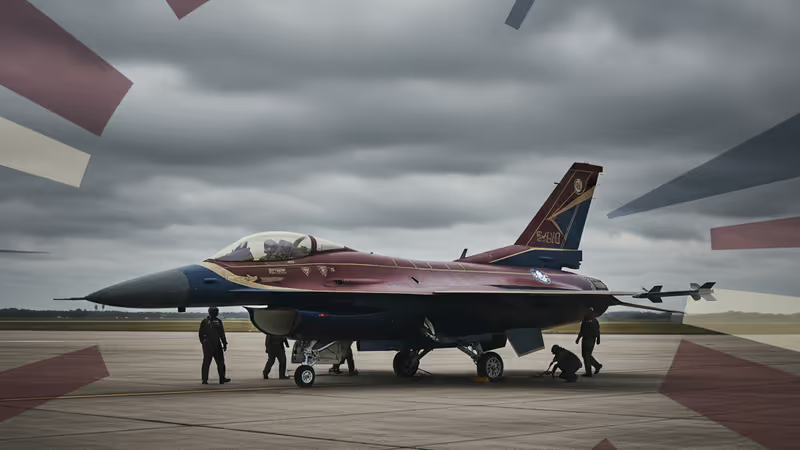
After repeated delays, Taiwan's newly ordered F-16V fighter jets have begun ground tests in the US. This marks a crucial step in bolstering Taiwan's air defense amid rising tensions with China.