
US Blacklists Drone Giant DJI as China's Own Tech Ambitions Falter
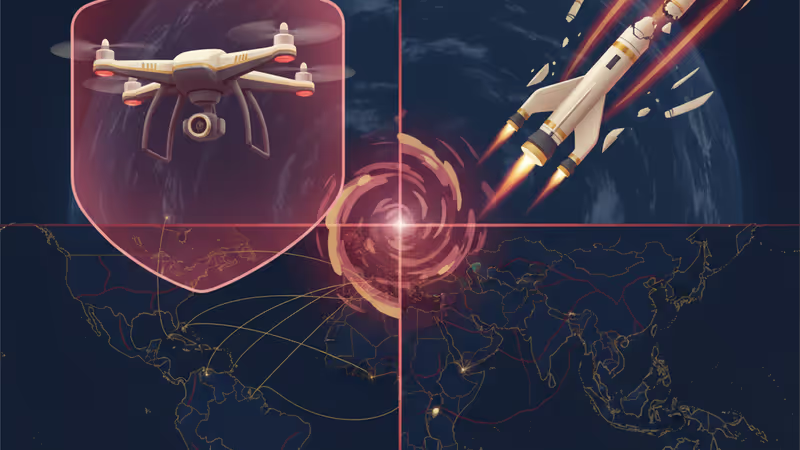
The US escalates its tech crackdown by blacklisting drone maker DJI, citing national security risks. Meanwhile, China suffers a major setback in its space program with a second failed reusable rocket recovery, highlighting the intensifying rivalry.
Washington Grounds a Chinese Tech Giant
The US telecommunications regulator is escalating its crackdown on Chinese technology, adding Shenzhen-based DJI, the world’s largest drone maker, to a list of companies deemed to pose “unacceptable risks” to national security. The move effectively bars the approval of new DJI models and all other foreign drones, marking what sources call a significant escalation in a policy that gained momentum under the Trump administration.
A Setback in the New Space Race
As Washington tightens its grip, China is facing its own internal technology hurdles. On Tuesday, December 23, the debut launch of the Long March 12A, China's first state-owned reusable rocket, ended in a setback when the recovery of its first stage failed. This is the second such failure in a single month.
According to reporting from the South China Morning Post, the repeated failures could put China's reusable rocket program as much as 10 years behind the US, where companies like SpaceX have mastered the technology. The incident highlights the persistent gap between China's state-led ambitions and the privately-driven innovation ecosystem in the US.
The Taiwan Question Looms
These technological and economic confrontations are unfolding against a backdrop of rising geopolitical tension over Taiwan. Analysts are closely examining Beijing's recent policy announcements, military posturing, and the creation of a new commemoration day for signs that its tone on “peaceful reunification” may be shifting towards one of greater urgency.
The twin events highlight a critical phase in the US-China rivalry. Washington is leveraging its regulatory power to proactively contain Chinese tech dominance (DJI), while Beijing's state-driven push for indigenous innovation (reusable rockets) is hitting significant, public hurdles. The competition is no longer just about chips; it's a full-spectrum contest for the technological high ground.
This content is AI-generated based on source articles. While we strive for accuracy, errors may occur. We recommend verifying with the original source.
Related Articles
The U.S. FCC has banned new drones from Chinese makers like DJI, citing national security risks. The move is seen as a key milestone in the deepening tech decoupling between the two countries.

Taiwan's government has bolstered security measures for the holidays following a deadly stabbing in Taipei that killed 3 and injured 11, raising public fears of copycat attacks.
Advocates warn of an unprecedented plan to strip legal permissions from 1.6 million immigrants in the U.S. This analysis explores the scale, political context, and potential impact of the 'largest-ever' effort of its kind.

Beijing appears to be recalibrating its Taiwan policy, scaling back military intimidation in favor of a softer approach that emphasizes 'peaceful reunification' and a vision for post-unity governance.