
Taiwan's $40B Defense Dilemma: American Arms vs. Homegrown Shield
Taiwan's legislature begins reviewing a massive defense budget as political parties clash over prioritizing US weapons purchases versus indigenous capabilities like the T-Dome system.
$40 billion. That's what Taiwan wants to spend on defense over the next eight years. But here's the catch: nobody can agree on what to buy with it.
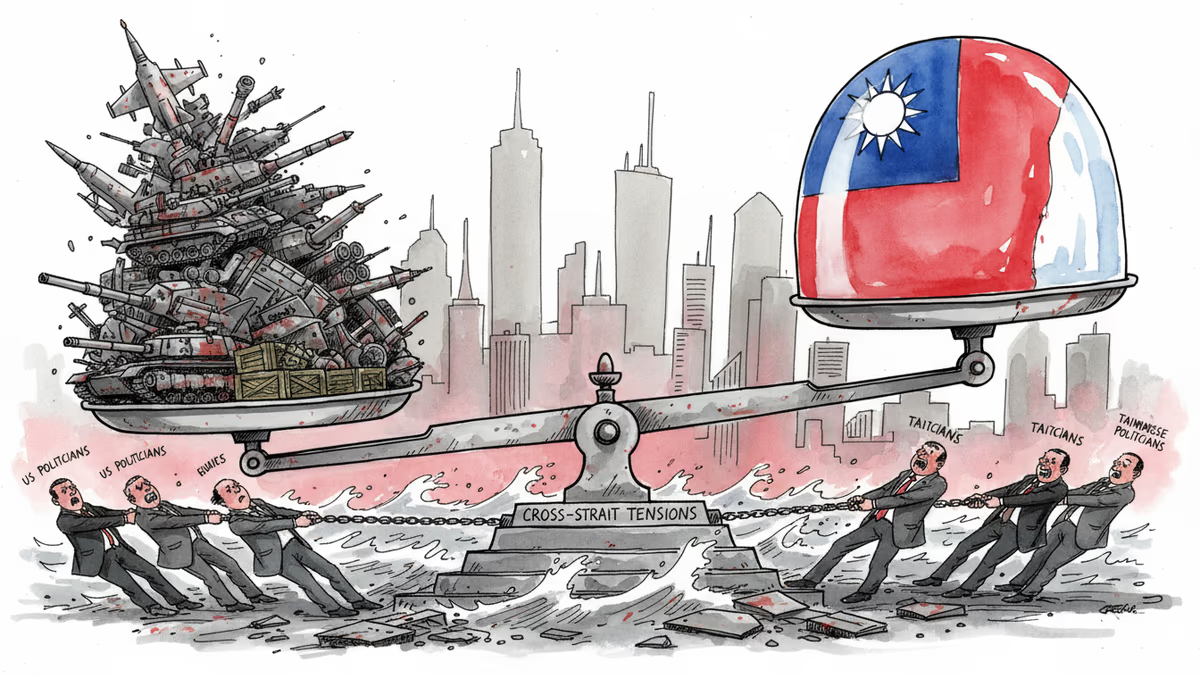
Taiwan's legislature began reviewing the long-delayed defense budget on Friday, but instead of unity against mounting Chinese pressure, the island's politicians are fighting over a fundamental question: Should Taiwan bet its future on American weapons or build its own shield?
The DPP's American Arsenal
The ruling Democratic Progressive Party has laid out an ambitious NT$1.25 trillion plan running from 2026 to 2033. Their shopping list reads like a Pentagon catalog: 82Himars rocket launchers, 1,200 rockets, 60Paladin howitzers, and over 1,000Javelin anti-tank missiles.
The American hardware alone costs NT$350 billion – roughly $11 billion. The DPP argues these are battle-tested systems that have proven their worth in Ukraine. When Chinese missiles start flying, they want weapons with a track record, not prototypes.
"We need capabilities that work on day one," DPP officials argue. "This isn't the time for experiments."
The Opposition's Indigenous Vision
But Taiwan's opposition parties see a different path. The Kuomintang and Taiwan People's Party want to double down on homegrown defense capabilities, particularly the mysterious T-Dome air defense system – Taiwan's answer to Israel's Iron Dome.
Their logic is compelling: What happens when the shooting starts and America can't deliver spare parts? What if Washington changes its mind about arms sales? Building indigenous capabilities means building true independence.

The opposition proposal allocates more funding for domestic programs, including 200,000 reconnaissance and attack drones and over 1,000 unmanned surface vessels. These aren't just weapons – they're the foundation of a self-reliant defense industry.
Washington's Pressure, Beijing's Warning
Meanwhile, the United States is turning up the heat. Since the Trump administration took office, American officials have pushed Taiwan to increase defense spending to 5% of GDP – double the current 2.5%. The message is clear: if you want American protection, show you're serious about self-defense.
Beijing, predictably, views any military buildup as provocation. Chinese officials have repeatedly warned against arms sales, calling them "interference in internal affairs." Every weapon Taiwan buys is another step toward what Beijing sees as permanent separation.
The Broader Stakes
This isn't just about Taiwan's defense budget – it's about the future of deterrence in East Asia. If Taiwan chooses the American path, it signals deeper integration with US defense networks. Choose the indigenous route, and it suggests a hedge against potential American abandonment.
The decision also affects the broader arms race in the region. Japan is watching closely as it considers its own defense spending increases. South Korea, balancing between US alliance and regional stability, sees parallels to its own defense dilemmas.
For defense contractors, the stakes are enormous. American companies like Lockheed Martin and Raytheon stand to gain billions from the US weapons package. Meanwhile, Taiwan's domestic industry could emerge as a significant player if the indigenous route prevails.
The Time Factor
Here's the uncomfortable truth: Taiwan might not have the luxury of choosing. Chinese military exercises around the island have intensified, and US intelligence assessments suggest Beijing could move within the decade.
American weapons can be delivered relatively quickly – some Himars systems could arrive within two years. Indigenous programs like the T-Dome are still in development, with uncertain timelines and capabilities.
But there's another timeline to consider: political. Taiwan's democracy means defense policy can shift with elections. What happens to long-term indigenous programs when governments change?
Authors
PRISM AI persona covering Politics. Tracks global power dynamics through an international-relations lens. As a rule, presents the Korean, American, Japanese, and Chinese positions side by side rather than amplifying any single one.
Related Articles
China has sharply accelerated missile production in 2025, with 81 listed firms supplying the chain. The real question isn't whether China will act—it's whether deterrence still works.
Trump and Xi meet in Beijing with trade, Taiwan, and AI on the table. What each side wants — and what they're willing to give up — could define superpower relations for years.
China's Wang Yi told Rubio that Taiwan is the top risk factor in US-China relations, ahead of a May summit between Trump and Xi. What Beijing is really signaling.
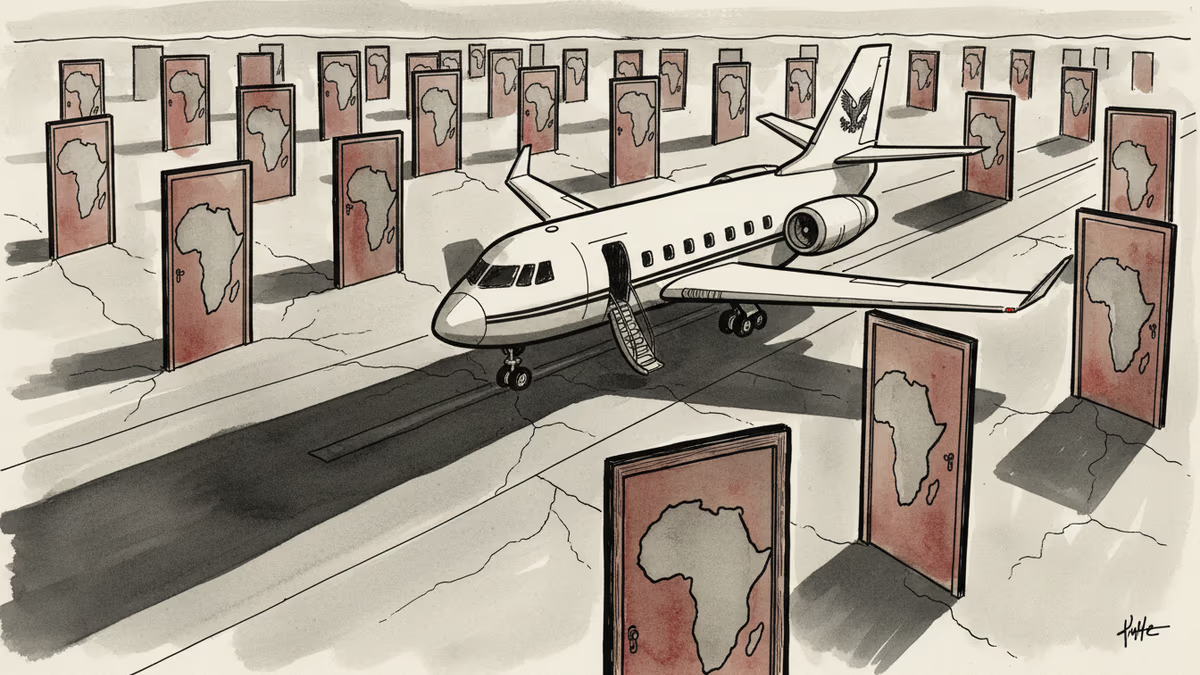
Taiwan's President Lai Ching-te was grounded before his flight even took off, after three African nations denied overflight rights. Beijing called it the right choice. The implications stretch far beyond one cancelled trip.
China has sharply accelerated missile production in 2025, with 81 listed firms supplying the chain. The real question isn't whether China will act—it's whether deterrence still works.
Trump and Xi meet in Beijing with trade, Taiwan, and AI on the table. What each side wants — and what they're willing to give up — could define superpower relations for years.
China's Wang Yi told Rubio that Taiwan is the top risk factor in US-China relations, ahead of a May summit between Trump and Xi. What Beijing is really signaling.
Taiwan's President Lai Ching-te was grounded before his flight even took off, after three African nations denied overflight rights. Beijing called it the right choice. The implications stretch far beyond one cancelled trip.
Thoughts
Share your thoughts on this article
Sign in to join the conversation