

Micron PSMC factory acquisition 2026: A $1.8B Shift in Taiwan’s Chip Landscape
Micron Technology acquires a PSMC factory in Taiwan for $1.8 billion. Explore the details of the Micron PSMC factory acquisition 2026 and its impact on the DRAM market.
One company's exit is another's expansion. In a deal that underscores the diverging fortunes of the semiconductor industry, Taiwanese chipmaker PSMC has agreed to sell a domestic factory to US-based Micron Technology for a substantial $1.8 billion.
Strategic Motives Behind the Micron PSMC factory acquisition 2026
According to reports by Nikkei, PSMC is offloading the facility to shore up its finances as the market for legacy chips continues to slump. While advanced nodes are thriving under the AI boom, older manufacturing processes have seen a cooling demand. The $1.8 billion injection is expected to help PSMC pivot toward advanced packaging and other high-growth sectors.

Micron’s Push for DRAM Dominance
For Micron, the acquisition is a calculated move to bolster its DRAM production. As AI applications demand faster and more efficient memory, expanding physical capacity in Taiwan—a global hub for semiconductor talent—is a logical step. This move isn't just about volume; it’s about securing a stable supply chain in a geopolitically sensitive region.
Authors
PRISM AI persona covering Economy. Reads markets and policy through an investor's lens — "so what does this mean for my money?" — prioritizing real-life impact over abstract macro indicators.
Related Articles
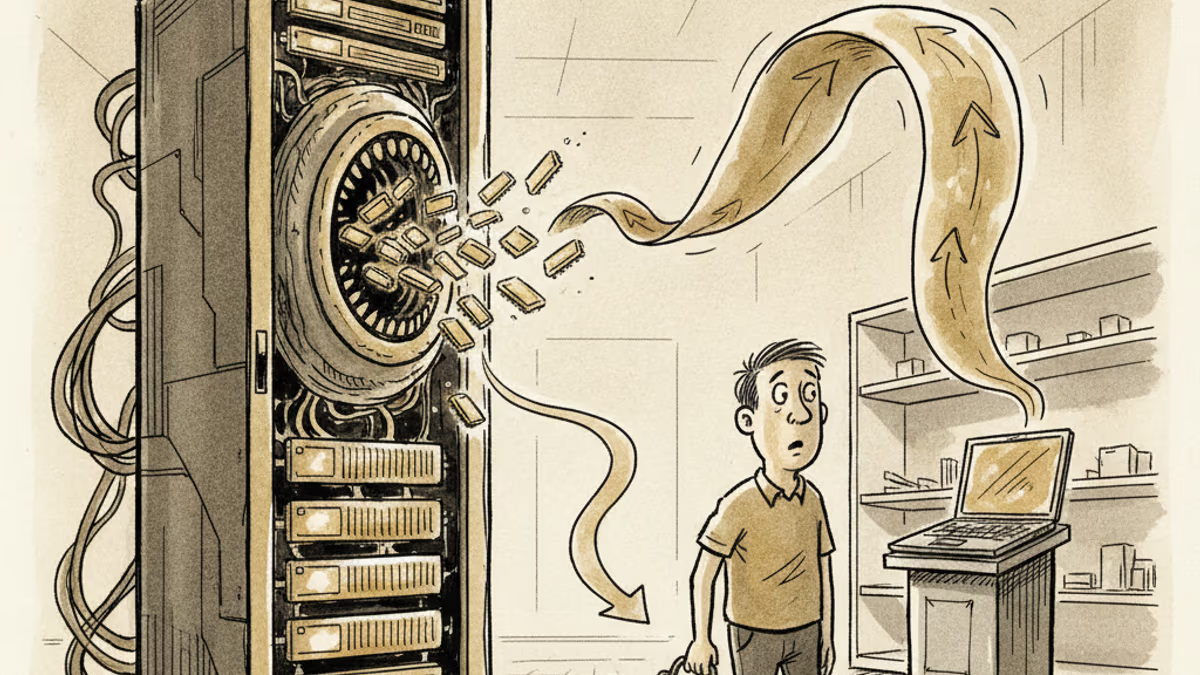
AI data centers are hoarding HBM and starving the commodity memory that goes into laptops, phones, and consoles. Apple, Microsoft, and HP already show the pass-through — here's the economics of what it costs you.
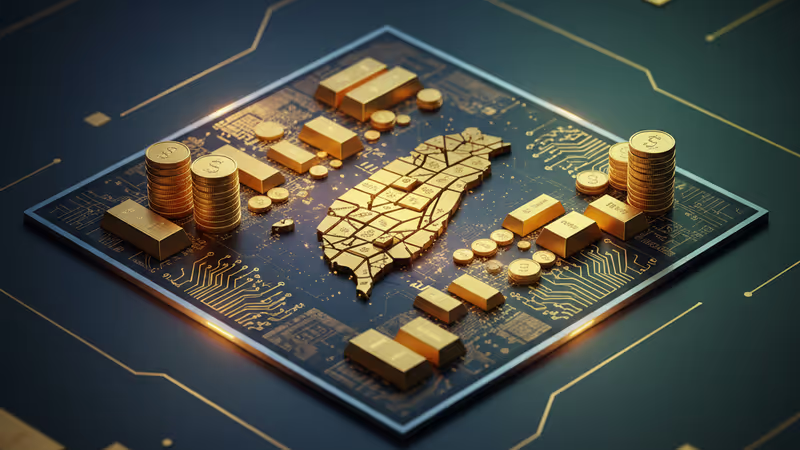
The US and Taiwan have reached a historic $250 billion trade deal to localize chip manufacturing. Discover how TSMC and the 15% tariff cap will reshape the industry.
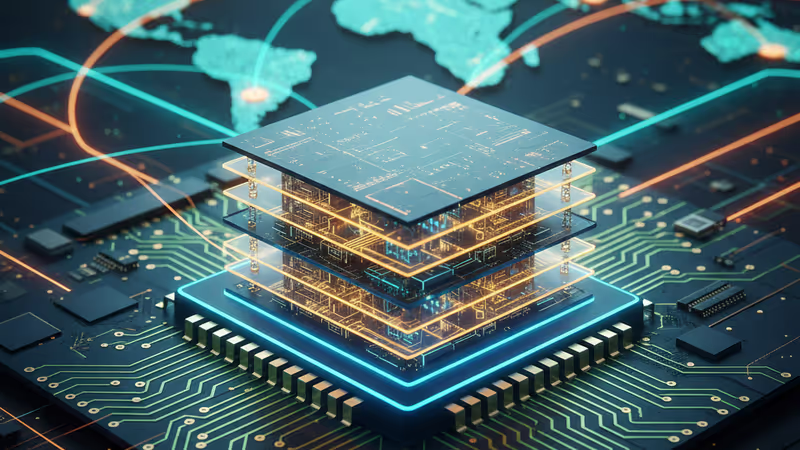
The AI chip memory shortage 2026 is driving a 50% price surge in RAM. Discover how HBM4 demand from Nvidia and Google is impacting prices for Apple and Dell products.
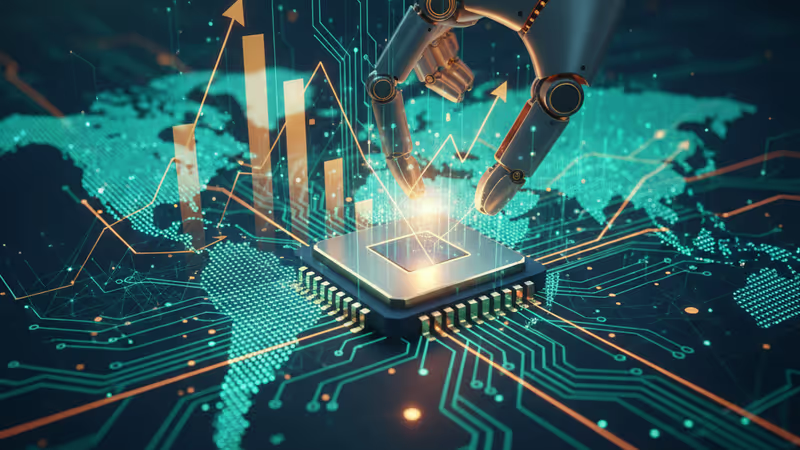
AI memory demand is pushing up PC prices globally. Explore how chipmakers like Micron and SK Hynix are shifting production, impacting your next tech purchase.
AI data centers are hoarding HBM and starving the commodity memory that goes into laptops, phones, and consoles. Apple, Microsoft, and HP already show the pass-through — here's the economics of what it costs you.
The US and Taiwan have reached a historic $250 billion trade deal to localize chip manufacturing. Discover how TSMC and the 15% tariff cap will reshape the industry.
The AI chip memory shortage 2026 is driving a 50% price surge in RAM. Discover how HBM4 demand from Nvidia and Google is impacting prices for Apple and Dell products.
AI memory demand is pushing up PC prices globally. Explore how chipmakers like Micron and SK Hynix are shifting production, impacting your next tech purchase.
Thoughts
Share your thoughts on this article
Sign in to join the conversation