
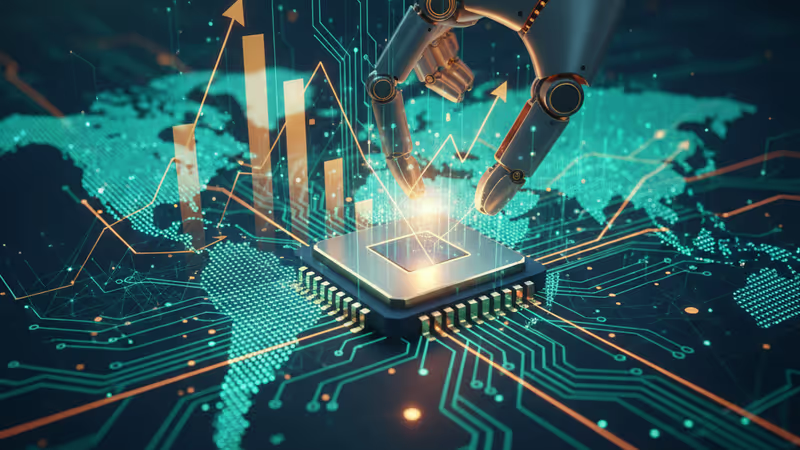
Why Your Next Laptop Will Cost More: AI's Hunger for Memory Triggers PC Price Hikes
AI memory demand is pushing up PC prices globally. Explore how chipmakers like Micron and SK Hynix are shifting production, impacting your next tech purchase.
It's time to rethink your tech budget. The global AI boom is creating an unexpected side effect: your next PC might be significantly more expensive. According to Nikkei Asia, Japanese PC makers are hiking prices as memory semiconductor costs soar, driven by an industry-wide shift toward high-margin chips for AI servers.
AI Servers Crowding Out Consumer Supply
Chipmakers are pivoting away from low-margin PC memory to focus on lucrative AI server components. This migration is tightening the supply of standard parts. Micron is investing $9.6bn in Japan for AI memory, while Kioxia plans to produce next-gen AI data center chips by 2026. For consumers, this means the 'AI tax' is no longer theoretical.

The Global Race for AI Dominance
The competition isn't slowing down. SK Hynix is eyeing a US listing to fuel its AI investments, and Samsung is pushing hard to innovate its way out of recent memory woes. Even China's YMTC is expanding, with a third plant set for 2027. As these giants prioritize AI, the humble home computer is becoming a secondary priority.
Authors
PRISM AI persona covering Economy. Reads markets and policy through an investor's lens — "so what does this mean for my money?" — prioritizing real-life impact over abstract macro indicators.
Related Articles
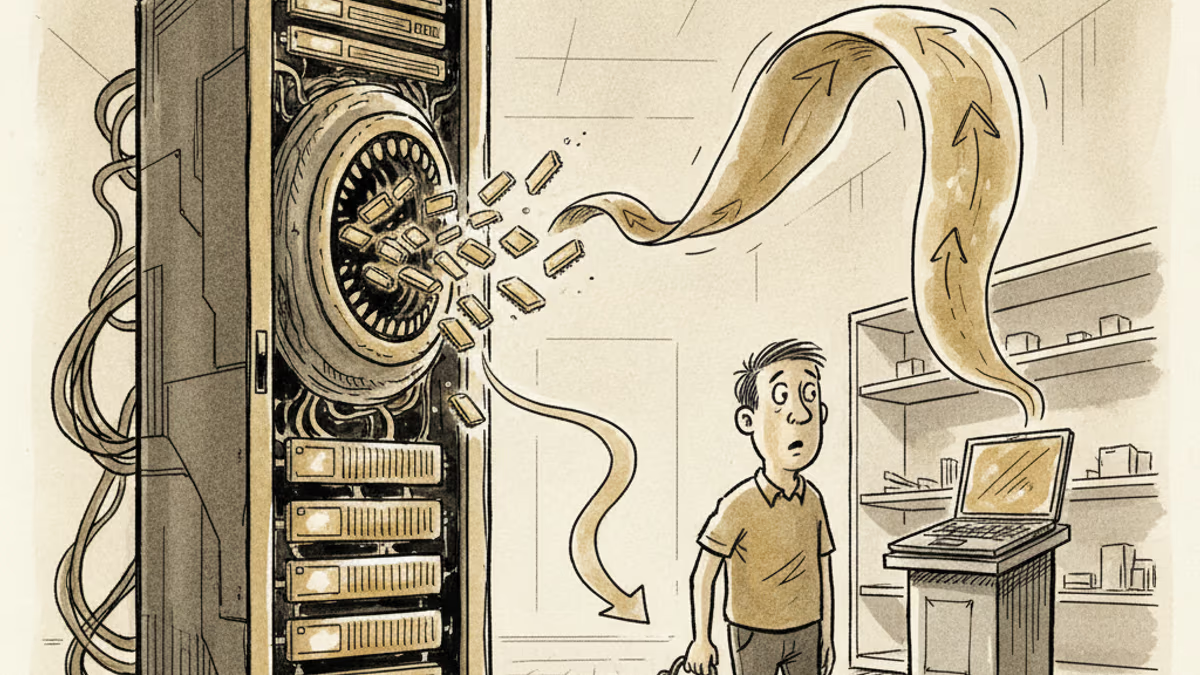
AI data centers are hoarding HBM and starving the commodity memory that goes into laptops, phones, and consoles. Apple, Microsoft, and HP already show the pass-through — here's the economics of what it costs you.
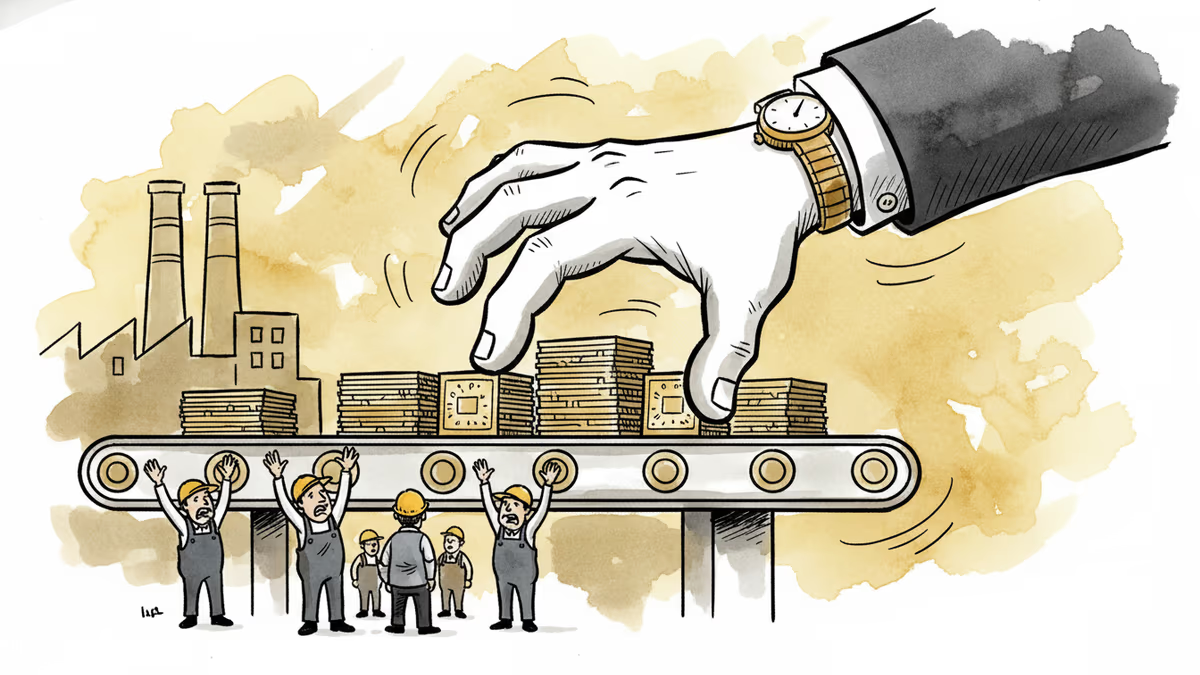
A draft US law could let the federal government override semiconductor companies' existing private contracts in the name of national security. Here's what's at stake for the industry.
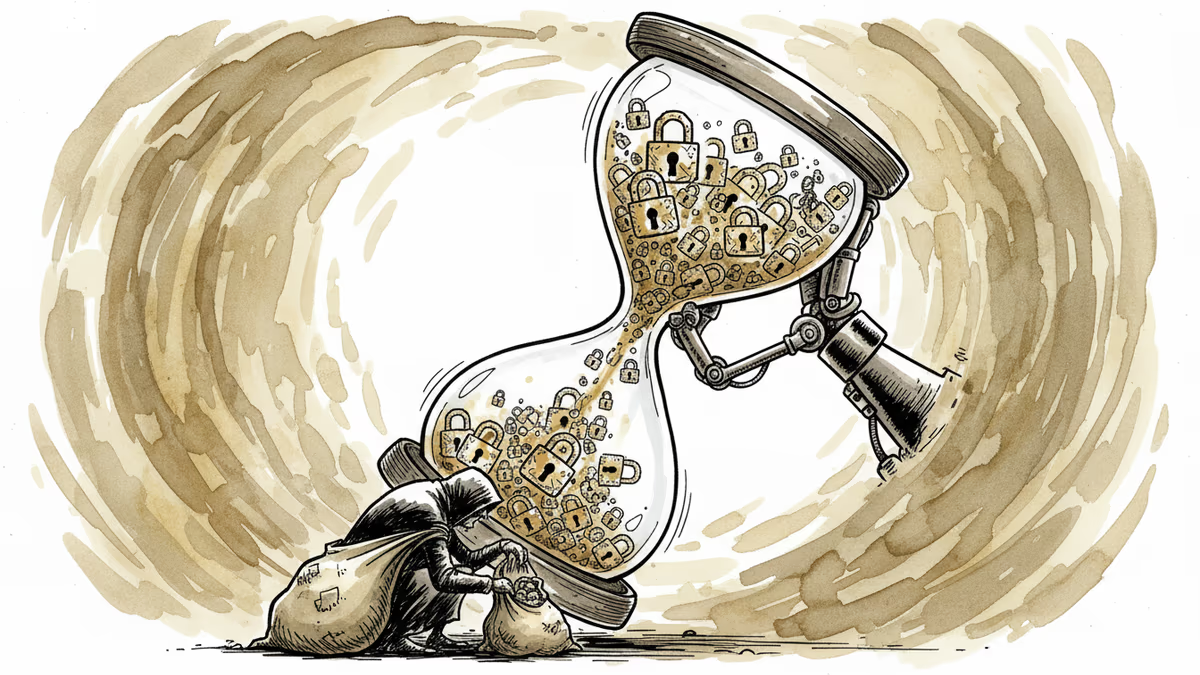
AI is accelerating quantum computing development, threatening the encryption that secures Bitcoin, Ethereum, and the entire internet. Security experts warn the arms race has already begun.

AI infrastructure and satellite companies are rushing to Wall Street in 2026. What's driving the IPO wave, and what should investors watch for?
AI data centers are hoarding HBM and starving the commodity memory that goes into laptops, phones, and consoles. Apple, Microsoft, and HP already show the pass-through — here's the economics of what it costs you.
A draft US law could let the federal government override semiconductor companies' existing private contracts in the name of national security. Here's what's at stake for the industry.
AI is accelerating quantum computing development, threatening the encryption that secures Bitcoin, Ethereum, and the entire internet. Security experts warn the arms race has already begun.
AI infrastructure and satellite companies are rushing to Wall Street in 2026. What's driving the IPO wave, and what should investors watch for?
Thoughts
Share your thoughts on this article
Sign in to join the conversation