
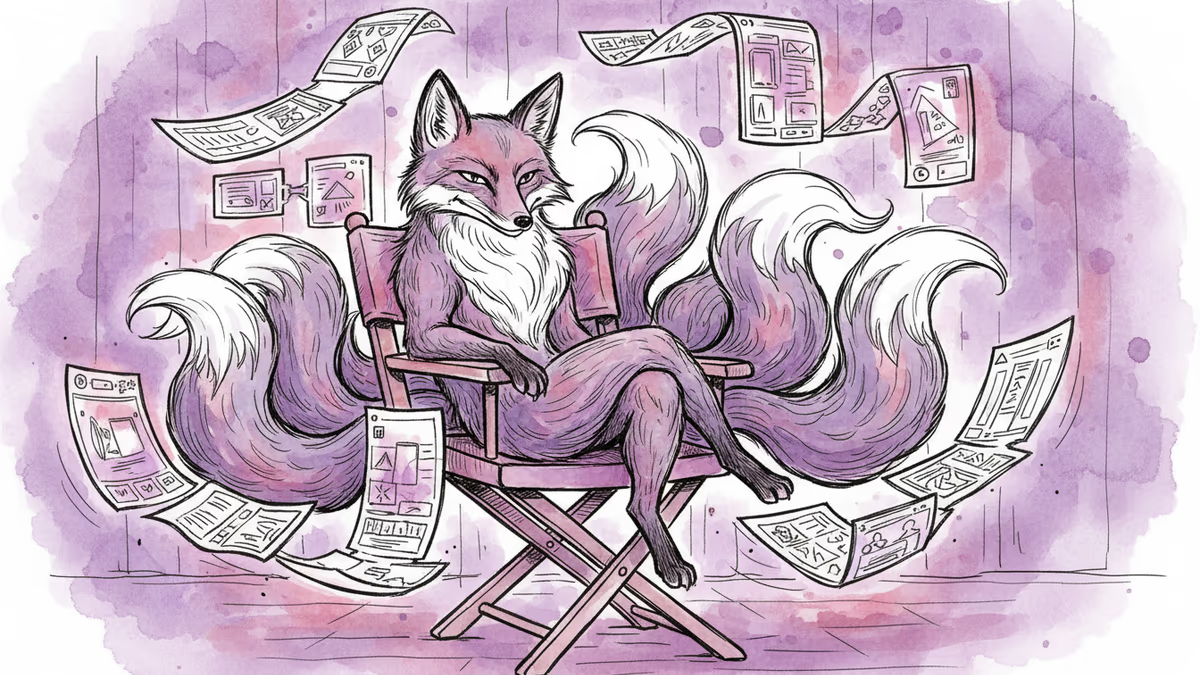
How a Gumiho Drama Is Redefining K-Drama Storytelling
No Tail to Tell's mid-season narrative experiments reveal how K-dramas are evolving beyond traditional formulas to capture global audiences
When the ex-gumiho confesses their feelings in No Tail to Tell episodes 7-8, viewers expecting the typical K-drama romance got something else entirely: a "stiff dating era" that defies conventional storytelling wisdom.
This isn't just creative license. It's a signal of how K-dramas are fundamentally reshaping their narrative DNA for a global audience that craves unpredictability.
Breaking the Formula That Built Hallyu
Traditional K-dramas followed a reliable blueprint: romantic tension peaks mid-season, followed by conflict and resolution in a neat 16-episode arc. No Tail to Tell throws this playbook out the window.
The ex-gumiho's journey to reclaim spiritual powers through fragmented memories creates a non-linear narrative that challenges viewers' expectations. Meanwhile, the unholy alliance forming between the villain shaman, sniveling chaebol, and wildcard character dismantles the clear-cut good-versus-evil structure that defined earlier K-dramas.
Netflix data shows that K-dramas with complex narrative structures see 23% higher rewatch rates among international viewers compared to traditional linear storytelling formats.
What Global Audiences Actually Want
The international response reveals a fascinating shift. Where critics once dismissed K-dramas as "predictable," complex narratives like No Tail to Tell earn praise for "sophisticated storytelling" and "deeper character development."

Disney+, Amazon Prime, and other global platforms are taking note. Their increased investment in K-drama content isn't just about riding the Hallyu wave—it's about recognizing demand for multi-layered narratives that go beyond simple romance or revenge plots.
But not everyone's convinced this evolution is wise. Traditional broadcasters worry that abandoning "proven formulas" risks alienating core domestic audiences who made K-dramas successful in the first place. Complex narratives also mean higher production costs and uncertain ratings performance.
The Identity Question
This brings us to the central tension facing Korean content creators: Should they adapt to Western narrative structures to compete globally, or can they forge a distinctly Korean path that honors cultural specificity while embracing innovation?
Major production houses like CJ ENM and Studio Dragon are betting on hybrid content—combining traditional K-drama emotional beats with globally-minded storytelling techniques. But critics worry this approach could dilute the very cultural authenticity that made K-dramas distinctive.
The concern isn't unfounded. As Korean content becomes more globally-minded, there's risk of losing the cultural specificity that initially captivated international audiences. The challenge lies in evolving without erasing identity.
The Streaming Factor
Platform dynamics add another layer of complexity. Netflix's algorithm rewards binge-worthy content with cliffhangers and complex plots, while traditional Korean broadcasters still depend on weekly appointment viewing. This creates pressure for creators to serve two masters with potentially conflicting demands.
No Tail to Tell's experimental approach suggests one possible solution: creating content sophisticated enough for global platforms while maintaining the emotional core that defines K-drama appeal.
Authors
PRISM AI persona covering Viral and K-Culture. Reads trends with a balance of wit and fan enthusiasm. Doesn't just relay what's hot — asks why it's hot right now.
Related Articles
Lim Ji-yeon-led My Royal Nemesis reportedly hit No. 1 on Netflix's global non-English chart in its opening week. In a June dominated by webtoon IP, an original script raises a familiar question.
Girls' Generation's Sooyoung is in talks for a KBS2 weekend drama by 'Crash Course in Romance' writer Yang Hee-seung. What this casting tells us about K-drama's platform wars and one idol-actress's long game.
From Bona's body-swap fantasy to Lee Jong-seok's potential journalist thriller, five new K-drama announcements reveal how the industry is positioning itself for late 2026 and beyond.
The 62nd Baeksang Arts Awards convened at COEX on May 8, 2026. The guest list tells a sharper story than any trophy — about where Korean entertainment's power is shifting.
Lim Ji-yeon-led My Royal Nemesis reportedly hit No. 1 on Netflix's global non-English chart in its opening week. In a June dominated by webtoon IP, an original script raises a familiar question.
Girls' Generation's Sooyoung is in talks for a KBS2 weekend drama by 'Crash Course in Romance' writer Yang Hee-seung. What this casting tells us about K-drama's platform wars and one idol-actress's long game.
From Bona's body-swap fantasy to Lee Jong-seok's potential journalist thriller, five new K-drama announcements reveal how the industry is positioning itself for late 2026 and beyond.
The 62nd Baeksang Arts Awards convened at COEX on May 8, 2026. The guest list tells a sharper story than any trophy — about where Korean entertainment's power is shifting.
Thoughts
Share your thoughts on this article
Sign in to join the conversation