
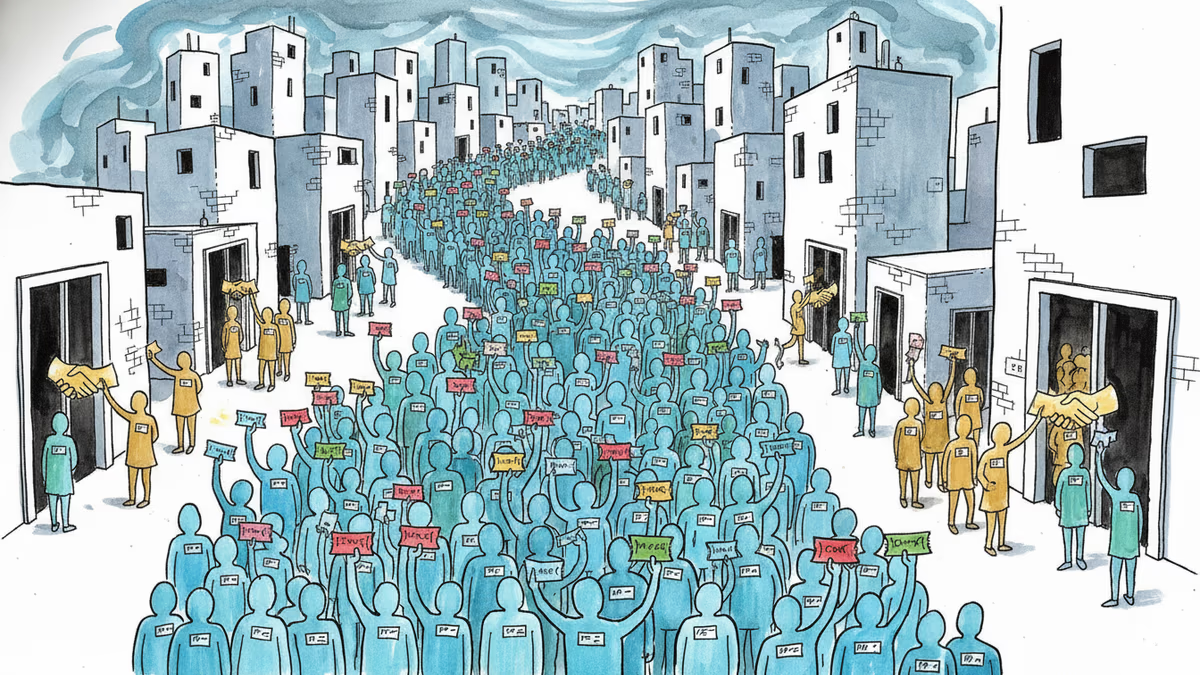
Is SXSW Dying — or Just Becoming More Honest?
SXSW turns 40 and reinvents itself with new badges, decentralized venues, and a reservation system. But who's actually getting value — and who's getting left out?
Every year, someone declares SXSW dead. Every year, roughly 300,000 people show up anyway.
What Actually Changed in 2026
The 40th edition of SXSW didn't just celebrate its history — it quietly rewrote its own rules. Greg Rosenbaum, SVP of Programming, called it the festival's most "ambitious reinvention" yet. That's not spin. The changes were structural.
The Austin Convention Center is being demolished, which forced the entire conference to scatter across downtown venues. The result: less overwhelming, but also less cohesive. The festival also ran two days shorter than in previous years — a quiet but significant trim. And it's still climbing back from the pandemic years, during which it laid off staff and went two years with minimal revenue before changing ownership.
The badge system got a significant overhaul. Gone is the secondary access that let, say, a music badge holder sneak into a film event. Now, if you want everything, you buy the all-in-one platinum badge at around $2,000. A new reservation system was introduced to manage lines — though it also meant that some events filled up so fast they became nearly inaccessible. Rosenbaum says reservations will return next year, with refinements. The new Clubhouse spaces, designed for recharging and networking, drew 5,000 visitors daily.
On the cultural side: Grammy-nominated Lola Young performed, Serena Williams and Steven Spielberg gave keynotes, and Boots Riley's new film premiered. The star power was real. The question is whether it translated into value for the people who paid to be there.
The Conference Doesn't Give — You Take

Every founder and investor I spoke with — and who was spoken to for the original reporting — landed on the same unsolicited piece of advice: you get what you give.
Ashley Tryner-Dolce, an investor and founder, called it an "incredible gathering of ideas," but said her most meaningful moments happened at side events — specifically INC's Founder House party, where she connected with other founders and CEOs. "It's less about the main stage and more about who you're sitting across from," she said.
James Norman, managing partner at Black Ops VC, didn't even have a proper badge. He threw his own event, attended film screenings and dinners, and worked the margins of the conference like a pro. His take was direct: "If you're just showing up without the right connections or proximity to the rooms that matter, you're going to struggle to unlock the real value."
First-timer Simon Davis saw it differently — and perhaps more clearly, without the weight of expectation. He described SXSW as "a media conference with a tech angle, not the other way around." He praised the diversity of attendees compared to other tech events. "At SXSW, you get a much wider range of people, backgrounds, and experience levels. It's not somewhere you'd necessarily go to do deals, but a great place to share and learn."
The Expensive Truth About Who Stands Out
Here's where it gets uncomfortable. Rodney Williams, co-founder of fintech SoLo Funds and a SXSW veteran of more than a decade, has watched the conference transform from what he calls an "intimate, scrappy discovery zone" into a "high-cost, high-competition space."
His diagnosis is sharp: companies with massive marketing budgets dominate the activations, the eyeballs, and the narrative. Emerging tech companies — the ones SXSW was arguably built for — are increasingly priced out of visibility. "Now, standing out requires more than just a great product," Williams said. "It demands significant marketing investment that only companies with huge budgets can do."
Adweek reported fewer large-scale spectacles overall this year, with an absence of big tech company advertising. But Williams argues that's not the same as a level playing field. The cost of throwing a party, hosting a dinner, or running a branded activation hasn't dropped just because Google or Meta skipped the floor.
And yet — Williams still threw a party. Norman still showed up. The conference still drew 300,000 people. Which raises a question the attendance numbers alone can't answer.
Authors
Related Articles
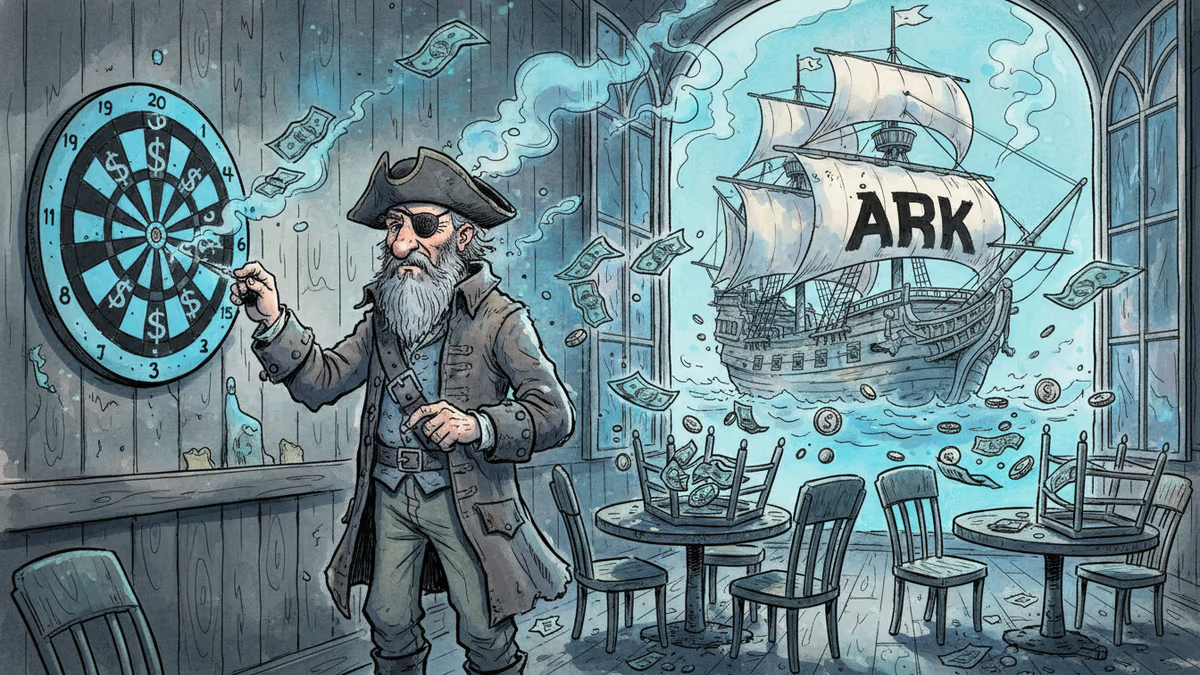
Lucra Sports CEO Dylan Robbins landed Cathie Wood's ARK Invest as a Series B lead without building AI. The story behind his unconventional fundraising playbook.
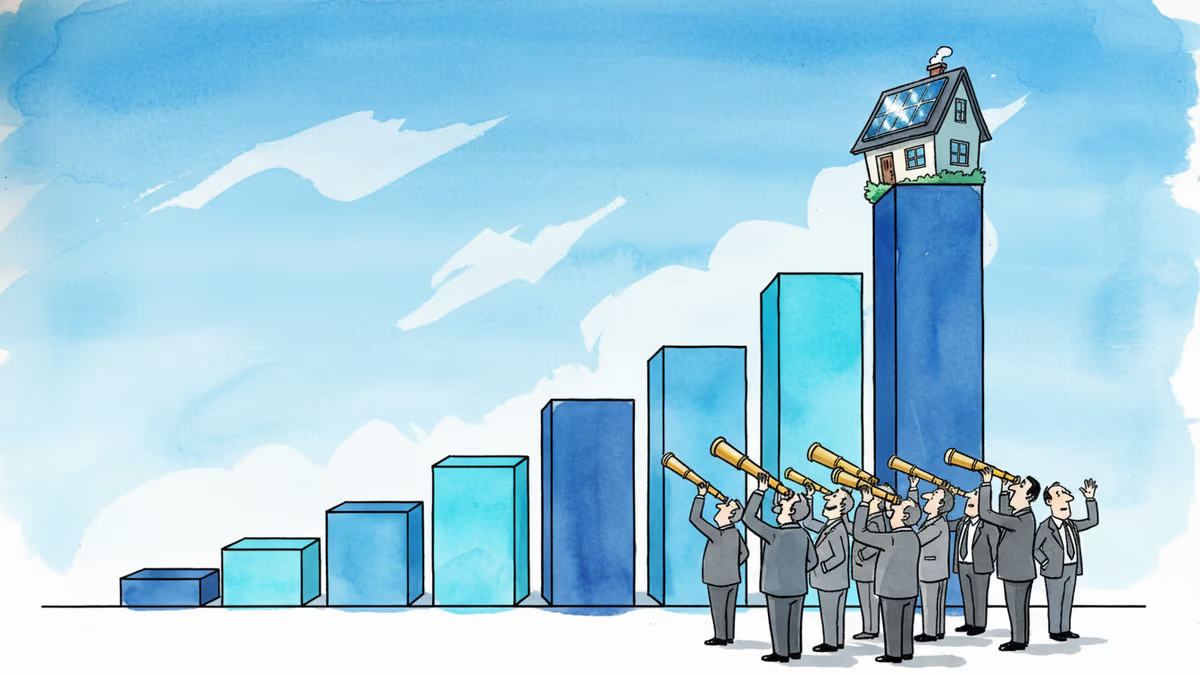
SolarSquare is raising $55-60M at a $450-500M valuation, more than doubling its worth in 18 months. Here's what's driving investor conviction in India's residential solar market.
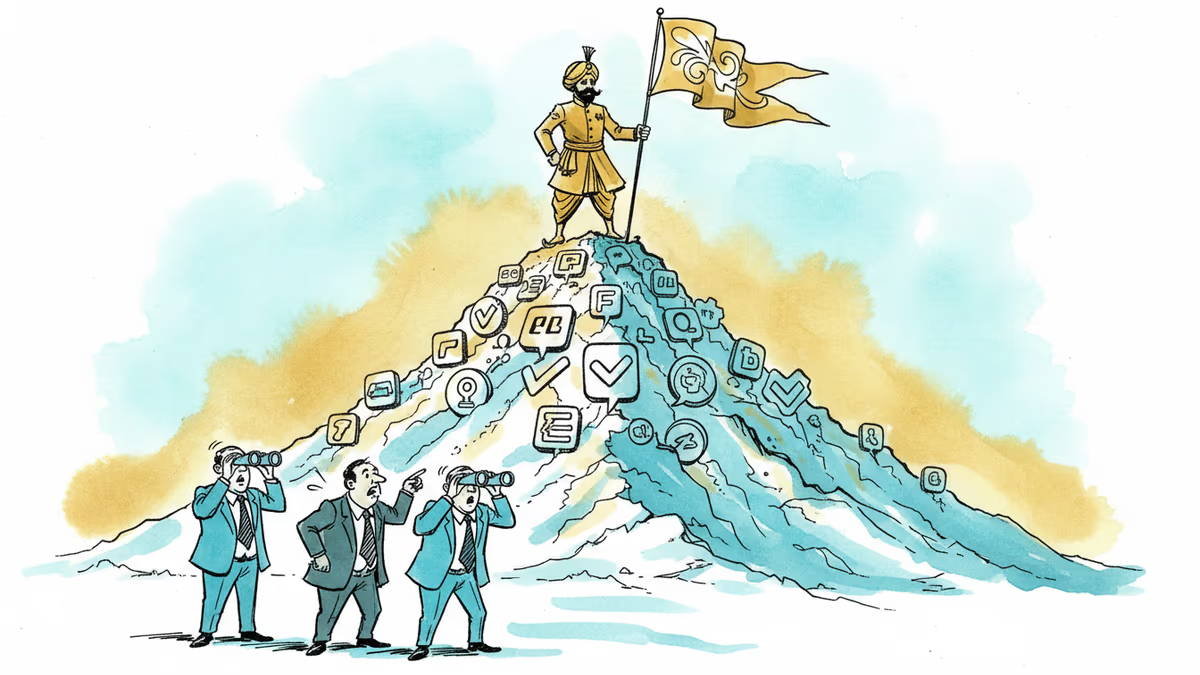
Indian venture capital has quietly displaced Silicon Valley in its own backyard. Only one American VC made India's top 10 investor list last year. Here's why that matters beyond India.
Cerebras Systems IPO yields a $5.3 billion return for Benchmark. Explore the 8.5-year journey from a reluctant first meeting to challenging Nvidia's AI dominance.
Lucra Sports CEO Dylan Robbins landed Cathie Wood's ARK Invest as a Series B lead without building AI. The story behind his unconventional fundraising playbook.
SolarSquare is raising $55-60M at a $450-500M valuation, more than doubling its worth in 18 months. Here's what's driving investor conviction in India's residential solar market.
Indian venture capital has quietly displaced Silicon Valley in its own backyard. Only one American VC made India's top 10 investor list last year. Here's why that matters beyond India.
Cerebras Systems IPO yields a $5.3 billion return for Benchmark. Explore the 8.5-year journey from a reluctant first meeting to challenging Nvidia's AI dominance.
Thoughts
Share your thoughts on this article
Sign in to join the conversation