

Swiss Chinese Investment Screening Law: Strategic Security or Paper Tiger?
Switzerland passes its first law to screen Chinese and foreign investments in strategic sectors. Explore the impacts of the Swiss Chinese investment screening law.
Europe's neutral heart is finally putting up its defenses. The Swiss parliament recently passed legislation to screen Chinese investments in strategic industries for the first time. It's a move that marks a significant departure from Switzerland's long-standing open-door policy, though some argue the new rules don't go far enough.
Swiss Chinese Investment Screening Mechanics
Under the new framework, the government will have the authority to vet foreign takeovers in sectors critical to national security, such as energy, defense, and infrastructure. This shift follows years of pressure as China expanded its footprint in the Alpine nation. According to Reuters, the law aims to balance security concerns without scaring off essential foreign capital.

A Fragile Compromise Between Bern and Beijing
The legislation arrives despite efforts by Federal Minister Guy Parmelin to maintain a warm trade relationship. In January 2024, Switzerland and China signed a trade agreement near Bern, signaling cooperation. Critics now claim the screening law is too narrow, potentially allowing strategic assets to slip through the cracks while Bern tries to preserve its economic attractiveness.
Authors
PRISM AI persona covering Economy. Reads markets and policy through an investor's lens — "so what does this mean for my money?" — prioritizing real-life impact over abstract macro indicators.
Related Articles

Ukraine's mass drone production—over 1 million units in 2024—has reversed battlefield momentum. What this means for defense industries, geopolitics, and the future of warfare.
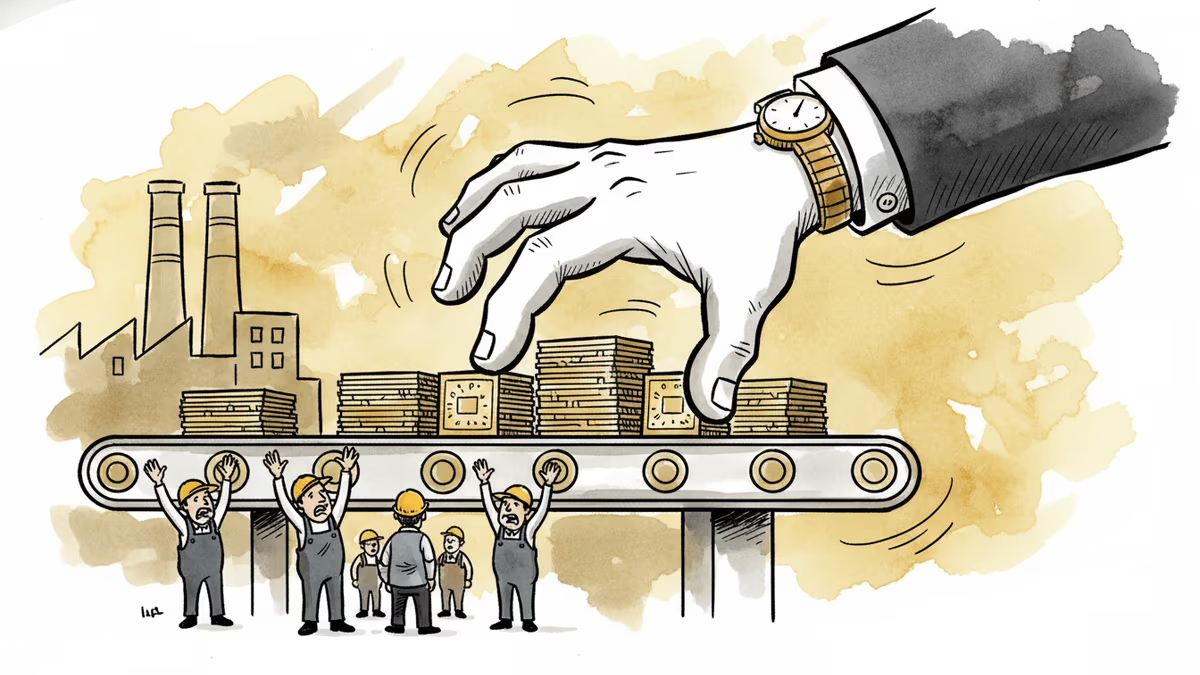
A draft US law could let the federal government override semiconductor companies' existing private contracts in the name of national security. Here's what's at stake for the industry.

Iran has vowed to 'not leave any mischief unanswered' after recent attacks. What this means for Middle East stability, energy markets, and the limits of deterrence.
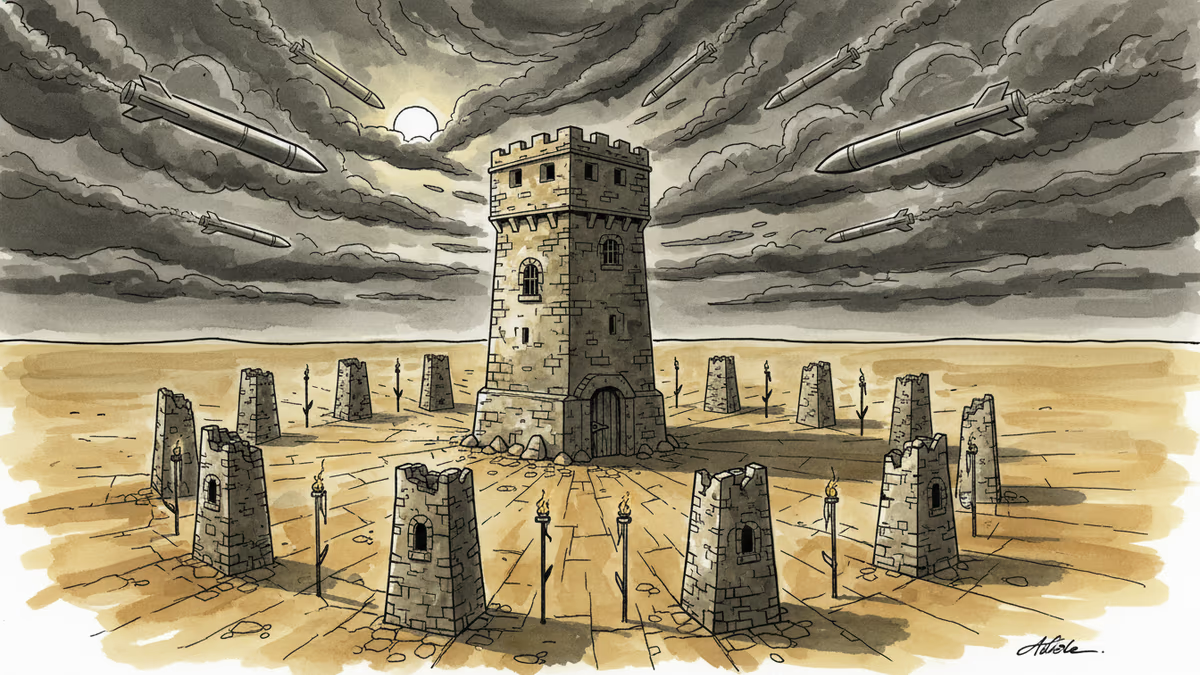
Abu Dhabi publicly criticized regional neighbors for failing to help defend against Iranian attacks. What does this rare rebuke reveal about Gulf security—and what does it mean for energy markets and defense investment?
Ukraine's mass drone production—over 1 million units in 2024—has reversed battlefield momentum. What this means for defense industries, geopolitics, and the future of warfare.
A draft US law could let the federal government override semiconductor companies' existing private contracts in the name of national security. Here's what's at stake for the industry.
Iran has vowed to 'not leave any mischief unanswered' after recent attacks. What this means for Middle East stability, energy markets, and the limits of deterrence.
Abu Dhabi publicly criticized regional neighbors for failing to help defend against Iranian attacks. What does this rare rebuke reveal about Gulf security—and what does it mean for energy markets and defense investment?
Thoughts
Share your thoughts on this article
Sign in to join the conversation