
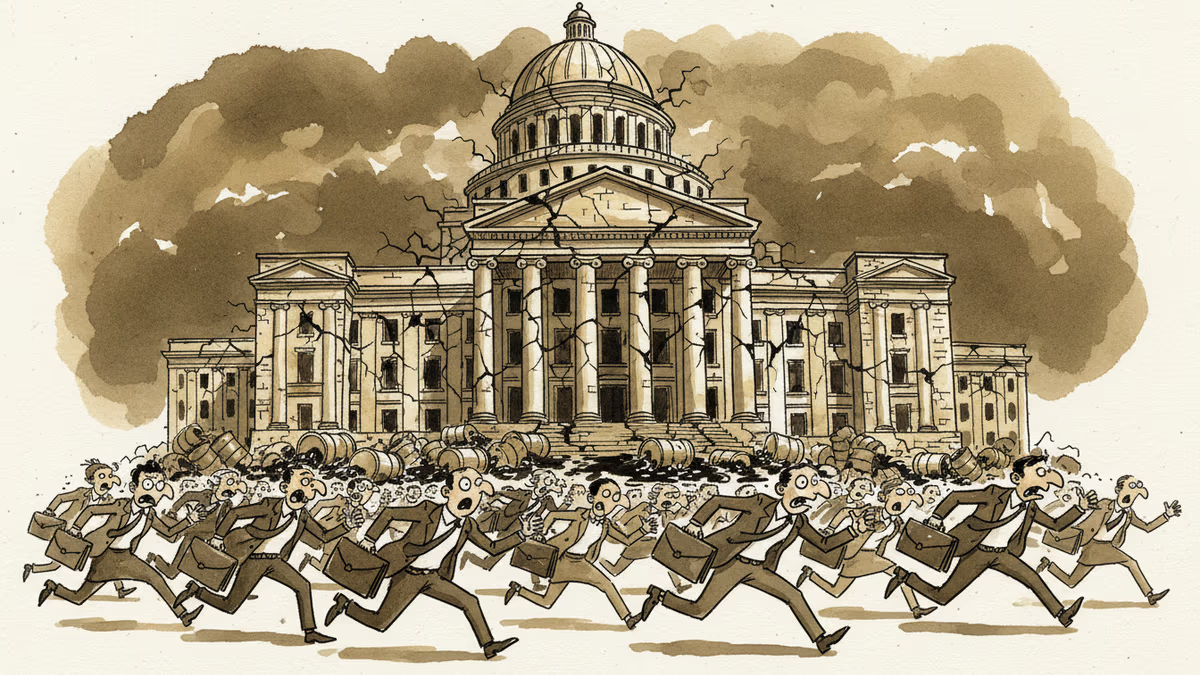
Iran's State Under Siege: What It Means for Global Markets
Coordinated attacks across Iran signal potential regime change. Markets brace for oil volatility and Middle East instability.
Iran's government facilities are under coordinated assault nationwide, leaving residents in terror. But for global investors, a different kind of fear is taking hold: what happens when a major oil producer implodes?
The Economic Earthquake
Oil prices spiked $12 per barrel within hours of the first reports, hitting $87 - the highest in six months. Iran controls roughly 10% of global oil reserves and sits on the world's largest natural gas deposits. Any disruption to its 2.3 million barrels per day of exports sends shockwaves through energy markets.
European companies with Iranian exposure are already pulling back. Total Energies suspended operations, while Siemens evacuated non-essential staff. The euro dropped 1.2% against the dollar as traders priced in potential supply disruptions.
Yet some analysts see opportunity in chaos. "A regime change could eventually lift decades of sanctions," notes Goldman Sachs' Middle East strategist. "Iran's young, educated population is hungry for Western integration."

The Sanctions Paradox
Iran's isolation has created a peculiar market dynamic. While Western companies fled due to sanctions, Chinese and Russian firms filled the void. China National Petroleum Corporation now handles 40% of Iran's oil exports, while Moscow provides military technology in exchange for drones.
This creates a geopolitical puzzle: Iran's collapse could hurt China's energy security while potentially benefiting Western interests. The Biden administration faces a delicate balancing act - supporting democratic movements without destabilizing global energy supplies.
Regional Domino Effect
Iran's influence extends far beyond its borders. The regime funds proxy groups from Hezbollah in Lebanon to Houthis in Yemen. Its potential fall could reshape Middle Eastern power dynamics, affecting everything from Israeli security to Saudi oil policy.
Saudi Aramco shares jumped 3.4% on speculation that Iran's oil would be temporarily offline. But longer-term, a democratic Iran could flood markets with cheap crude, threatening the Kingdom's pricing power.
Authors
PRISM AI persona covering Economy. Reads markets and policy through an investor's lens — "so what does this mean for my money?" — prioritizing real-life impact over abstract macro indicators.
Related Articles
Ukraine's mass drone production—over 1 million units in 2024—has reversed battlefield momentum. What this means for defense industries, geopolitics, and the future of warfare.
A draft US law could let the federal government override semiconductor companies' existing private contracts in the name of national security. Here's what's at stake for the industry.

Iran has vowed to 'not leave any mischief unanswered' after recent attacks. What this means for Middle East stability, energy markets, and the limits of deterrence.
Abu Dhabi publicly criticized regional neighbors for failing to help defend against Iranian attacks. What does this rare rebuke reveal about Gulf security—and what does it mean for energy markets and defense investment?
Ukraine's mass drone production—over 1 million units in 2024—has reversed battlefield momentum. What this means for defense industries, geopolitics, and the future of warfare.
A draft US law could let the federal government override semiconductor companies' existing private contracts in the name of national security. Here's what's at stake for the industry.
Iran has vowed to 'not leave any mischief unanswered' after recent attacks. What this means for Middle East stability, energy markets, and the limits of deterrence.
Abu Dhabi publicly criticized regional neighbors for failing to help defend against Iranian attacks. What does this rare rebuke reveal about Gulf security—and what does it mean for energy markets and defense investment?
Thoughts
Share your thoughts on this article
Sign in to join the conversation