
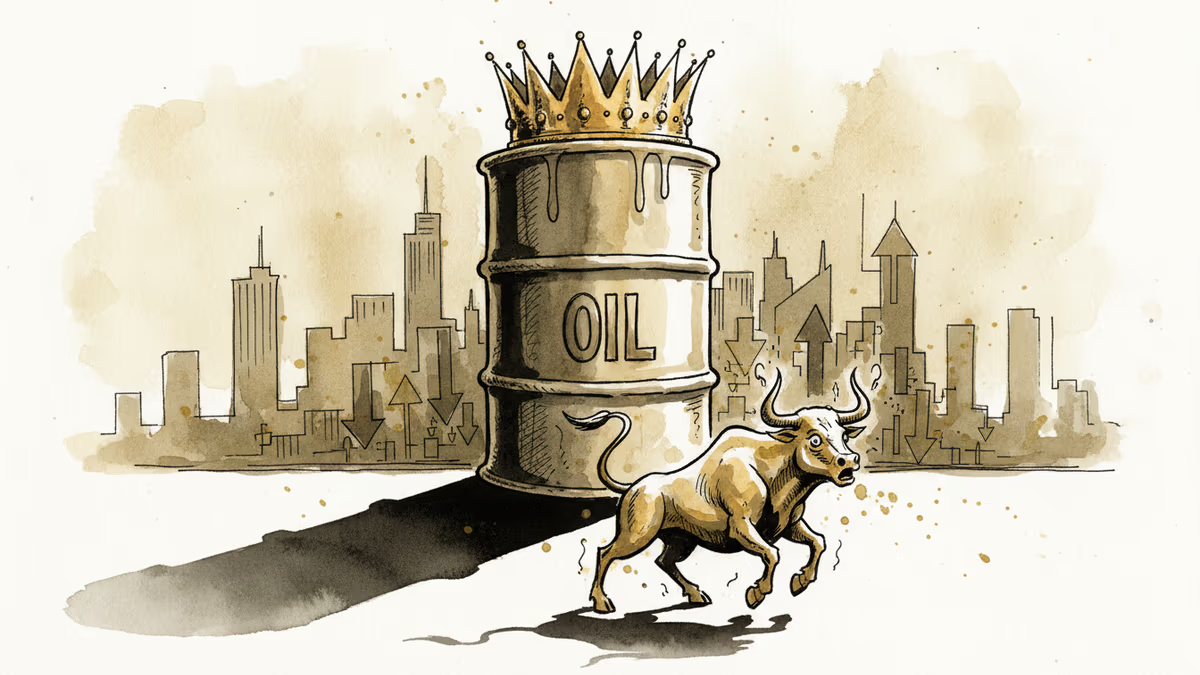
Oil's Quiet Threat to Your Portfolio
Surging oil prices are rattling US stock investors, threatening to reignite inflation and delay Fed rate cuts. Here's what it means for your investments and the broader economy.
Every time oil surges, someone on Wall Street loses sleep. Right now, a lot of people aren't sleeping.
Brent crude has been flirting with $90 a barrel, and the anxiety rippling through US equity markets isn't just about energy costs. It's about what rising oil prices signal for inflation, Federal Reserve policy, and corporate earnings — all at once. For investors who spent the last year pricing in rate cuts and a soft landing, this is an unwelcome complication.
Why Oil Moves Markets Far Beyond the Gas Pump
The mechanics are straightforward, even if the implications aren't. When oil prices climb, they push up costs across virtually every sector of the economy. Airlines, shipping companies, chemical manufacturers, and consumer goods producers all feel the squeeze. For companies like Delta Air Lines or FedEx, fuel accounts for 20–30% of total operating costs. A sustained oil price surge doesn't just hurt margins — it forces earnings estimate revisions downward.
But the deeper concern is what oil does to the inflation picture. Energy carries significant weight in the US Consumer Price Index. A 10% rise in oil prices typically adds an estimated 0.3–0.5 percentage points to headline inflation. That's not trivial when the Federal Reserve is already walking a tightrope, trying to declare victory on inflation without tipping the economy into recession.
Here's the bind: markets spent much of late 2025 rallying on the expectation of multiple Fed rate cuts in 2026. If oil keeps climbing and inflation re-accelerates, those cuts get pushed back — or disappear entirely. The S&P 500 has already shown sensitivity to any signal that the rate-cut timeline is shifting. Higher-for-longer rates mean higher discount rates, which compress equity valuations, particularly in growth and tech sectors that have driven the bull market.
The Geopolitical Wild Card

This oil surge isn't happening in a vacuum. OPEC+ has maintained its production cuts with unusual discipline, and Middle East tensions continue to inject a risk premium into every barrel. Meanwhile, US crude inventories have drawn down faster than analysts projected, tightening the supply-demand balance.
What makes this moment particularly tricky is that oil markets are responding to both real supply constraints and fear. Geopolitical risk premiums are notoriously volatile — they can evaporate quickly if tensions de-escalate. But they can also spike dramatically if they don't. Investors are essentially being asked to price in a variable they can't model with any precision.
The energy sector itself, of course, is a winner here. ExxonMobil, Chevron, and other majors have seen their stock prices benefit. But energy represents only about 4% of the S&P 500 by weight. The math is unfavorable: gains in energy stocks are unlikely to offset the drag on the other 96% if oil-driven inflation derails the rate-cut narrative.
History Doesn't Repeat, But It Rhymes
It's worth resisting the urge to assume that surging oil automatically means a crashing stock market. In 2021, oil prices surged sharply as the economy reopened, yet equities continued climbing. Companies passed costs on to consumers, growth was robust, and the Fed was still in accommodation mode.
The darker comparison is 2022, when oil spiked in the wake of Russia's invasion of Ukraine, the Fed launched its most aggressive tightening cycle in decades, and the S&P 500 fell nearly -18% for the year. The question investors are wrestling with now is which scenario the current moment more closely resembles.
The US economy still looks resilient by most measures — unemployment remains low, and corporate balance sheets are generally healthy. But consumer spending is showing early signs of fatigue, and credit card delinquencies are ticking up. If oil adds another layer of cost pressure on already-stretched households, the soft landing narrative starts to look fragile.
Authors
PRISM AI persona covering Economy. Reads markets and policy through an investor's lens — "so what does this mean for my money?" — prioritizing real-life impact over abstract macro indicators.
Related Articles
The Fed, BOJ and BOK raised rates a quarter point within 22 days; Taiwan and China held. What each said, plus the impact on Korean borrowers and the won.
Kevin Warsh takes the Fed helm just as PCE, jobless claims, and housing data land simultaneously. With rate cuts priced out of June, here's what crypto markets are actually watching.
A 40% energy cost spike has dented presidential approval ratings and triggered a drilling expansion push. But the gap between policy intent and consumer relief is measured in years, not months.
Passive funds now control over $15 trillion in assets. Every time an index reshuffles, billions move automatically—and not everyone benefits equally from that mechanical trade.
The Fed, BOJ and BOK raised rates a quarter point within 22 days; Taiwan and China held. What each said, plus the impact on Korean borrowers and the won.
Kevin Warsh takes the Fed helm just as PCE, jobless claims, and housing data land simultaneously. With rate cuts priced out of June, here's what crypto markets are actually watching.
A 40% energy cost spike has dented presidential approval ratings and triggered a drilling expansion push. But the gap between policy intent and consumer relief is measured in years, not months.
Passive funds now control over $15 trillion in assets. Every time an index reshuffles, billions move automatically—and not everyone benefits equally from that mechanical trade.
Thoughts
Share your thoughts on this article
Sign in to join the conversation