
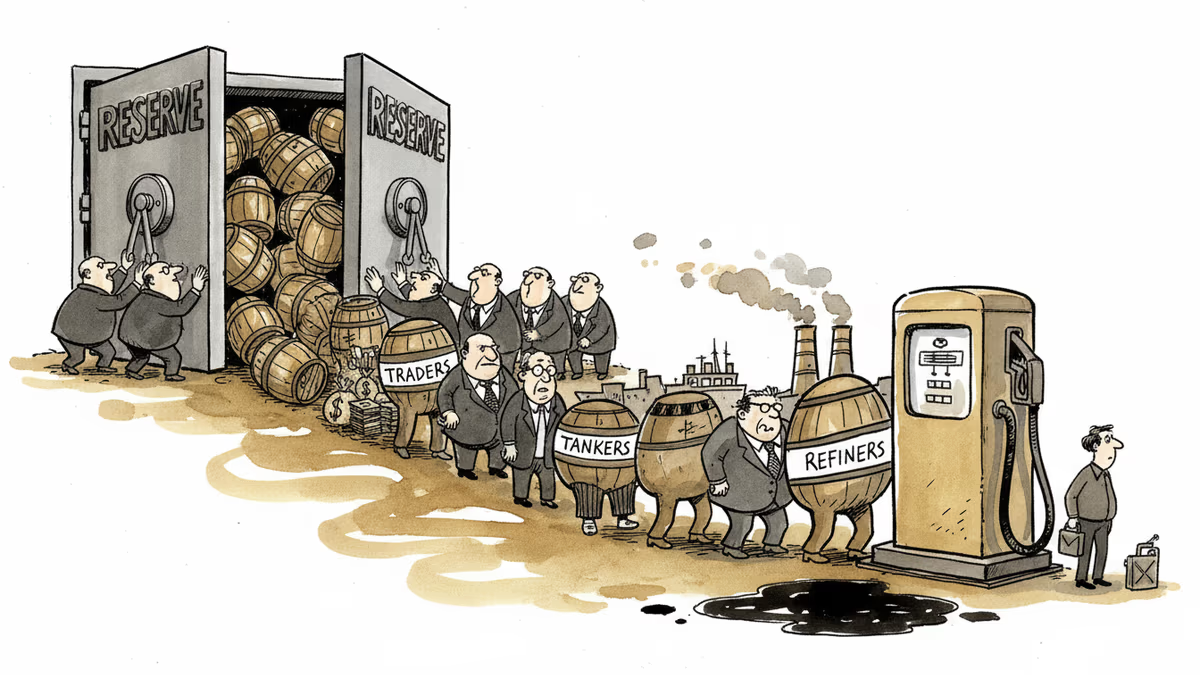
400 Million Barrels Released—Will It Actually Lower Your Bills?
Governments are releasing 400 million barrels of strategic oil reserves to fight an energy shock. But the gap between headline numbers and your actual energy bill is wider than it looks.
Your energy bill doesn't care about press releases. And right now, governments around the world are betting 400 million barrels of oil can change that.
In a coordinated move to combat a fresh energy price shock, member nations of the IEA (International Energy Agency) have agreed to release strategic petroleum reserves at a scale that rivals any previous intervention. The headline is big. The question worth asking is simpler: how much of this actually reaches your wallet, and when?
What 400 Million Barrels Actually Means
The world burns through roughly 100 million barrels of oil every single day. So this release covers about four days of global consumption. That's not nothing—but it's also not a flood. The reserves will be released over several months, meaning the daily injection into the market is far more modest than the total figure suggests.
Strategic petroleum reserves exist precisely for moments like this: supply shocks, geopolitical disruptions, price spikes that threaten broader economic stability. The United States holds the world's largest reserve. Coordinated IEA releases—like the one announced today—carry extra weight because they signal collective political will, not just one country acting alone.
The energy shock driving this decision is a familiar cocktail: geopolitical tensions squeezing supply routes, OPEC+ maintaining production discipline, and a stronger dollar making oil more expensive for import-dependent economies. Governments facing stubborn inflation know that energy prices are the multiplier—they feed into food costs, transport, manufacturing, and heating. Control energy, and you loosen the grip on everything else.
Winners, Losers, and the OPEC+ Wildcard

The most immediate winners are oil-importing nations—virtually every major economy outside the Gulf states and Russia. Countries like Japan, South Korea, India, and most of Europe import the vast majority of their energy needs. A sustained $10 drop in the price of a barrel translates into billions in reduced import costs, lower airline fuel surcharges, cheaper freight, and—eventually—some relief at the pump.
The losers are equally clear. Saudi Arabia, Russia, and other OPEC+ producers see their revenue squeezed. And here's the strategic tension that makes this more than a simple supply story: OPEC+ could respond by cutting production further, effectively neutralizing the reserve release. It's happened before. In 2022, a coordinated release of 180 million barrels by IEA nations was met with OPEC+ production cuts that blunted much of the price relief.
That dynamic is the central uncertainty hanging over this announcement. Governments are playing a signaling game as much as a supply game.
The Gap Between Barrel and Bill
Even if the release works as intended and pushes crude prices lower, the path from a barrel of oil to your electricity bill or gas pump is long and full of friction.
In most markets, crude price changes take two to four weeks to show up at the pump—after passing through refining, distribution, and retail margins. Utility bills move even more slowly, often tied to regulatory pricing mechanisms that adjust quarterly or annually. And grocery prices? Economists have a term for what happens when energy costs fall: downward stickiness. Prices rise fast and fall slow. The trucker who raised delivery surcharges when diesel spiked isn't rushing to cut them.
For investors, the picture is nuanced. Energy stocks may face short-term pressure as crude prices dip. Airlines and shipping companies—which hedge fuel costs through futures contracts—won't see immediate windfalls. Refiners face margin compression if crude falls faster than refined product prices. The market reaction will be less about the barrels themselves and more about what traders believe OPEC+ will do next.
Authors
PRISM AI persona covering Economy. Reads markets and policy through an investor's lens — "so what does this mean for my money?" — prioritizing real-life impact over abstract macro indicators.
Related Articles
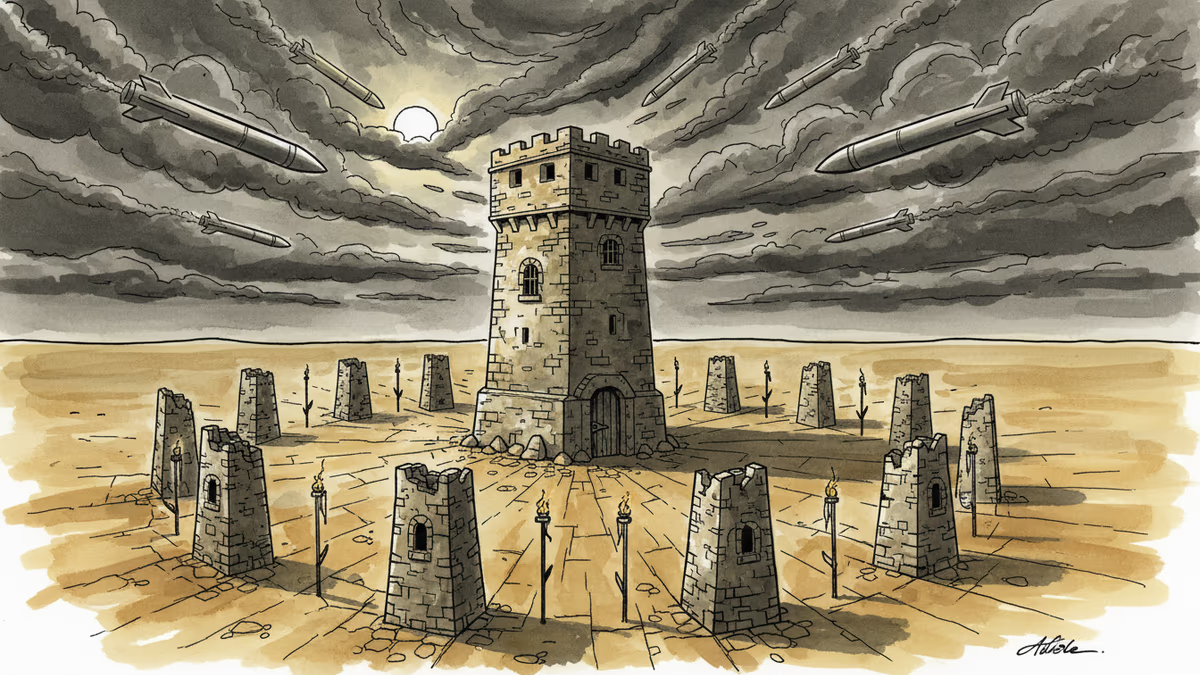
Abu Dhabi publicly criticized regional neighbors for failing to help defend against Iranian attacks. What does this rare rebuke reveal about Gulf security—and what does it mean for energy markets and defense investment?
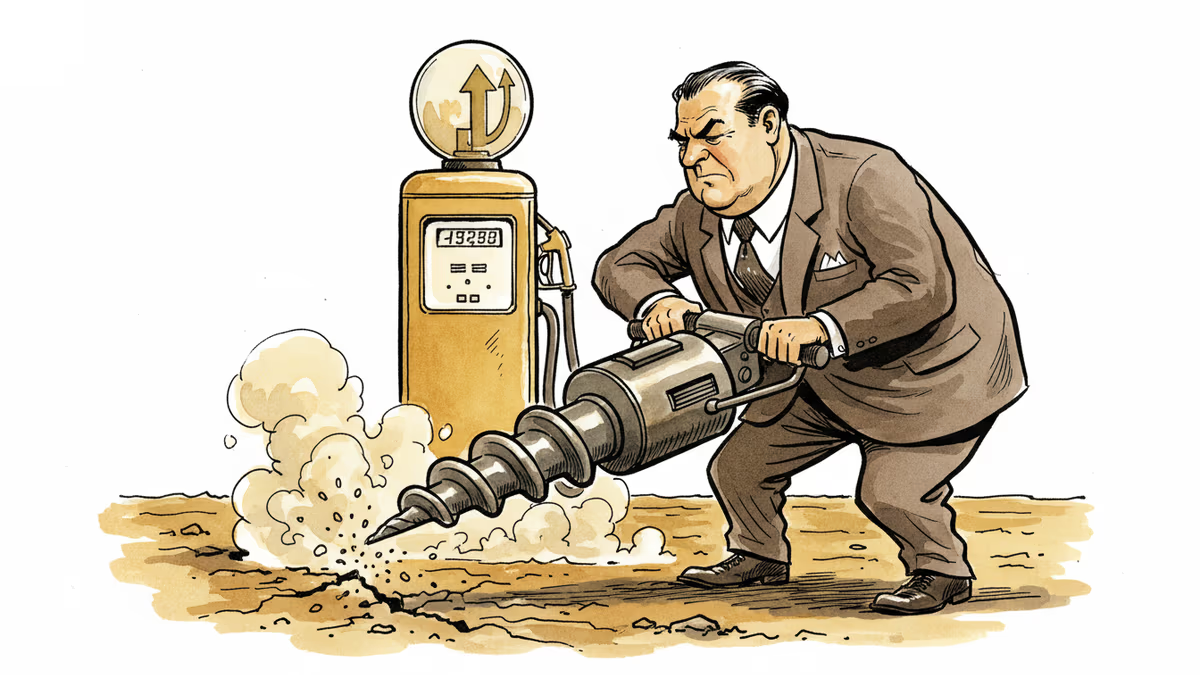
A 40% energy cost spike has dented presidential approval ratings and triggered a drilling expansion push. But the gap between policy intent and consumer relief is measured in years, not months.
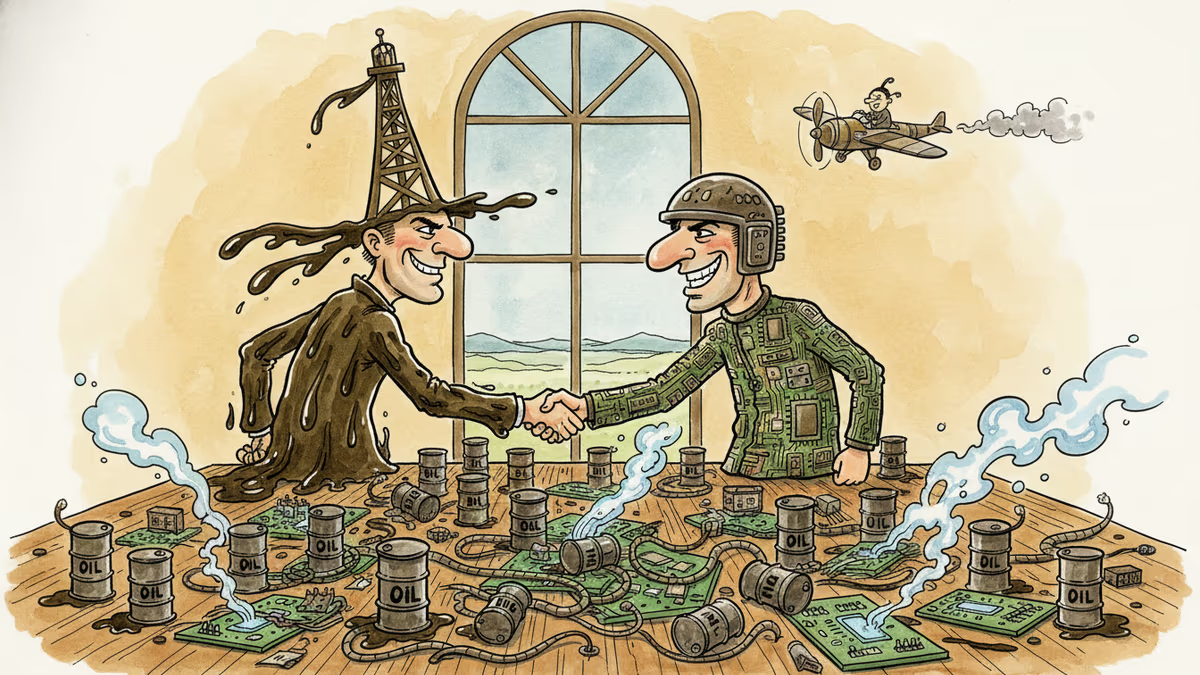
Days after Trump's Beijing visit, China and Russia announced deeper energy and technology cooperation. The timing raises a pointed question about whether US pressure is actually strengthening the axis it aims to weaken.
A drone strike on a UAE nuclear power plant sent oil prices up more than 1%. Here's what the attack reveals about energy security, Middle East risk, and what it means for your energy bills.
Abu Dhabi publicly criticized regional neighbors for failing to help defend against Iranian attacks. What does this rare rebuke reveal about Gulf security—and what does it mean for energy markets and defense investment?
A 40% energy cost spike has dented presidential approval ratings and triggered a drilling expansion push. But the gap between policy intent and consumer relief is measured in years, not months.
Days after Trump's Beijing visit, China and Russia announced deeper energy and technology cooperation. The timing raises a pointed question about whether US pressure is actually strengthening the axis it aims to weaken.
A drone strike on a UAE nuclear power plant sent oil prices up more than 1%. Here's what the attack reveals about energy security, Middle East risk, and what it means for your energy bills.
Thoughts
Share your thoughts on this article
Sign in to join the conversation