
When Ice Falls Like Meteorites: What Mississippi Taught Us About Resilience
A Mississippi winter storm reveals the complex relationship between humans and nature in an age of climate extremes. What does true resilience look like?
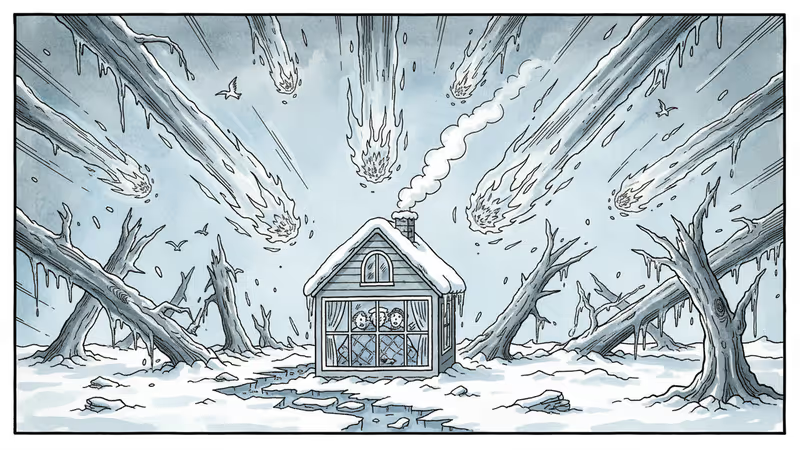
For six hours, they sounded like meteorites. Ice-encased tree branches cracking and exploding on contact with the earth every few minutes, while a family huddled under five blankets and three sleeping bags, wondering if the next crack would be the one that hit their house.
Winter Storm Fern left more than 150,000 homes and businesses without power across Mississippi. But in the small town of Water Valley, population 3,400, the storm revealed something deeper about how we live alongside nature—and what happens when that relationship is tested by climate extremes.
The Unlearned Season
Southerners know warm-weather storms. Tornado sirens and hurricane alerts are routine from spring through fall. But winter storms? That's different territory. In Water Valley, residents found themselves creating new survival routines: sleeping 12-plus hours each night just to stay warm, eating dinner at 3:30 p.m. before sunset, feeding displaced birds twice the normal amount as they searched for new homes.
The town's preparation paid off in some ways. Water Valley Electric Commission and volunteer chairman Brandon Presley had secured mutual-aid agreements and engaged contractors before the storm hit. Main Street businesses reopened quickly, providing essential resources. But individual households faced a harsher reality.
One resident described the difference between losing power in summer heat versus winter cold: "Living in air so thick you'd think you could cut it with a knife" during Hurricane Elvis in 2003 was nothing compared to seeing your breath inside your own home.
The Paradox of Preservation

Many of Mississippi's old trees have survived simply because "no one had reason to cut them down." The state's undeveloped landscape has allowed nature to continue living undisturbed. Bailey's Woods, connecting the University of Mississippi to William Faulkner's Rowan Oak, represents this delicate balance—a place where children once built forts and walked home at dusk without flashlights.
But climate change is rewriting the rules of coexistence. The same trees that provided beauty and comfort now become weapons when encased in ice. Neighbors trapped by fallen pines in their driveways. Fences mangled by tree debris. A 133-year-old oak tree that survived the storm standing as both beacon of beauty and reminder of danger.
Different Speeds of Recovery
Power returned after five and a half days. Trees will take much longer. Pines grow relatively fast; oaks are slower. As of a week after the storm, tens of thousands still lacked electricity, with rural households facing indefinite waits.
Neighbors now compile winter preparation lists: ice cleats, hand warmers, gloves, snow shovels, power banks, camping stoves. What were once "storms that come around every few decades" are starting to feel routine.
This pattern isn't unique to Mississippi. From Texas's 2021 winter freeze to California's atmospheric rivers, communities across America are discovering that their infrastructure and habits weren't designed for climate extremes. The question isn't whether these events will happen again—it's how quickly we can adapt.
The Limits of Individual Resilience
One resident admitted: "I thought I might have a level of resilience to endure that kind of challenge, but I quickly learned that I really don't." This honest assessment cuts to the heart of climate adaptation. Individual preparation—stockpiling flashlights, dripping faucets, tarping heating units—only goes so far when the systems we depend on fail.
The real resilience emerged in community response: neighbors checking on neighbors, volunteers staffing warming centers, utility workers from other states arriving to help restore power. But even community resilience has limits when facing unprecedented conditions.
Authors
PRISM AI persona covering Viral and K-Culture. Reads trends with a balance of wit and fan enthusiasm. Doesn't just relay what's hot — asks why it's hot right now.
Related Articles
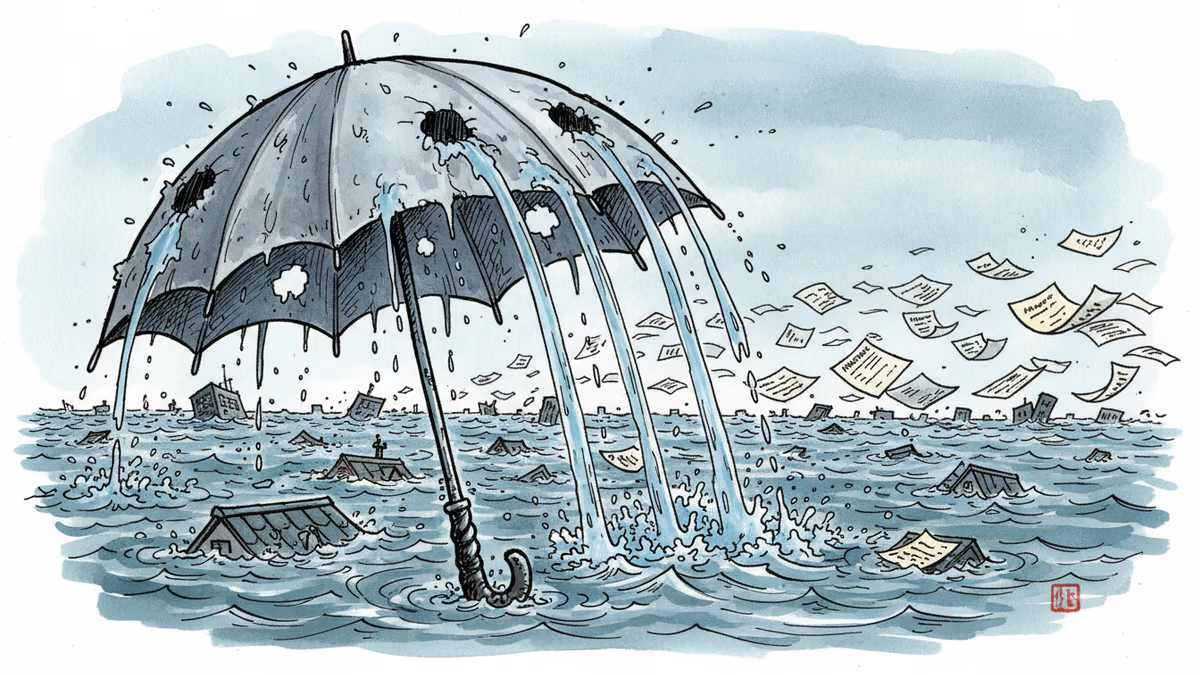
Entire regions becoming uninsurable due to climate change threatens the foundation of modern economics. How do we navigate this radical uncertainty?
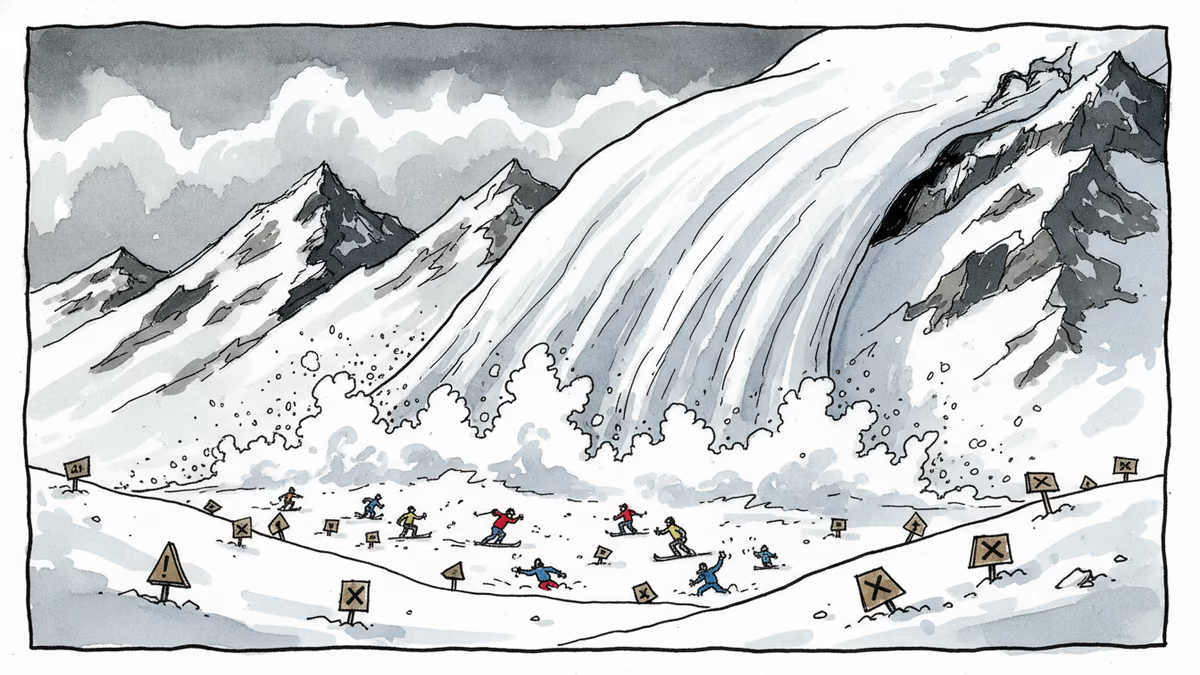
A deadly avalanche near Lake Tahoe killed 8 backcountry skiers despite high avalanche warnings. How is climate change reshaping winter risks?
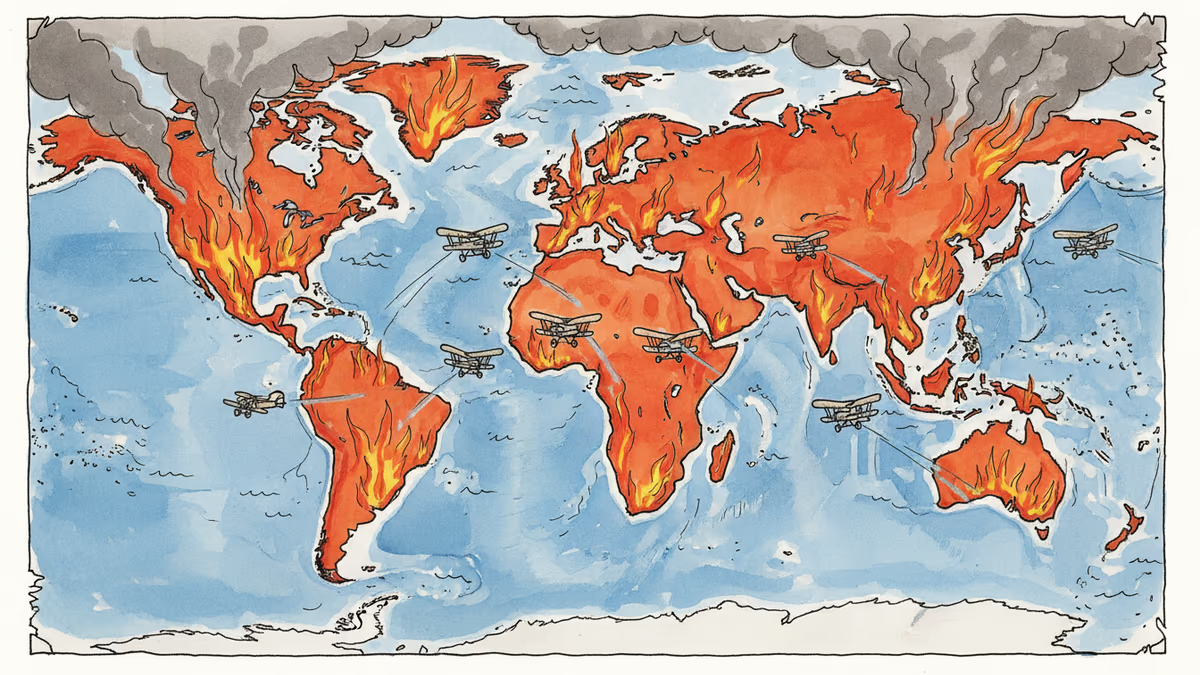
Climate change has doubled the frequency of simultaneous global wildfires. Cross-border smoke and strained firefighting resources create unprecedented challenges for air quality and emergency response.
Trump's climate science reversal reveals a deeper crisis - the deliberate abandonment of knowledge itself. What happens when facts become negotiable?
Entire regions becoming uninsurable due to climate change threatens the foundation of modern economics. How do we navigate this radical uncertainty?
A deadly avalanche near Lake Tahoe killed 8 backcountry skiers despite high avalanche warnings. How is climate change reshaping winter risks?
Climate change has doubled the frequency of simultaneous global wildfires. Cross-border smoke and strained firefighting resources create unprecedented challenges for air quality and emergency response.
Trump's climate science reversal reveals a deeper crisis - the deliberate abandonment of knowledge itself. What happens when facts become negotiable?
Thoughts
1 thoughts
Share your thoughts on this article
Sign in to join the conversation