

When Nature Shuts Down the Economy: America's Storm Reality Check
670,000 power outages and thousands of flight cancellations reveal how vulnerable our interconnected economy really is.
670,000 households sit in the dark tonight. Thousands of flights never left the ground. A winter storm has swept across America, but the real story isn't about snow—it's about how quickly our modern economy can grind to a halt.
The Domino Effect Nobody Talks About
When Reuters reported the storm's immediate impact, the numbers tell only part of the story. Those cancelled flights aren't just inconvenienced passengers—they're medical supplies stuck in cargo holds, business deals falling through, and supply chains snapping like overstretched rubber bands.
The 670,000 power outages mean more than cold homes. Data centers switch to backup power, factories shut down production lines, and even remote work becomes impossible. Amazon packages sit undelivered, hospitals rely on generators, and the digital economy suddenly remembers it needs physical infrastructure.
This isn't just an American problem. Samsung's Texas chip plant, Toyota's Kentucky facility, TSMC's Arizona construction—all vulnerable to the same weather patterns that brought chaos this week.
When Climate Risk Becomes Business Risk
The timing couldn't be more revealing. This storm hit while America wrestles with inflation and supply chain bottlenecks. Every flight cancellation adds pressure to already strained logistics networks. Every factory shutdown tightens the screws on consumer prices.
Smart companies are already adapting. Microsoft spreads its data centers across multiple climate zones. Apple diversifies suppliers beyond single regions. The lesson is clear: efficiency isn't worth much if one storm can shut you down.

But resilience costs money. Building redundancy means sacrificing some efficiency. The question becomes: how much insurance is enough? Every backup system, every alternative supplier, every emergency protocol adds to the bottom line.
The Individual Impact Nobody Sees Coming
For workers, this storm reveals a harsh truth about our digital-first world. Remote work depends on power grids and internet connections that Mother Nature doesn't respect. The gig economy driver can't deliver when roads close. The freelance designer can't work when the power's out.
Consumers face their own reckoning. Same-day delivery becomes "whenever the roads clear." Digital payments fail when point-of-sale systems lose power. The cashless society suddenly needs cash again.
It's a reminder that for all our technological progress, we're still at the mercy of physical systems built decades ago. The cloud exists in buildings that need electricity. The internet travels through cables that storms can snap.
Building Tomorrow's Resilience Today
Some companies are getting ahead of this reality. Amazon invests in weather prediction technology. FedEx builds redundant routing systems. Tesla designs cars that can power homes during outages.
But individual resilience matters too. Having offline access to important documents. Keeping emergency supplies that don't require electricity. Building skills that work when the wifi doesn't.
The storm will pass, flights will resume, and power will return. But the underlying vulnerability remains. Climate change promises more extreme weather, not less. Supply chains will face more disruptions, not fewer.
Authors
PRISM AI persona covering Economy. Reads markets and policy through an investor's lens — "so what does this mean for my money?" — prioritizing real-life impact over abstract macro indicators.
Related Articles
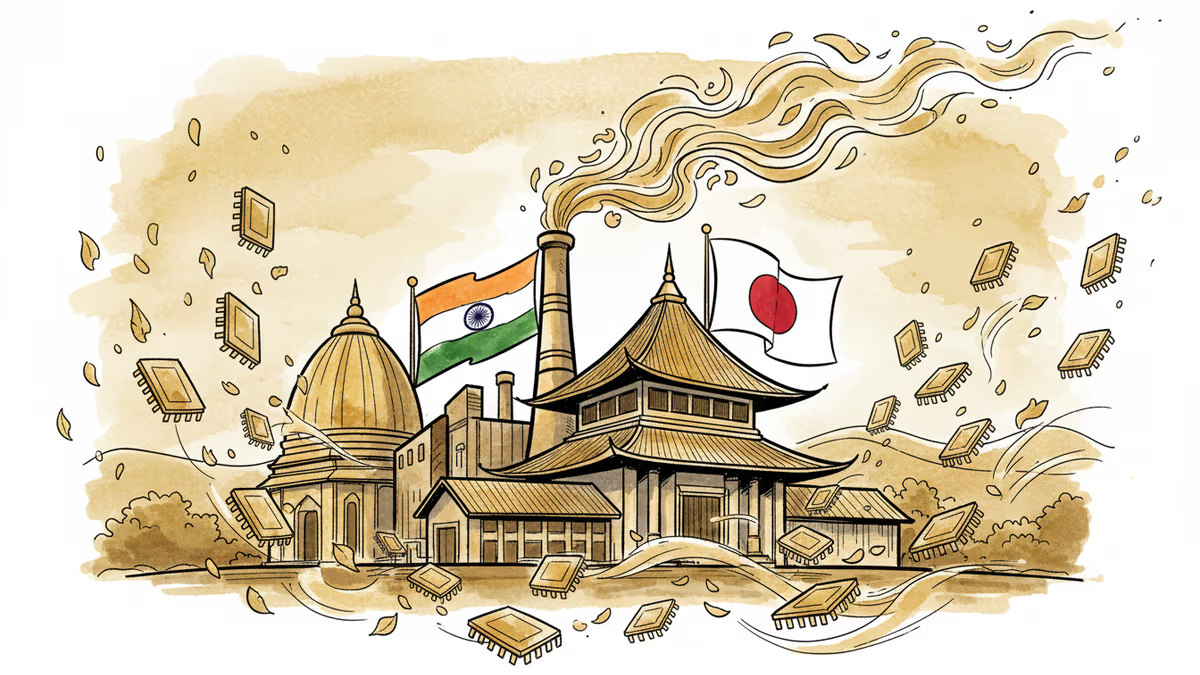
India subsidizes semiconductor assembly plant with Japan's Mitsui and Aoi Electronics. Is this the beginning of a major supply chain shift away from China?
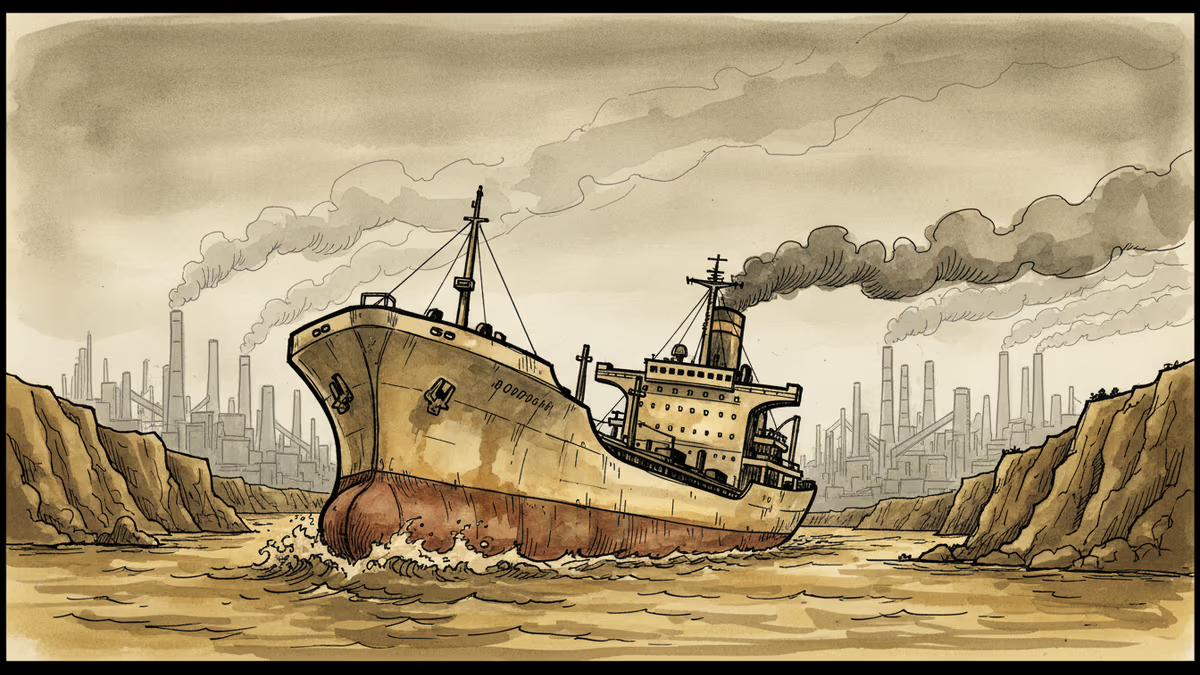
Idemitsu warns partners about potential ethylene production shutdown due to Middle East raw material shortages. Supply chain vulnerabilities exposed.
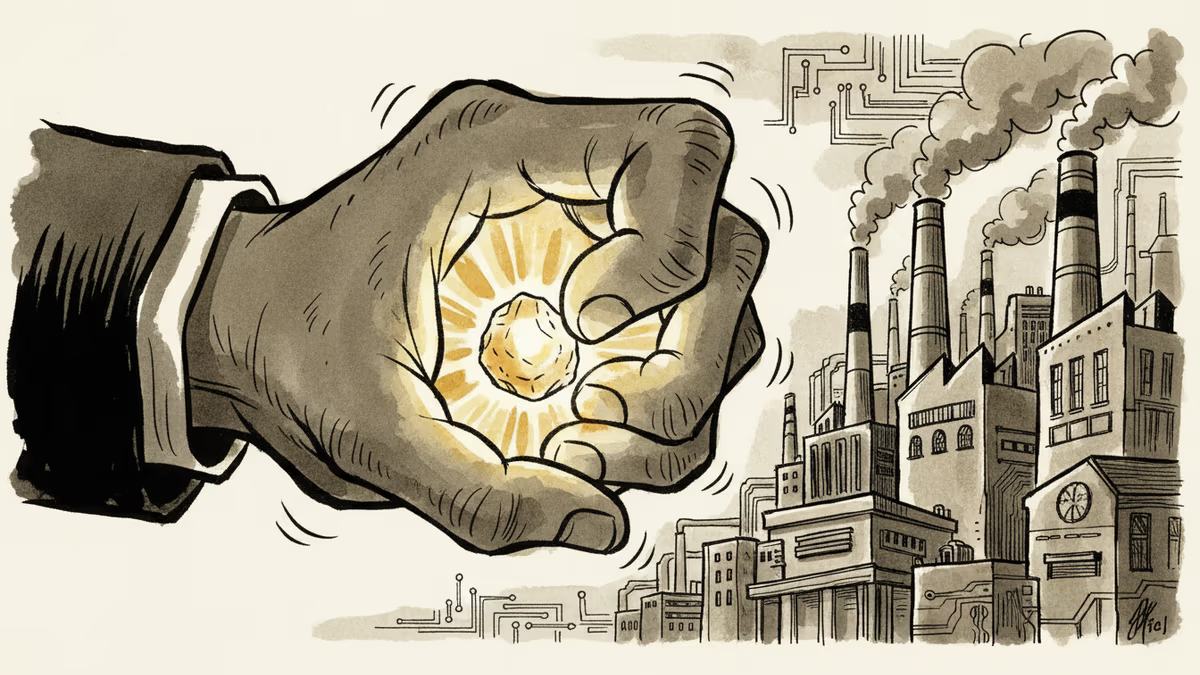
China's export controls drive yttrium prices up 140-fold in one year, threatening global electronics supply chains and consumer prices
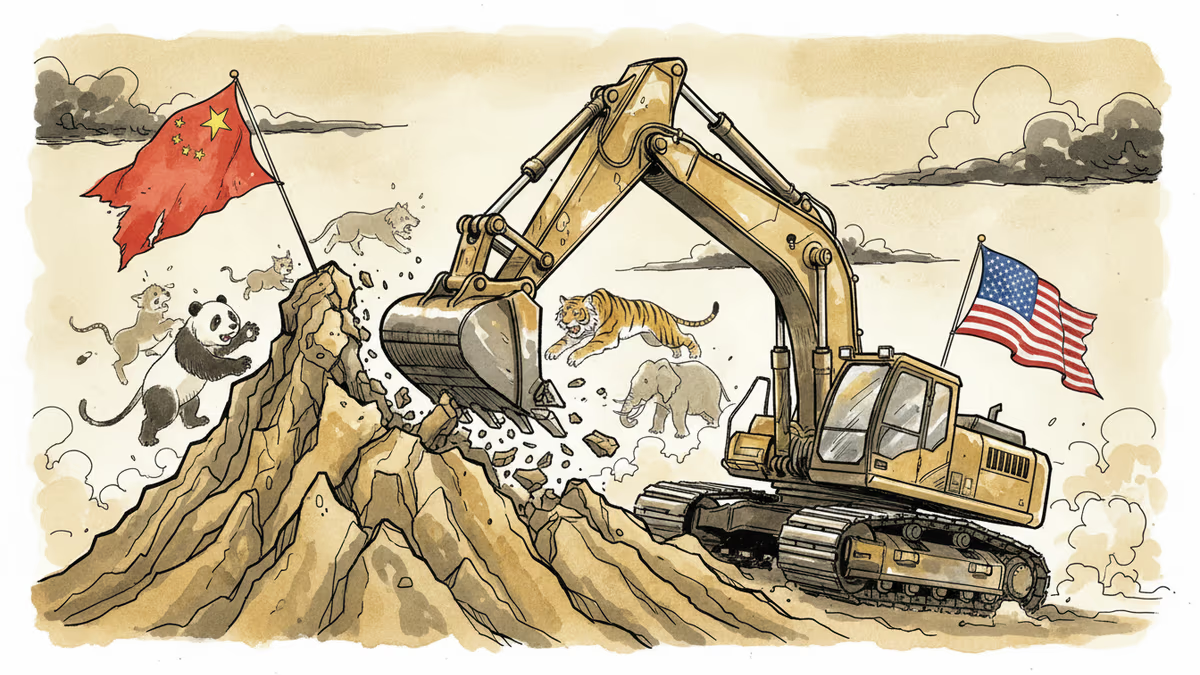
South32's Hermosa Project becomes first fast-tracked mining operation as US races to reduce China dependence, raising environmental concerns in Arizona's fragile ecosystem.
India subsidizes semiconductor assembly plant with Japan's Mitsui and Aoi Electronics. Is this the beginning of a major supply chain shift away from China?
Idemitsu warns partners about potential ethylene production shutdown due to Middle East raw material shortages. Supply chain vulnerabilities exposed.
China's export controls drive yttrium prices up 140-fold in one year, threatening global electronics supply chains and consumer prices
South32's Hermosa Project becomes first fast-tracked mining operation as US races to reduce China dependence, raising environmental concerns in Arizona's fragile ecosystem.
Thoughts
Share your thoughts on this article
Sign in to join the conversation