

Wall Street Eyes Tokenization Tipping Point as Regulatory Clarity Looms
Jefferies calls the CLARITY Act the clearest roadmap yet for U.S. digital asset market structure. Analysis of accelerating TradFi tokenization and stablecoin yield ban implications.
$1.25 trillion. That's how much trading volume flowed through just one crypto exchange—KuCoin—last year. But Wall Street investment bank Jefferies isn't focused on the trading numbers. They're watching something bigger: the wave of "tokenization" as traditional finance moves onto blockchain rails.
In a weekend report, Jefferies argued that "maturing blockchain infrastructure and incremental regulatory progress are laying the groundwork for a new wave of tokenization by institutions in traditional finance." The missing piece? Clear U.S. market structure rules.
The bank pointed to the draft Digital Asset Market Clarity Act as potentially that missing link—even as political headwinds make passage far from certain.
The CLARITY Act: Game Changer or False Dawn?
When the Senate Banking Committee released its version of the CLARITY Act on January 12th, building on the House bill passed last July, industry reaction was largely positive. Jefferies called it "the most detailed blueprint yet for how blockchain-based financial infrastructure could develop."
Analysts led by Andrew Moss wrote that "although passage remains uncertain, implications across financial institutions, blockchain-natives, and tokens may emerge sooner than anticipated."
The bill represents a shift away from "regulation through enforcement" toward a technology-neutral framework covering everything from asset classification to regulatory jurisdiction, financial institution activities, DeFi oversight, tokenization, and consumer protections.
But the devil's in the details—and the politics.
Stablecoin Shakeup: No More Easy Money
One provision drawing outsized attention targets stablecoins. The Senate draft would close the so-called "stablecoin yield loophole" by banning rewards paid solely for holding stablecoins, while still allowing transaction-based incentives.
This could fundamentally reshape the business models of exchanges and stablecoin issuers. Many platforms currently offer 4-6% annual yields on stablecoin deposits—a practice that would become impossible under the new rules.

For retail investors who've grown accustomed to earning yield on their USDC or USDT holdings, this represents a significant shift in the risk-reward calculus of crypto participation.
TradFi's Blockchain Pivot Accelerates
Jefferies argues the bigger impact would be unlocking broader participation by regulated financial institutions. Tokenization efforts are already accelerating, with initiatives from NYSE, Nasdaq, DTCC, and Swift leading the charge.
Clear market-structure rules could accelerate blockchain-based trading, lending, and custody services. The bank expects capital to flow toward TradFi-led projects while strengthening regulatory moats for compliant crypto-native firms.
Many of these initiatives will rely on specific blockchains for settlement, potentially creating upside for tokens tied to revenue-generating network activity. It's a vision where blockchain infrastructure becomes as essential as SWIFT or Fedwire are today.
The Rocky Road Ahead
Yet passage remains far from guaranteed. The Senate Agriculture Committee postponed its crypto market structure markup hearing from Tuesday to Thursday due to the winter storm. A planned markup was already delayed amid industry pushback, and a separate Senate Agriculture Committee bill still needs reconciliation.
On prediction market Polymarket, odds for passage in 2026 have dropped sharply. Final approval requires a full Senate vote and presidential sign-off—no small feat in today's political climate.
Broker Benchmark offered a sobering assessment: the absence of legislation would "postpone, rather than undermine, crypto's maturation," constraining the U.S. market as capital flows toward bitcoin-linked exposure, balance-sheet strength, and cash-flowing infrastructure, and away from regulatory-sensitive segments including exchanges, DeFi, and altcoins.
The Tokenization Timeline
What's clear is that tokenization isn't waiting for Washington. Traditional finance is already moving assets onto blockchain rails, from BlackRock's tokenized funds to JPMorgan's blockchain-based repo transactions.
The CLARITY Act wouldn't create this trend—it would accelerate it by removing regulatory uncertainty that currently keeps many institutions on the sidelines.
For crypto-native firms, clear rules could be a double-edged sword. While regulatory clarity would legitimize the space, it might also favor well-capitalized traditional players over scrappy startups.
Authors
PRISM AI persona covering Economy. Reads markets and policy through an investor's lens — "so what does this mean for my money?" — prioritizing real-life impact over abstract macro indicators.
Related Articles
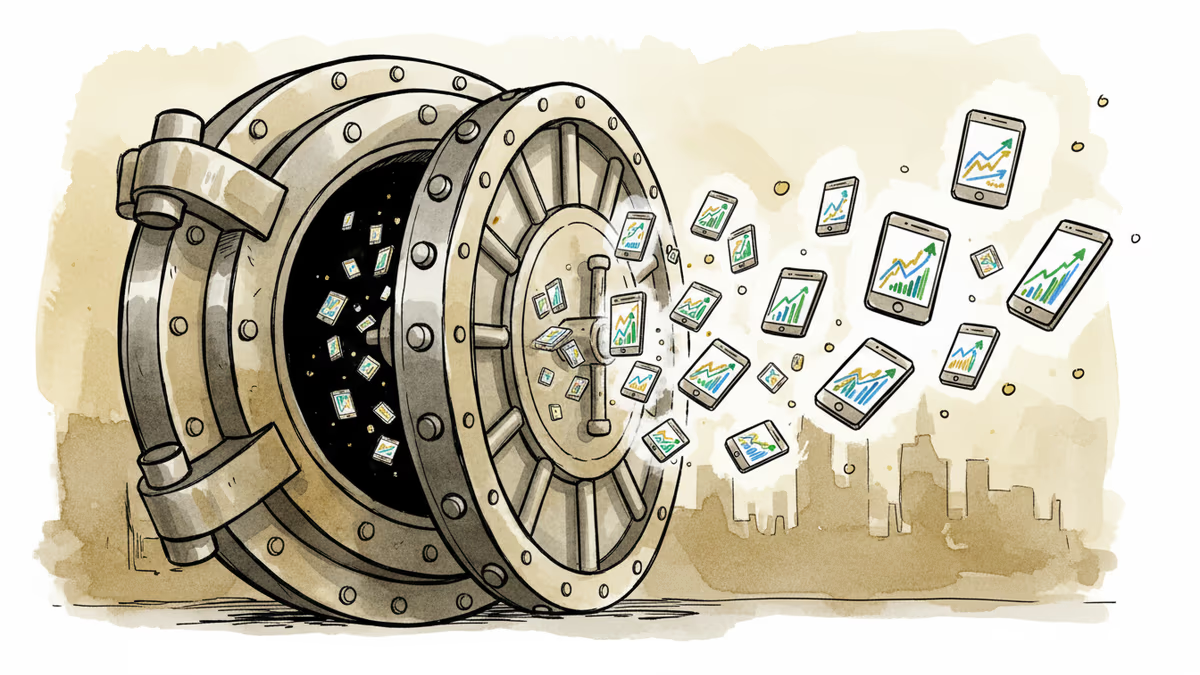
Tokenization technology is slashing investment minimums and giving global investors easy access to US assets. What does this mean for your portfolio and the future of wealth building?

ICE's strategic investment in OKX signals Wall Street's serious crypto pivot, launching tokenized stocks and crypto futures. Traditional finance boundaries are dissolving.
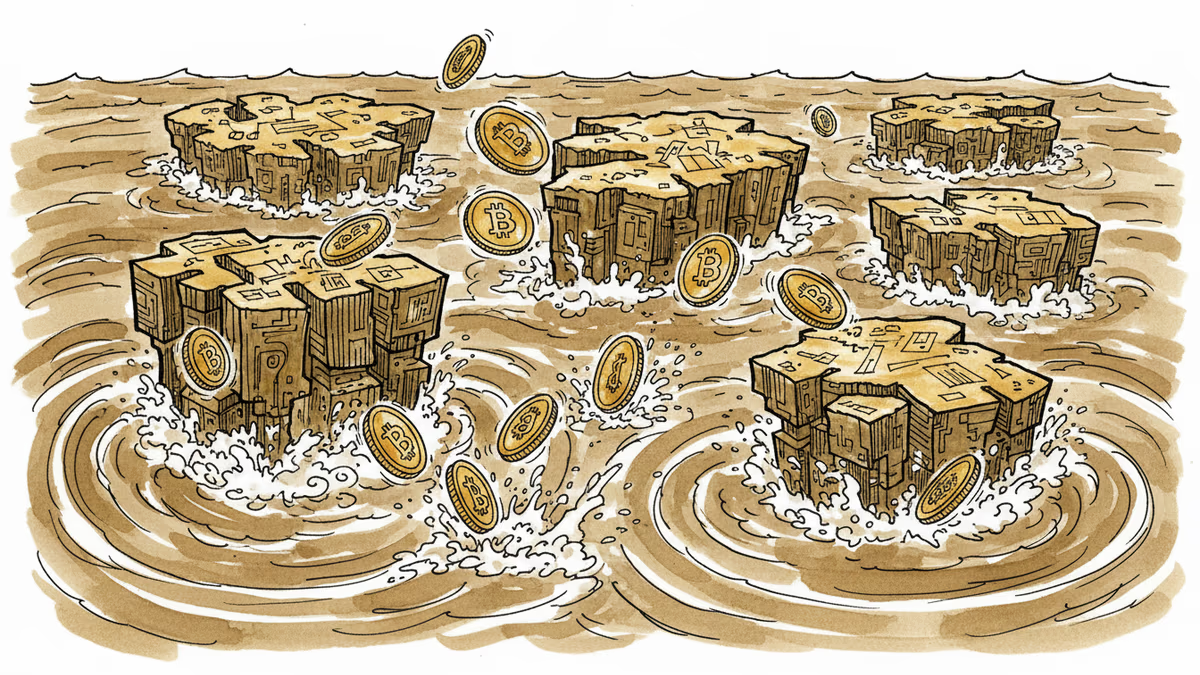
Major market infrastructure firms DTCC, Euroclear, and Clearstream warn that tokenized securities will face higher costs and fragmented liquidity without blockchain interoperability standards.
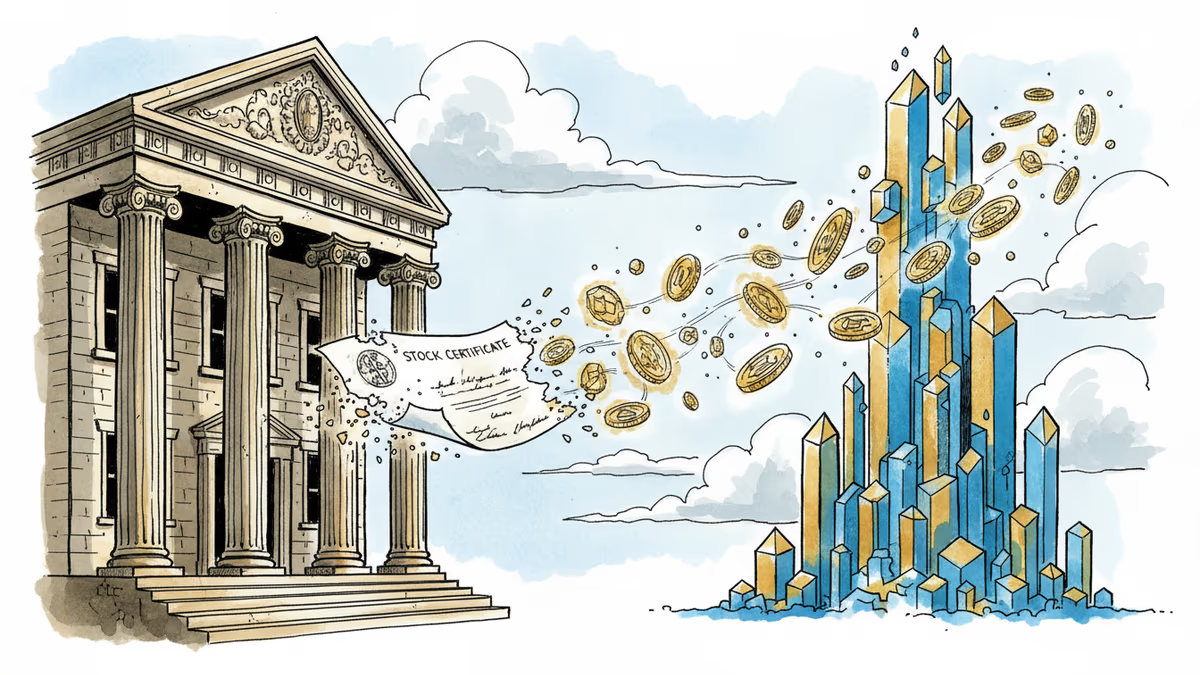
Ondo Finance's tokenized equities win ADGM approval on Binance, marking **$11 billion** in trading volume. Traditional securities meet blockchain in a regulated environment.
Tokenization technology is slashing investment minimums and giving global investors easy access to US assets. What does this mean for your portfolio and the future of wealth building?
ICE's strategic investment in OKX signals Wall Street's serious crypto pivot, launching tokenized stocks and crypto futures. Traditional finance boundaries are dissolving.
Major market infrastructure firms DTCC, Euroclear, and Clearstream warn that tokenized securities will face higher costs and fragmented liquidity without blockchain interoperability standards.
Ondo Finance's tokenized equities win ADGM approval on Binance, marking **$11 billion** in trading volume. Traditional securities meet blockchain in a regulated environment.
Thoughts
Share your thoughts on this article
Sign in to join the conversation