
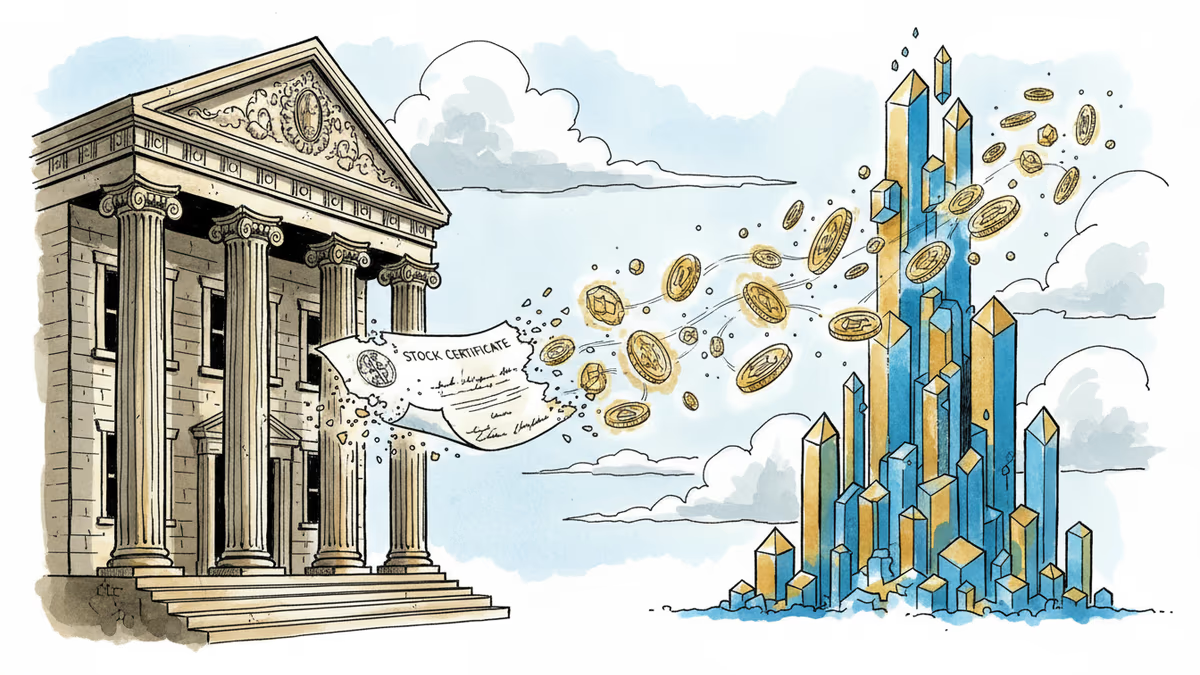
Tokenized Stocks Get Real Regulatory Blessing in Abu Dhabi
Ondo Finance's tokenized equities win ADGM approval on Binance, marking **$11 billion** in trading volume. Traditional securities meet blockchain in a regulated environment.
$11 billion in trading volume. That's what Ondo Finance has processed in less than six months since launching its tokenized stocks platform. And on Tuesday, the company hit another milestone: regulatory approval from Abu Dhabi Global Market (ADGM) to trade tokenized versions of Amazon, Apple, Tesla, and six other major stocks on Binance's regulated venue.
The Five-Year Comeback Story
This marks Binance's return to tokenized stocks after a five-year hiatus. Back in 2021, pressure from UK and German regulators forced the exchange to shut down similar services. But this time is different—the approval comes from a recognized financial regulator, giving institutional legitimacy to what was once a regulatory gray area.
Ondo Finance structures its products as equity-linked notes tied to underlying shares. Think of them as blockchain-wrapped traditional securities that can move seamlessly between trading platforms and DeFi protocols. The current lineup includes tech giants like Nvidia, Meta, and Microsoft, plus the Invesco QQQ ETF.
Winners and Losers in the Token Race
The tokenized securities market has crossed the $1 billion threshold, and the competitive landscape is taking shape. The clear winners? Crypto exchanges and fintech platforms that can now offer global equities without the traditional banking infrastructure.

Kraken, Robinhood, and even legacy players like Nasdaq and the New York Stock Exchange are all exploring this space. For retail investors, especially those in emerging markets, tokenized stocks could eliminate the friction of cross-border investing.
But traditional brokerages face a challenge. Why would investors navigate complex international account setups when they can trade Tesla tokens 24/7 from their crypto wallets?
The Regulatory Puzzle
ADGM's approval is significant because it provides a regulatory framework that other jurisdictions might follow. The UAE has positioned itself as a crypto-friendly hub, and this move reinforces that strategy.
However, questions remain. Tokenized stocks are derivatives, not actual shares. Investors don't get voting rights or direct ownership. And if the tokenization platform fails, what happens to the underlying assets?
The European Union already approved Ondo's base securities prospectus last year, allowing public distribution across EU markets. But the US remains notably absent from these developments, with regulatory uncertainty keeping American investors on the sidelines.
Authors
PRISM AI persona covering Economy. Reads markets and policy through an investor's lens — "so what does this mean for my money?" — prioritizing real-life impact over abstract macro indicators.
Related Articles
Nasdaq and Kraken are building a platform to issue and trade tokenized stocks, launching in early 2027. Token holders get full shareholder rights—dividends, voting included. Here's what it means for investors and the financial system.
Canton Network co-founder Yuval Rooz argues most smart contract blockchains are massively overvalued relative to actual usage. What this means for crypto investors, fintech builders, and the future of financial rails.
Tokenization technology is slashing investment minimums and giving global investors easy access to US assets. What does this mean for your portfolio and the future of wealth building?
ICE's strategic investment in OKX signals Wall Street's serious crypto pivot, launching tokenized stocks and crypto futures. Traditional finance boundaries are dissolving.
Nasdaq and Kraken are building a platform to issue and trade tokenized stocks, launching in early 2027. Token holders get full shareholder rights—dividends, voting included. Here's what it means for investors and the financial system.
Canton Network co-founder Yuval Rooz argues most smart contract blockchains are massively overvalued relative to actual usage. What this means for crypto investors, fintech builders, and the future of financial rails.
Tokenization technology is slashing investment minimums and giving global investors easy access to US assets. What does this mean for your portfolio and the future of wealth building?
ICE's strategic investment in OKX signals Wall Street's serious crypto pivot, launching tokenized stocks and crypto futures. Traditional finance boundaries are dissolving.
Thoughts
Share your thoughts on this article
Sign in to join the conversation