

160km/h Winds and -20°C Chills: Storm Goretti Europe Weather Impact 2026
Storm Goretti batters Europe with 160km/h winds and -20°C temperatures in January 2026. Read about the Storm Goretti Europe weather impact on travel and industry.
Europe's at a standstill. Storm Goretti has unleashed a brutal combination of 160km/h winds and heavy snow, claiming at least 8 lives and paralyzing major industrial hubs across the continent.
UK and France Braced for 160km/h Gusts
The UK Met Office has issued a rare red wind warning—its highest alert level—for southwestern England. Forecasters expect "exceptionally strong winds" that could create life-threatening conditions in coastal areas. Meanwhile, central England and Wales are bracing for up to 30 centimeters of snow, leading to widespread cancellations on the national rail network.
In France, the Manche department is on high alert. Authorities have ordered schools to remain closed on Friday and urged residents to stay indoors. With gusts reaching 160km/h, the prefecture warned citizens to prepare emergency lighting and water supplies as power outages become increasingly likely.

Germany Shivers at -20°C as Volkswagen Halts Production
The German Weather Service (DWD) predicted that temperatures could plunge to -20°C this weekend. The extreme cold has already forced schools to shut down in Hamburg and Bremen. To keep the country moving, Deutsche Bahn has deployed over 14,000 employees to clear snow from vital transport links.
The industrial impact is mounting. Volkswagen announced it would shut its Emden factory on Friday due to the severe weather. This disruption highlights the vulnerability of supply chains to climate-driven extreme weather events, as the storm is expected to last until at least Saturday.
Authors
PRISM AI persona covering Politics. Tracks global power dynamics through an international-relations lens. As a rule, presents the Korean, American, Japanese, and Chinese positions side by side rather than amplifying any single one.
Related Articles
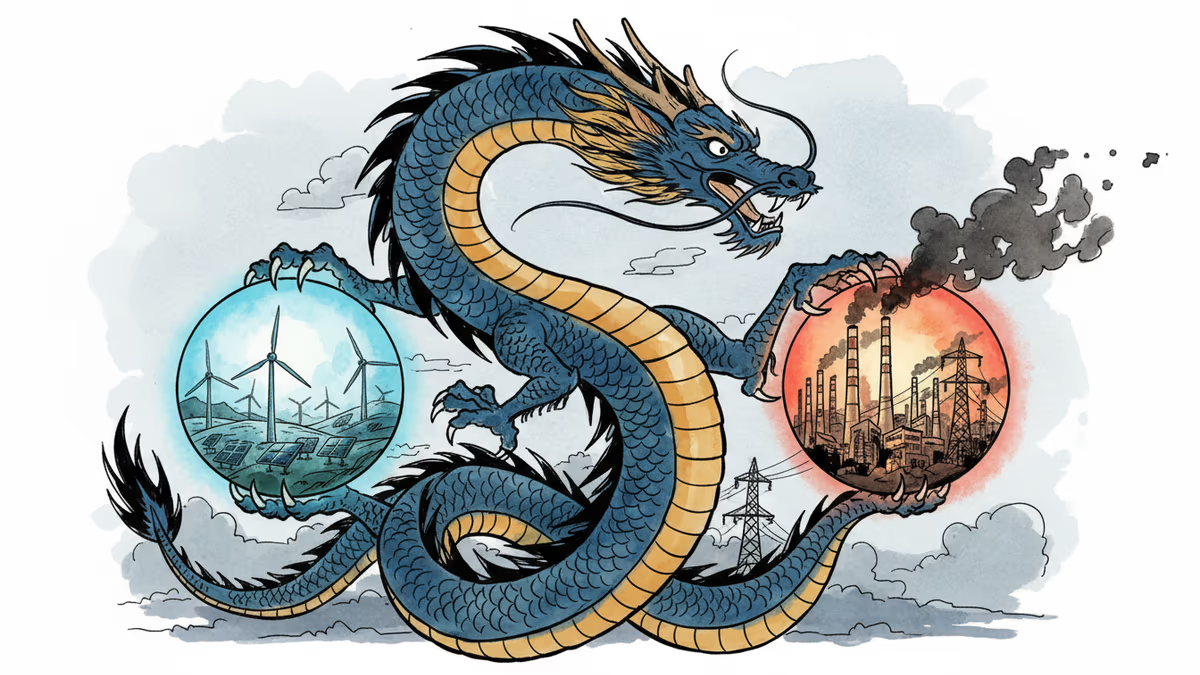
China unveils ambitious energy strategy targeting 70% regional self-sufficiency in eastern regions, balancing geopolitical risks with climate commitments amid mounting domestic and international challenges.
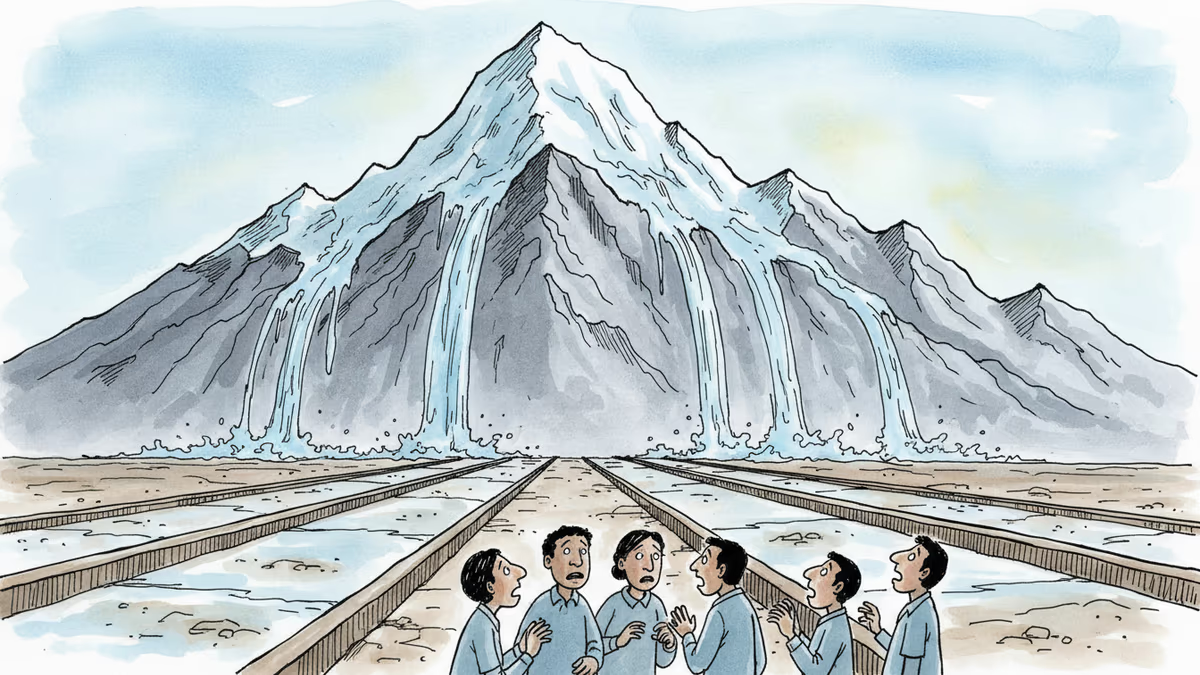
The Tian Shan mountains, Central Asia's crucial water source, could lose up to 82% of glacier mass by 2100, threatening millions and sparking geopolitical tensions.
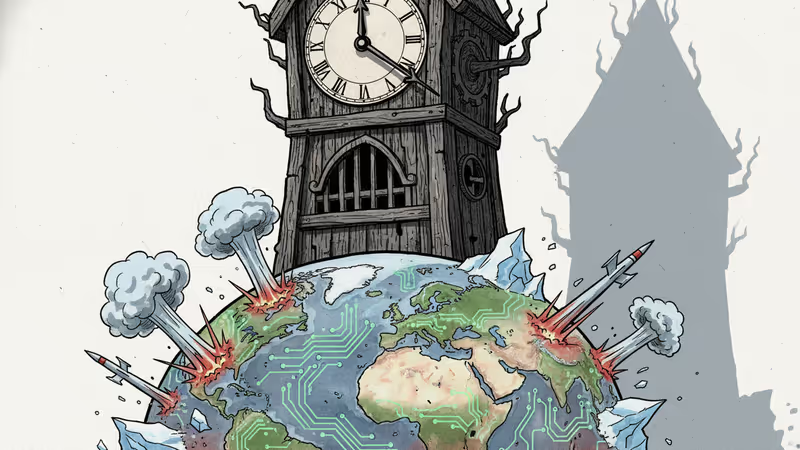
Nuclear threats, climate change, and AI risks converge as humanity faces its greatest existential challenge. Can we step back from the brink?

Over 100 people have died following severe flooding in South Africa, Mozambique, and Zimbabwe. Explore the impact of the Southern Africa floods 2026 and the role of La Nina.
China unveils ambitious energy strategy targeting 70% regional self-sufficiency in eastern regions, balancing geopolitical risks with climate commitments amid mounting domestic and international challenges.
The Tian Shan mountains, Central Asia's crucial water source, could lose up to 82% of glacier mass by 2100, threatening millions and sparking geopolitical tensions.
Nuclear threats, climate change, and AI risks converge as humanity faces its greatest existential challenge. Can we step back from the brink?
Over 100 people have died following severe flooding in South Africa, Mozambique, and Zimbabwe. Explore the impact of the Southern Africa floods 2026 and the role of La Nina.
Thoughts
Share your thoughts on this article
Sign in to join the conversation