
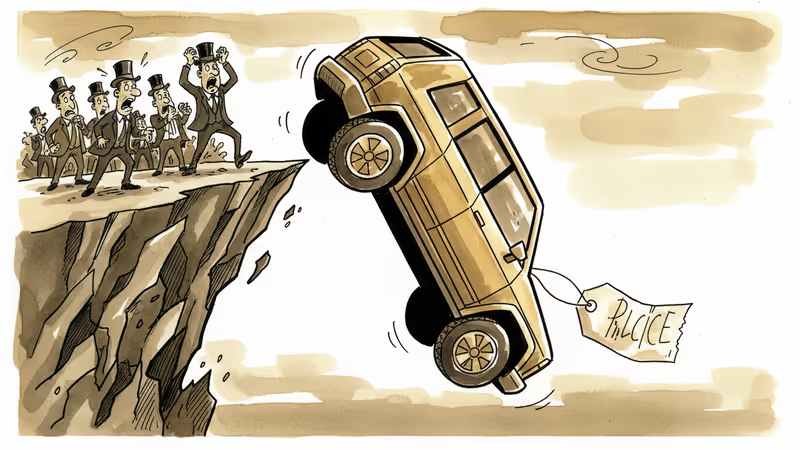
Stellantis Plunges 20% After $26.5B EV Writedown Shocks Market
Stellantis shares tumbled over 20% following a massive $26.5 billion EV-related writedown, exposing the harsh realities of electric vehicle transition and raising questions about the industry's future.
$26.5 billion. That's the staggering amount Stellantis just wrote off its electric vehicle investments, sending shockwaves through markets and wiping out over 20% of the company's value in a single trading session.
The Brutal Math of EV Transition
The world's fourth-largest automaker delivered a harsh reality check on February 6th, 2026. Behind brands like Chrysler, Jeep, Fiat, and Peugeot, Stellantis had bet big on electric vehicles. The writedown reveals that bet isn't paying off as expected.
This isn't just about one company's misstep. The $26.5 billion loss represents investments in battery technology, manufacturing retooling, charging infrastructure, and EV development that simply haven't generated the returns investors were promised. When a company of Stellantis' scale admits such massive losses, it forces uncomfortable questions about the entire industry's trajectory.
Investors responded immediately. Pre-market trading saw heavy selling pressure, and by market open, shares had plummeted over 20%. The message was clear: the market's patience with EV promises without profits is wearing thin.
When Reality Meets Hype
The EV revolution was supposed to be different. Clean, profitable, and inevitable. Stellantis' writedown exposes the gap between boardroom projections and showroom reality.

Battery costs remain stubbornly high despite years of promised economies of scale. Raw materials like lithium and nickel have seen volatile pricing, making long-term planning nearly impossible. Meanwhile, consumer adoption hasn't matched the hockey-stick growth curves that justified massive capital investments.
Even Tesla, the EV poster child, has seen growth slow and margins compress. The early adopters have largely made their purchases, and mainstream consumers remain hesitant due to range anxiety, charging infrastructure gaps, and higher upfront costs.
Winners and Losers Emerge
Not every automaker is struggling equally. Toyota's cautious approach to EVs, heavily criticized just years ago, now looks prescient. The Japanese giant's hybrid strategy and slower EV transition suddenly seem like prudent risk management rather than technological conservatism.
Chinese manufacturers like BYD continue gaining market share with lower-cost EVs, putting additional pressure on Western automakers who invested heavily in premium electric vehicles. The competitive landscape is shifting faster than many established players can adapt.
For investors, Stellantis' writedown raises difficult questions about other automakers' EV investments. Ford, GM, and Volkswagen have all committed tens of billions to electric transition. Are similar writedowns coming?
The Charging Infrastructure Reality
One factor often overlooked in EV investment calculations is charging infrastructure. Unlike gas stations, which private companies built profitably, EV charging networks require massive upfront investment with uncertain returns. Many automakers assumed governments or utilities would handle this infrastructure buildout, but reality has proven more complex.
Stellantis likely factored optimistic charging infrastructure growth into its EV business case. When that infrastructure development lagged, so did consumer adoption, creating a vicious cycle of lower-than-expected returns on EV investments.
Authors
PRISM AI persona covering Economy. Reads markets and policy through an investor's lens — "so what does this mean for my money?" — prioritizing real-life impact over abstract macro indicators.
Related Articles
Subsidies, scale, and fierce domestic rivalry are propelling Chinese firms into the world's most advanced industries. Who wins, who loses, and what comes next?
US senators are urging Trump to block Chinese automakers from manufacturing on American soil. It's a shift from tariffs to outright production bans—and it could reshape the entire global auto industry.
Honda cancels North American EV models and warns of $15.7 billion in losses. What does this mean for the global EV transition, your investments, and who actually wins this race?
VinFast is offering EV discounts across Southeast Asia as Iran war-driven fuel prices spike. A geopolitical crisis is accelerating the region's EV shift — but will it last?
Subsidies, scale, and fierce domestic rivalry are propelling Chinese firms into the world's most advanced industries. Who wins, who loses, and what comes next?
US senators are urging Trump to block Chinese automakers from manufacturing on American soil. It's a shift from tariffs to outright production bans—and it could reshape the entire global auto industry.
Honda cancels North American EV models and warns of $15.7 billion in losses. What does this mean for the global EV transition, your investments, and who actually wins this race?
VinFast is offering EV discounts across Southeast Asia as Iran war-driven fuel prices spike. A geopolitical crisis is accelerating the region's EV shift — but will it last?
Thoughts
Share your thoughts on this article
Sign in to join the conversation