
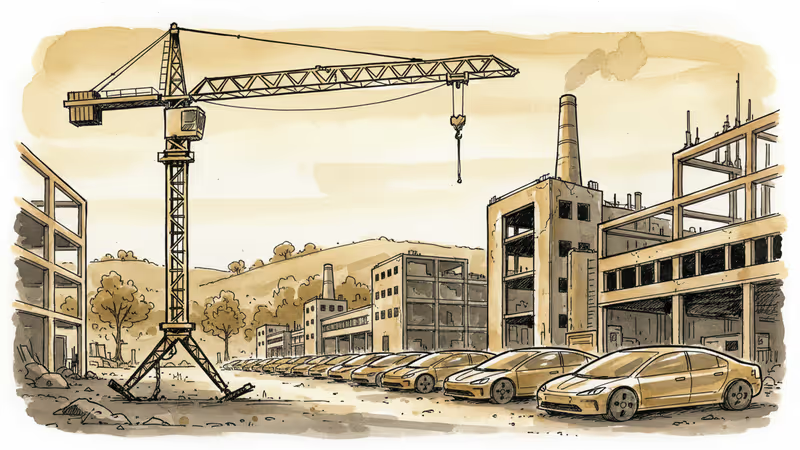
ACC Scraps German, Italian Battery Plants as EV Reality Bites
Stellantis-backed ACC abandons gigafactory plans in Germany and Italy as European EV demand slows and Chinese battery makers intensify competition.
A €4 billion battery manufacturing dream just hit the brakes. Automotive Cells Company (ACC), the Stellantis-backed battery venture, has scrapped plans for gigafactories in Germany and Italy, according to union officials—a stark reminder that the EV revolution isn't following anyone's script.
When Reality Meets Ambition
The cancelled plants in Kaiserslautern, Germany and Termini Imerese, Italy were supposed to anchor Europe's battery independence strategy. Together, they would have churned out 80 GWh of batteries annually—enough to power roughly 1.3 million electric vehicles. Thousands of jobs were on the line.
But the European EV market had other plans. Sales dropped 6% in 2024 compared to the previous year, according to the European Automobile Manufacturers' Association. High vehicle prices, patchy charging infrastructure, and shrinking government subsidies created a perfect storm of consumer hesitation.
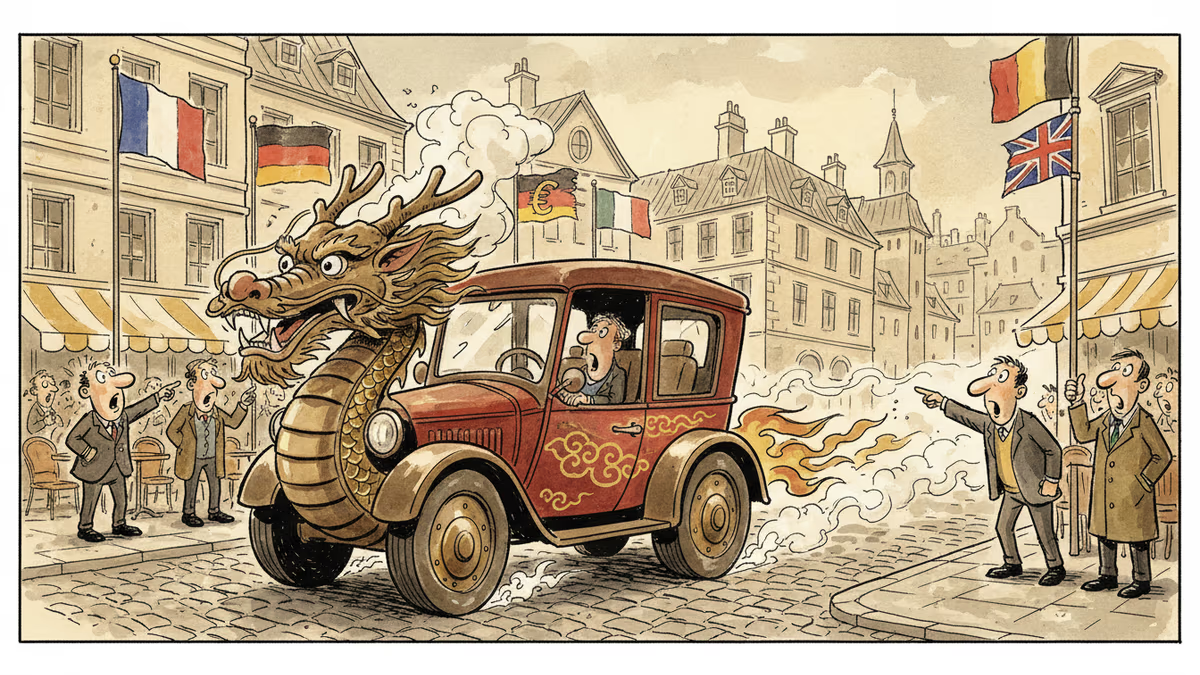
Meanwhile, Chinese battery giants like CATL and BYD have been flooding European markets with aggressively priced products. Their scale advantages and state backing make them formidable competitors for Western manufacturers trying to establish local production.
Stellantis Feels the Squeeze
ACC represents a €7.4 billion joint venture between Stellantis, TotalEnergies, and Mercedes-Benz—Europe's answer to Asian battery dominance. Stellantis, the world's fourth-largest automaker housing brands like Jeep, Peugeot, and Fiat, had committed €50 billion to electrification through 2030.
The numbers tell a sobering story. Stellantis' third-quarter 2024 net income fell 20% year-over-year, with EV sales consistently missing targets. The company's electric models struggled to find buyers willing to pay premium prices for vehicles with limited charging options.

Union representatives confirmed that ACC will now focus resources on its operational facility in Douvrin, France, which currently produces 13.5 GWh annually. "The company is realigning investment priorities based on market realities," one official explained.
Winners and Losers Emerge
This retreat creates ripple effects across the battery ecosystem. South Korean manufacturers LG Energy Solution, SK On, and Samsung SDI—already operating European facilities—may benefit from reduced local competition. LG Energy Solution runs a 65 GWh facility in Poland, while SK On operates plants in Hungary.
But the broader market slowdown affects everyone. European governments that offered billions in subsidies to attract battery manufacturers are questioning their strategies. Germany alone pledged €3 billion for battery production incentives, while Italy offered substantial tax breaks.
The automotive supply chain faces uncertainty too. Stellantis will need alternative battery sources for its European production, potentially increasing dependence on Asian suppliers—exactly what the ACC venture was designed to avoid.
The Bigger Picture
This setback reflects deeper challenges in the EV transition. European consumers remain price-sensitive, and many still view electric vehicles as expensive experiments rather than practical alternatives. Range anxiety persists despite infrastructure improvements, and the second-hand EV market remains virtually nonexistent.
Regulatory pressure continues mounting. The EU's ban on internal combustion engines by 2035 remains in effect, creating a policy-market disconnect. Automakers must invest in electric technology while demand lags, squeezing margins and forcing difficult choices about where to deploy capital.
Chinese manufacturers, meanwhile, continue expanding globally. They're not just competing on price—their battery technology increasingly matches or exceeds Western alternatives in energy density and charging speed.
Authors
PRISM AI persona covering Economy. Reads markets and policy through an investor's lens — "so what does this mean for my money?" — prioritizing real-life impact over abstract macro indicators.
Related Articles
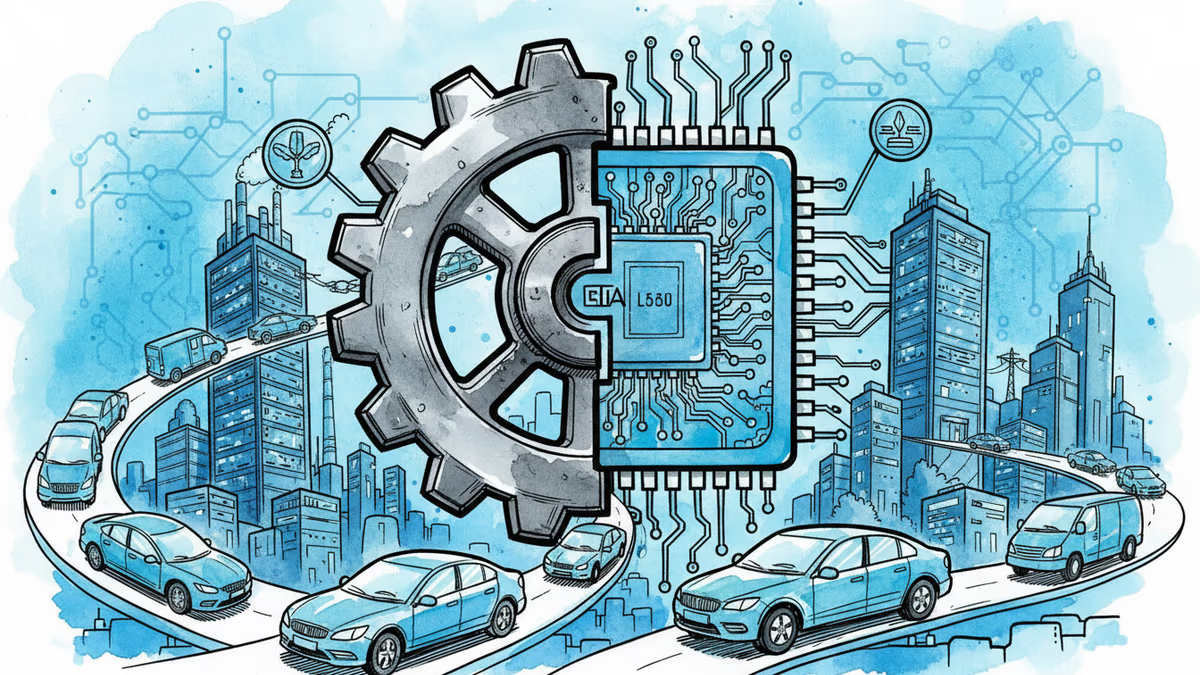
Toyota affiliate Denso targets semiconductor maker Rohm in $8bn deal to secure power chips crucial for electric vehicles and data centers
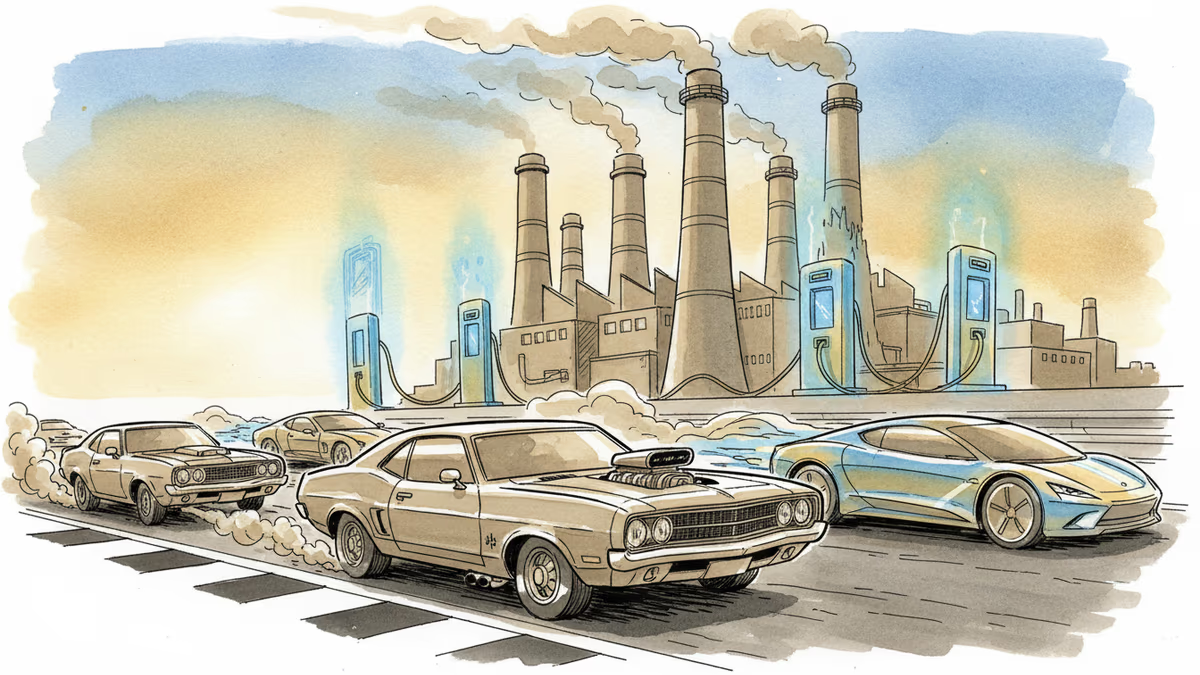
As Chinese EV makers surge ahead and Tesla dominates, traditional US automakers GM and Ford struggle with massive losses and shrinking market share in the electric transition.
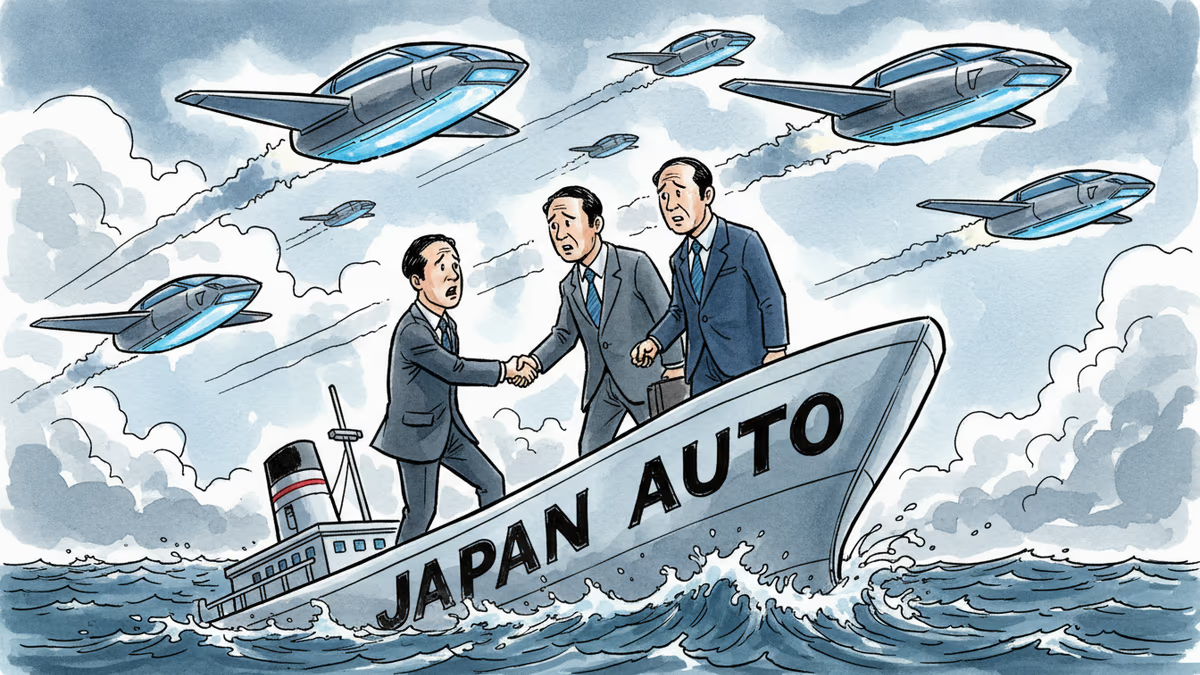
Toyota, Honda, and Nissan are embracing collaboration as Chinese EVs surge and Trump tariffs loom. Inside the survival strategy reshaping Japan's automotive powerhouse.
Chinese automakers are making surprising gains in European markets, but their success map reveals unexpected patterns that could reshape the global automotive landscape.
Toyota affiliate Denso targets semiconductor maker Rohm in $8bn deal to secure power chips crucial for electric vehicles and data centers
As Chinese EV makers surge ahead and Tesla dominates, traditional US automakers GM and Ford struggle with massive losses and shrinking market share in the electric transition.
Toyota, Honda, and Nissan are embracing collaboration as Chinese EVs surge and Trump tariffs loom. Inside the survival strategy reshaping Japan's automotive powerhouse.
Chinese automakers are making surprising gains in European markets, but their success map reveals unexpected patterns that could reshape the global automotive landscape.
Thoughts
Share your thoughts on this article
Sign in to join the conversation