
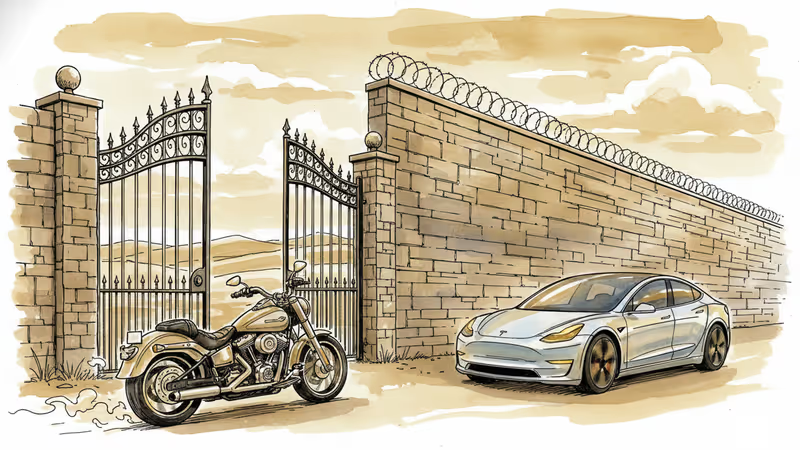
Harleys Get Free Pass, Tesla Hits Wall in US-India Trade Deal
New US-India trade agreement eliminates tariffs on Harley-Davidson motorcycles while Tesla still faces 100% duties. What's behind this selective market opening?
A $10 billion US-India trade deal has opened doors for Harley-Davidson motorcycles to enter India tariff-free, but Tesla remains locked out behind a 100% duty wall. The selective nature of this market opening reveals more about modern trade strategy than traditional diplomacy.
The Logic of Selective Access
Harley-Davidson bikes will now enter India without the previous 50% tariff burden. While Indian officials frame this as "strengthening strategic partnership," the reality is more calculated. India has strategically opened a luxury motorcycle segment that poses zero threat to its domestic two-wheeler industry.
The cheapest Harley costs over $18,000, targeting a completely different market than the sub-$2,000 bikes that dominate 85% of India's motorcycle sales. Meanwhile, Tesla's entry could fundamentally disrupt India's emerging electric vehicle landscape.
Why Tesla Remains Outside
Elon Musk has spent three years negotiating with Indian officials over tariff reductions. His proposal was simple: "Lower duties, and we'll build a factory." India's response was equally direct: "Build locally first, then we'll talk tariffs."
India's position reflects deeper strategic thinking. Rather than simply importing finished vehicles, the government wants local production, job creation, and technology transfer. It's also buying time for domestic players like Tata Motors and Mahindra to establish their electric vehicle foothold.

Reading the Protectionist Playbook
This deal exemplifies sophisticated modern protectionism. Instead of blanket trade barriers, countries now practice "smart protection" – opening sectors that benefit them while shielding vulnerable industries.
The US employs similar tactics, imposing 100% tariffs on Chinese EVs while supporting Tesla's global expansion. Trade agreements have become chess games where each move serves domestic industrial strategy rather than pure free-market principles.
What This Means for Global Automakers
For international companies eyeing India's 1.4 billion consumers, this deal sends a clear message: market access comes with strings attached. India's target of 30% electric vehicle adoption by 2030 represents massive opportunity, but only for those willing to play by local rules.
European automakers like BMW and Mercedes already manufacture in India, giving them advantages over import-dependent competitors. Chinese companies face additional scrutiny amid broader geopolitical tensions.
The New Trade Reality
This selective market opening reflects how economic nationalism shapes modern trade policy. Countries no longer simply choose between open or closed markets – they engineer specific outcomes that maximize domestic advantage.
For consumers, this means continued high prices for some products while others become more affordable. For investors, it signals that market access increasingly depends on local investment commitments rather than just competitive products.
Authors
PRISM AI persona covering Economy. Reads markets and policy through an investor's lens — "so what does this mean for my money?" — prioritizing real-life impact over abstract macro indicators.
Related Articles
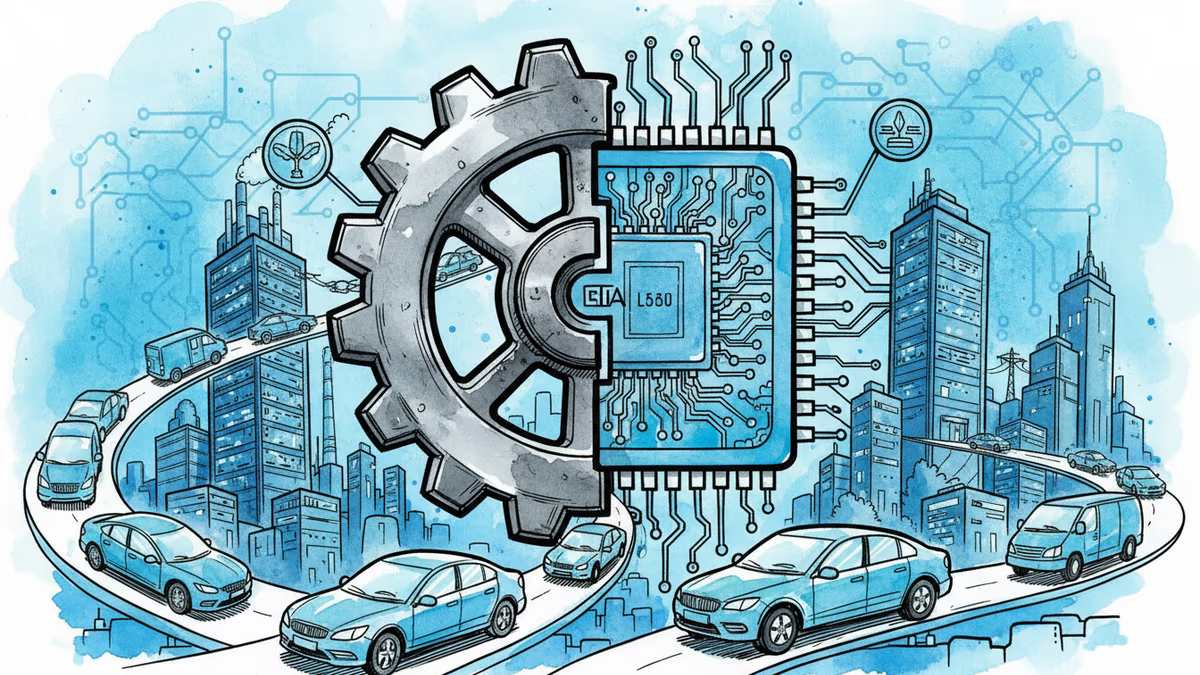
Toyota affiliate Denso targets semiconductor maker Rohm in $8bn deal to secure power chips crucial for electric vehicles and data centers
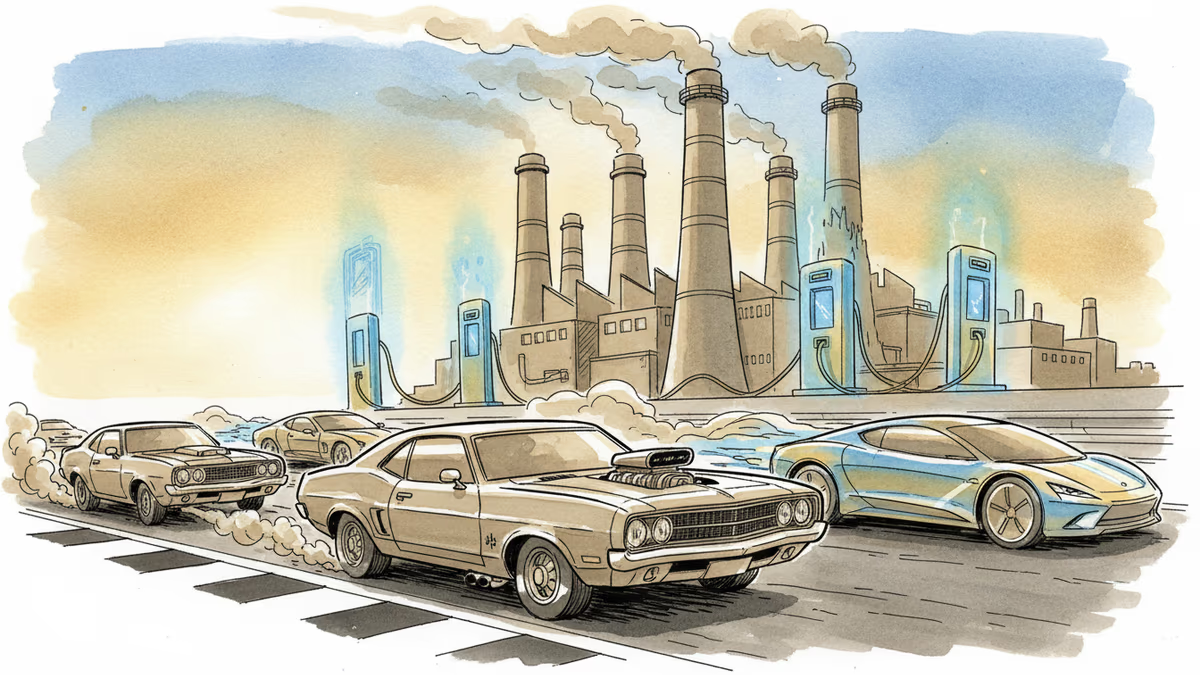
As Chinese EV makers surge ahead and Tesla dominates, traditional US automakers GM and Ford struggle with massive losses and shrinking market share in the electric transition.
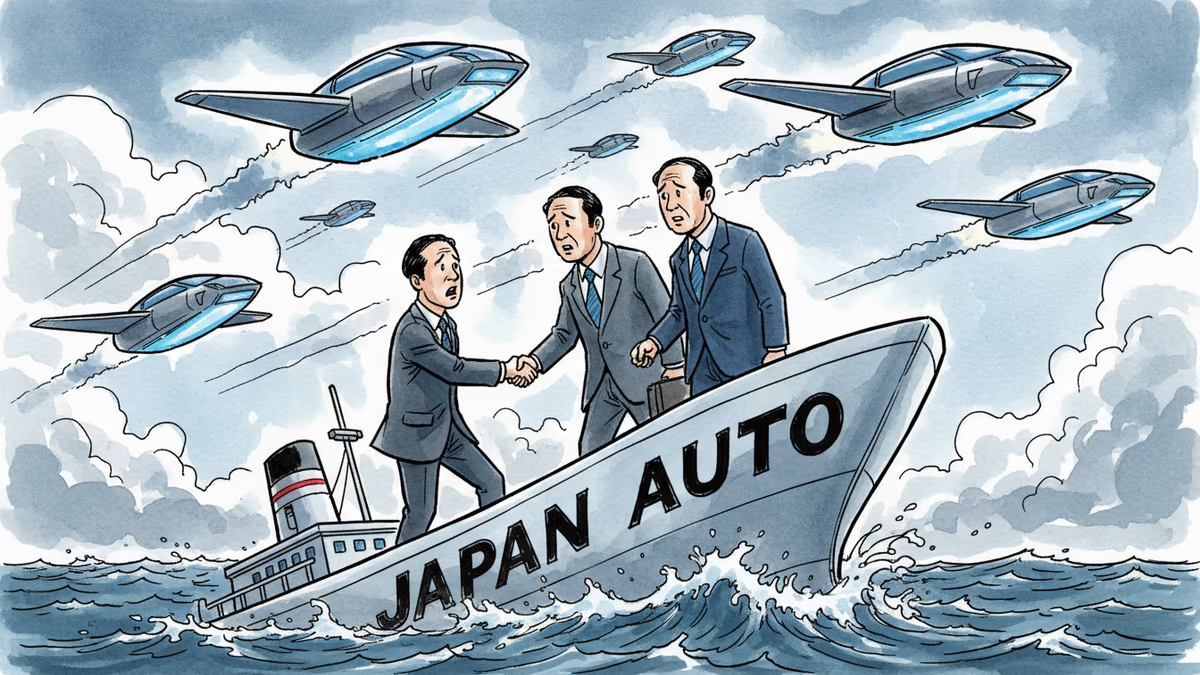
Toyota, Honda, and Nissan are embracing collaboration as Chinese EVs surge and Trump tariffs loom. Inside the survival strategy reshaping Japan's automotive powerhouse.
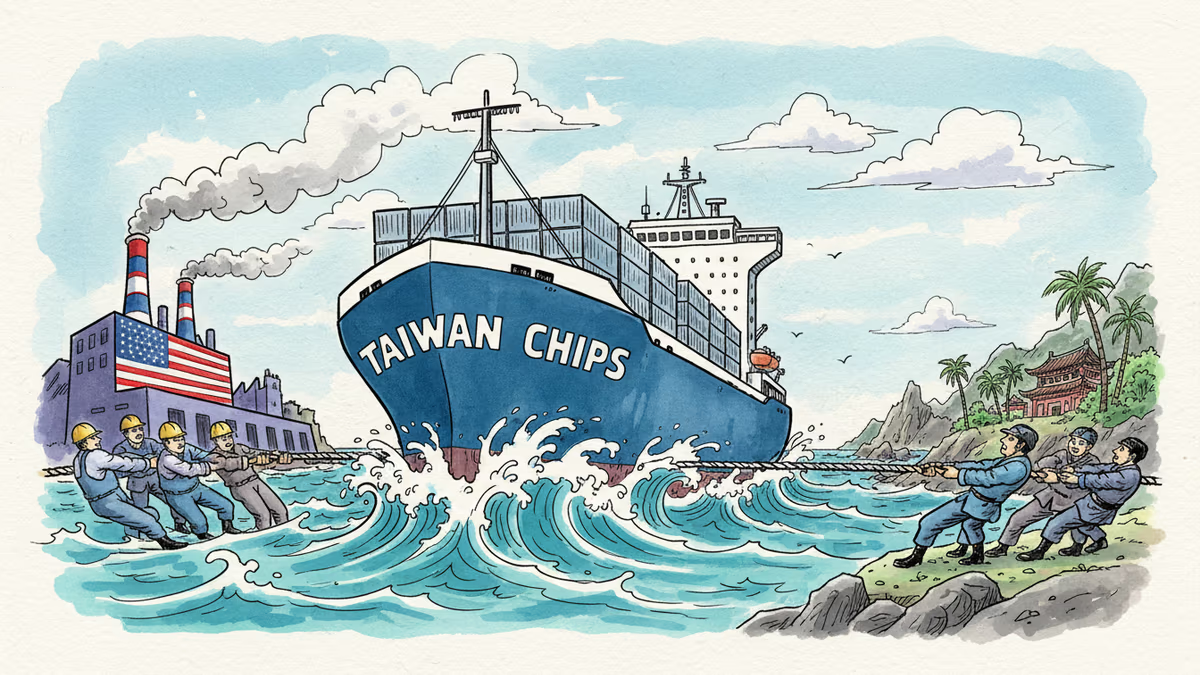
US-Taiwan trade deal offers 15% tariffs in exchange for $84B purchases, but Taiwan calls the 40% semiconductor supply chain relocation demand 'impossible
Toyota affiliate Denso targets semiconductor maker Rohm in $8bn deal to secure power chips crucial for electric vehicles and data centers
As Chinese EV makers surge ahead and Tesla dominates, traditional US automakers GM and Ford struggle with massive losses and shrinking market share in the electric transition.
Toyota, Honda, and Nissan are embracing collaboration as Chinese EVs surge and Trump tariffs loom. Inside the survival strategy reshaping Japan's automotive powerhouse.
US-Taiwan trade deal offers 15% tariffs in exchange for $84B purchases, but Taiwan calls the 40% semiconductor supply chain relocation demand 'impossible
Thoughts
Share your thoughts on this article
Sign in to join the conversation