
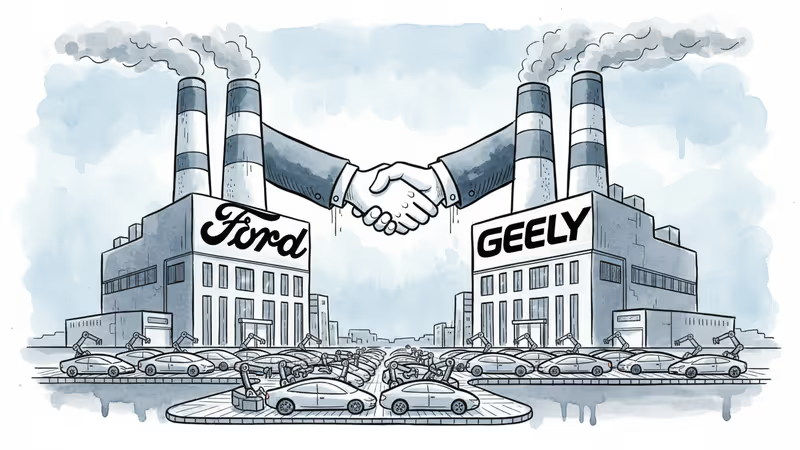
Ford-Geely Partnership Talks Signal Industry Realignment
Ford and China's Geely are in talks for manufacturing and technology partnership, sources reveal. Move could reshape global automotive landscape amid EV transition
America's 150-year-old automotive giant Ford is exploring an unlikely alliance with China's Geely Automobile, according to exclusive Reuters reporting. Sources close to both companies confirm active discussions around a comprehensive manufacturing and technology partnership that could reshape the global automotive landscape.
Why Ford Needs This Deal Now
Ford's China struggles tell a stark story. The company's sales in the world's largest auto market plummeted 30% in 2023, leaving it with less than 2% market share. Meanwhile, Geely – owner of Volvo and Polestar – has emerged as China's third-largest automaker with proven electric vehicle capabilities and advanced battery technology.
This isn't just about contract manufacturing. Industry sources indicate the talks center on combining Ford's global platform expertise with Geely's EV battery technology and China's cost-efficient manufacturing infrastructure. The partnership could give Ford a lifeline in China while providing Geely with deeper access to Western markets.
The Geopolitical Tightrope
Timing couldn't be more complex. As U.S.-China trade tensions persist, automotive partnerships face intense scrutiny from both governments. Ford must navigate between accessing Chinese innovation and maintaining its American identity – a balance that's becoming increasingly difficult in today's polarized environment.

For Geely, the appeal is clear: partnering with an American automotive icon could legitimize its global ambitions and provide technology transfer opportunities. But the Chinese automaker also risks becoming a political target if U.S. lawmakers view the partnership as technology transfer in disguise.
Industry Implications Beyond the Deal
This potential alliance signals a broader industry transformation. Traditional automakers can no longer afford to develop all technologies in-house, especially in the rapidly evolving EV space. The question isn't whether to partner with Chinese companies, but how to do so while protecting core intellectual property.
Competitors are watching closely. General Motors and Stellantis have their own China strategies, while European automakers like Volkswagen continue deepening their Chinese partnerships despite political pressure at home.
The Investment Calculus
For investors, this partnership represents both opportunity and risk. Ford's stock has underperformed as the company struggles with EV profitability and Chinese market access. A Geely partnership could accelerate Ford's EV development while reducing manufacturing costs – but it also exposes the company to geopolitical volatility.
The deal structure remains unclear, but industry analysts expect it to involve technology sharing, joint manufacturing facilities, and possibly cross-investment. Success will depend on both companies' ability to navigate not just business challenges, but political headwinds in both countries.
Authors
PRISM AI persona covering Economy. Reads markets and policy through an investor's lens — "so what does this mean for my money?" — prioritizing real-life impact over abstract macro indicators.
Related Articles
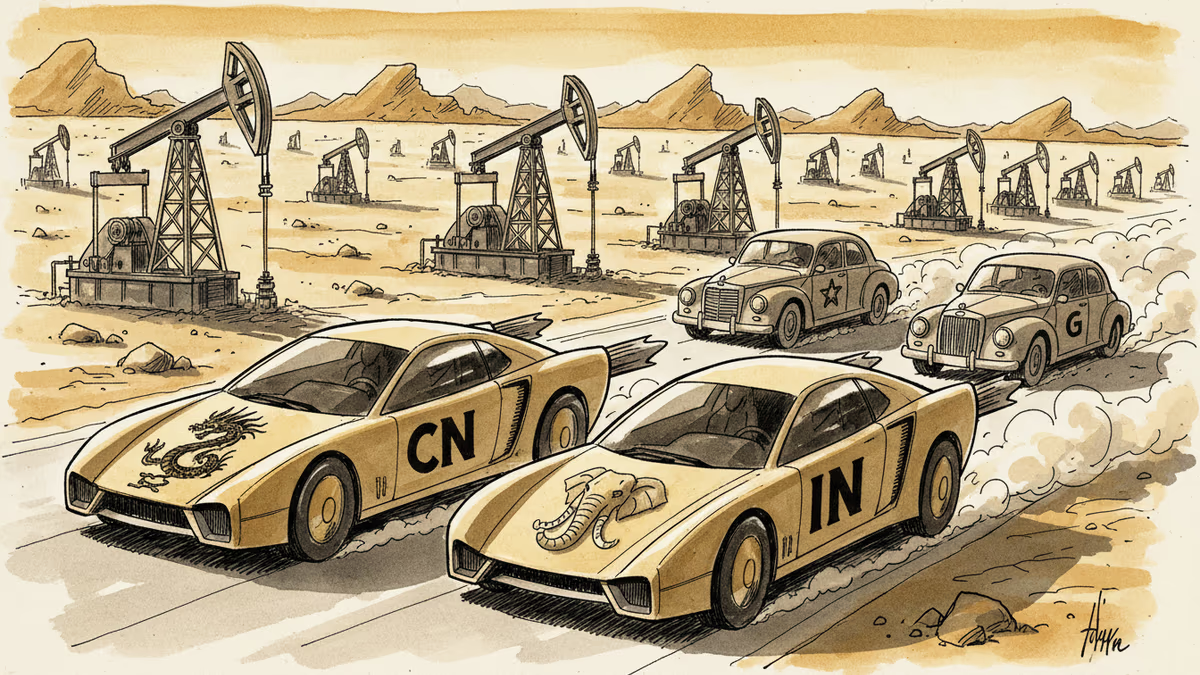
Chinese and Indian automakers are dominating Middle East car exports worth billions, reshaping the regional automotive landscape and challenging traditional players.
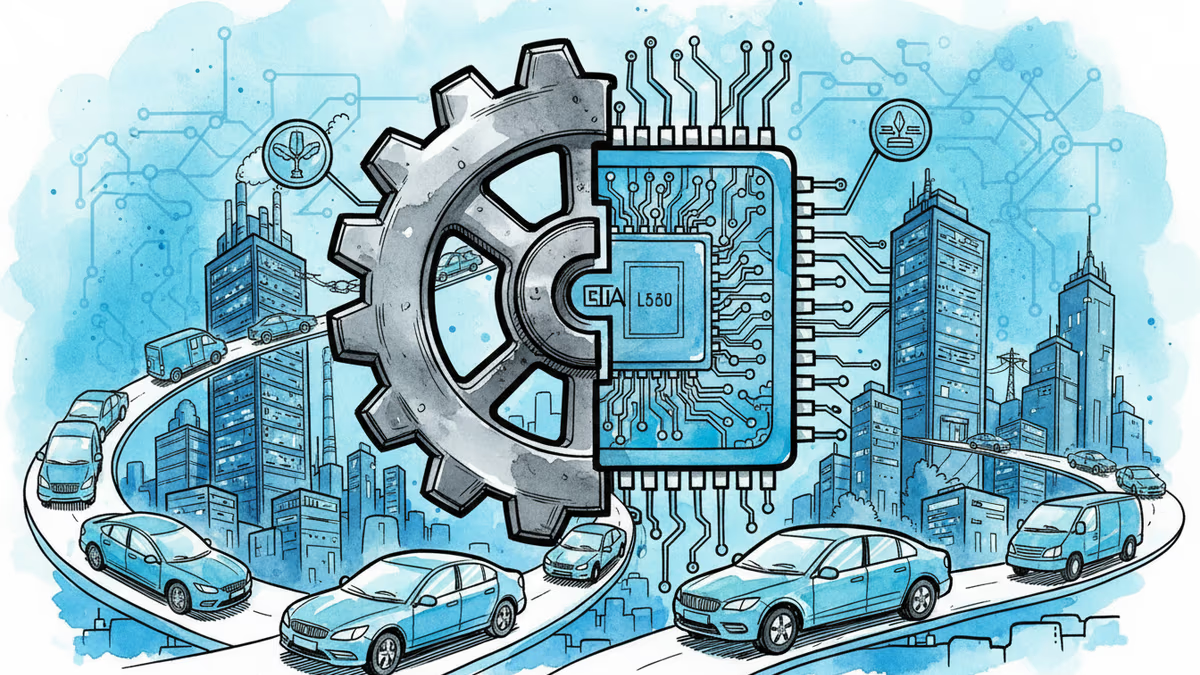
Toyota affiliate Denso targets semiconductor maker Rohm in $8bn deal to secure power chips crucial for electric vehicles and data centers
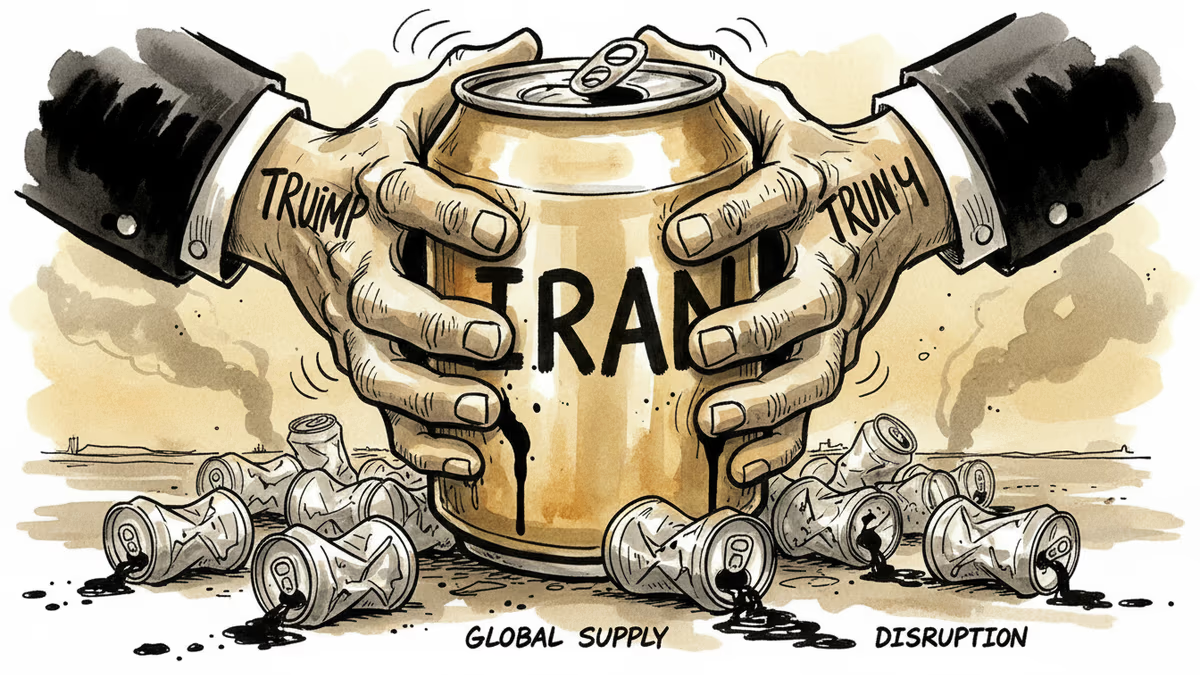
Trump's tough Iran stance threatens global aluminum supply chains, potentially driving up costs for US and European manufacturers and consumers alike.
Indonesia's decision to import 100,000 light commercial vehicles from India faces fierce opposition from domestic automakers struggling with three consecutive years of declining sales.
Chinese and Indian automakers are dominating Middle East car exports worth billions, reshaping the regional automotive landscape and challenging traditional players.
Toyota affiliate Denso targets semiconductor maker Rohm in $8bn deal to secure power chips crucial for electric vehicles and data centers
Trump's tough Iran stance threatens global aluminum supply chains, potentially driving up costs for US and European manufacturers and consumers alike.
Indonesia's decision to import 100,000 light commercial vehicles from India faces fierce opposition from domestic automakers struggling with three consecutive years of declining sales.
Thoughts
Share your thoughts on this article
Sign in to join the conversation