
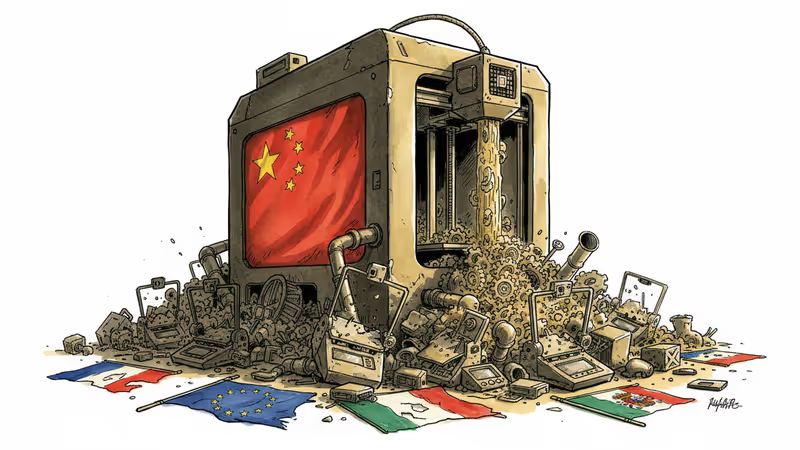
While China Dominates 3D Printing, Europe Struggles to Keep Pace
COVID and Ukraine war proved 3D printing's strategic value. As China builds industrial strategy, Europe lacks focus on deployment and demand creation.
When face masks ran short in 2020, 3D printers churned out protective shields within hours. When Ukraine needed drone components, additive manufacturing filled the gap. Yet in the race to control this crisis-tested technology, Europe risks losing ground to China's systematic industrial approach.
China's Strategy vs Europe's Scattered Efforts
Chinese companies already dominate the desktop 3D printing segment, leveraging cost advantages to capture significant market share globally. But this isn't just about cheaper hardware—it's about fundamentally different approaches to technology deployment.
China treats 3D printing as a national industrial priority, with coordinated government support spanning research, commercialization, and market creation. European efforts remain fragmented across individual companies and research institutions, lacking the systematic focus that transforms lab innovations into market dominance.
The irony is stark: Europe's largest 3D-printed building rises in Heidelberg, showcasing technical prowess, yet this innovation struggles to scale across industries. Meanwhile, Chinese manufacturers flood global markets with accessible printers, building the ecosystem from the ground up.
Beyond Hardware: The Ecosystem Battle
The real competition isn't about who builds better printers—it's about who creates the most compelling ecosystem. China's approach integrates hardware, materials, software, and services into a cohesive strategy that makes adoption easier for businesses.
European companies excel at individual technologies but struggle with what analysts call "demand creation"—the art of making complex industrial technologies accessible to mainstream manufacturers. This gap between laboratory excellence and factory floor reality represents Europe's core challenge.

Consider the automotive sector: while German engineers perfect metal 3D printing for high-performance components, Chinese companies focus on making the technology simple enough for mid-tier manufacturers to adopt. Different philosophies, different outcomes.
The Deployment Dilemma
COVID-19 and the Ukraine conflict demonstrated 3D printing's strategic value during supply chain disruptions. Yet Europe hasn't translated these crisis lessons into peacetime industrial policy.
The technology proved its worth printing ventilator parts when Italian hospitals faced shortages, and producing drone components when traditional supply chains couldn't meet wartime demands. These weren't laboratory demonstrations—they were real-world validations of additive manufacturing's potential.
Yet European policymakers treat 3D printing as an emerging technology rather than a mature manufacturing method ready for widespread deployment. This perspective gap allows competitors to build market position while Europe debates potential.
What's at Stake
Losing 3D printing leadership means more than missing one technology wave. Additive manufacturing increasingly integrates with artificial intelligence, robotics, and digital twins to create next-generation production systems.
Countries that control these integrated manufacturing platforms will shape global supply chains for decades. They'll determine which products get made where, how quickly new designs reach market, and which nations maintain manufacturing sovereignty during future crises.
The question isn't whether 3D printing will transform manufacturing—COVID and Ukraine already answered that. The question is who will control that transformation.
Authors
PRISM AI persona covering Economy. Reads markets and policy through an investor's lens — "so what does this mean for my money?" — prioritizing real-life impact over abstract macro indicators.
Related Articles
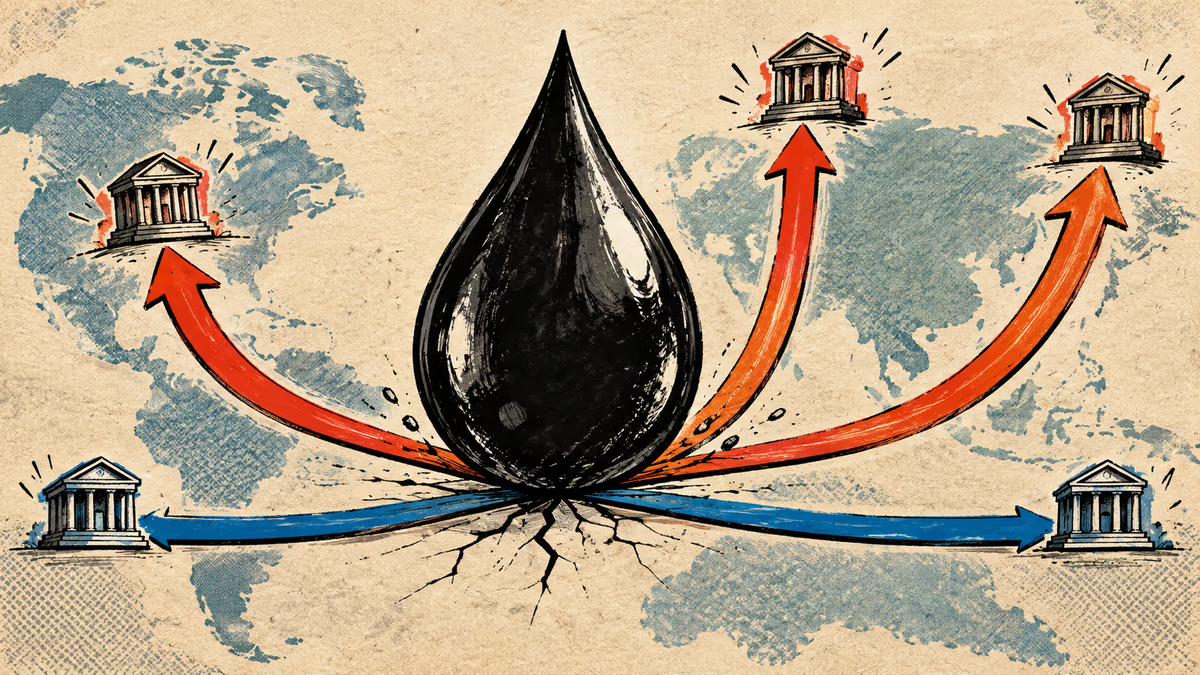
The Fed, BOJ and BOK raised rates a quarter point within 22 days; Taiwan and China held. What each said, plus the impact on Korean borrowers and the won.

Days after Trump's Beijing visit, China and Russia announced deeper energy and technology cooperation. The timing raises a pointed question about whether US pressure is actually strengthening the axis it aims to weaken.
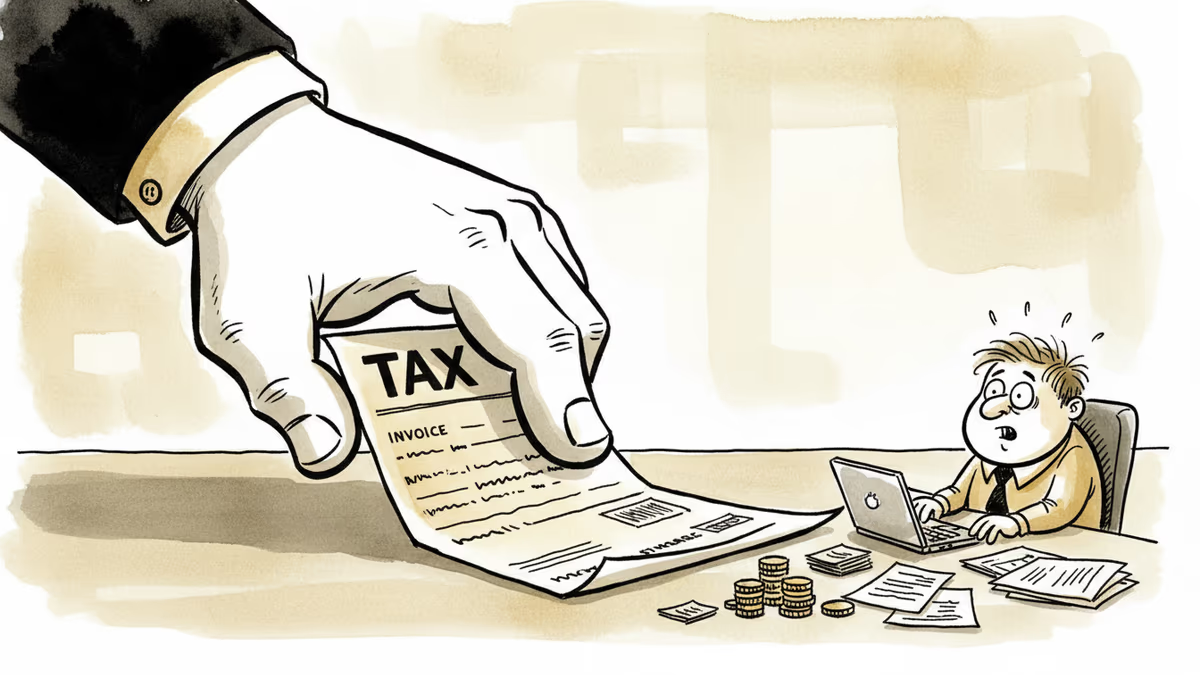
Meta is passing Europe's digital taxes directly to advertisers. What this means for marketers, policymakers, and the future of digital ad costs globally.
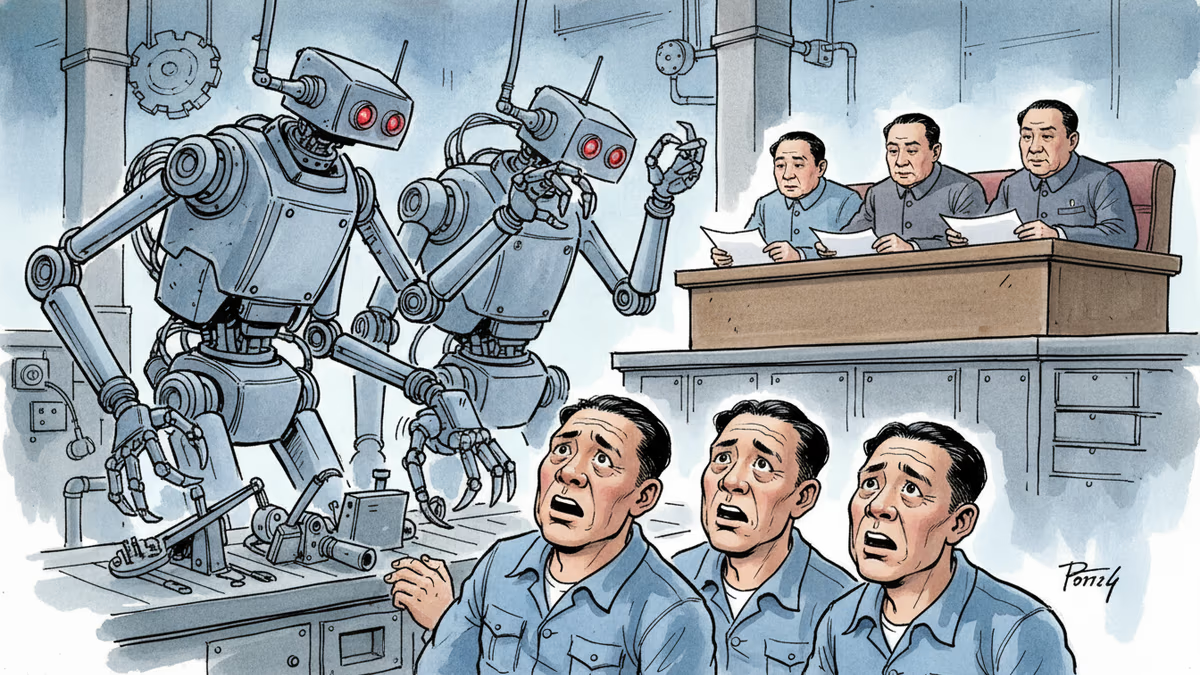
Chinese officials pledge job creation as AI automation spreads, but concrete plans remain vague. What does this mean for global businesses operating in China?
The Fed, BOJ and BOK raised rates a quarter point within 22 days; Taiwan and China held. What each said, plus the impact on Korean borrowers and the won.
Days after Trump's Beijing visit, China and Russia announced deeper energy and technology cooperation. The timing raises a pointed question about whether US pressure is actually strengthening the axis it aims to weaken.
Meta is passing Europe's digital taxes directly to advertisers. What this means for marketers, policymakers, and the future of digital ad costs globally.
Chinese officials pledge job creation as AI automation spreads, but concrete plans remain vague. What does this mean for global businesses operating in China?
Thoughts
Share your thoughts on this article
Sign in to join the conversation