
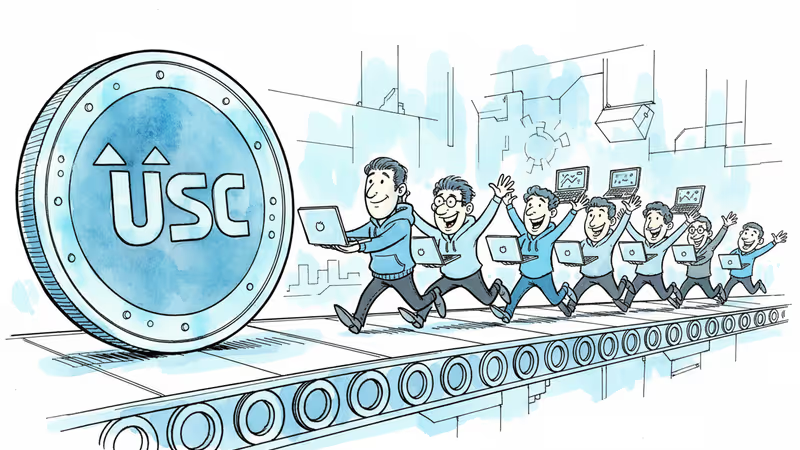
Y Combinator Now Offers Stablecoin Investments to Startups
Y Combinator introduces stablecoin payment option for startup investments, offering more efficient funding for founders in emerging markets through blockchain networks.
The $500,000 check is going digital. Y Combinator, the world's most influential startup accelerator, now offers accepted startups the option to receive their seed funding in stablecoins, marking a significant shift in how venture capital flows.
Breaking Down Traditional Barriers
YC's famous "standard deal" has remained unchanged for years: invest $500,000 in exchange for 7% equity in accepted startups. Now this deal is hitting the blockchain, specifically Base, Solana, and Ethereum networks, starting with the upcoming spring batch.
Nemil Dala, YC's crypto partner, told The Block that stablecoin transfers are "often more effective, specifically for founders working in emerging markets." The reasoning is clear: traditional international wire transfers can take days, cost hundreds in fees, and require extensive banking documentation. Stablecoins? Minutes, pennies, and a wallet address.
Silicon Valley's Crypto Renaissance
This isn't just about payment efficiency. YC is putting its money where its mouth is. Last fall, the accelerator partnered with Base and Coinbase Ventures to encourage more blockchain-focused startups. Now they're walking the walk by moving their own investment infrastructure onto blockchain rails.

The timing aligns with broader Silicon Valley trends. As the US moves toward more formal, crypto-friendly regulation, blockchain interest is resurging among VCs and founders alike. YC's stablecoin option signals confidence that digital assets are here to stay in the startup ecosystem.
Leveling the Global Playing Field
The real winners might be founders outside traditional tech hubs. A startup in Lagos, Mumbai, or São Paulo can now receive YC funding as quickly as one in San Francisco. This could fundamentally reshape the geography of innovation, reducing the advantage that proximity to Silicon Valley once provided.
But questions remain. How will tax implications work across different jurisdictions? What happens if regulatory winds shift again? And will other top-tier VCs follow suit, or will YC find itself isolated in the crypto space?
The Ripple Effect
YC's move could pressure other accelerators and VCs to modernize their payment infrastructure. Techstars, 500 Global, and others may need to offer similar options to remain competitive, especially when courting international founders.
The startup world is watching closely. If this experiment succeeds, we might be witnessing the beginning of a broader transformation in how venture capital operates globally.
Authors
Related Articles

Stablecoin giant Tether launches US-regulated USAT while CEO Paolo Ardoino repositions company from crypto outcast to law enforcement ally. What changed?

The AI boom is reviving the legendary 'dropout founder' myth. Discover why Y Combinator founders are ditching diplomas in 2026 and what VCs actually think about the trend.

Five stories from late September, traced to where the paper trail stops: Korea's export record, Nvidia's Hugging Face 8-K, a US-China AI channel, the UN on AI, and rising births.

Huawei's CANN is open source under a license barring software for non-Ascend chips. Inside China's second CUDA, and the two links still outside it: pre-training compute and 5nm capacity.
Stablecoin giant Tether launches US-regulated USAT while CEO Paolo Ardoino repositions company from crypto outcast to law enforcement ally. What changed?
The AI boom is reviving the legendary 'dropout founder' myth. Discover why Y Combinator founders are ditching diplomas in 2026 and what VCs actually think about the trend.
Five stories from late September, traced to where the paper trail stops: Korea's export record, Nvidia's Hugging Face 8-K, a US-China AI channel, the UN on AI, and rising births.
Huawei's CANN is open source under a license barring software for non-Ascend chips. Inside China's second CUDA, and the two links still outside it: pre-training compute and 5nm capacity.
Thoughts
Share your thoughts on this article
Sign in to join the conversation