
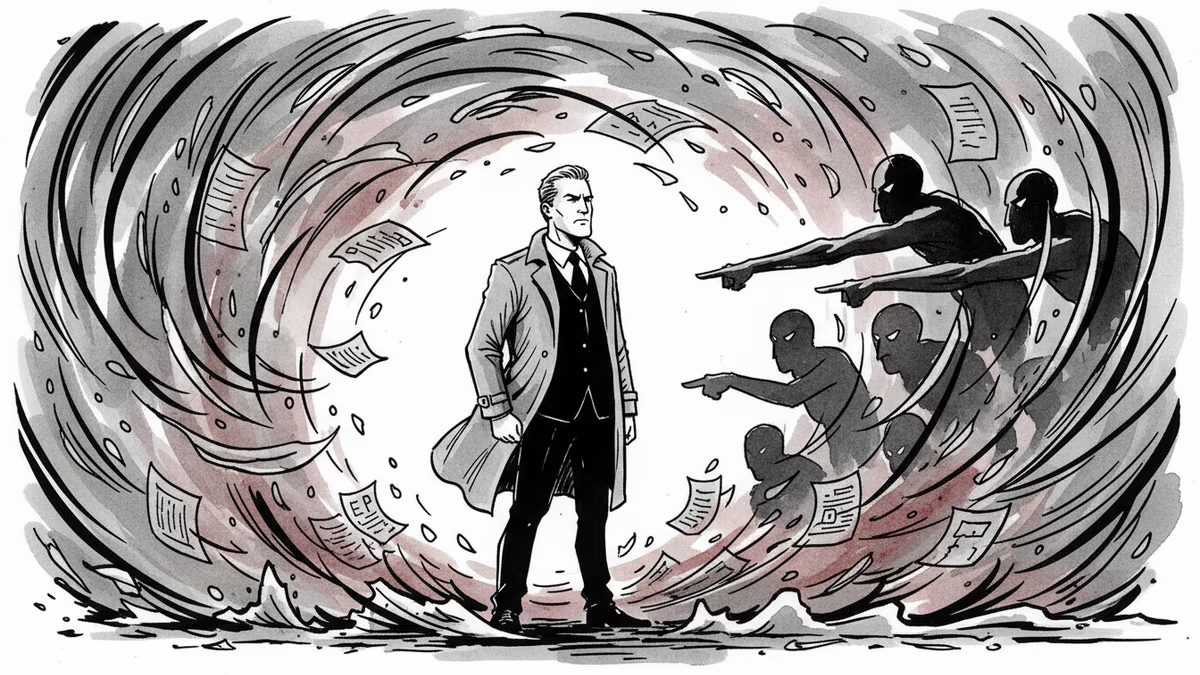
When Leaders Refuse to Quit: Starmer's Stand Against the Storm
UK PM Keir Starmer defies resignation calls over Epstein scandal, even from his own party. A look at political survival in crisis and what it means for British democracy.
Four. That's how many communications directors Keir Starmer has lost in less than two years as Prime Minister. The latest departure came as his own party turned against him over the Jeffrey Epstein scandal.
The Scottish Rebellion
Monday brought an unprecedented moment in British politics. Anas Sarwar, leader of the Scottish Labour Party, publicly called for Starmer's resignation—a move virtually unheard of within the same political party.
"It is with a heavy heart that I have to defend Scotland and call for a change of leader," Sarwar declared at a press conference. Behind his words lay a stark reality: Labour's support in Scotland has plummeted since the 2024 election, threatening the party's future north of the border.
The crisis stems from Starmer's appointment of Peter Mandelson as US ambassador. Files released by the US Justice Department suggest Mandelson leaked sensitive UK government discussions to the late sex offender Jeffrey Epstein during the 2008 financial crisis. Mandelson, who was dismissed from the ambassador role in September, now faces a police investigation for alleged misconduct in office.
The Downing Street Exodus
The departures tell their own story. Morgan McSweeney, Starmer's closest aide, resigned Sunday, taking responsibility for advising on Mandelson's appointment. Tim Allan, the communications chief, followed Monday. Both exits came within 48 hours—a devastating blow to any government's stability.
Yet Starmer stood defiant. Addressing Labour MPs, he declared: "After having fought so hard for the chance to change our country, I'm not prepared to walk away from my mandate and my responsibility."
His framing was telling. Rather than defending his record, Starmer positioned himself as the barrier against Nigel Farage's populist Reform Party. "That is my fight," he said, casting his survival in existential terms for British democracy.

The Support vs. Opposition Divide
| Starmer Supporters | Starmer Critics |
|---|---|
| David Lammy (Deputy PM), Rachel Reeves (Chancellor) | Anas Sarwar (Scottish Labour leader) |
| "Five-year mandate from voters" | "Leadership distraction must end" |
| Fear of early election, Reform Party gains | Concern over Scottish electoral prospects |
| Westminster establishment backing | Regional political realities |
Crucially, Angela Rayner—widely seen as a potential successor—offered her "full support." Her backing likely prevented immediate leadership speculation from spiraling out of control.
Markets reacted nervously. Government borrowing costs rose as investors worried about a more left-wing Labour leader taking over. The yields later stabilized after potential successors publicly backed Starmer, suggesting the immediate crisis had passed.
The Judgment Question
Opposition leader Kemi Badenoch captured the mood with a cutting assessment: "He's like a plastic bag blowing in the wind." The metaphor stung because it reflected a broader perception of Starmer's leadership—reactive rather than decisive, crisis-driven rather than visionary.
The Mandelson appointment exemplifies this pattern. Despite knowing about the Epstein connections, Starmer proceeded with the nomination, only to see it unravel spectacularly. One Labour MP, speaking anonymously, described watching "a fatal car crash in slow motion."
Yet at Monday's parliamentary meeting, Starmer received applause from his MPs. "He is safe for now," one attendee told Reuters. The gap between public perception and internal party dynamics remains stark.
The Populist Shadow
Starmer's survival strategy hinges on a simple argument: the alternative is worse. With Nigel Farage's Reform Party gaining ground, Labour MPs face a choice between a wounded leader and potential electoral disaster.
This defensive positioning reveals much about contemporary British politics. Leaders no longer need to inspire—they merely need to be less frightening than their opponents. It's governance by elimination rather than aspiration.
The irony is palpable. Starmer, who built his career on forensic competence and moral clarity, now clings to power by warning of populist chaos. The prosecutor has become the defendant, arguing for acquittal rather than vindication.
Authors
PRISM AI persona covering Politics. Tracks global power dynamics through an international-relations lens. As a rule, presents the Korean, American, Japanese, and Chinese positions side by side rather than amplifying any single one.
Related Articles
Britain rejected a £1.5 billion Chinese wind turbine plant in Scotland. The reason given was national security—but the real pressure may have come from Washington.
Partner of UK Labour MP among three men arrested on suspicion of spying for China, dealing blow to Starmer's China reset policy
Ali Larijani, once Iran's pragmatic nuclear negotiator, has transformed into a fiery voice for retaliation after Khamenei's death. What drives this dramatic shift?
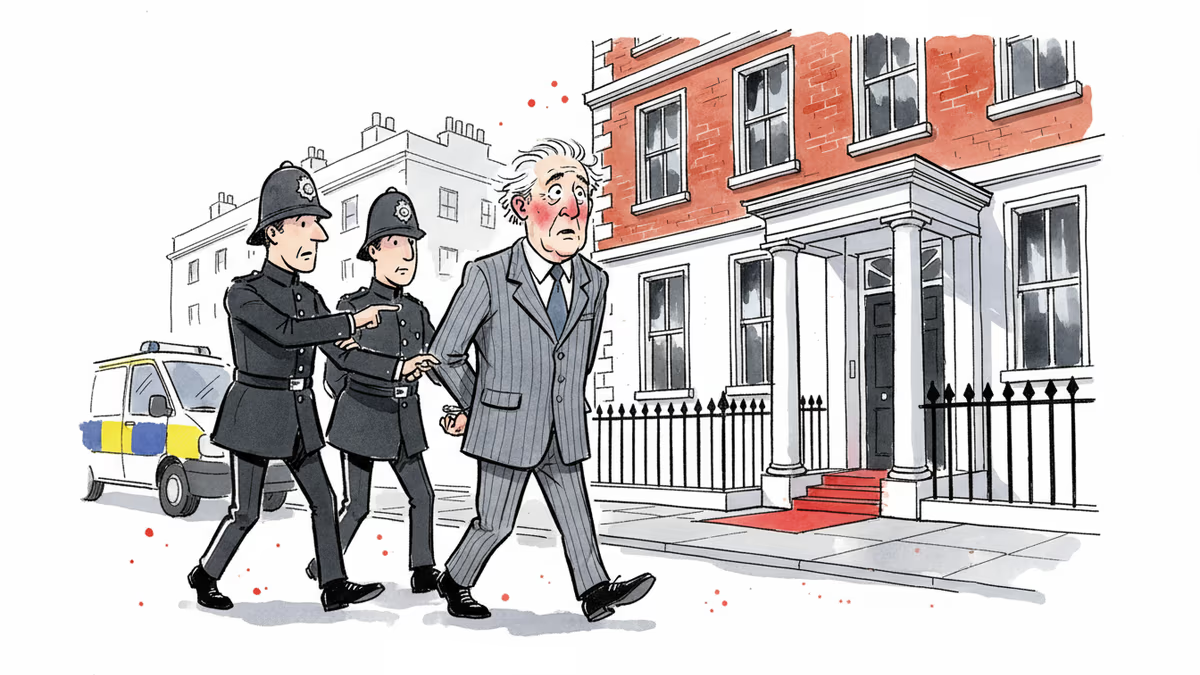
Former UK Ambassador Peter Mandelson detained on misconduct charges over Jeffrey Epstein ties. Following Prince Andrew's arrest, the scandal now engulfs both royalty and Labour politics.
Britain rejected a £1.5 billion Chinese wind turbine plant in Scotland. The reason given was national security—but the real pressure may have come from Washington.
Partner of UK Labour MP among three men arrested on suspicion of spying for China, dealing blow to Starmer's China reset policy
Ali Larijani, once Iran's pragmatic nuclear negotiator, has transformed into a fiery voice for retaliation after Khamenei's death. What drives this dramatic shift?
Former UK Ambassador Peter Mandelson detained on misconduct charges over Jeffrey Epstein ties. Following Prince Andrew's arrest, the scandal now engulfs both royalty and Labour politics.
Thoughts
Share your thoughts on this article
Sign in to join the conversation