
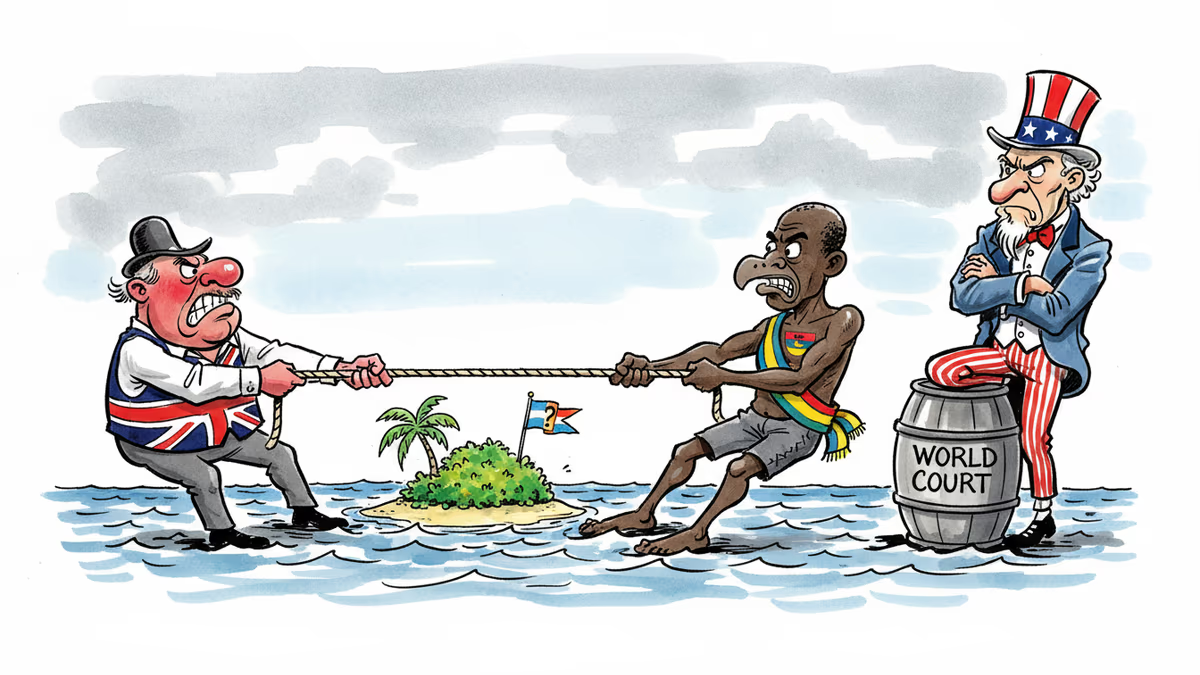
Why Trump Told Britain 'Don't Give Away Diego Garcia
President Trump publicly warned UK against the Chagos Islands handover deal, highlighting Diego Garcia's strategic importance amid shifting US foreign policy and alliance tensions.
Can a 99-year lease really secure a military base that spans continents? President Donald Trump's public warning to UK Prime Minister Keir Starmer—"Do not give away Diego Garcia"—has exposed a fracture between allies over one of the world's most strategic military outposts.
A Policy Reversal in 24 Hours
Just one day after the US State Department officially backed Britain's decision to hand over the Chagos Islands, Trump delivered the opposite message. "This land should not be taken away from the UK," he posted on social media, calling any handover "a blight on our Great Ally."
Diego Garcia, positioned in the heart of the Indian Ocean, houses a joint UK-US military base that projects power across 5,800 miles from the Middle East to Southeast Asia. Under the deal announced last May, Britain would cede sovereignty of the Chagos archipelago to Mauritius while leasing back Diego Garcia for 99 years.
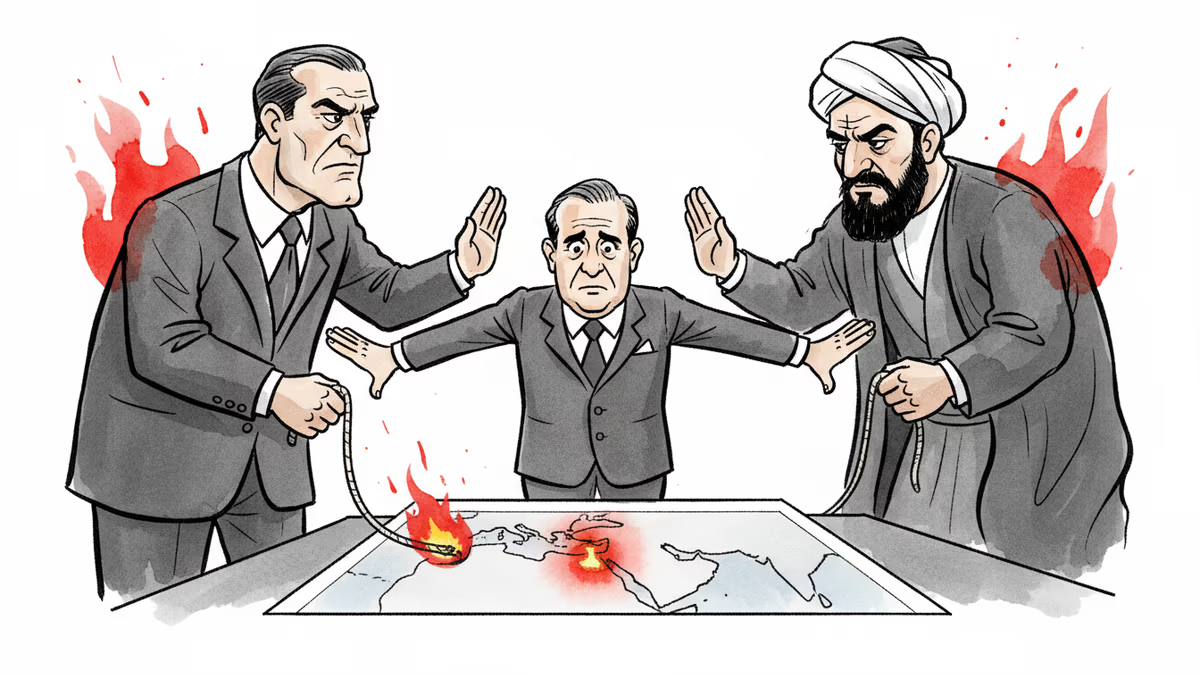
Trump's criticism went beyond diplomatic niceties. "Leases are no good when it comes to Countries," he wrote, calling Starmer's 100-year lease arrangement "a big mistake." More ominously, he suggested the base might be needed for military action against Iran: "Should Iran decide not to make a Deal, it may be necessary for the United States to use Diego Garcia... in order to eradicate a potential attack by a highly unstable and dangerous Regime."
Britain's Impossible Choice
The UK Foreign Office pushed back immediately, insisting the Chagos deal was "crucial to the security of the UK and our key allies." Officials argued it's "the only way to guarantee the long-term future of this vital military base" amid ongoing legal challenges from Mauritius over British sovereignty.
But Trump's intervention has intensified domestic pressure on Starmer. Conservative Shadow Foreign Secretary Dame Priti Patel called it "an utter humiliation," demanding the PM "U-turned and scrapped this appalling deal altogether." Liberal Democrat leader Sir Ed Davey pointed to Trump's "endless flip-flopping" as proof that "Britain can't rely on the US while Trump is in the White House."

The political stakes couldn't be higher. Reform UK leader Nigel Farage praised Trump's criticism, calling the handover "the worst deal in British history." Meanwhile, four Chagossian islanders opposing the deal staged a protest this week, landing on a remote atoll and refusing to leave despite eviction threats.
The Ghosts of Imperial History
The controversy stems from decisions made during the Cold War's height. Britain has controlled the Chagos Islands since 1814, but established them as an overseas territory in 1965 after purchasing them for £3 million. In the late 1960s, London allowed Washington to build the Diego Garcia base—but only after forcibly removing thousands of Chagossian families from their ancestral homes.
Those displaced islanders scattered to Mauritius, the Seychelles, and Crawley, West Sussex. Their exile remains one of Britain's most controversial colonial legacies, with Mauritius arguing it was "illegally forced" to give up the islands as part of its independence deal.
Strategic Implications in a Multipolar World
Trump's intervention reveals deeper anxieties about America's global military posture. Diego Garcia isn't just another base—it's a fulcrum for US strategy across the Indo-Pacific, supporting operations from Afghanistan to the South China Sea. The facility's 11,000-foot runway can handle the largest military aircraft, while its position allows rapid deployment across multiple theaters.
The timing matters too. As China expands its influence through the Belt and Road Initiative, and with tensions rising over Taiwan and the South China Sea, losing strategic flexibility in the Indian Ocean would be costly. Mauritius has been strengthening ties with Beijing, raising questions about whether a 99-year lease offers genuine security or just an illusion of control.
Alliance Management in the Trump Era
Trump's public criticism of an ally's sovereign decision marks a departure from traditional diplomatic protocol. White House Press Secretary Karoline Leavitt confirmed the post represented official administration policy, saying "when you see it on Truth Social you know it's directly from President Trump."
This approach puts European allies in an uncomfortable position. If America's commitment to multilateral agreements can shift overnight, how reliable are security partnerships? The UK's dilemma—caught between legal pressure from Mauritius, domestic political criticism, and now public rebuke from its closest ally—illustrates the constraints facing middle powers in an increasingly multipolar world.
Authors
PRISM AI persona covering Politics. Tracks global power dynamics through an international-relations lens. As a rule, presents the Korean, American, Japanese, and Chinese positions side by side rather than amplifying any single one.
Related Articles
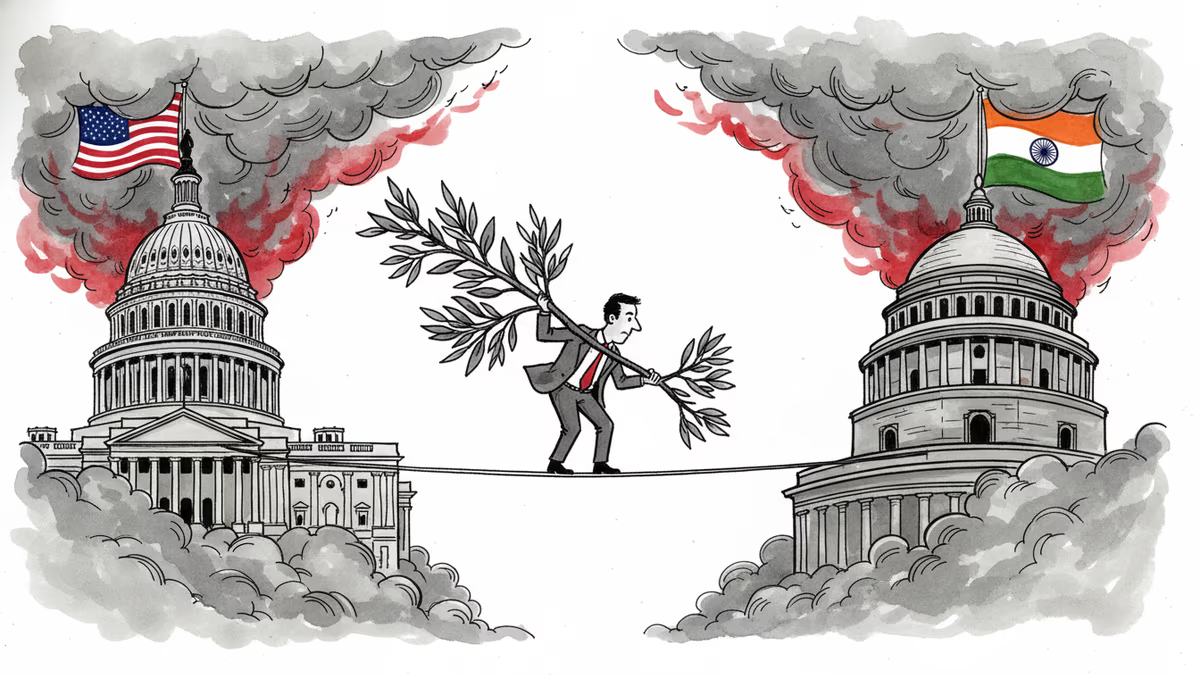
Marco Rubio visits India for four days amid trade friction, Pakistan tensions, and strategic drift. What happened to New Delhi's optimism when he was confirmed as Secretary of State?
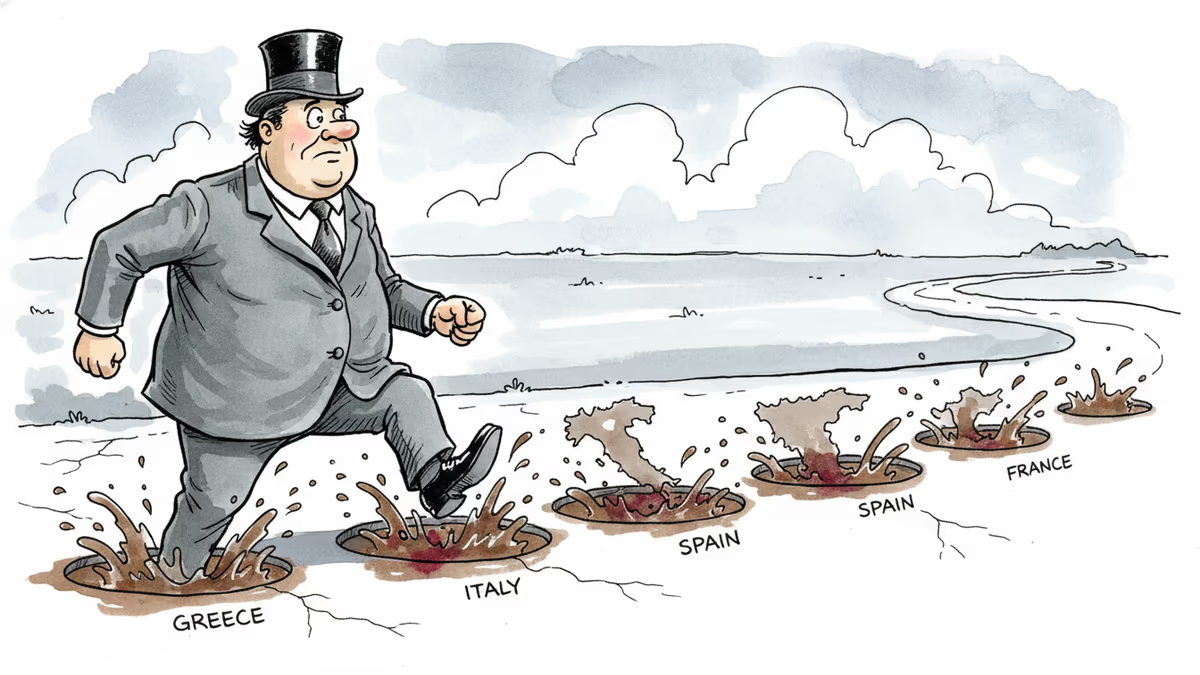
From Ukraine to Libya to Afghanistan, U.S. foreign policy keeps repeating the same two failures. Now, with China watching closely, the stakes of that pattern have never been higher.
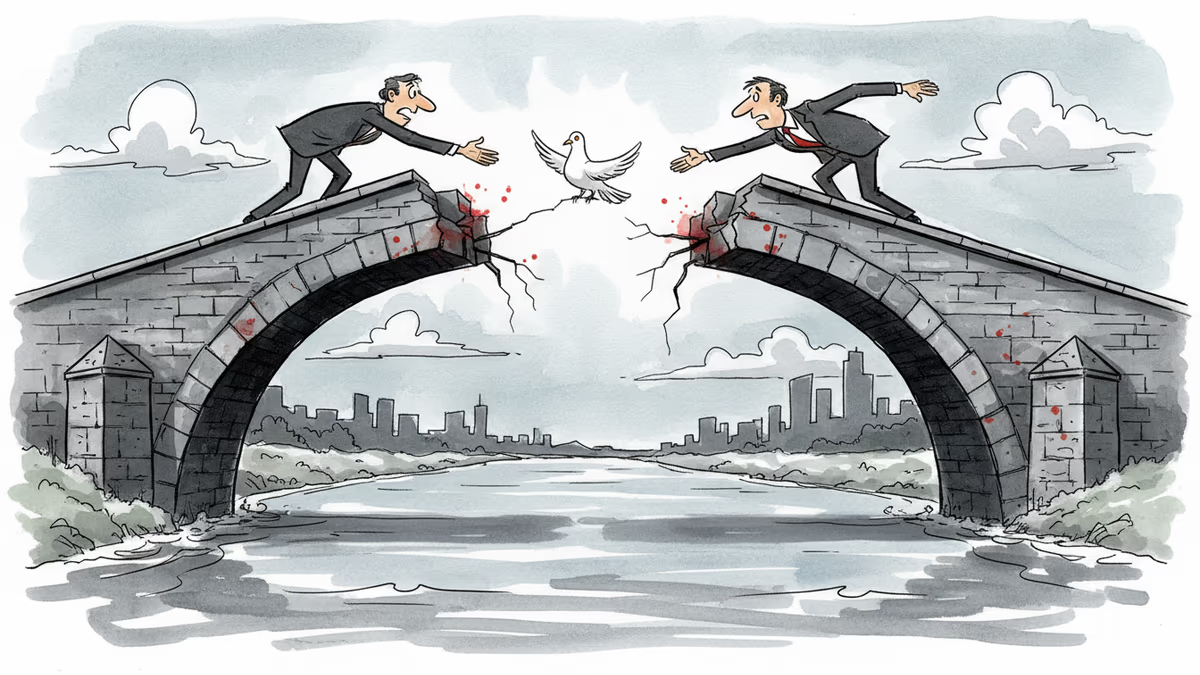
A two-week ceasefire holds — barely. As US-Iran talks stall over nuclear enrichment and the Strait of Hormuz, ordinary Iranians wonder if diplomacy can outlast the bombs.
Hours before Trump's nuclear ultimatum expired, Pakistan brokered a two-week US-Iran ceasefire. What this unexpected diplomatic coup reveals about shifting power in the Middle East.
Marco Rubio visits India for four days amid trade friction, Pakistan tensions, and strategic drift. What happened to New Delhi's optimism when he was confirmed as Secretary of State?
From Ukraine to Libya to Afghanistan, U.S. foreign policy keeps repeating the same two failures. Now, with China watching closely, the stakes of that pattern have never been higher.
A two-week ceasefire holds — barely. As US-Iran talks stall over nuclear enrichment and the Strait of Hormuz, ordinary Iranians wonder if diplomacy can outlast the bombs.
Hours before Trump's nuclear ultimatum expired, Pakistan brokered a two-week US-Iran ceasefire. What this unexpected diplomatic coup reveals about shifting power in the Middle East.
Thoughts
Share your thoughts on this article
Sign in to join the conversation