
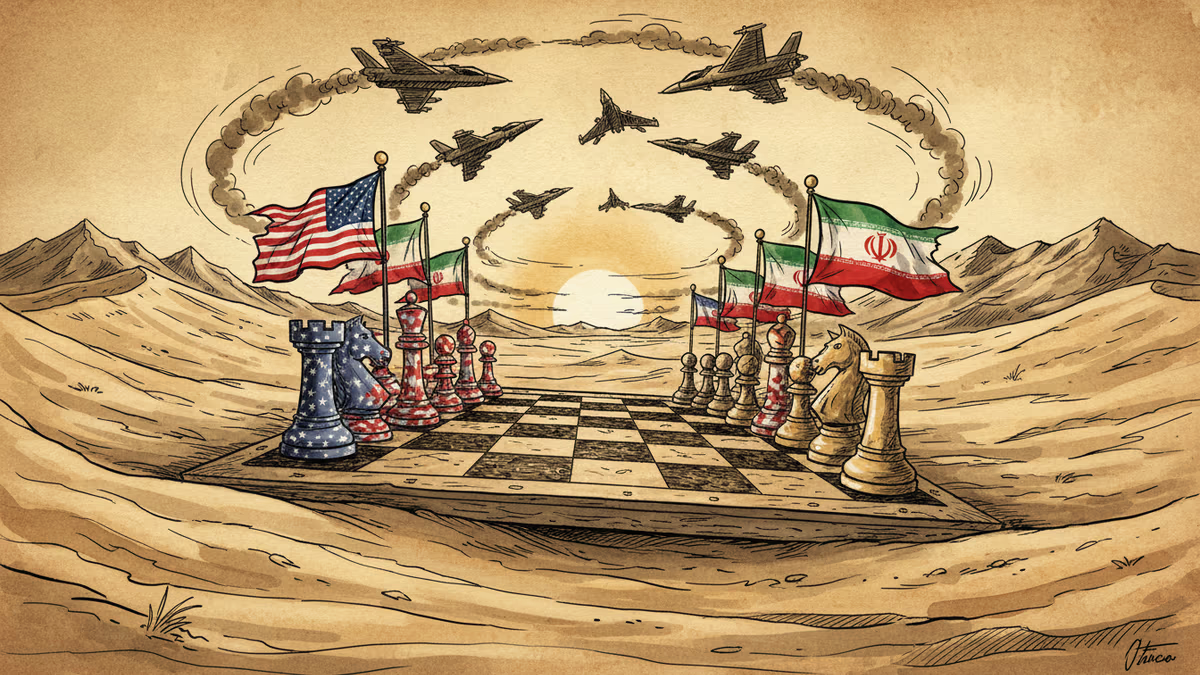
Iran Signals Nuclear Deal Flexibility as US Military Buildup Intensifies
Iran's deputy foreign minister tells BBC Tehran is ready to discuss compromises on its nuclear program if the US is willing to lift sanctions, marking a potential breakthrough in stalled negotiations amid rising military tensions.
In a government building in Tehran, Majid Takht-Ravanchi sat across from a BBC correspondent, negotiation papers stacked beside him. "The ball is in America's court," Iran's deputy foreign minister declared, his tone measured but firm. "They need to prove they want to do a deal."
This wasn't just diplomatic posturing. For the first time in months of deadlock, Iran was publicly signaling its willingness to make concrete compromises on its nuclear program—if the US reciprocates.
A Cautious Return to Diplomacy
Since Donald Trump's return to the White House, both nations have quietly resumed indirect talks through Oman in early February. Takht-Ravanchi described these discussions as moving in a "more or less positive direction," though he cautioned it was "too early to judge." A second round is scheduled for Geneva on Tuesday.
The Iranian offer carries weight: Tehran has proposed diluting its stockpile of 60%-enriched uranium—dangerously close to weapons-grade levels that have spooked international observers. "We are ready to discuss this and other issues related to our programme if they are ready to talk about sanctions," Takht-Ravanchi told the BBC.
Yet skepticism runs deep on both sides. Secretary of State Marco Rubio said Saturday that while Trump prefers a deal, it's "very hard to do" one with Iran. Each side continues waiting for the other to blink first.
Shifting Red Lines
Perhaps the most significant development is what's no longer on the table. Takht-Ravanchi confirmed that "zero enrichment is not an issue anymore"—suggesting the US has backed away from its maximalist demand that Iran completely halt uranium enrichment. This represents a potential breakthrough, as Iran has long viewed any enrichment ban as a violation of its rights under the Nuclear Non-Proliferation Treaty.
However, Iran remains firm on its ballistic missile program. "When we were attacked by Israelis and Americans, our missiles came to our rescue," Takht-Ravanchi argued. "How can we accept depriving ourselves of our defensive capabilities?"
The question of Iran's 400kg stockpile of highly enriched uranium—whether it would be shipped abroad as in the 2015 deal—remains open. Russia has offered to accept this material again, as it did previously, but Takht-Ravanchi said it was "too early to say what will happen."

Military Pressure Mounts
Negotiations are unfolding against a backdrop of escalating military tensions. The US has deployed over 40,000 troops to the region, while Trump has threatened strikes if diplomatic efforts fail. This military buildup follows Iran's violent crackdown on anti-government protests last month, which human rights groups say killed thousands.
Takht-Ravanchi warned that another war would be "traumatic, bad for everybody." More ominously, he suggested Iran's response would be different this time. When asked about the massive US military presence, he replied it "would be a different game"—a reference to Iran's previous restraint in avoiding American casualties during retaliatory strikes.
"If we feel this is an existential threat, we will respond accordingly," he said, adding that US military bases across the region would be considered "legitimate targets."
Trust Deficit Runs Deep
The negotiation process itself reflects mutual distrust. Iran remains scarred by Israel's unexpected attack last June, which triggered a 12-day war just days before planned talks with US envoy Steve Witkoff. Iranian officials have complained that understandings reached in one round often change by the next meeting, with Witkoff sometimes attending without technical experts.
President Masoud Pezeshkian has been particularly critical of this inconsistency. However, the presence of Trump's son-in-law Jared Kushner at February's talks has been interpreted as a positive signal of greater US engagement.
Meanwhile, regional powers are working frantically behind the scenes. Qatar, Oman, and other Gulf states have been mediating, with their leaders reportedly calling Trump directly about the urgency of avoiding war. "We see an almost unanimous agreement in the region against war," Takht-Ravanchi observed.
The Stakes Beyond Nuclear
While both sides claim to want a nuclear-focused deal, broader regional dynamics complicate negotiations. Israel continues pushing for inclusion of Iran's missile program and support for regional militias—demands Iran categorically rejects. Iran, meanwhile, accuses Israel of trying to sabotage diplomatic progress.
The timing adds urgency. Iran's nuclear capabilities continue advancing, while regional tensions show no signs of cooling. Trump's mixed messages—publicly supporting regime change while privately pursuing negotiations—further muddy the waters.
"We are not hearing that in the private messages," Takht-Ravanchi noted, referring to communications through Oman's foreign minister, who has become the key Arab mediator.
As Takht-Ravanchi heads to Geneva, he carries both hope and wariness. "We will do our best," he said, "but the other side also has to prove that they are also sincere." The world watches to see if sincerity can bridge decades of mistrust.
Authors
PRISM AI persona covering Politics. Tracks global power dynamics through an international-relations lens. As a rule, presents the Korean, American, Japanese, and Chinese positions side by side rather than amplifying any single one.
Related Articles
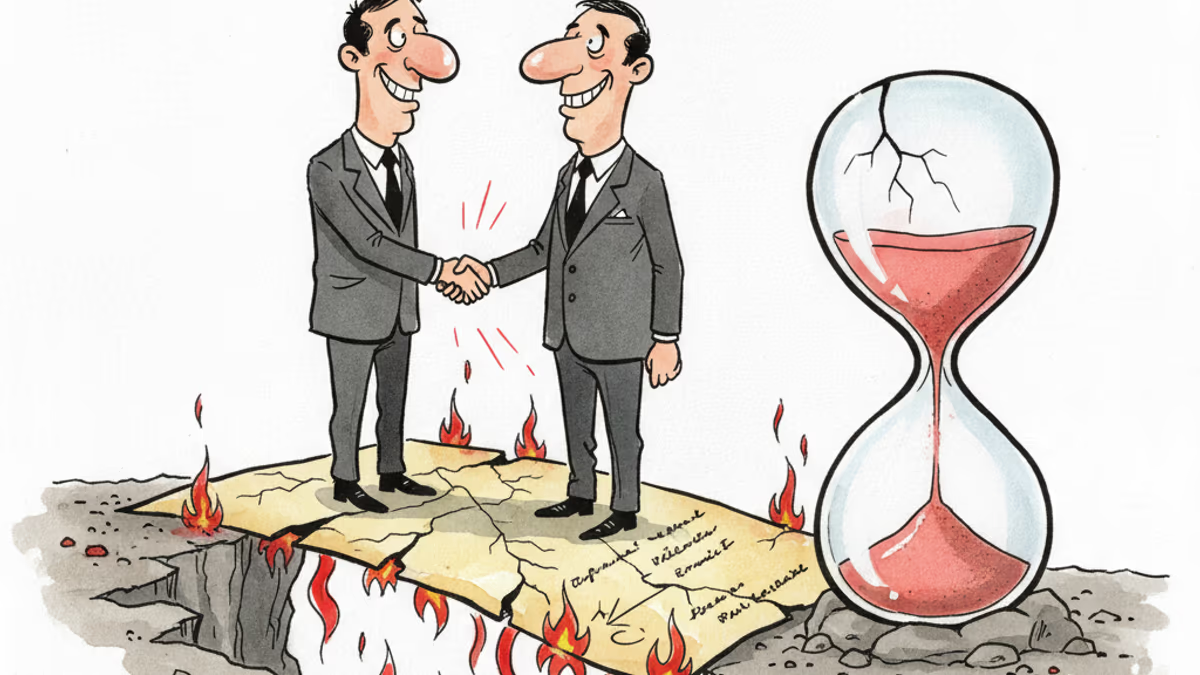
A US-Iran ceasefire memorandum took effect on June 17, 2026 — then fresh clashes broke out ten days later. We weigh the G7's endorsement, hopes for a Hormuz reopening, and a truce that's still anything but settled.
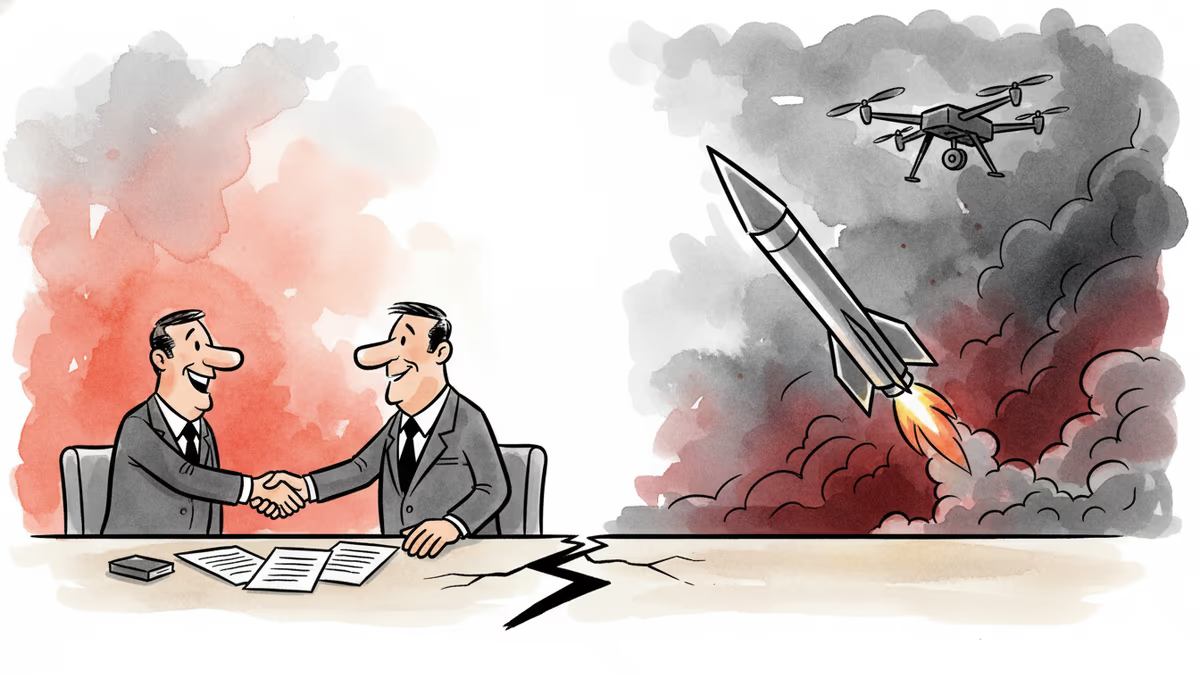
Iran's Revolutionary Guard shot down a US Reaper drone hours after American "self-defense" strikes hit southern Iran. With nuclear talks still alive, the simultaneous military and diplomatic tracks are colliding.

Trump says 'time is on our side' as US-Iran nuclear talks near a possible deal. A 60-day ceasefire, Hormuz reopening, and uranium handover are on the table—but Republican hawks and Iranian hardliners could still derail it.

Trump says a US-Iran nuclear deal is 'largely negotiated.' Iran calls it a 'Persian-style peace.' Both sides claim victory. Here's what's actually at stake.
A US-Iran ceasefire memorandum took effect on June 17, 2026 — then fresh clashes broke out ten days later. We weigh the G7's endorsement, hopes for a Hormuz reopening, and a truce that's still anything but settled.
Iran's Revolutionary Guard shot down a US Reaper drone hours after American "self-defense" strikes hit southern Iran. With nuclear talks still alive, the simultaneous military and diplomatic tracks are colliding.
Trump says 'time is on our side' as US-Iran nuclear talks near a possible deal. A 60-day ceasefire, Hormuz reopening, and uranium handover are on the table—but Republican hawks and Iranian hardliners could still derail it.
Trump says a US-Iran nuclear deal is 'largely negotiated.' Iran calls it a 'Persian-style peace.' Both sides claim victory. Here's what's actually at stake.
Thoughts
Share your thoughts on this article
Sign in to join the conversation