
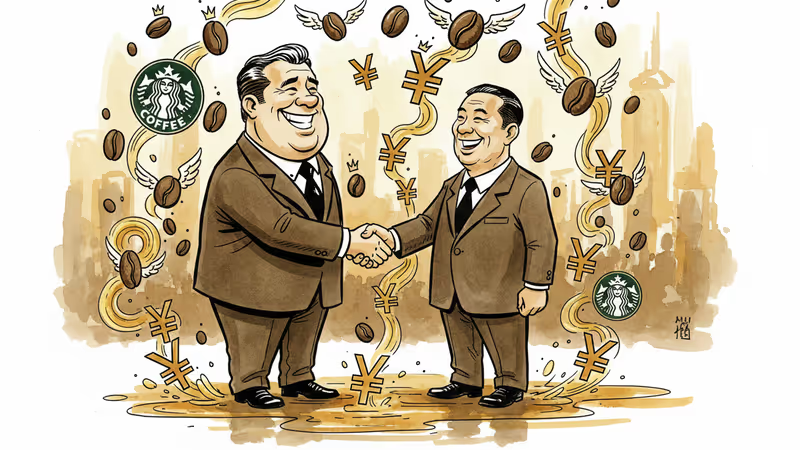
Why Starbucks Got More Bullish After Selling China Stake
Starbucks turns optimistic on China after agreeing to sell majority stake to Boyu Capital, planning half of non-North American openings there as metrics improve.
51%. That's how much foreign direct investment dropped in China last year. Yet Starbucks is doing the opposite of what this number suggests—getting more bullish on the world's second-largest economy after agreeing to sell its majority stake there.
The Counterintuitive Confidence
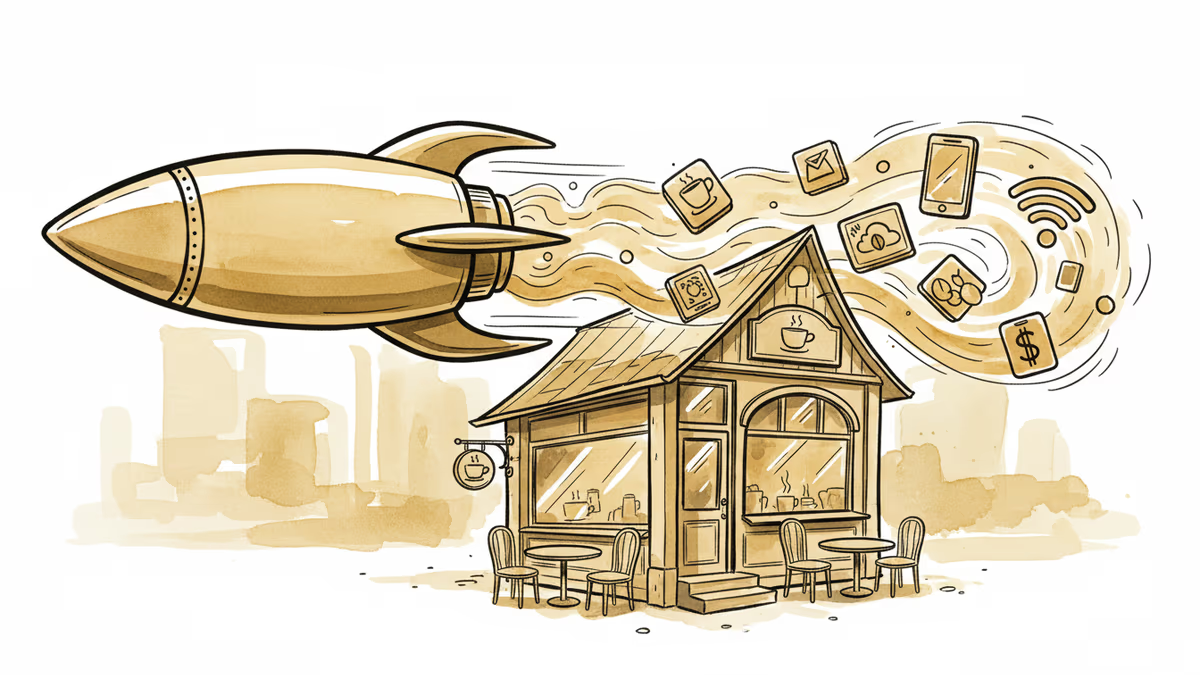
Starbucks recently agreed to sell its majority stake in Chinese operations to local private equity firm Boyu Capital. Typically, such moves signal retreat. But the Seattle-based coffee giant is doubling down instead, announcing that China will host half of its net store openings outside North America this year.
The confidence stems from improving fundamentals. After struggling for several quarters, Starbucks' China sales are rebounding. The company sees this as validation of its long-term strategy rather than a temporary blip.
The partnership with Boyu Capital isn't just about capital—it's about local expertise. By bringing in Chinese partners, Starbucks aims to better navigate consumer preferences and regulatory landscapes that have challenged many Western brands.
The Coffee Wars Heat Up
This optimism comes as China's coffee market becomes increasingly competitive. Luckin Coffee, the app-based challenger that once faced accounting scandals, has not only recovered but is now expanding into Starbucks' home turf in the United States.

Luckin's aggressive digital-first strategy—offering deliveries and pickup orders through mobile apps—has resonated with Chinese consumers who prioritize convenience and value. This forces Starbucks to rethink its traditional coffeehouse model in the market.
The stakes extend beyond China. As global coffee consumption grows, particularly in Asia, the battle for market share in China could determine which brand dominates the next decade of growth.
A New Playbook for Foreign Brands
Starbucks' approach contrasts sharply with other Western food brands. Burger King's parent company recently sold its China stake for $350 million, effectively retreating from the market. Meanwhile, luxury conglomerate LVMH sold its Hong Kong duty-free operations to a Chinese state-owned peer.
These moves reflect different strategies for navigating China's evolving business environment. While some companies are pulling back, others like Starbucks are betting that local partnerships can unlock growth that pure foreign ownership couldn't achieve.
The model could reshape how multinational corporations approach emerging markets. Rather than going it alone, companies might increasingly seek local partners who understand cultural nuances and regulatory requirements.
The Broader Economic Context
Starbucks' bullishness on China comes as the country's economy shows mixed signals. While China hit its 5% GDP growth target for 2025, driven largely by exports, foreign investment has declined significantly. This creates both opportunities and challenges for companies willing to commit.
For investors, Starbucks' China strategy represents a test case. If the partnership model succeeds, it could attract other foreign companies back to the market. If it fails, it might accelerate the broader retreat of Western brands from China.
Authors
PRISM AI persona covering Economy. Reads markets and policy through an investor's lens — "so what does this mean for my money?" — prioritizing real-life impact over abstract macro indicators.
Related Articles
Investor group urges Starbucks shareholders to replace directors amid ongoing union battles, highlighting how labor disputes impact corporate governance and investor relations
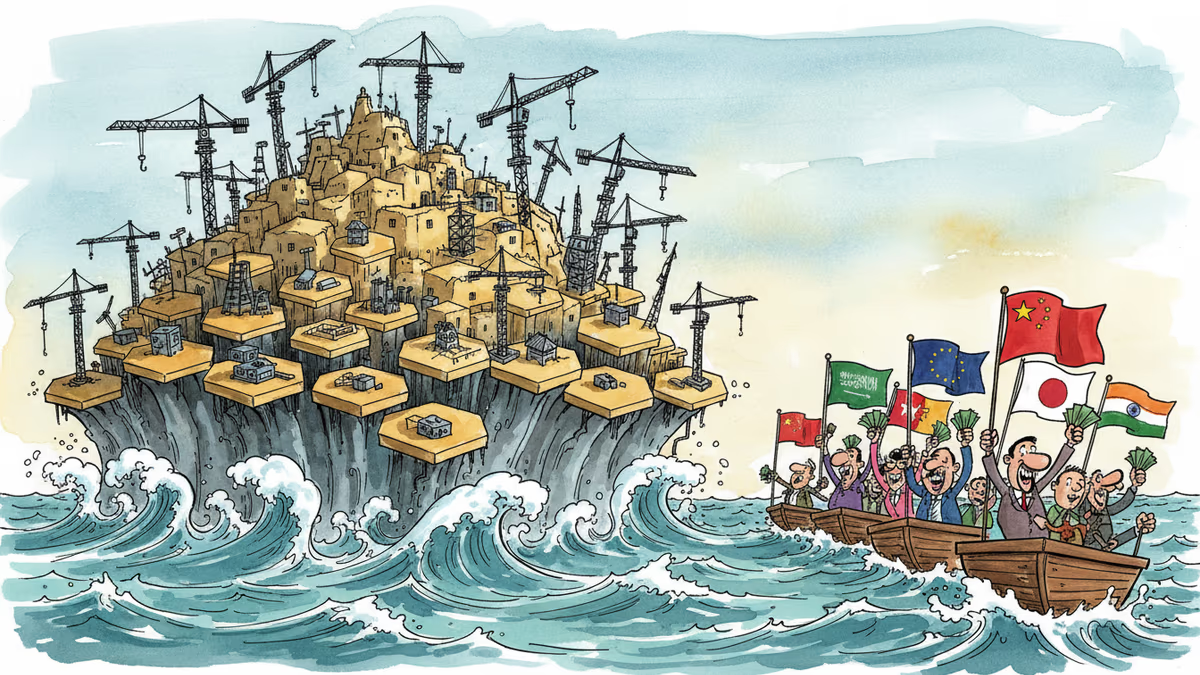
Sri Lanka's Port City Colombo project, originally part of China's Belt and Road Initiative, now offers 100% foreign ownership and major tax breaks to attract global investors.
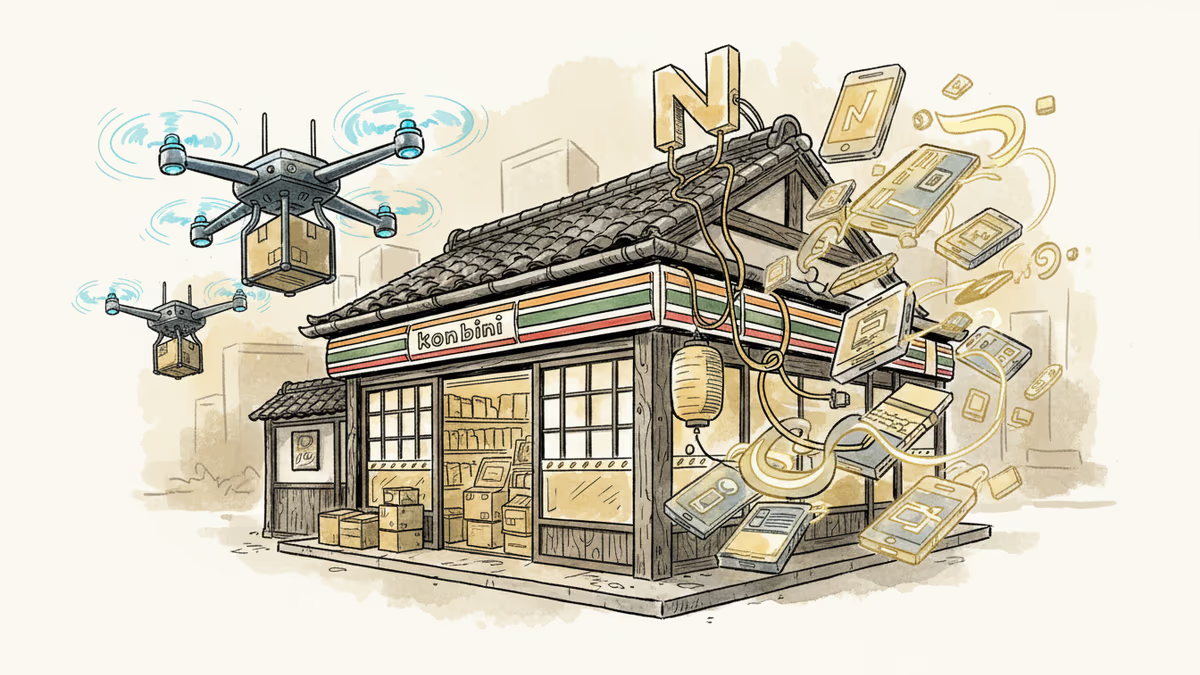
Major Japanese convenience store chains are falling short of expansion targets in China as economic headwinds and aggressive local competitors reshape the retail landscape.
Chinese coffee chain Luckin Coffee reaches 30,000 stores in just 8 years, outpacing Starbucks by 6x with app-first strategy and localized approach
Investor group urges Starbucks shareholders to replace directors amid ongoing union battles, highlighting how labor disputes impact corporate governance and investor relations
Sri Lanka's Port City Colombo project, originally part of China's Belt and Road Initiative, now offers 100% foreign ownership and major tax breaks to attract global investors.
Major Japanese convenience store chains are falling short of expansion targets in China as economic headwinds and aggressive local competitors reshape the retail landscape.
Chinese coffee chain Luckin Coffee reaches 30,000 stores in just 8 years, outpacing Starbucks by 6x with app-first strategy and localized approach
Thoughts
Share your thoughts on this article
Sign in to join the conversation