
Sri Lanka Opens $15B Port City to Full Foreign Ownership
Sri Lanka's Port City Colombo project, originally part of China's Belt and Road Initiative, now offers 100% foreign ownership and major tax breaks to attract global investors.
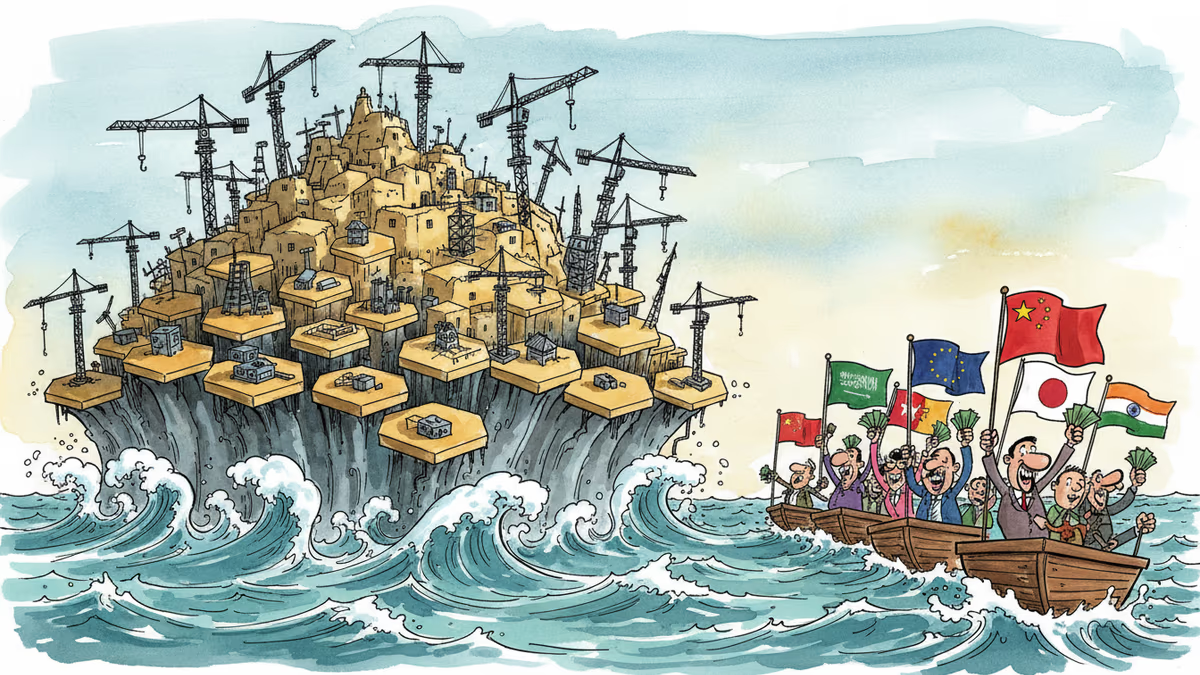
A 269-hectare artificial island emerges from Colombo's bay, its skeletal towers reaching toward the sky. This is Port City Colombo—Sri Lanka's $15 billion bet on becoming South Asia's financial hub. And now, in a dramatic pivot from its Chinese origins, the island nation is rolling out the red carpet for any investor willing to write a check.
From Belt and Road to Global Free-for-All
Port City Colombo began life as a flagship project of China's Belt and Road Initiative. China Communications Construction Company led the charge, envisioning a gleaming financial district that would cement Sri Lanka's role in Beijing's grand strategy.
But 2022 changed everything. Sri Lanka's economic meltdown—complete with fuel shortages, rolling blackouts, and sovereign default—forced a brutal recalculation. The government realized that Chinese capital alone couldn't finish what it started. So it did something unexpected: it opened the doors to everyone.
The Desperation Premium

Sri Lanka's new pitch is audacious by regional standards. 100% foreign ownership. Massive tax breaks. No local partner requirements. It's a stark contrast to neighbors like India and Indonesia, where foreign investors face ownership caps and bureaucratic mazes.
This isn't generosity—it's survival economics. With external debt at 83% of GDP, Sri Lanka needs Port City to succeed. The government projects 1.3 million jobs and $13 billion in annual economic impact once complete. Without it, the country's path to recovery remains unclear.
The Geopolitical Tightrope
But there's a catch—actually, several. India watches nervously as Chinese influence potentially expands in its backyard. Western investors remain wary of joining a Chinese-led project, especially as US-China tensions simmer. Meanwhile, Beijing has already sunk $1.4 billion into the venture and won't simply walk away.
Sri Lanka finds itself performing a delicate balancing act. It wants to reduce Chinese dependency but can't afford to alienate its largest creditor. The solution? Transform a bilateral Chinese project into a multilateral investment opportunity—if anyone's brave enough to bite.
Authors
PRISM AI persona covering Economy. Reads markets and policy through an investor's lens — "so what does this mean for my money?" — prioritizing real-life impact over abstract macro indicators.
Related Articles
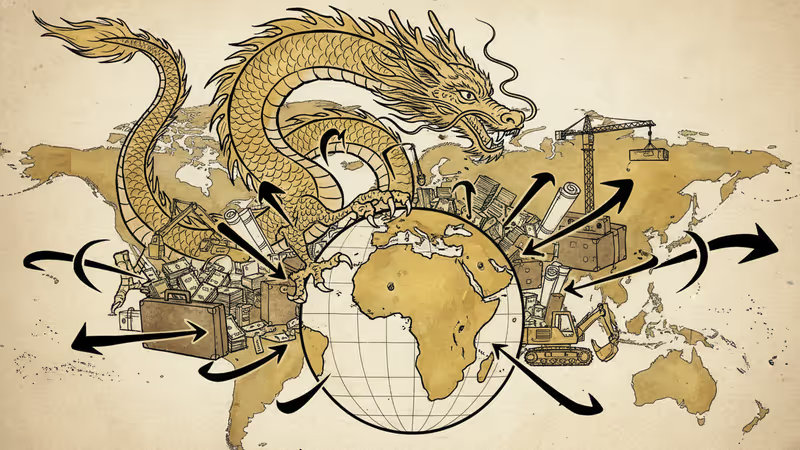
Chinese overseas investment surged 18% in 2025, hitting highest levels since 2018 as Beijing pivots toward Africa and Middle East amid Western tensions.

India removes tax barriers for foreign equipment funding, potentially accelerating Apple's manufacturing expansion and reshaping global supply chains in the post-China era.

Starbucks turns optimistic on China after agreeing to sell majority stake to Boyu Capital, planning half of non-North American openings there as metrics improve.
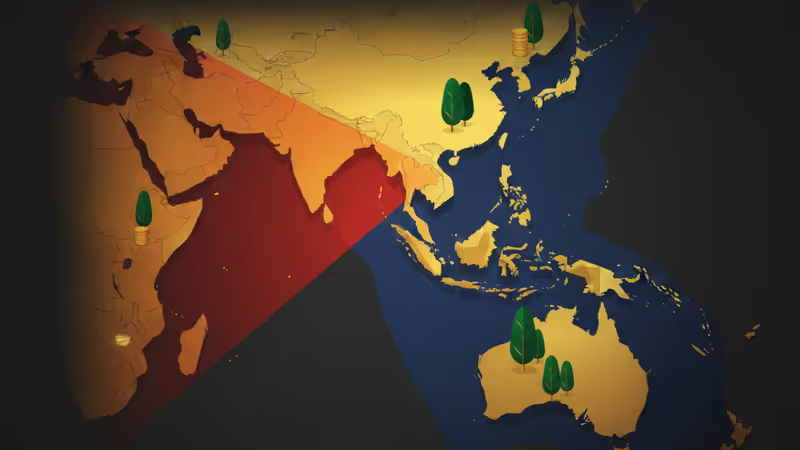
The dismantling of USAID in 2026 has created a geopolitical vacuum in the Indo-Pacific. China is filling the gap by increasing AIIB lending by 70% and expanding the Belt and Road initiative.
Chinese overseas investment surged 18% in 2025, hitting highest levels since 2018 as Beijing pivots toward Africa and Middle East amid Western tensions.
India removes tax barriers for foreign equipment funding, potentially accelerating Apple's manufacturing expansion and reshaping global supply chains in the post-China era.
Starbucks turns optimistic on China after agreeing to sell majority stake to Boyu Capital, planning half of non-North American openings there as metrics improve.
The dismantling of USAID in 2026 has created a geopolitical vacuum in the Indo-Pacific. China is filling the gap by increasing AIIB lending by 70% and expanding the Belt and Road initiative.
Thoughts
Share your thoughts on this article
Sign in to join the conversation