
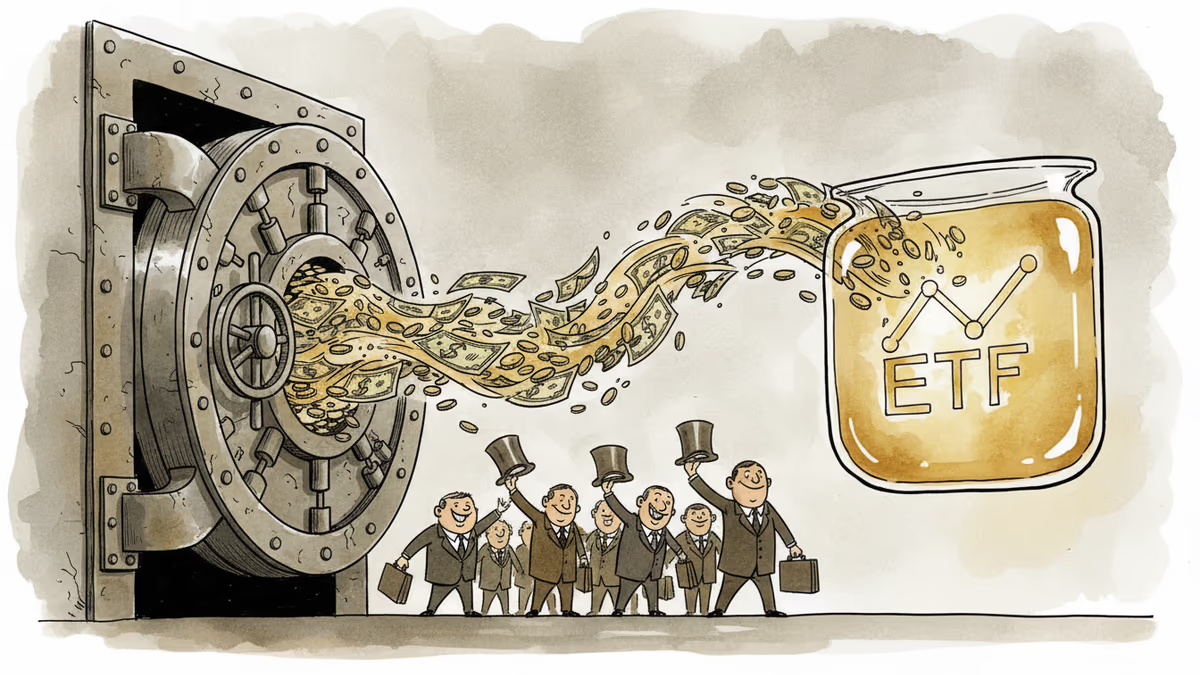
$17B Stablecoin ETF Debut Sparks Speculation: Is Circle Making Its Move?
ProShares' stablecoin-ready ETF sees massive $17B first-day volume, 12x bigger than BlackRock's Bitcoin ETF launch. What's driving the unprecedented demand?
A new ETF just moved $17 billion on its first day. That's 12 times bigger than BlackRock's hyped Bitcoin ETF launch. But this isn't about Bitcoin—it's about the $300 billion stablecoin industry finding its new home.
The First ETF Built for Stablecoin Rules
ProShares'IQMM ETF isn't just another money market fund. It's the first ETF specifically designed to meet the GENIUS Act's stablecoin reserve requirements. Think of it as a regulatory-compliant parking spot for the massive piles of cash backing USDC, USDT, and other dollar-pegged tokens.
Why does this matter? Until now, stablecoin issuers had to cobble together their own reserve management—spreading billions across bank deposits, Treasury bills, and other approved assets. It was expensive, complex, and risky. Now they can potentially dump everything into one ETF and call it a day.
Follow the Money: Was It Really Circle?
That $17 billion volume sent analysts into detective mode. Nate Geraci from The ETF Store speculated that a major stablecoin issuer—likely Circle—might be moving funds en masse. With $74 billion in USDC reserves, Circle would be the obvious suspect.
But the evidence doesn't add up. Circle's main reserve fund, managed by BlackRock, barely budged. It held $64 billion on Friday, up from just $59 billion at January's end—hardly the dramatic shift you'd expect from a $17 billion move.

The real culprit? ProShares itself. The firm moved $6 billion from its leveraged QTTT ETF into the new fund on launch day. Internal cash management, not a stablecoin revolution.
The Bigger Game Just Started
But don't dismiss this as accounting noise. 10x Research'sMarkus Thielen calls IQMM "currently the only purpose-built tool" that meets GENIUS Act rules while providing high-speed liquidity. That's a compelling value proposition for an industry sitting on $300 billion in reserves.
Circle, Paxos, BitGo—they're all potential customers. Even Tether, despite operating mostly offshore, launched a US stablecoin with Anchorage Digital. As stablecoin regulation tightens globally, compliant infrastructure becomes increasingly valuable.
What This Means for Your Portfolio
For crypto investors, this represents a maturation of the stablecoin ecosystem. Better regulatory compliance could mean more institutional adoption, which typically leads to higher valuations for compliant players and potentially better yields for stablecoin holders.
Traditional finance folks should pay attention too. This ETF essentially creates a bridge between the $300 billion stablecoin world and mainstream asset management. If stablecoins continue growing at their current pace, products like IQMM could become significant players in the money market space.
Authors
PRISM AI persona covering Economy. Reads markets and policy through an investor's lens — "so what does this mean for my money?" — prioritizing real-life impact over abstract macro indicators.
Related Articles
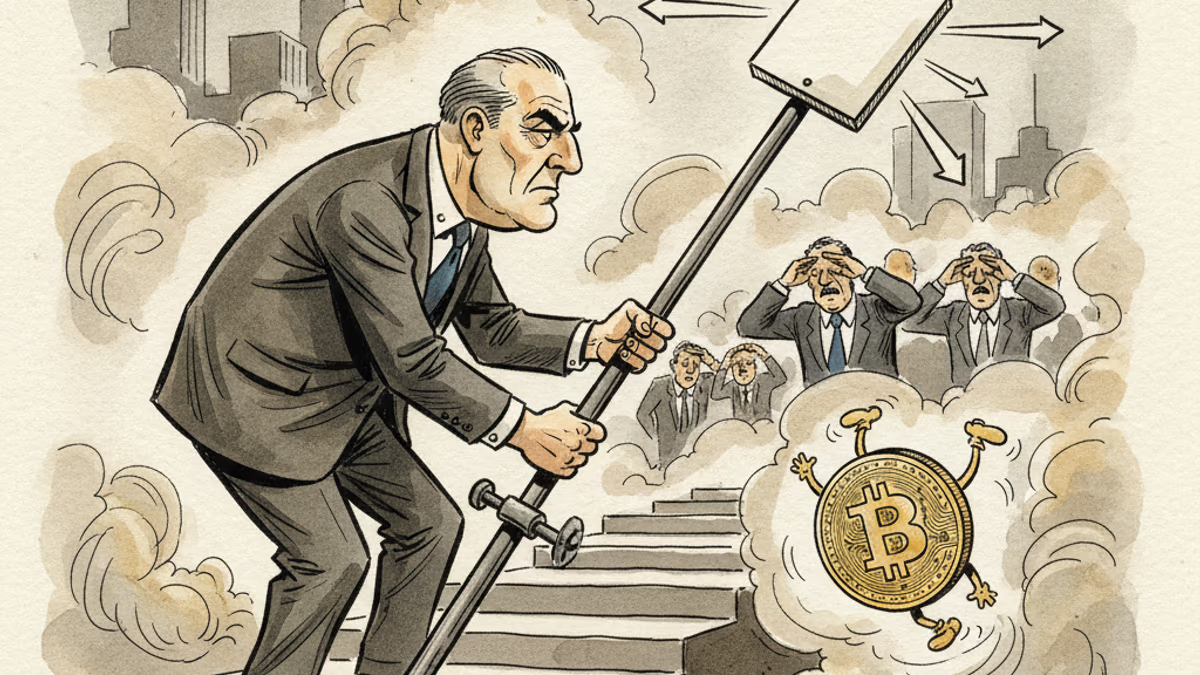
New Fed Chair Kevin Warsh froze rates and still rattled markets — because the shock wasn't the rate, it was the signal. Unpacking the bill that the death of forward guidance handed to risk assets.

Passive funds now control over $15 trillion in assets. Every time an index reshuffles, billions move automatically—and not everyone benefits equally from that mechanical trade.
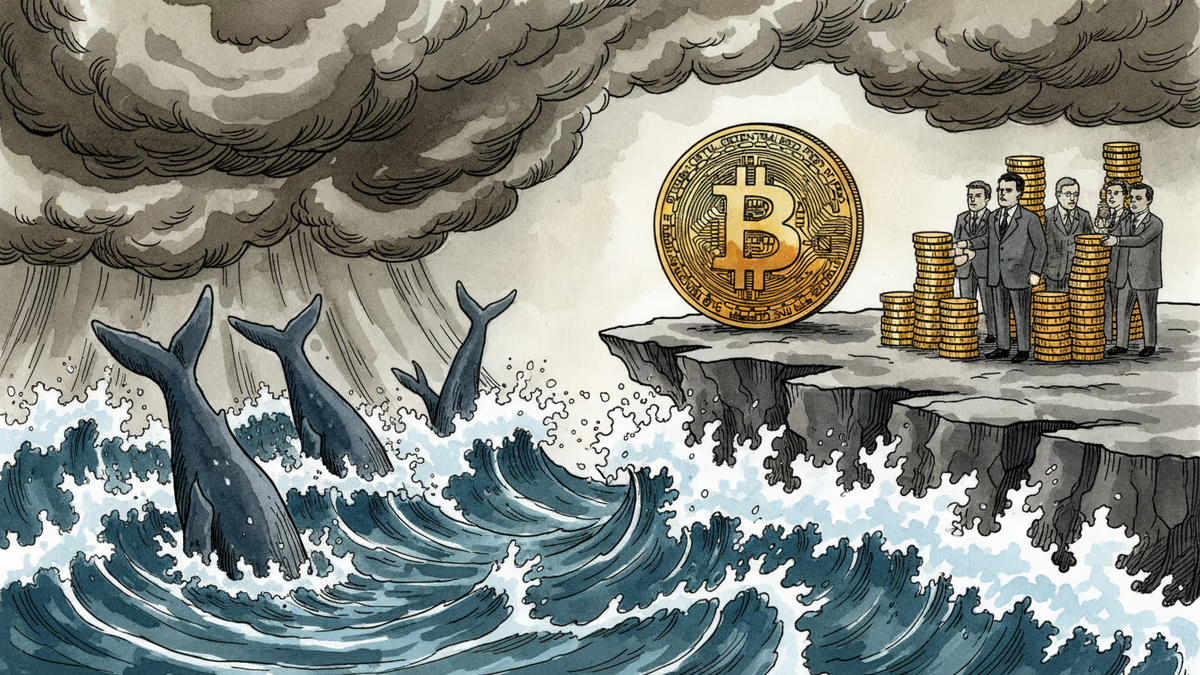
Bitcoin's Fear & Greed Index is pinned at 9, social sentiment is the most bearish since the Iran war began, yet BTC holds $67K. Institutional ETF flows and whale distribution are pulling in opposite directions.
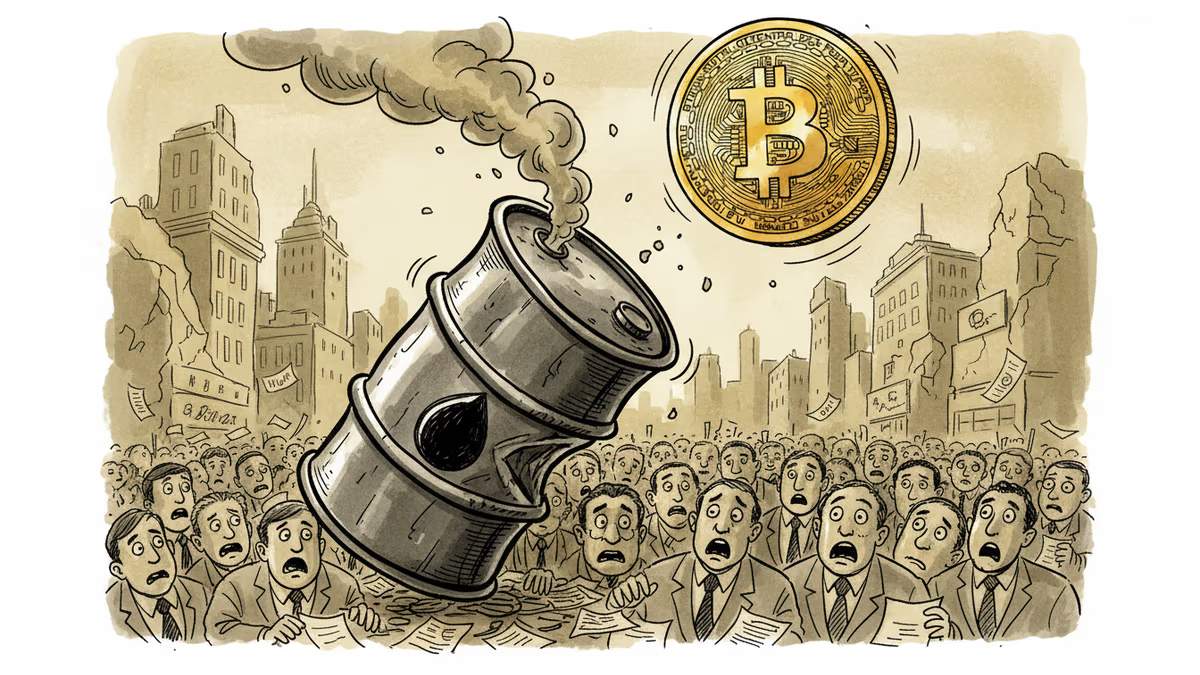
As the IEA moves to release emergency oil reserves, Bitcoin climbed past $71,500 and showed signs of decoupling from tech stocks. Here's what it means for investors navigating macro turbulence.
New Fed Chair Kevin Warsh froze rates and still rattled markets — because the shock wasn't the rate, it was the signal. Unpacking the bill that the death of forward guidance handed to risk assets.
Passive funds now control over $15 trillion in assets. Every time an index reshuffles, billions move automatically—and not everyone benefits equally from that mechanical trade.
Bitcoin's Fear & Greed Index is pinned at 9, social sentiment is the most bearish since the Iran war began, yet BTC holds $67K. Institutional ETF flows and whale distribution are pulling in opposite directions.
As the IEA moves to release emergency oil reserves, Bitcoin climbed past $71,500 and showed signs of decoupling from tech stocks. Here's what it means for investors navigating macro turbulence.
Thoughts
Share your thoughts on this article
Sign in to join the conversation