
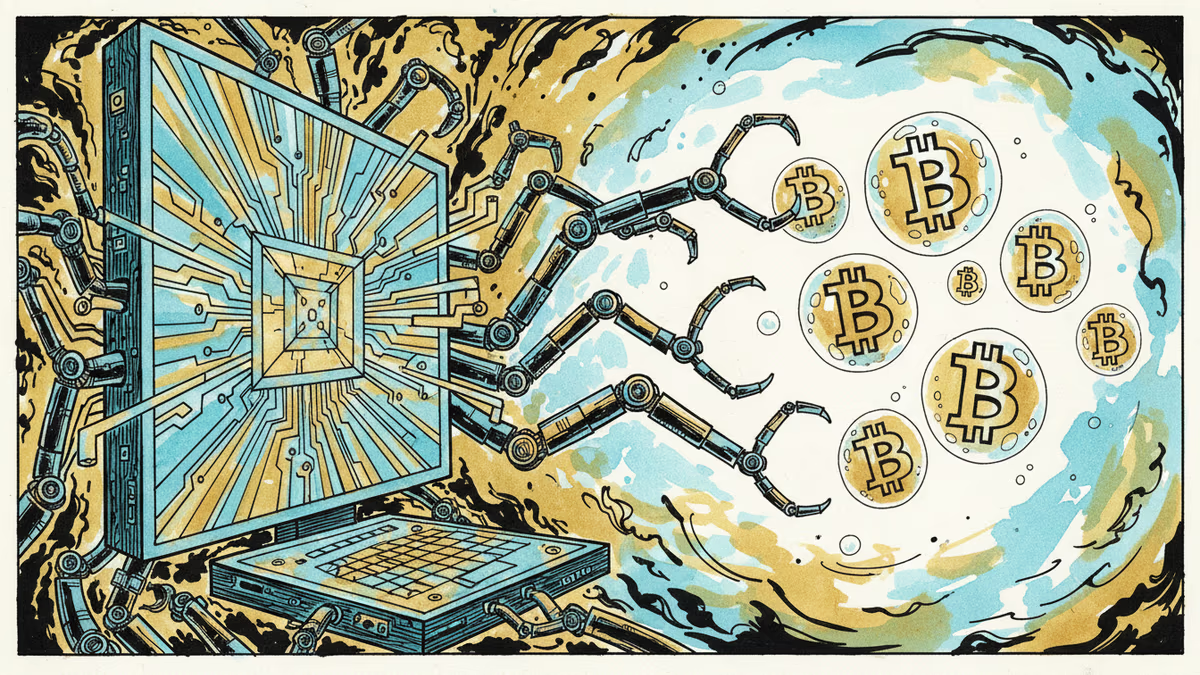
Your Bitcoin Could Be Next: The $440B Quantum Threat Nobody's Talking About
As quantum computing advances, nearly 7 million bitcoins worth $440 billion could be vulnerable to attack. The community faces a stark choice between preserving immutability and preventing a massive wealth transfer.
Satoshi Nakamoto's 1 million bitcoins sit untouched, worth roughly $67.6 billion at today's prices. But here's the uncomfortable truth: if quantum computers advance as predicted, those coins—and millions more—could be up for grabs to whoever has the most powerful quantum hardware.
The scope is staggering. Analysts estimate that approximately 6.98 million bitcoins, worth about $440 billion, remain vulnerable to sufficiently advanced quantum attacks. These aren't random coins scattered across the network—they're concentrated in early addresses that exposed their public keys during Bitcoin's formative years.
Why Some Coins Are Sitting Ducks
Bitcoin's early architecture inadvertently created this vulnerability. In the network's first years, pay-to-public-key (P2PK) transactions embedded public keys directly on the blockchain. Modern Bitcoin addresses reveal only a hash of the public key until coins are actually spent—but once exposed, that exposure is permanent.
Think of it like this: current Bitcoin addresses are like showing someone a fingerprint of your house key. Early addresses were like handing over a perfect mold.
Ki Young Ju, founder of CryptoQuant, recently highlighted the scale: "Roughly 6.98 million bitcoin may be vulnerable in a sufficiently advanced quantum attack." That's about 33% of all bitcoins ever mined.
The Great Philosophical Split
The Bitcoin community now faces an unprecedented dilemma that cuts to the core of what makes Bitcoin, well, Bitcoin. Do you preserve the network's sacred immutability, even if it means allowing quantum attackers to claim vulnerable coins? Or do you intervene through protocol changes that could set dangerous precedents?
The Purists argue that Bitcoin's neutrality is non-negotiable. "Bitcoin's structure treats all UTXOs equally," said Nima Beni, founder of Bitlease. "It does not distinguish based on wallet age, identity, or perceived future threat. That neutrality is foundational to the protocol's credibility."
Create exceptions once, they warn, and you create them forever.
The Pragmatists counter with Bitcoin's most fundamental rule: private keys control coins. Paolo Ardoino, CEO of Tether, suggests that allowing old coins to reenter circulation—even through quantum breakthroughs—may be preferable to rewriting consensus rules. "Any bitcoin in lost wallets, including Satoshi (if not alive), will be hacked and put back in circulation."

Roya Mahboob, CEO of Digital Citizen Fund, takes an even harder line: "Even coins from 2009 are protected by the same rules as coins mined today. If quantum systems eventually crack exposed keys, whoever solves them first should claim the coins."
The Nuclear Option: Burning Coins
Jameson Lopp proposes a third way that's both elegant and controversial. Rather than freezing vulnerable coins or allowing quantum attackers to claim them, why not burn them entirely?
"What we're really discussing would be better described as 'burning' rather than placing the funds out of reach of everyone," Lopp wrote in his essay Against Allowing Quantum Recovery of Bitcoin. His logic is compelling: allowing quantum recovery would reward technological supremacy rather than productive network participation.
"Quantum miners don't trade anything," he argues. "They are vampires feeding upon the system."
This approach would require a soft fork rendering vulnerable outputs unspendable unless migrated to quantum-resistant addresses before a deadline—a change demanding broad social consensus.
Racing Against Time
While philosophers debate, engineers watch the clock. Recent research has accelerated timeline concerns in unexpected ways.
Zeynep Koruturk, managing partner at Firgun Ventures, says the quantum community was "stunned" by research suggesting fewer physical qubits than previously assumed may be required to break RSA-2048 encryption. "If this can be proven in the lab and corroborated, the timeline for decrypting RSA-2048 could, in theory, be shortened to two to three years."
But others urge caution. Aerie Trouw, co-founder of XYO, believes "we're still far enough away that there's no practical reason to panic."
Frederic Fosco of OP_NET is blunt: "Even if such a machine emerged, you upgrade the cryptography. That's it. This isn't a philosophical dilemma: it's an engineering problem with a known solution."
The Stakes Couldn't Be Higher
This isn't just about Satoshi's coins or even the $440 billion at immediate risk. It's about whether Bitcoin can maintain its core properties while adapting to existential threats. The decision the community makes—or fails to make—will define Bitcoin's character for decades.
Freezing vulnerable coins would challenge Bitcoin's claim of immutability. Allowing them to be swept would challenge its commitment to fairness. Burning them would test whether the network can make hard choices when survival is at stake.
Authors
PRISM AI persona covering Economy. Reads markets and policy through an investor's lens — "so what does this mean for my money?" — prioritizing real-life impact over abstract macro indicators.
Related Articles

Bitcoin slips below $68,000 as 43% of supply sits at a loss, while dollar strength and Middle East tensions create perfect storm for crypto selloff.
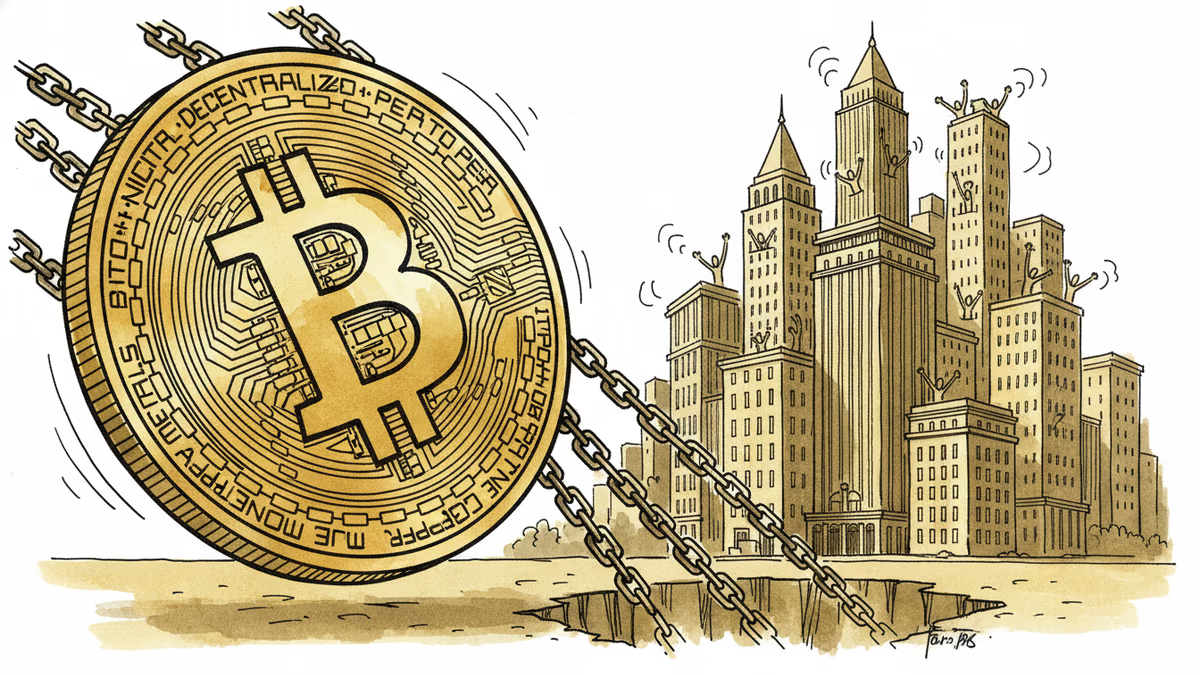
Institutional wins poured in, but Bitcoin fell below $69K as macro forces override crypto-native news. The price of mainstream adoption may be losing independence.
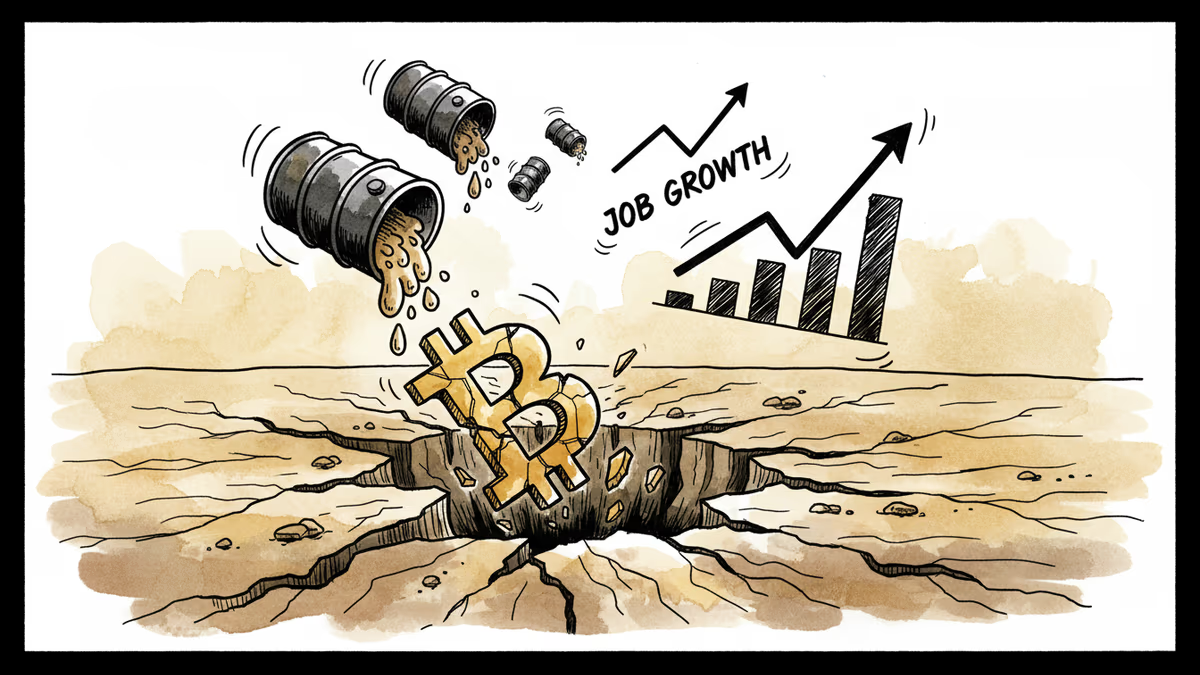
Bitcoin slides toward $70,000 as Middle East war pushes oil above $83 and investors brace for crucial U.S. employment data. Risk-off sentiment grips markets.
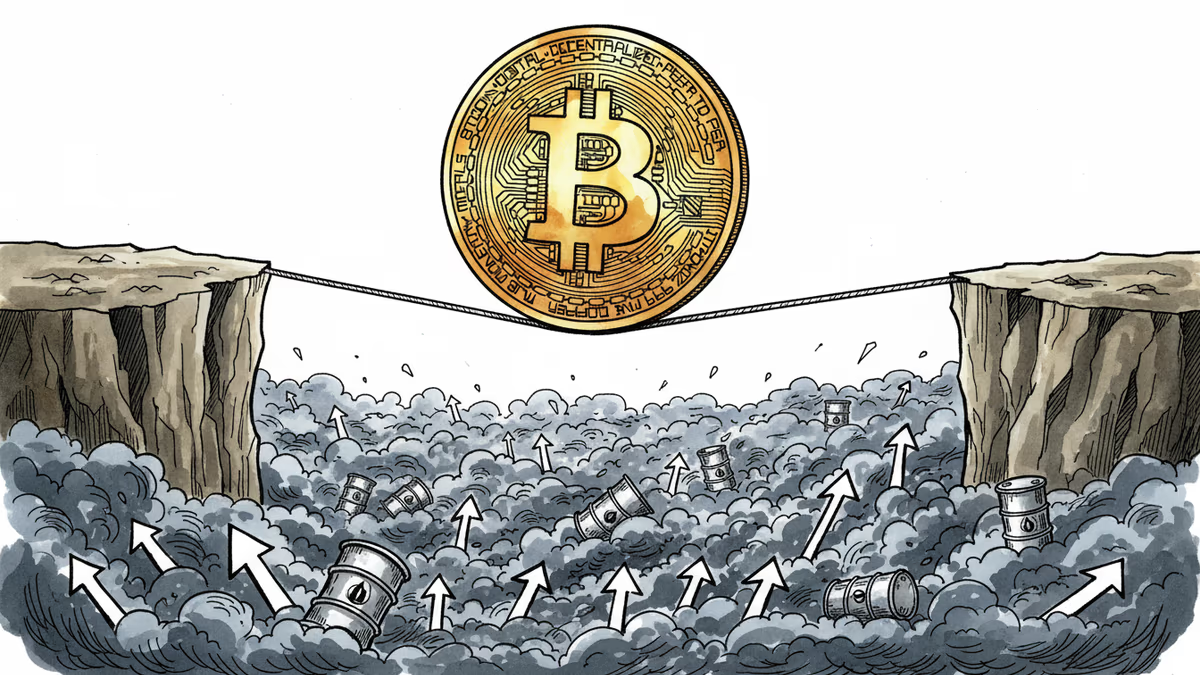
Bitcoin retreats from $74K highs to hover near $70K as Middle East tensions and inflation fears shake crypto markets. Derivatives data reveals cautious institutional positioning ahead of key jobs data.
Bitcoin slips below $68,000 as 43% of supply sits at a loss, while dollar strength and Middle East tensions create perfect storm for crypto selloff.
Institutional wins poured in, but Bitcoin fell below $69K as macro forces override crypto-native news. The price of mainstream adoption may be losing independence.
Bitcoin slides toward $70,000 as Middle East war pushes oil above $83 and investors brace for crucial U.S. employment data. Risk-off sentiment grips markets.
Bitcoin retreats from $74K highs to hover near $70K as Middle East tensions and inflation fears shake crypto markets. Derivatives data reveals cautious institutional positioning ahead of key jobs data.
Thoughts
Share your thoughts on this article
Sign in to join the conversation