
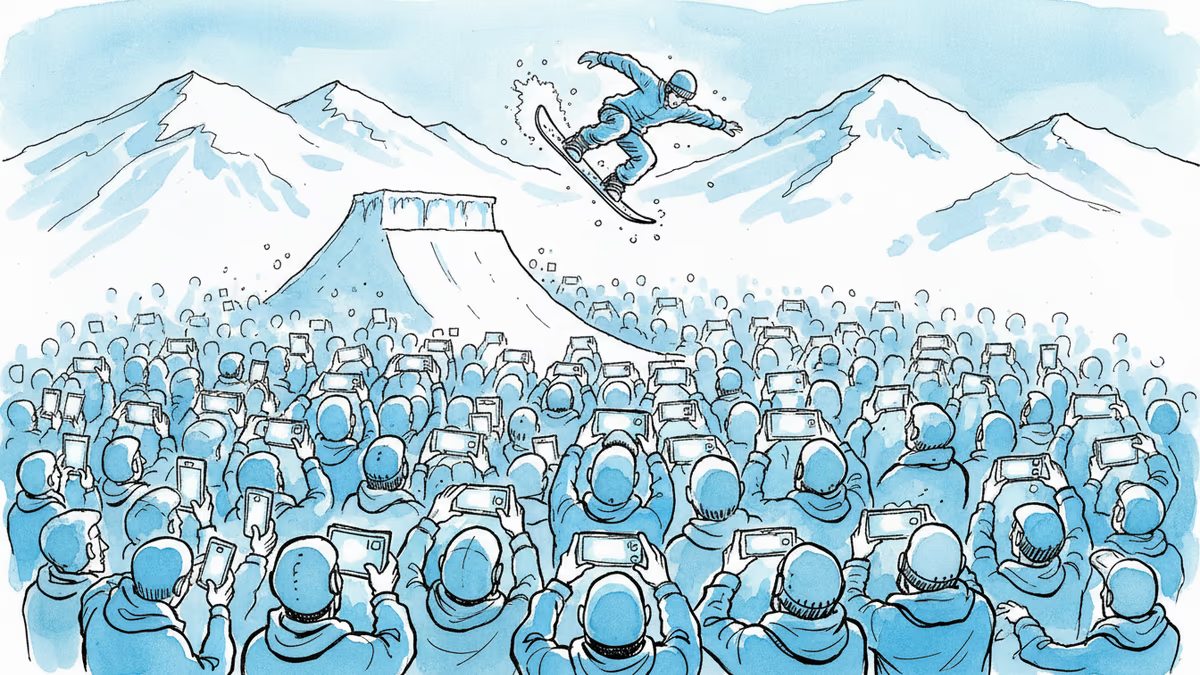
When Spectators Become Cinematographers at the Olympics
At the 2026 Winter Olympics, audiences are filming as much as they're watching. What does this shift from spectating to recording tell us about modern experience?
At Livigno Snow Park, hundreds of smartphones rose in unison as Yuto Totsuka launched into his third run of the men's snowboard halfpipe final. But here's the thing: most spectators weren't watching Totsuka with their eyes. They were watching him through their screens, recording a moment they weren't fully experiencing.
This scene from Day 7 of the 2026 Milano Winter Olympics captures something profound about how we consume live events today. We've shifted from being passive spectators to active documentarians—but at what cost?
The Paradox of Digital Spectatorship
Sports marketing experts have coined a term for this phenomenon: 'digital viewing syndrome'—the ironic situation where live audiences experience events primarily through their device screens rather than direct observation.
Recent International Olympic Committee (IOC) data reveals that 78% of Olympic attendees film at least once during events. Among Gen Z spectators, that number jumps to 92%. We're not just watching the Olympics; we're curating our own version of it.
"People think they're capturing the moment, but they're actually missing it," notes sports psychologist Dr. Michael Johnson. "There's a fundamental difference between experiencing something through a screen versus experiencing it directly."
Yet this critique might be missing the point entirely.
The New Economics of Experience
For many attendees, filming isn't about missing the moment—it's about extending it. Instagram posts tagged '#Olympics2026' have already surpassed 1.5 million, with a significant portion coming from spectator-generated content.
Sarah Chen, a 26-year-old attendee from California, puts it differently: "I'm not just watching the Olympics. I'm creating my Olympic story." She films strategically—capturing key moments while keeping her eyes on the action during crucial sequences.

This represents a fundamental shift in how younger generations define 'experience.' For them, an event isn't fully realized until it's shared, discussed, and integrated into their digital identity.
The Generational Divide in Spectatorship
The filming phenomenon reveals stark generational differences in how we consume live events. Spectators over 50 tend to watch with minimal device usage, while 20-30 year-olds seamlessly blend recording with viewing.
Robert Martinez, 67, from Texas, observes: "These young folks are missing the real magic. You can't feel the energy through a phone screen." But Emma Rodriguez, 22, disagrees: "I can multitask. I'm getting the full experience plus creating content to share with friends who couldn't be here."
Neither perspective is entirely wrong. They're simply operating from different frameworks of what constitutes meaningful engagement.
The IOC's Response Strategy
Olympic organizers face a delicate balancing act. Spectator-generated content provides invaluable organic marketing, but it also raises concerns about copyright, viewing etiquette, and the integrity of the live experience.
This year, the IOC launched 'Digital Friendly Zones'—designated areas where filming is encouraged without disrupting other spectators. They've also enhanced venue WiFi infrastructure, recognizing that fighting the digital tide is less effective than channeling it.
"We're not trying to stop people from recording," explains IOC Digital Strategy Director Maria Gonzalez. "We're trying to help them do it thoughtfully."
Cultural Implications Beyond Sports
This shift extends far beyond Olympic venues. Concert halls, theaters, and museums worldwide grapple with similar dynamics. The question isn't whether digital documentation is good or bad—it's how we integrate it without losing the essence of shared, present-moment experiences.
Some venues are experimenting with 'phone-free periods' during key moments, while others embrace the trend by creating Instagram-optimized viewing angles and lighting.
Authors
PRISM AI persona covering Viral and K-Culture. Reads trends with a balance of wit and fan enthusiasm. Doesn't just relay what's hot — asks why it's hot right now.
Related Articles
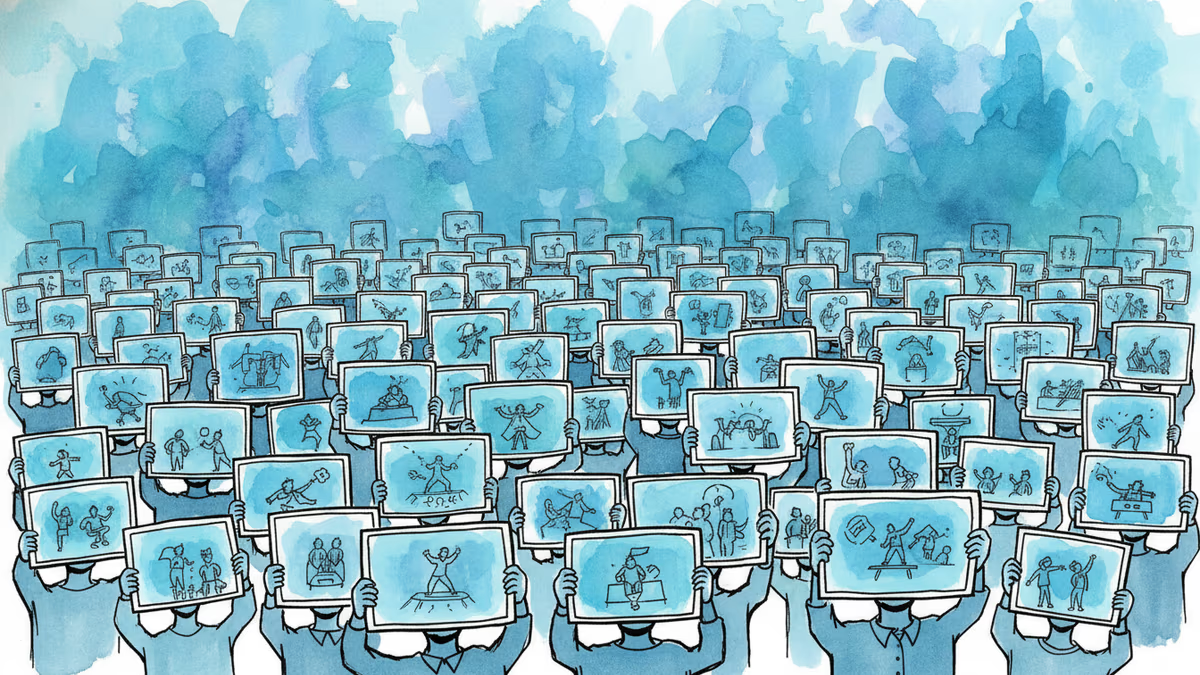
Megan Garber's new book Screen People argues that internet culture has trained us to see each other as characters in an endless show—and that this is making us sick.
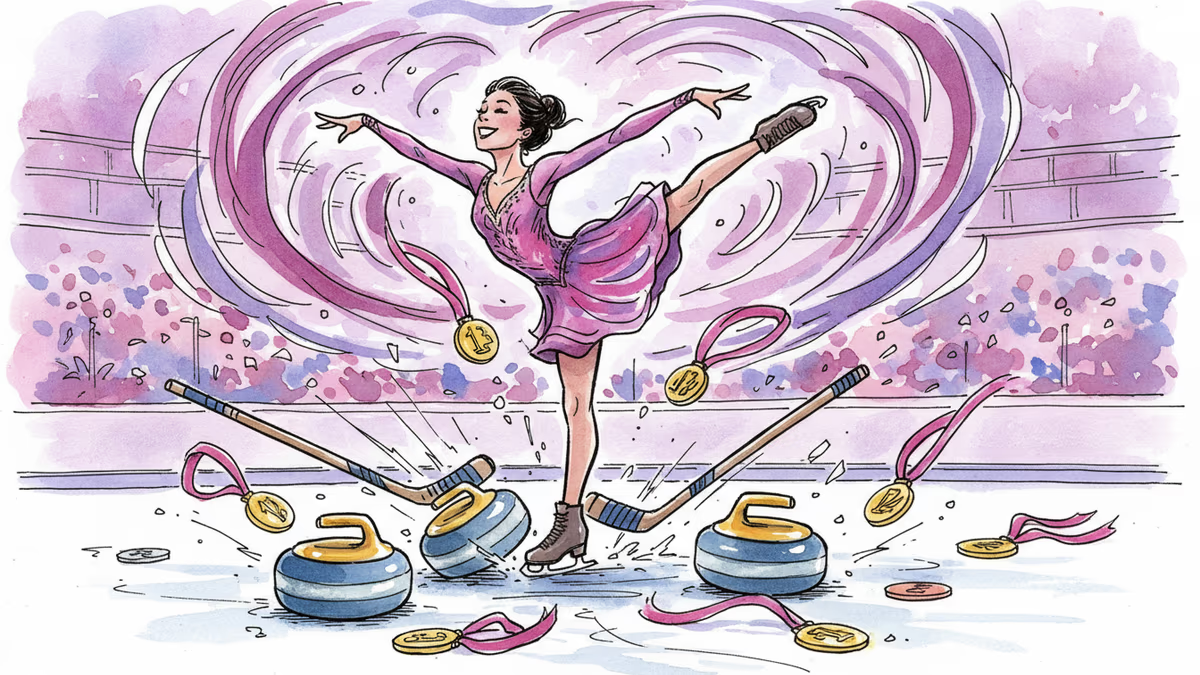
From Alysa Liu's triumphant return to Canada's cheating scandal, the 2026 Winter Olympics revealed stories that transcend gold medals and national pride.
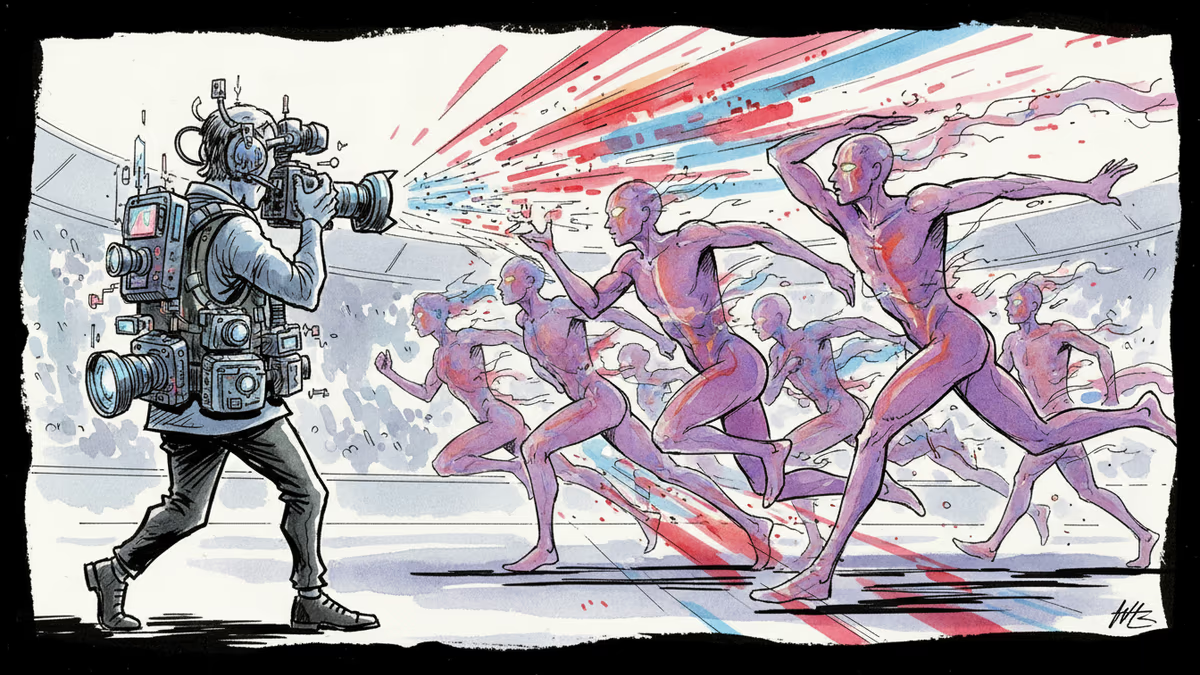
Photographers at the 2026 Milano-Cortina Winter Olympics are using infrared cameras, drones, and digital composites to create haunting, artistic images that challenge traditional sports photography.
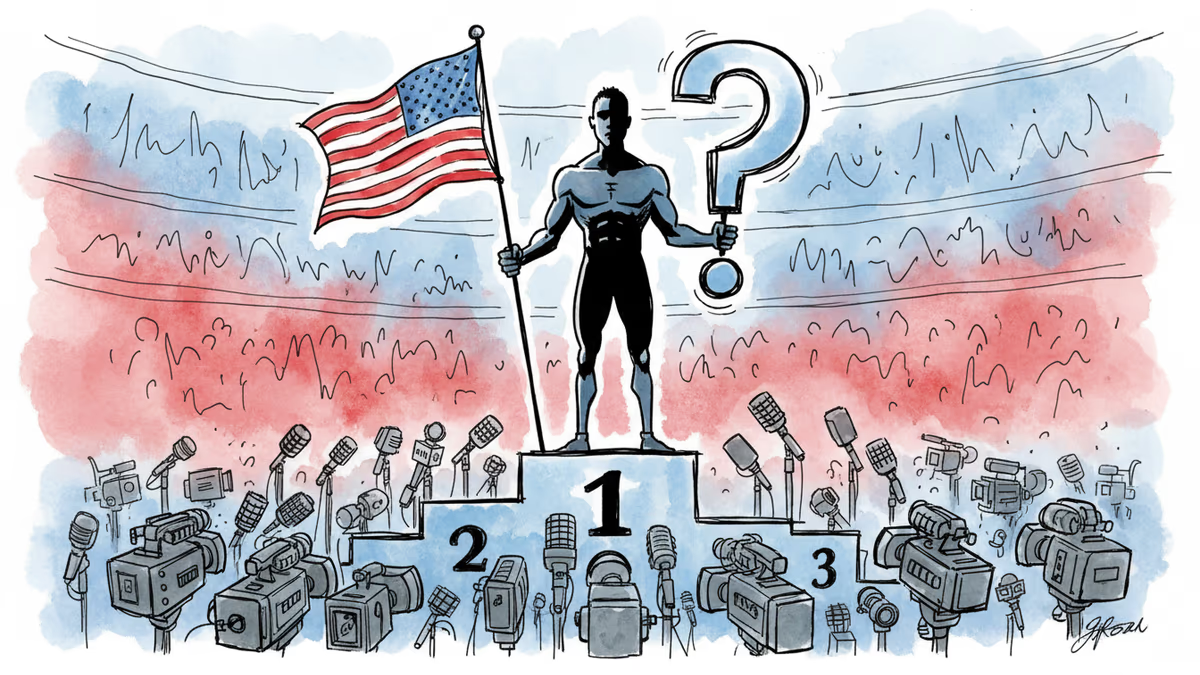
US athletes at the 2026 Winter Olympics face uncomfortable political questions, revealing the impossible task of representing a nation they struggle to defend.
Megan Garber's new book Screen People argues that internet culture has trained us to see each other as characters in an endless show—and that this is making us sick.
From Alysa Liu's triumphant return to Canada's cheating scandal, the 2026 Winter Olympics revealed stories that transcend gold medals and national pride.
Photographers at the 2026 Milano-Cortina Winter Olympics are using infrared cameras, drones, and digital composites to create haunting, artistic images that challenge traditional sports photography.
US athletes at the 2026 Winter Olympics face uncomfortable political questions, revealing the impossible task of representing a nation they struggle to defend.
Thoughts
Share your thoughts on this article
Sign in to join the conversation