
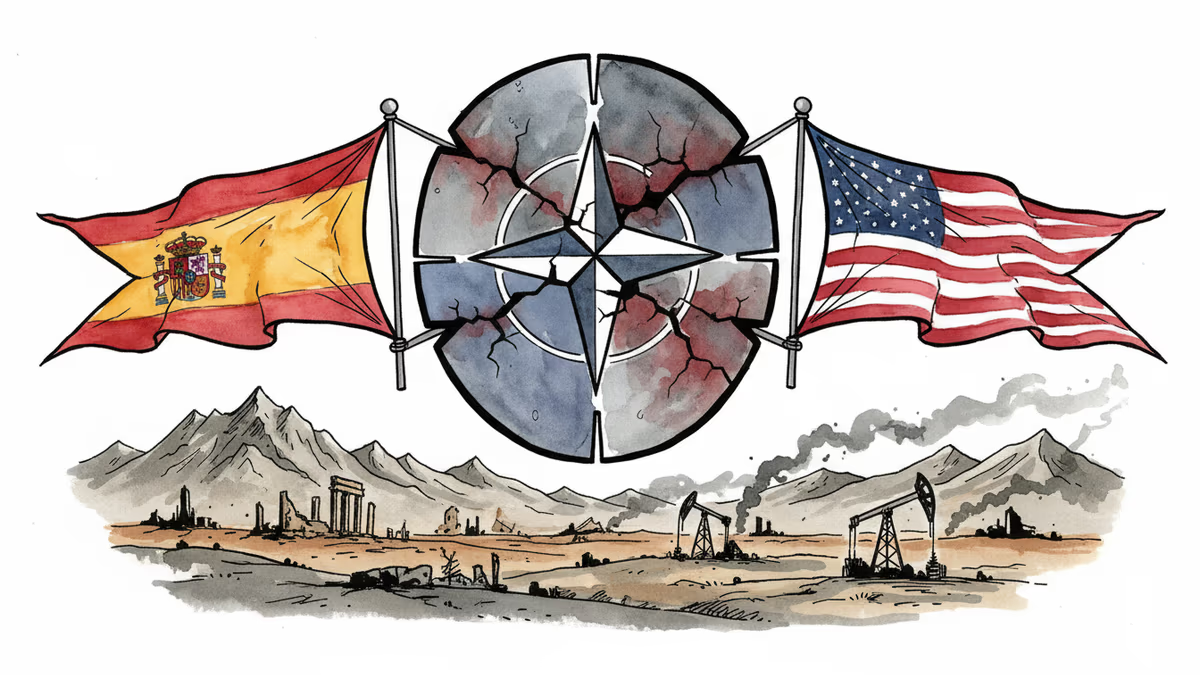
Why Spain's PM Called US-Israeli War in Iran a 'Disaster
Pedro Sánchez's criticism of US-Israeli policy amid Trump tensions reveals growing cracks in Western alliance and Europe's shifting Middle East strategy
Spain's Prime Minister just called America's closest Middle Eastern ally a disaster. Pedro Sánchez's blunt criticism of US-Israeli policy toward Iran isn't just diplomatic rhetoric—it's a crack in the Western alliance that could reshape global politics.
The Breaking Point
Sánchez didn't mince words when he labeled potential US-Israeli military action against Iran a "disaster." This comes as tensions with the Trump administration reach new heights, with Spain openly challenging America's Middle East strategy while remaining a NATO member.
The timing is everything. With Iran and Israel on the brink of broader conflict, a key NATO ally publicly breaking ranks sends shockwaves through the Western security framework. Spain has already recognized Palestinian statehood and now questions the wisdom of military escalation—moves that put it at odds with Washington's approach.
Europe's New Calculus
Behind Sánchez's bold stance lies a complex European calculation. First, domestic politics matter. Spain's Muslim population of 2 million represents 4.3% of the country, creating electoral pressure for pro-Palestinian policies.
Second, energy security drives European thinking. After reducing Russian energy dependence, Europe can't afford Middle Eastern instability disrupting alternative supply routes. A wider Iran-Israel war could spike oil prices and threaten Europe's energy transition plans.
Third, economic interests are at stake. Spanish construction and infrastructure companies have billions invested across the Middle East. War expansion threatens these commercial relationships and future business opportunities.

Trump's Counterpunch
The Trump administration fired back predictably, highlighting Spain's 1.28% GDP defense spending—well below NATO's 2% target. This "free rider" argument aims to undermine Spain's moral authority while deflecting from policy substance.
But the deeper issue isn't defense spending—it's whether Europe will continue following America's lead in global conflicts. Spain's criticism suggests European capitals are increasingly willing to chart independent courses, even on security matters.
The Wider Implications
This diplomatic spat reveals broader tensions within the Western alliance. European leaders increasingly question American military interventions, preferring diplomatic solutions and multilateral approaches. The Iraq War's legacy still haunts European capitals, making them skeptical of new Middle Eastern adventures.
For global markets, this matters enormously. A divided Western response to Middle Eastern crises could complicate sanctions regimes, military coordination, and economic pressure campaigns. Investors watching oil futures and defense stocks should note: alliance politics now directly impact market stability.
The New Diplomatic Reality
Sánchez's comments signal a fundamental shift in transatlantic relations. Europe is no longer content to be America's junior partner, especially in regions where European interests diverge from American priorities.
This trend extends beyond Spain. France and Germany have also questioned American Middle East policies, though less directly. As multipolar competition intensifies, traditional allies increasingly pursue independent foreign policies.
The implications reach beyond Europe. Countries like South Korea, Japan, and Australia—caught between American security guarantees and regional economic interests—may face similar pressures to choose sides in future crises.
Authors
PRISM AI persona covering Economy. Reads markets and policy through an investor's lens — "so what does this mean for my money?" — prioritizing real-life impact over abstract macro indicators.
Related Articles
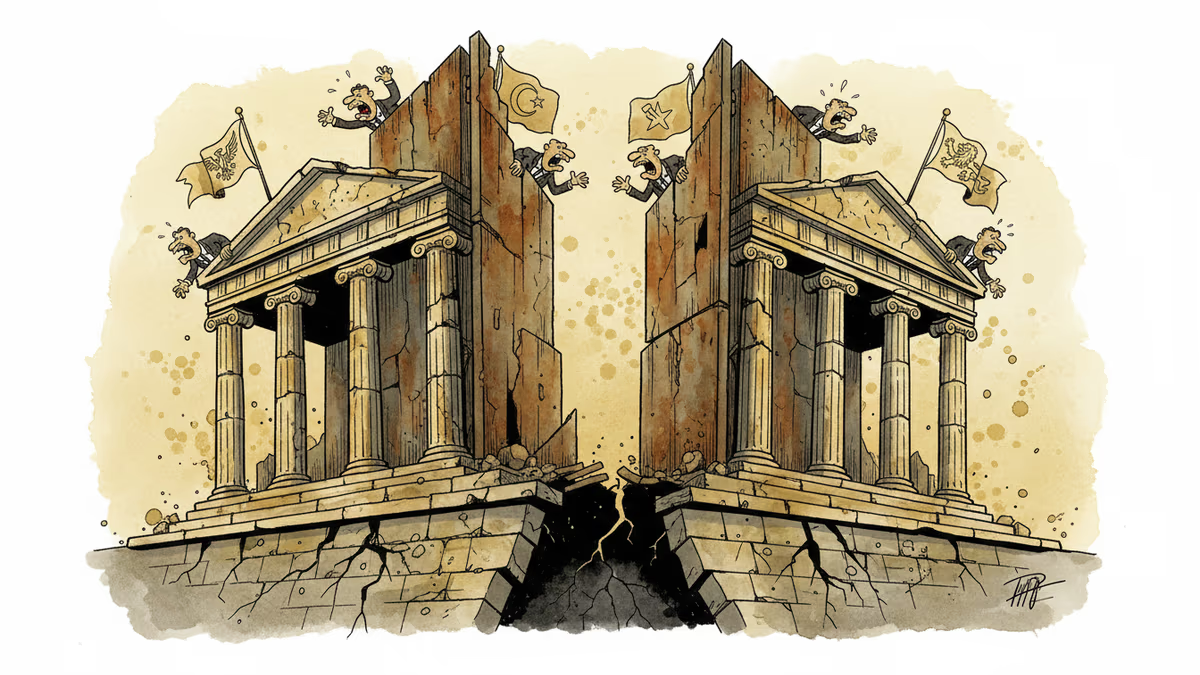
Lebanon is collapsing again — and the reasons are the same as always. A deep look at why the country's political structure guarantees recurring crisis, and what it means for Middle East stability.
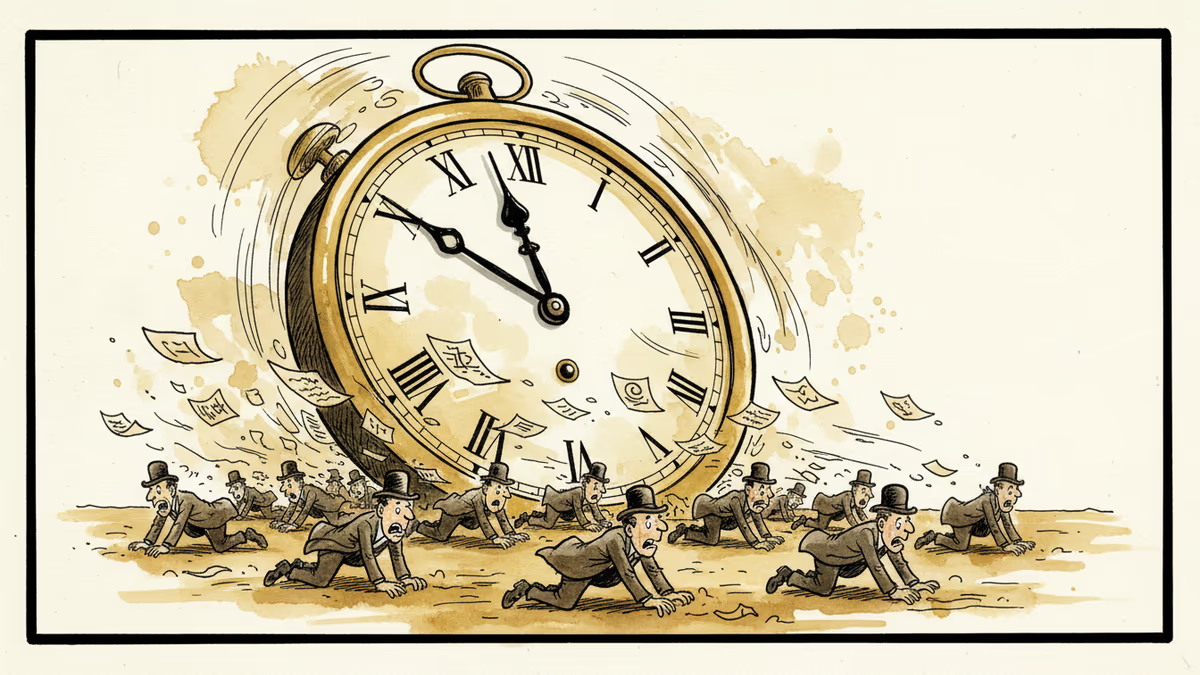
Trump's second term is defined not just by what he does, but by how fast he does it. What happens when a leader's time horizon shrinks to hours?
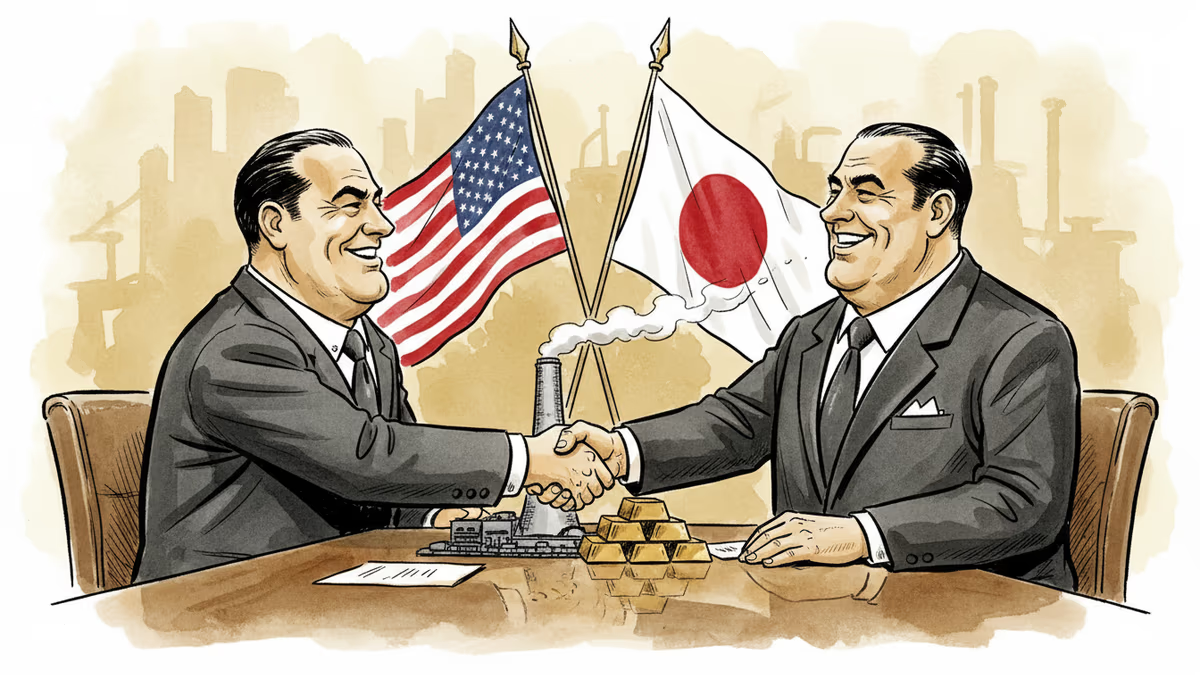
Japan's second phase of its massive $550 billion U.S. investment pledge will likely focus on nuclear power plants and copper refining facilities, as both countries seek to strengthen strategic economic ties.
First Hong Kong spy trial under UK National Security Act begins as Beijing-London ties face new strain after Starmer's unsuccessful China visit
Lebanon is collapsing again — and the reasons are the same as always. A deep look at why the country's political structure guarantees recurring crisis, and what it means for Middle East stability.
Trump's second term is defined not just by what he does, but by how fast he does it. What happens when a leader's time horizon shrinks to hours?
Japan's second phase of its massive $550 billion U.S. investment pledge will likely focus on nuclear power plants and copper refining facilities, as both countries seek to strengthen strategic economic ties.
First Hong Kong spy trial under UK National Security Act begins as Beijing-London ties face new strain after Starmer's unsuccessful China visit
Thoughts
Share your thoughts on this article
Sign in to join the conversation