
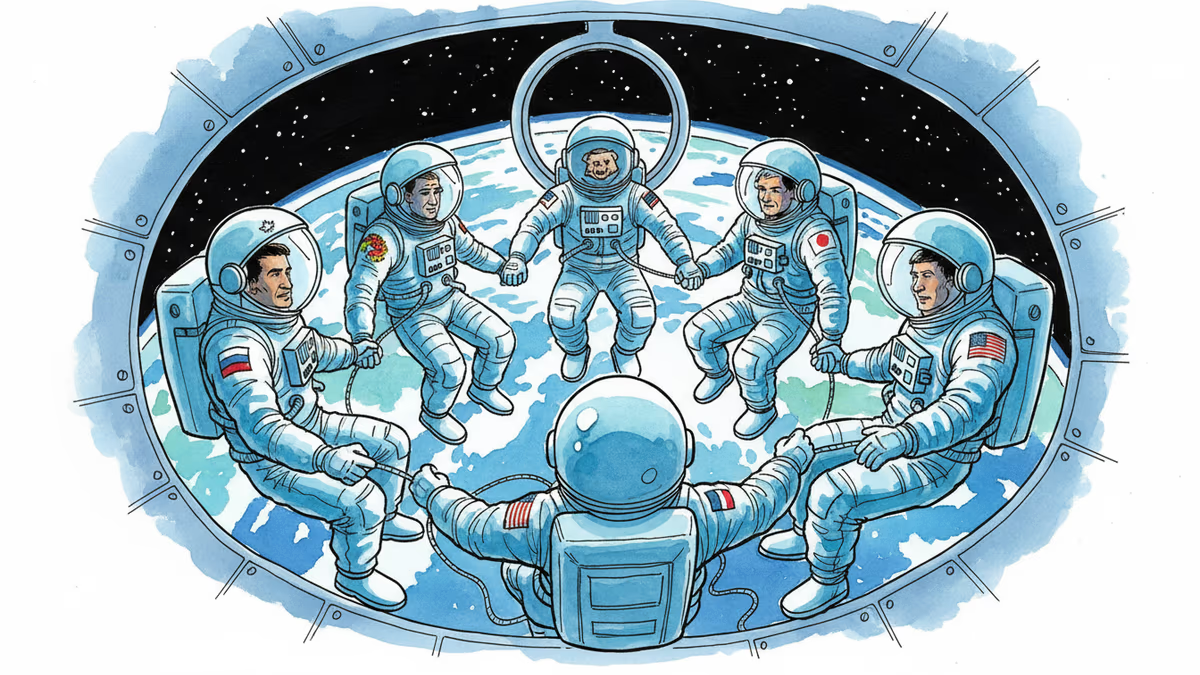
Seven Souls Above Earth: Why This ISS Crew Size Matters More Than You Think
Crew Dragon 12's Valentine's Day arrival brought ISS crew to seven. Beyond routine rotation, this signals a shift in space economics and geopolitical strategy.
A Valentine's Day Reunion 400 Kilometers Above Earth
At 5:14 PM ET on Valentine's Day, hatches opened aboard the International Space Station. Four new faces emerged from SpaceX's Crew Dragon 12: NASA's Jessica Meir and Jack Hathaway, ESA's Sophie Adenot, and Roscosmos' Andrey Fedyaev. They joined three existing crew members, bringing the station's population to seven.
Sounds routine? It's not. This crew configuration represents something bigger than a standard rotation—it's a carefully orchestrated display of Western space independence, wrapped in the language of international cooperation.
The Magic Number: Why Four USOS Astronauts?
Since Crew Dragon began regular flights in late 2020, NASA has maintained a strict rule: keep at least four "USOS" astronauts aboard at all times. USOS stands for "US Orbital Segment"—the parts of ISS operated by America, Canada, Europe, and Japan, distinct from Russia's segment.
Why exactly four? It's the Goldilocks number for space operations. Three leaves you vulnerable if someone falls ill or gets injured. Five or more strains life support and workspace. Four provides redundancy for critical tasks while maximizing scientific output per person.
But there's a deeper game being played here.
Space Independence Has a Price Tag

For nearly a decade after the Space Shuttle's retirement, America paid Russia $90 million per seat to reach ISS. That wasn't just expensive—it was strategically uncomfortable. Every American astronaut's journey depended on Russian goodwill and Soyuz availability.
SpaceX changed that equation. Crew Dragon seats cost roughly $55 million each, but more importantly, they restored American control over crew transportation. The four-astronaut minimum isn't just operational—it's a declaration: "We can run our part of this station without depending on anyone else."
Yet here's the twist: Fedyaev's presence shows that even amid terrestrial tensions, space cooperation endures. It's diplomacy through orbital mechanics.
The Commercial Space Station Race Begins
This crew rotation happens against a ticking clock. ISS operations end in 2031, and the race for commercial replacement stations is heating up. Axiom Space plans its own station by 2028. Gateway Foundation promises artificial gravity by the early 2030s.
When that transition happens, today's government-to-government partnerships could become corporate competitions. Will future space crews be employees of Boeing or Blue Origin rather than NASA or ESA? The current seven-person crew might be among the last of the traditional space agency era.
Three Perspectives on Seven People
NASA's view: This crew size validates their post-Shuttle strategy. They've achieved operational independence while maintaining international partnerships. Success.
Russia's calculation: Fedyaev's inclusion keeps Roscosmos relevant in Western-dominated operations. As terrestrial relationships cool, space remains a diplomatic bridge.
Commercial space companies: They're watching closely. Today's crew operations become tomorrow's business models. How many paying customers can a private station support? What's the optimal crew-to-revenue ratio?
Authors
Related Articles
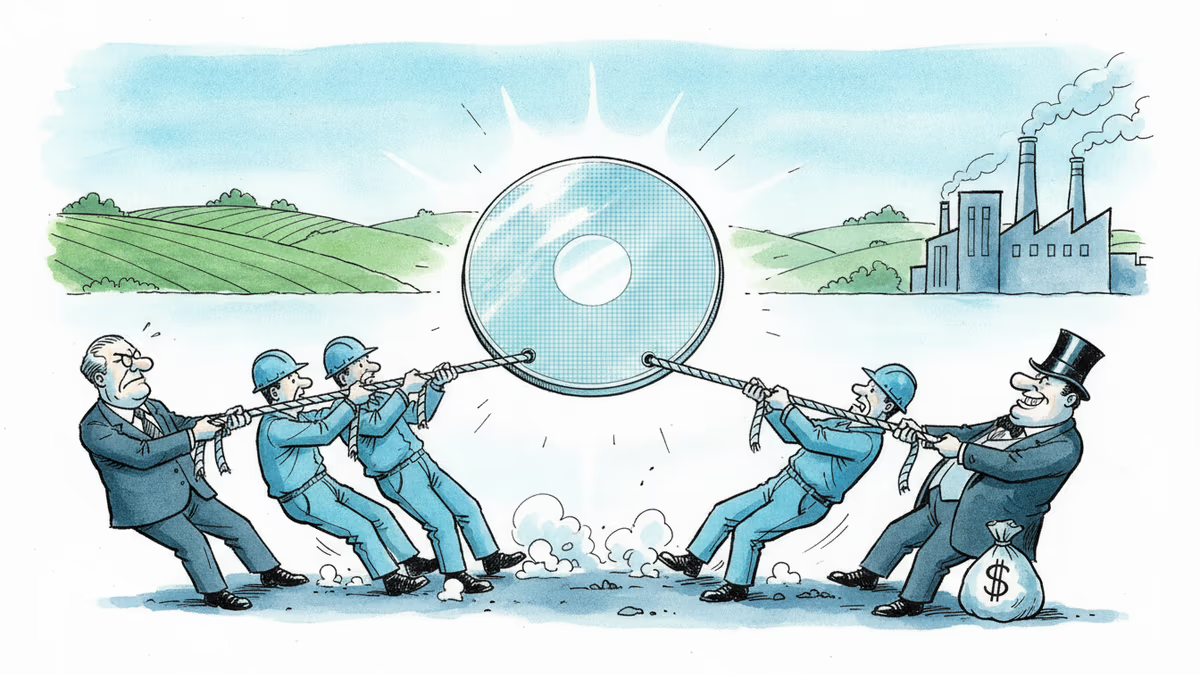
Samsung Electronics' union branch revealed that 84% of survey respondents oppose the government's roughly $290 billion (₩400 trillion) semiconductor megaproject in Gwangju. Government, management, the union and shareholders are all reading the same national project in sharply different ways.
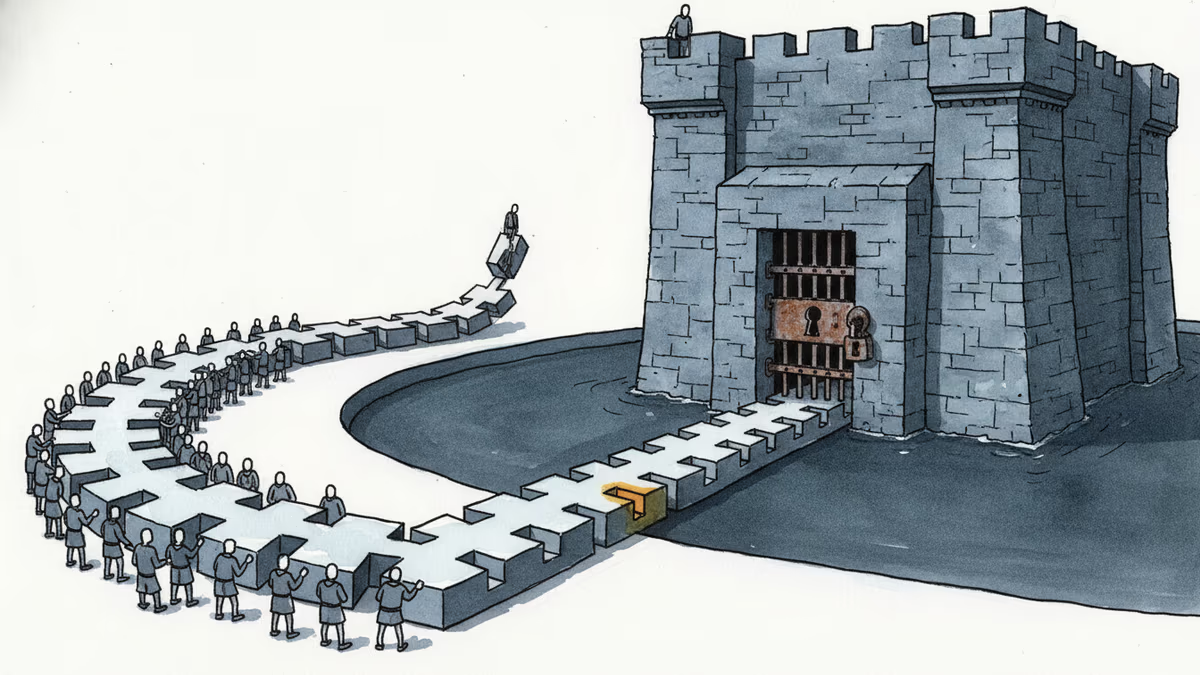
Nvidia shipped roughly a billion RISC-V cores in 2024, then announced it would run CUDA on the open standard. We break down how royalty-free instruction sets and open software stacks are trying to route around CUDA's lock-in. Part 2 of the Semiconductor Sovereignty series.
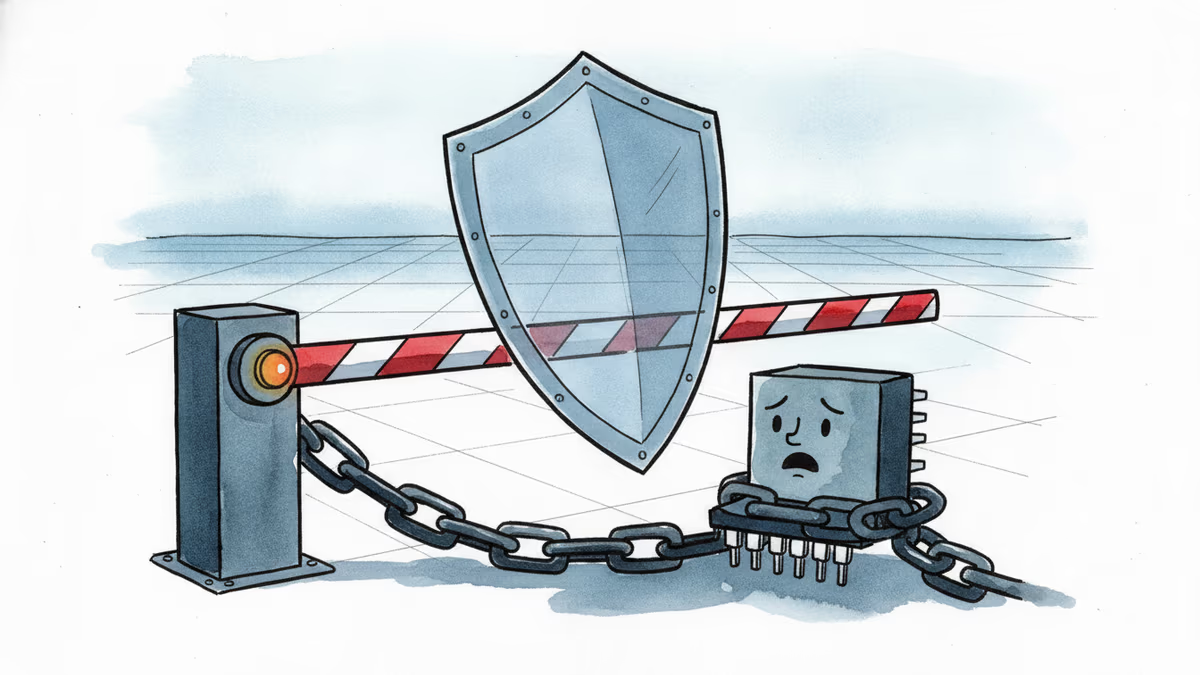
US AI-chip export controls split into three layers in the first half of 2026 — January easing, a May crackdown on circumvention, and a pending bill. Nvidia erased China from its guidance and still posted a record $81.6 billion quarter. A look at the export policy that both shields and cages it.
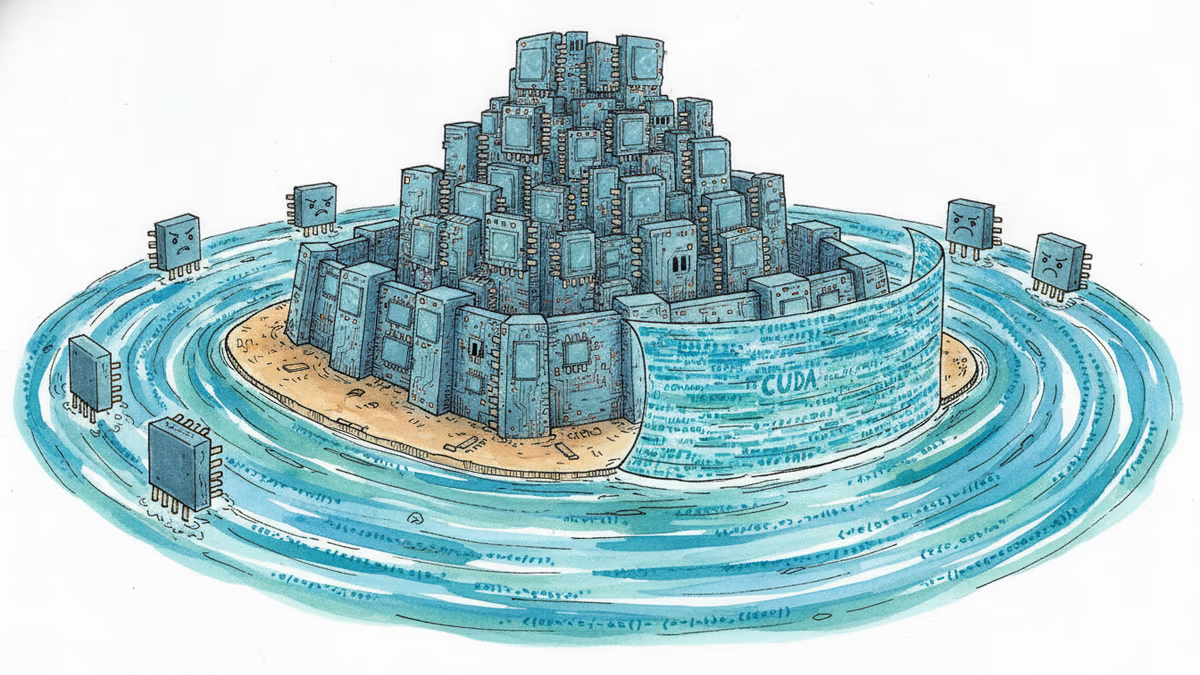
AMD's MI325X matches or beats Nvidia on memory and bandwidth — yet Nvidia's 86-92% share holds. The real moat is CUDA, 20 years in the making. Part 1 of 4.
Samsung Electronics' union branch revealed that 84% of survey respondents oppose the government's roughly $290 billion (₩400 trillion) semiconductor megaproject in Gwangju. Government, management, the union and shareholders are all reading the same national project in sharply different ways.
Nvidia shipped roughly a billion RISC-V cores in 2024, then announced it would run CUDA on the open standard. We break down how royalty-free instruction sets and open software stacks are trying to route around CUDA's lock-in. Part 2 of the Semiconductor Sovereignty series.
US AI-chip export controls split into three layers in the first half of 2026 — January easing, a May crackdown on circumvention, and a pending bill. Nvidia erased China from its guidance and still posted a record $81.6 billion quarter. A look at the export policy that both shields and cages it.
AMD's MI325X matches or beats Nvidia on memory and bandwidth — yet Nvidia's 86-92% share holds. The real moat is CUDA, 20 years in the making. Part 1 of 4.
Thoughts
Share your thoughts on this article
Sign in to join the conversation