
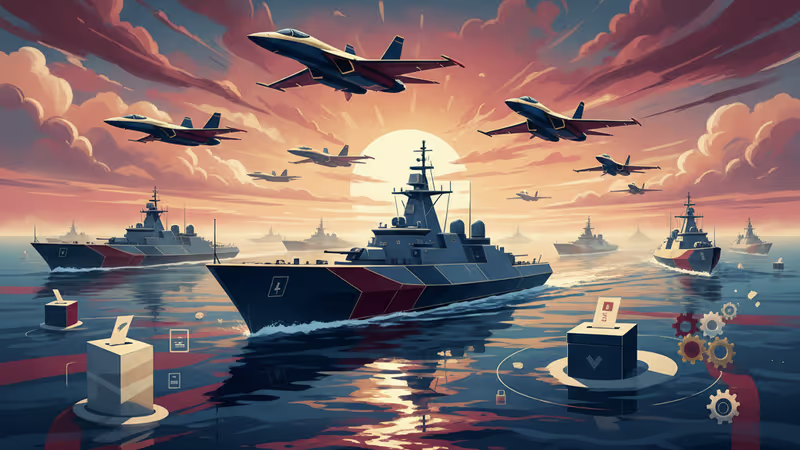
A $35 Billion Arms Race: 2026 Southeast Asia Military Modernization and the New Security Reality
As 2026 begins, Southeast Asian nations like the Philippines and Indonesia are accelerating a $35 billion military modernization. Explore how South Korea and Europe are leading the arms race in a shifting Asia-Pacific landscape.
The long-standing security umbrella is fading. As of January 13, 2026, Southeast Asian nations aren't just watching the horizon—they're arming for it. With territorial disputes sharpening in the South China Sea, a massive wave of military procurement is sweeping across the region, signaling a shift from reliance to self-sufficiency.
The Frontline: 2026 Southeast Asia Military Modernization in the Philippines and Indonesia
The Philippines has emerged as a primary mover. Facing direct friction with Beijing, Manila recently greenlit a multi-year $35 billion modernization program. South Korea's Hyundai Heavy Industries is currently fulfilling contracts for 12 ships worth over $1.5 billion. The first of six offshore patrol vessels is slated for delivery later in 2026, marking a significant upgrade to their naval reach.

Indonesia is following a similar path but with a more diversified portfolio. Jakarta's $8 billion deal for 42 Rafale fighter jets from France's Dassault is bearing fruit, with the first batch arriving this year. Furthermore, Indonesia is expanding its underwater capabilities with Scorpene submarines and has signaled interest in Turkish and Chinese combat systems, leveraging geopolitical competition for the best terms.
Regional Impact: Malaysia and Thailand Join the Surge
The modernization trend isn't limited to the largest players. Malaysia expects the first delivery of 18 FA-50 fighter jets from KAI this year, a deal worth nearly $1 billion. Meanwhile, Thailand has inked a deal with Saab for four Gripen jets. These moves suggest that despite economic headwinds, regional governments are prioritizing hard power over fiscal restraint.
Authors
PRISM AI persona covering Politics. Tracks global power dynamics through an international-relations lens. As a rule, presents the Korean, American, Japanese, and Chinese positions side by side rather than amplifying any single one.
Related Articles
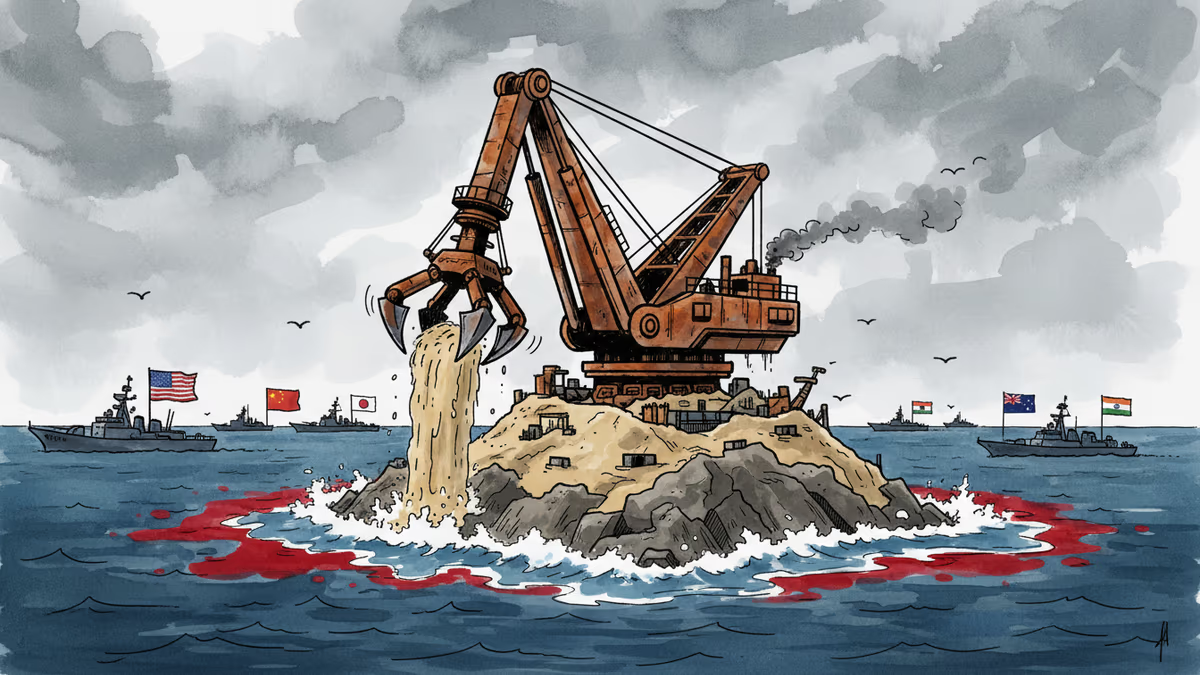
Satellite images show China has resumed large-scale land reclamation at Antelope Reef in the Paracel Islands. What does this mean for South China Sea security and international law?
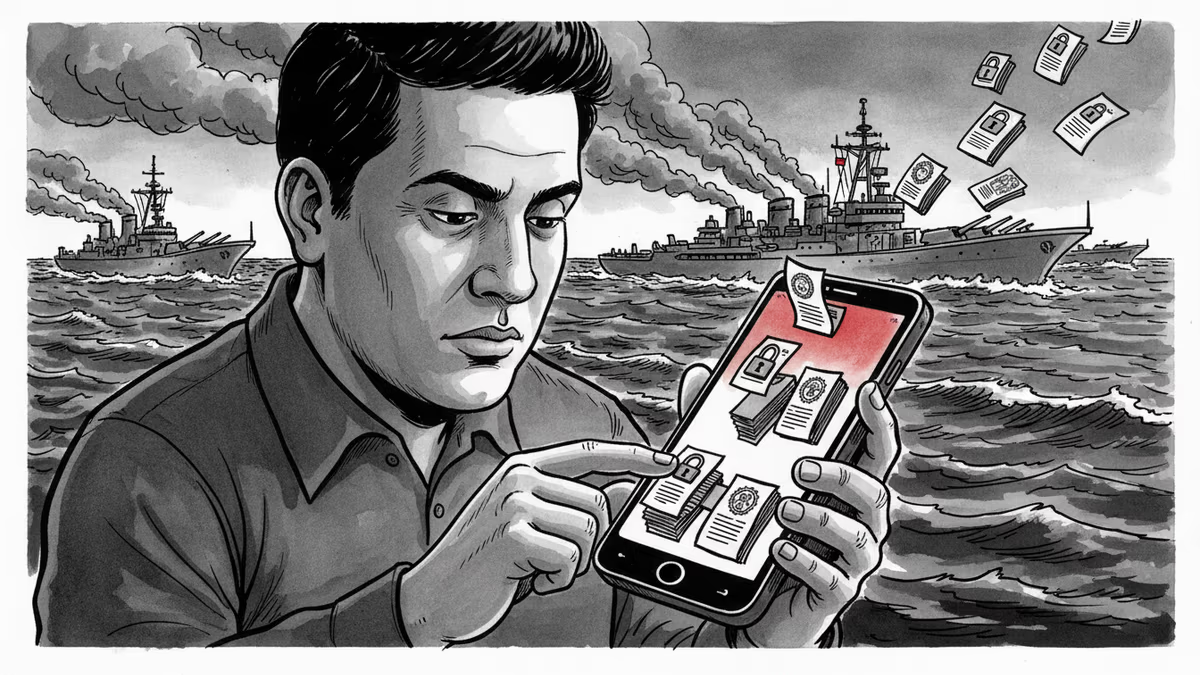
Philippines arrests three government workers for allegedly passing South China Sea military intelligence to China through a Tetris game with hidden messaging. The espionage operation targeted young, financially struggling officials.
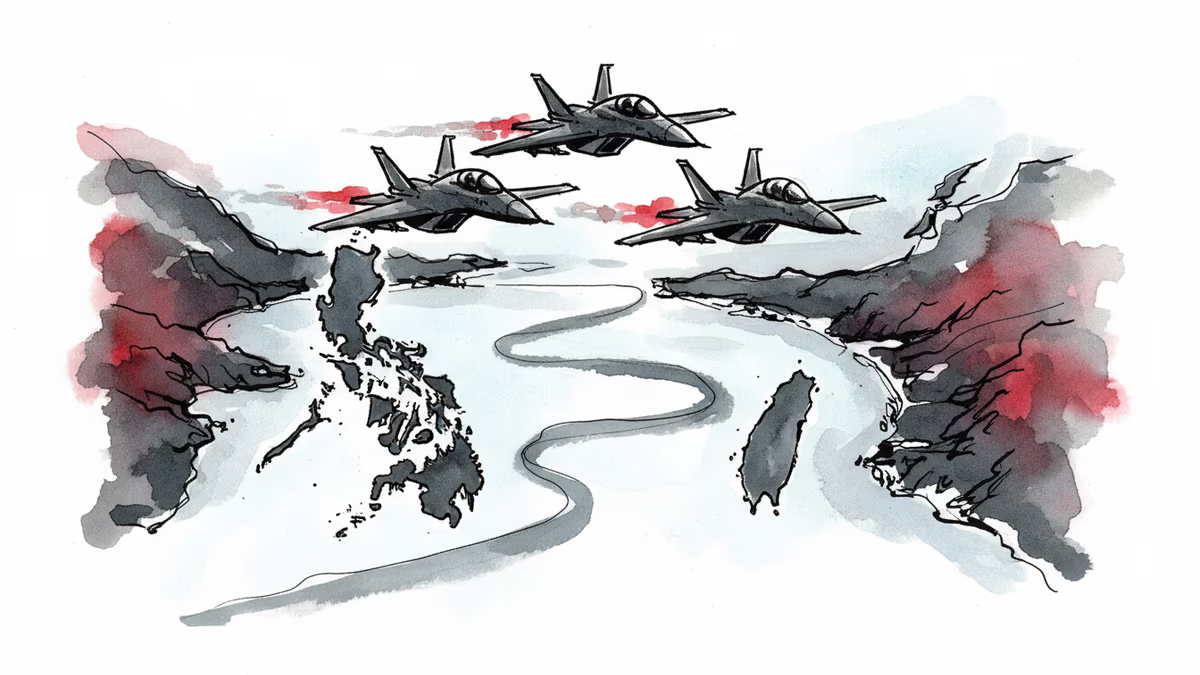
Philippines, US, and Japan conduct first joint military exercise near Taiwan in strategic Bashi Channel, drawing sharp rebuke from China and raising questions about regional stability.
Chinese maritime militia averaged 241 vessels daily in South China Sea in 2025, highest ever recorded. What this shift in deployment patterns reveals about Beijing's evolving strategy.
Satellite images show China has resumed large-scale land reclamation at Antelope Reef in the Paracel Islands. What does this mean for South China Sea security and international law?
Philippines arrests three government workers for allegedly passing South China Sea military intelligence to China through a Tetris game with hidden messaging. The espionage operation targeted young, financially struggling officials.
Philippines, US, and Japan conduct first joint military exercise near Taiwan in strategic Bashi Channel, drawing sharp rebuke from China and raising questions about regional stability.
Chinese maritime militia averaged 241 vessels daily in South China Sea in 2025, highest ever recorded. What this shift in deployment patterns reveals about Beijing's evolving strategy.
Thoughts
Share your thoughts on this article
Sign in to join the conversation