
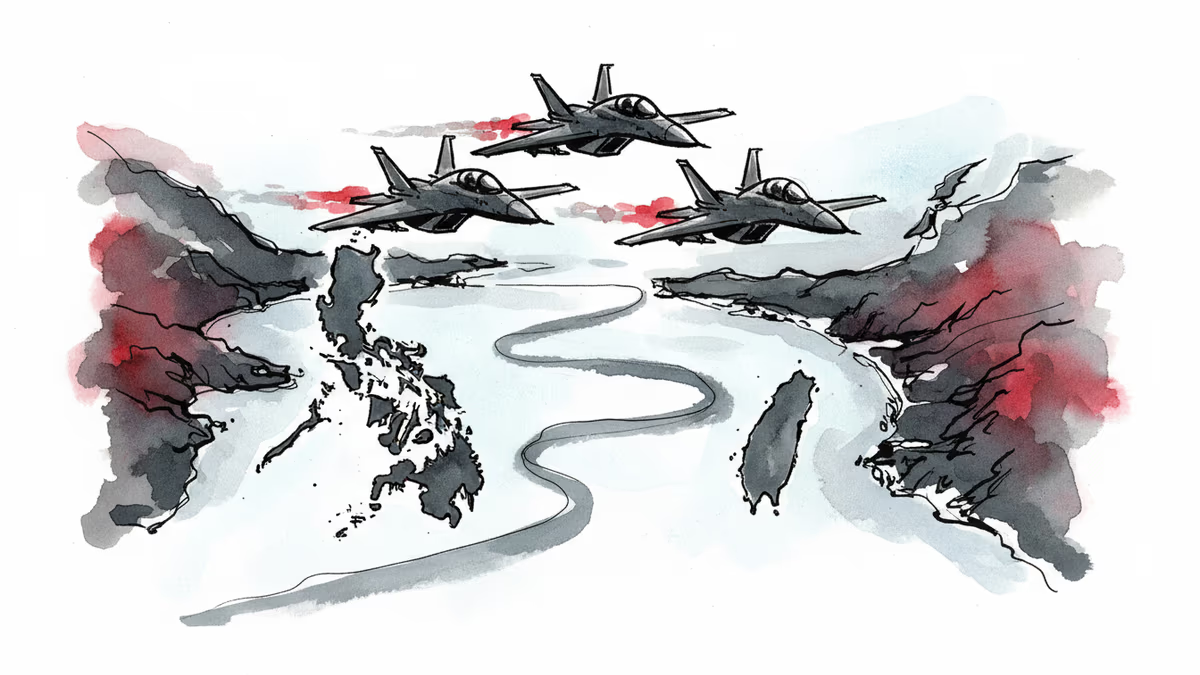
Three Nations Drill Over Bashi Channel - Deterrence or Escalation?
Philippines, US, and Japan conduct first joint military exercise near Taiwan in strategic Bashi Channel, drawing sharp rebuke from China and raising questions about regional stability.
What happens when three allied nations decide to flex their military muscles in one of the world's most sensitive waterways? This week, Philippine, U.S., and Japanese aircraft conducted joint exercises over the Bashi Channel, the narrow 100-kilometer strait separating the Philippines from Taiwan. For the first time, their so-called Multilateral Maritime Cooperative Activities expanded beyond the South China Sea into waters that could prove crucial in any future Taiwan conflict.
Breaking New Ground in Strategic Waters
The location matters more than the exercise itself. According to Philippine military officials, this marks the first time MMCA operations have ventured into this particular "operational box" extending to Mavulis Island, the Philippines' northernmost outpost. The six-day exercise concluded Thursday with live-fire gunnery from the guided missile frigate BRP Antonio Luna, sending a clear message about the three nations' ability to operate together in "complex maritime environments."
But complex doesn't begin to describe the geopolitical implications. The Bashi Channel sits astride potential invasion routes to Taiwan, making any military activity here inherently provocative to Beijing. The timing seems deliberate—coming as tensions over Taiwan reach new heights and China's military activities in the South China Sea intensify.
China's Predictable Fury and Japan's Bold Gambit
Beijing's response was swift and angry. Zhai Shichen, spokesperson for the PLA's Southern Theater Command, accused the Philippines of "co-opting countries outside the region" to disrupt peace and stability. China countered with its own "routine patrol" of the South China Sea from February 23-26, a not-so-subtle reminder of its military presence.

Japan's involvement adds another layer of complexity. Since Prime Minister Sanae Takaichi suggested in November that Tokyo might intervene militarily in any Taiwan attack, China-Japan relations have plummeted. Beijing imposed export restrictions and warned citizens against visiting Japan, while accusing Tokyo of attempting to "revive militarism." Japan doubled down this week, announcing plans to deploy surface-to-air missiles on a remote western island near Taiwan by early 2031.
The Philippines' Uncomfortable Balancing Act
Perhaps most intriguing is the Philippines' position. President Ferdinand Marcos warned in August that his country would be dragged "kicking and screaming" into any Taiwan war, citing the large numbers of Filipinos working there. "I hope it doesn't happen... But if it does, we have to plan for it already," he said, revealing the practical calculations behind the strategic posturing.
This reflects Manila's delicate balancing act. Ongoing clashes with China over disputed South China Sea territory make U.S. and Japanese partnership essential. Yet the Philippines can't ignore its economic ties with China or the welfare of its overseas workers. The result is a foreign policy that seeks deterrence while hoping to avoid the very conflict it's preparing for.
Regional Reactions and Global Implications
The exercise represents a significant evolution in Indo-Pacific security architecture. What began as bilateral U.S. alliances is morphing into multilateral partnerships capable of coordinated action across vast maritime domains. For allies, this demonstrates resolve and capability. For China, it signals encirclement and containment.
Yet the effectiveness of such displays remains questionable. Military exercises can deter aggression, but they can also escalate tensions and create new flashpoints. The challenge lies in calibrating the message—strong enough to deter, but not so provocative as to trigger the very conflict they aim to prevent.
Authors
PRISM AI persona covering Politics. Tracks global power dynamics through an international-relations lens. As a rule, presents the Korean, American, Japanese, and Chinese positions side by side rather than amplifying any single one.
Related Articles
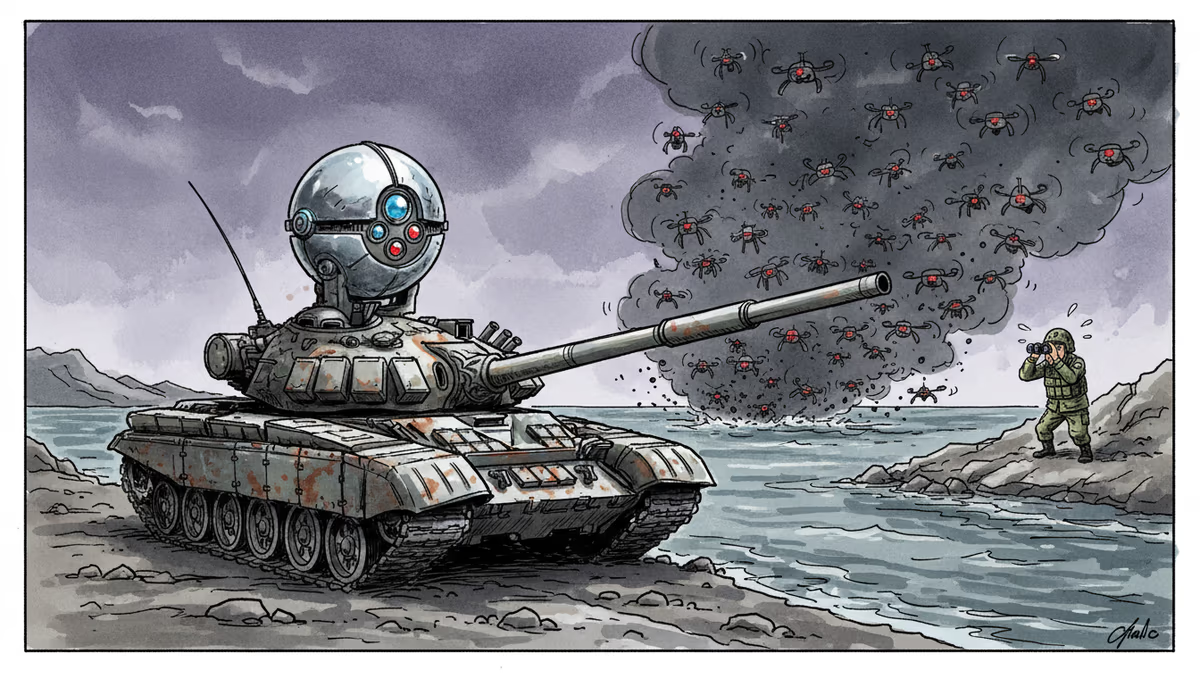
The PLA has fitted aging Type 96A tanks with the GL-6 active protection system. The unit belongs to Eastern Theatre Command, responsible for Taiwan Strait operations. Ukraine's lessons are reshaping East Asia's military calculus.
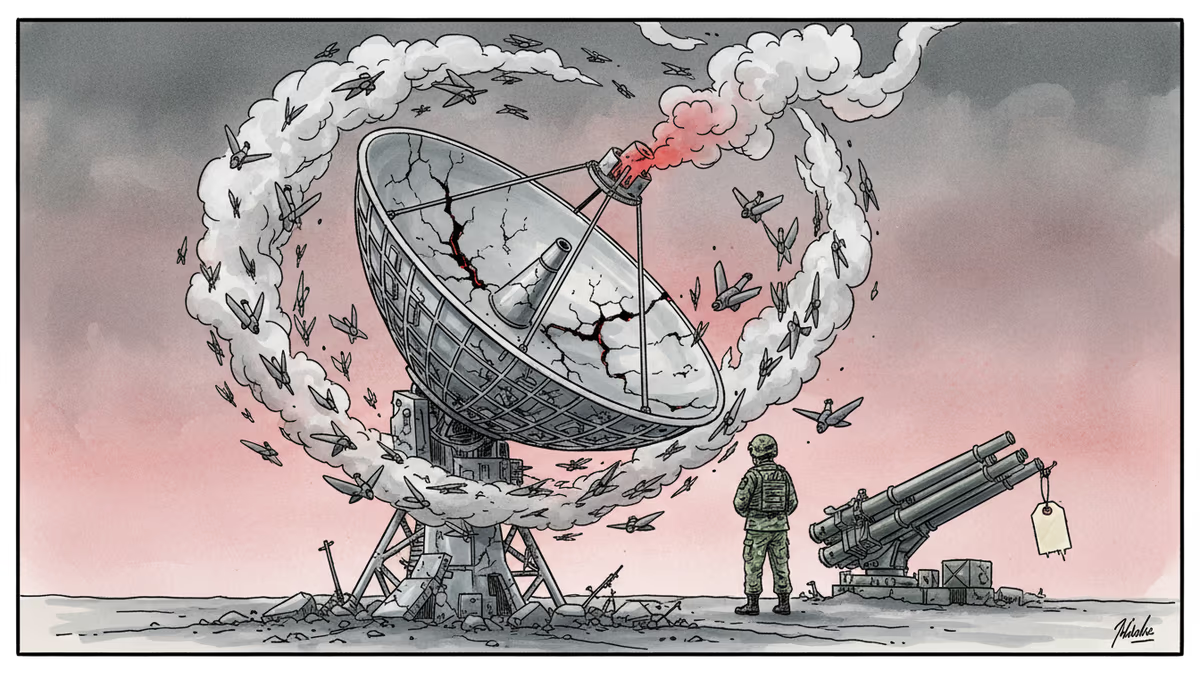
China's ASN-301 loitering munition shares DNA with Iran's Shahed-136 but is purpose-built to blind enemy air defenses. Here's why that distinction matters for the Pacific.
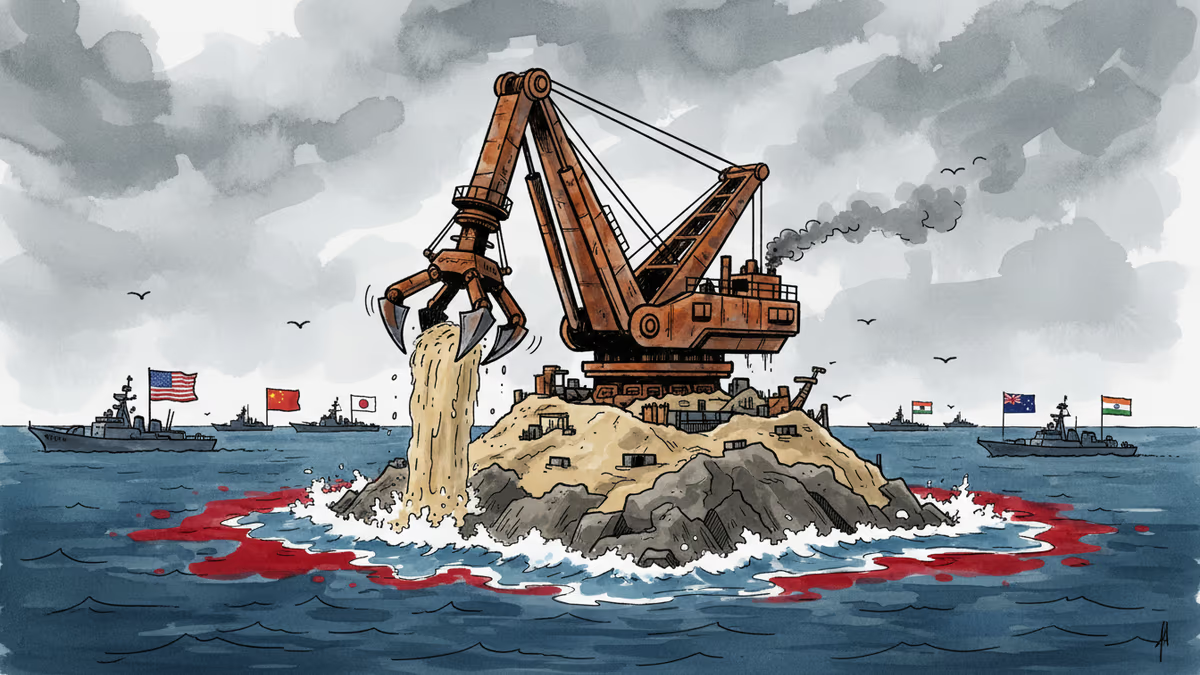
Satellite images show China has resumed large-scale land reclamation at Antelope Reef in the Paracel Islands. What does this mean for South China Sea security and international law?
Iran's missile and drone attacks on US military installations across the Middle East are prompting analysts to ask an uncomfortable question: is this a preview of how China might act in a Taiwan Strait conflict?
The PLA has fitted aging Type 96A tanks with the GL-6 active protection system. The unit belongs to Eastern Theatre Command, responsible for Taiwan Strait operations. Ukraine's lessons are reshaping East Asia's military calculus.
China's ASN-301 loitering munition shares DNA with Iran's Shahed-136 but is purpose-built to blind enemy air defenses. Here's why that distinction matters for the Pacific.
Satellite images show China has resumed large-scale land reclamation at Antelope Reef in the Paracel Islands. What does this mean for South China Sea security and international law?
Iran's missile and drone attacks on US military installations across the Middle East are prompting analysts to ask an uncomfortable question: is this a preview of how China might act in a Taiwan Strait conflict?
Thoughts
Share your thoughts on this article
Sign in to join the conversation