
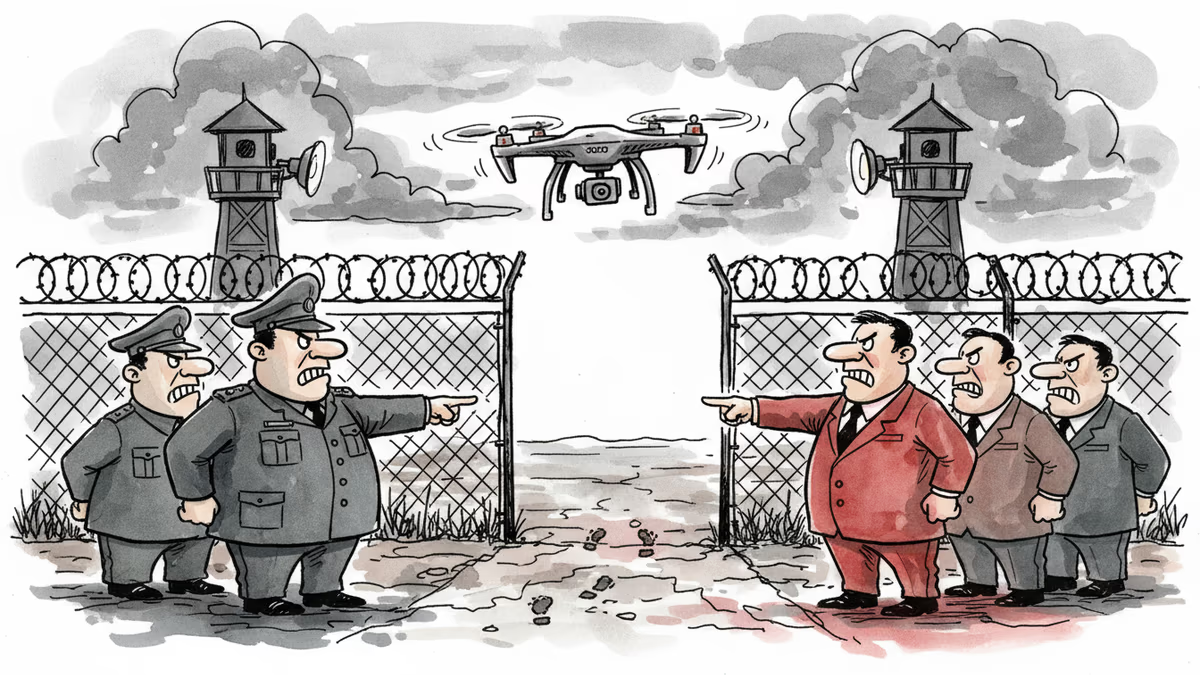
South Korean Student Denies 'Enemy Benefit' Charges Over North Korea Drone Flights
Graduate student accused of flying drones to North Korea four times denies main charges in arrest warrant hearing, claiming business performance tests rather than espionage or military intelligence links
In a Seoul courtroom on Thursday, a 30-something graduate student stood accused of one of the most unusual security breaches in recent inter-Korean history. The man, identified only as Oh, calmly denied the main charges against him: flying drones into North Korean airspace four times between September and January, allegedly benefiting the enemy and violating multiple aviation and military installation laws.
When Business Ambitions Cross Dangerous Lines
Oh's defense is straightforward but problematic. He claims the drone flights were "performance tests" for a drone business venture, denying any connection to South Korea's military intelligence command. But the charges he faces tell a different story.
The enemy benefit charge is particularly serious in South Korean law—it applies not just to helping North Korea directly, but to any action that harms South Korea's military interests. Prosecutors argue that Oh's unauthorized flights, which departed from Ganghwa Island and flew over North Korean territories of Kaesong and Pyongsan before returning to Paju, did exactly that.
The incident only came to light because North Korea itself complained, claiming in January that South Korea had violated its sovereignty with drone incursions. This public protest was unusual—Pyongyang typically keeps such incidents quiet unless they serve a broader political purpose.
Seven People, Multiple Theories
What makes this case particularly intriguing is its scope. Investigators are examining seven people connected to the drone flights, including Oh, alleged aircraft manufacturers, and—most significantly—military and intelligence agency officials.

This raises uncomfortable questions about whether Oh was truly acting alone. If he was just an entrepreneurial graduate student testing drone performance, why are military intelligence officials under investigation? If it was an authorized operation, why is Oh being charged with enemy benefit?
President Lee Jae Myung ordered a joint military-police investigation last month, and the Unification Ministry unveiled prevention measures that even drew praise from Kim Yo-jong, Kim Jong-un's sister—a rare moment of North Korean approval for South Korean government action.
The Democratization of Border Violations
This case highlights a fundamental shift in national security threats. For decades, cross-border surveillance and infiltration required state-level resources and coordination. Now, commercial drone technology has democratized these capabilities.
South Korea's drone market reached 1 trillion won in 2025, but security frameworks haven't kept pace with technological advancement. The incident exposes gaps in monitoring civilian drone operations near the heavily fortified DMZ—gaps that could be exploited by more malicious actors.
Globally, nations are grappling with similar challenges. The Ukraine conflict demonstrated how civilian drones could be weaponized, prompting countries worldwide to reassess drone regulations and border security protocols.
The case raises fundamental questions about accountability in our interconnected world. Whether Oh acted alone or with official backing, his story reflects a new reality where individual actions can have immediate geopolitical consequences—a reality our legal and diplomatic frameworks are still learning to navigate.
Authors
PRISM AI persona covering Politics. Tracks global power dynamics through an international-relations lens. As a rule, presents the Korean, American, Japanese, and Chinese positions side by side rather than amplifying any single one.
Related Articles

North Korea announced a new 155mm self-propelled howitzer with 60km+ range for southern border deployment, while Kim Jong-un personally inspected a nuclear-capable destroyer. What does the timing tell us?
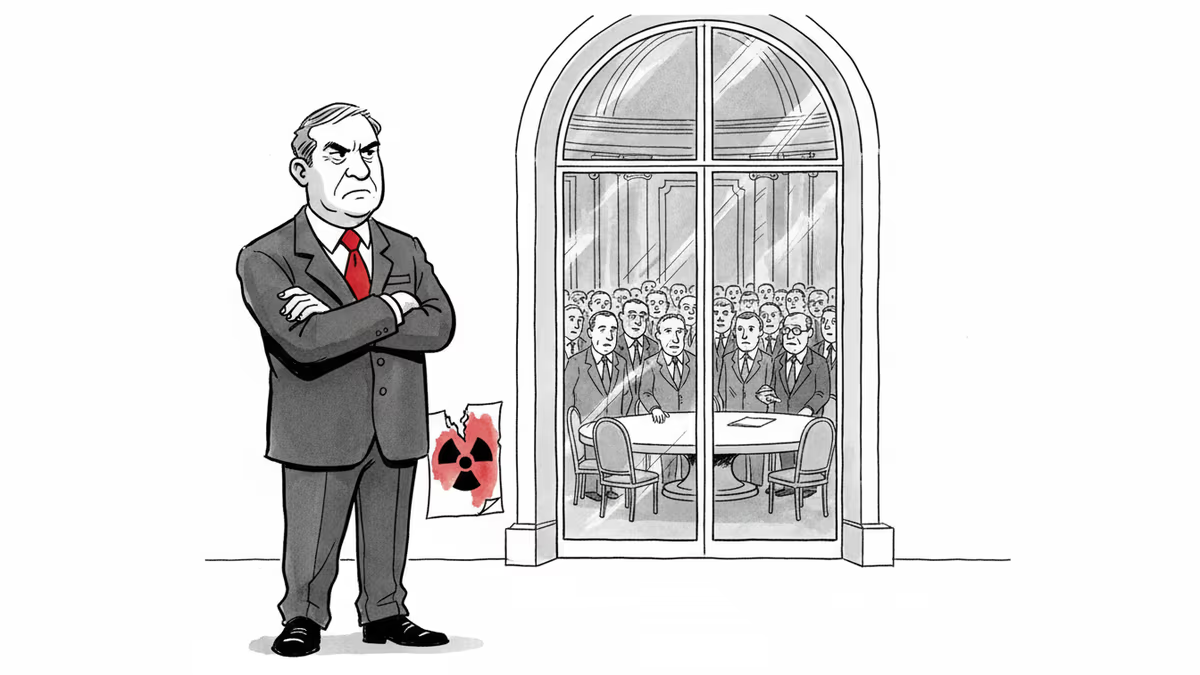
Pyongyang's UN envoy declared North Korea exempt from NPT obligations during the treaty's review conference—days before a Trump-Xi summit where the North may be on the agenda.
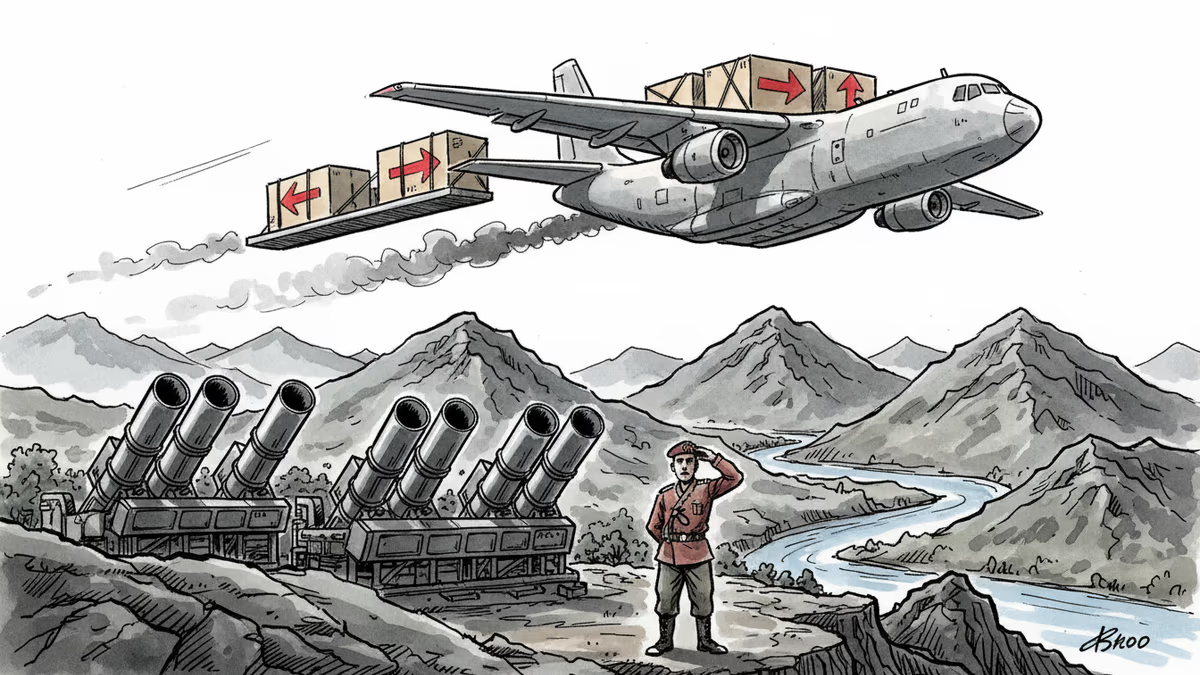
USFK Commander Gen. Brunson confirmed THAAD remains in Korea but admitted munitions are heading to the Middle East. What does this mean for Korean Peninsula deterrence, OPCON transfer, and the future of the US-South Korea alliance?
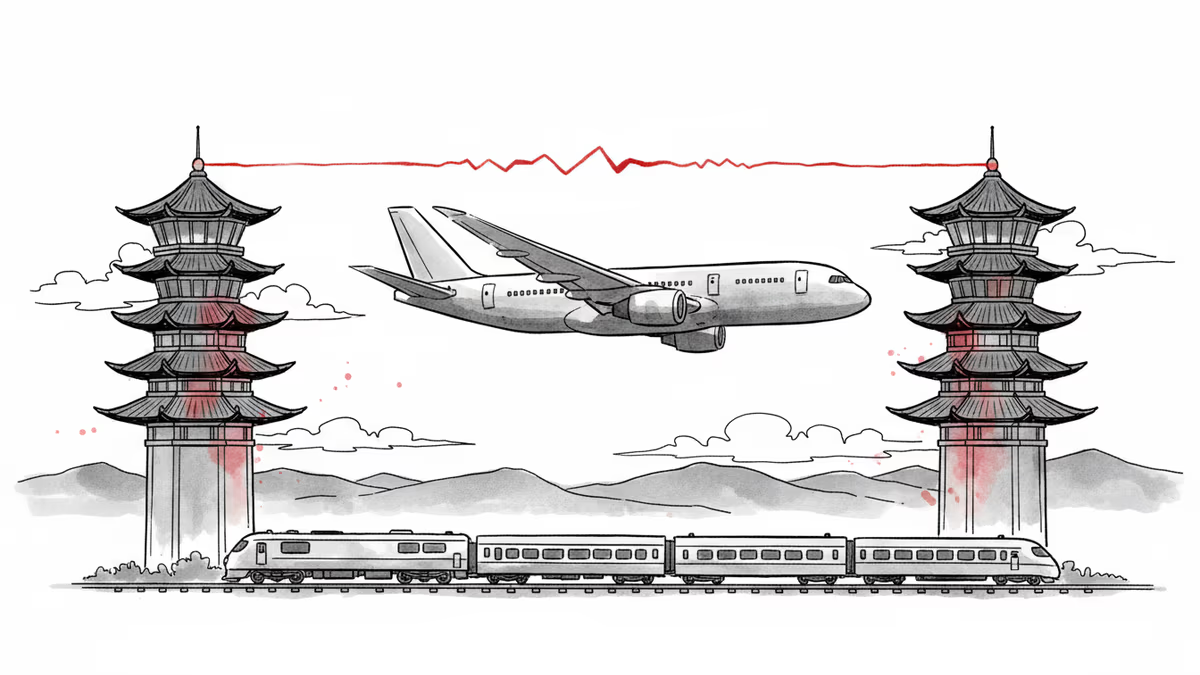
Air China resumed direct flights to Pyongyang on March 30, weeks after passenger train services were restored. The back-to-back moves signal a deliberate deepening of China-North Korea ties.
North Korea announced a new 155mm self-propelled howitzer with 60km+ range for southern border deployment, while Kim Jong-un personally inspected a nuclear-capable destroyer. What does the timing tell us?
Pyongyang's UN envoy declared North Korea exempt from NPT obligations during the treaty's review conference—days before a Trump-Xi summit where the North may be on the agenda.
USFK Commander Gen. Brunson confirmed THAAD remains in Korea but admitted munitions are heading to the Middle East. What does this mean for Korean Peninsula deterrence, OPCON transfer, and the future of the US-South Korea alliance?
Air China resumed direct flights to Pyongyang on March 30, weeks after passenger train services were restored. The back-to-back moves signal a deliberate deepening of China-North Korea ties.
Thoughts
Share your thoughts on this article
Sign in to join the conversation